

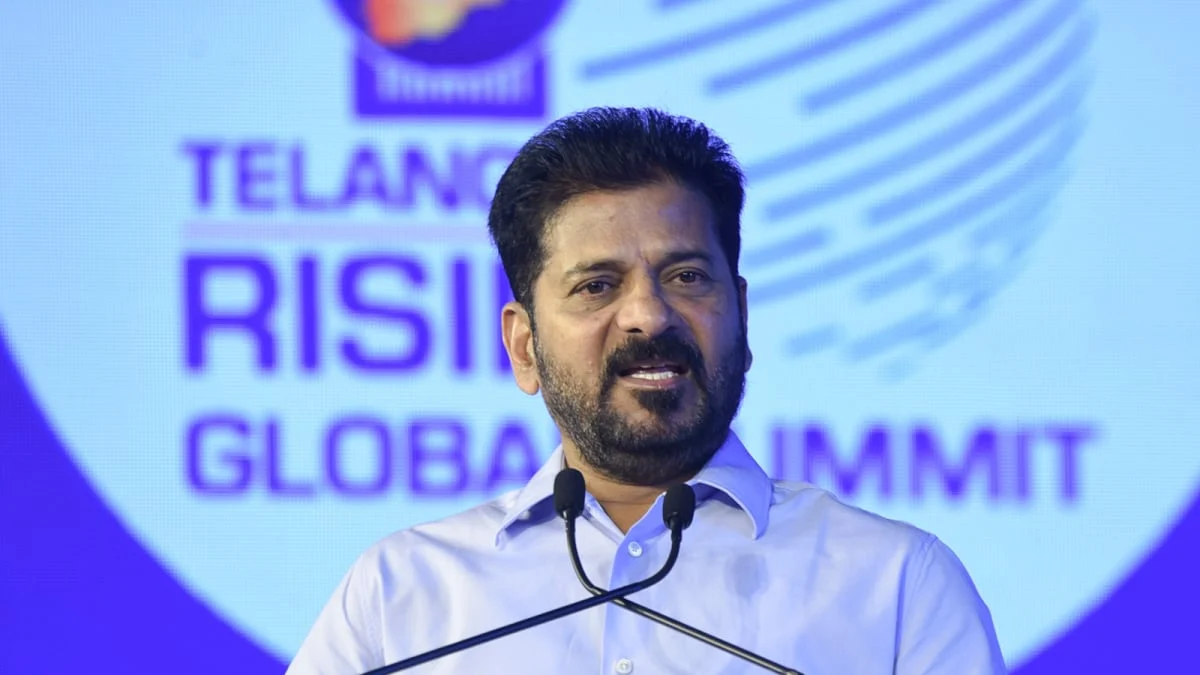
Hyderabad, India – May 11, 2026 – In a scathing counter-attack that has sent ripples through the national political landscape, Telangana Chief Minister Revanth Reddy launched a fierce broadside against Prime Minister Narendra Modi and the Bharatiya Janata Party (BJP). Addressing a press conference in Hyderabad, Reddy vehemently condemned PM Modi’s recent remarks referring to the Indian National Congress as "Muslim League Maoists Congress," accusing the saffron party of engaging in divisive politics, fostering fear, and systematically misusing constitutional institutions. The Chief Minister’s strong rebuttal also extended to the Centre’s handling of the burgeoning West Asia crisis, where he critically assessed PM Modi’s "self-reliance" push as a "complete failure of foreign policy" and demanded an immediate all-party meeting to forge a unified national strategy.
The political discourse in India has reached a fever pitch, marked by increasingly sharp exchanges between the ruling BJP and the opposition Congress. Chief Minister Reddy’s remarks underscore a growing chasm in ideological and governance approaches, particularly concerning social cohesion and foreign policy. His audacious labeling of the BJP as the "British Janata Party" is a potent rhetorical device aimed at questioning the party’s nationalist credentials while accusing it of employing tactics reminiscent of colonial "divide and rule" strategies. This confrontation signals a significant escalation in the ongoing political battle, setting the stage for intensified scrutiny of both parties’ agendas and leadership.
The Epicentre of Conflict: Modi’s Provocative Statement
The immediate catalyst for Chief Minister Revanth Reddy’s fiery response was Prime Minister Narendra Modi’s contentious characterization of the Congress party. During a recent public rally, the Prime Minister had reportedly articulated a highly provocative term, "Muslim League Maoists Congress," designed to paint the grand old party as ideologically aligned with disparate and often antagonistic entities. This descriptor, widely perceived as an attempt to delegitimize the Congress by associating it with historical communalism (referencing the erstwhile Muslim League) and left-wing extremism (Maoists), ignited widespread condemnation from opposition ranks.
Reddy did not mince words in his retort. "We strongly condemn the statement made by PM Modi," he asserted, his voice resonating with indignation. "Muslims and Maoists are also part of this country. It is unfortunate for a Prime Minister to speak in such a manner." He emphasized that such rhetoric from the nation’s highest office was not only unbecoming but also deeply detrimental to the fabric of a diverse and democratic society. The Telangana Chief Minister highlighted the inherent danger of a Prime Minister attempting to ostracize significant sections of the populace, asserting that such language fuels societal fragmentation rather than unity.
Accusations of Divisive Politics and Institutional Misuse
Beyond merely condemning the Prime Minister’s specific remarks, Revanth Reddy broadened his attack to encompass what he described as the BJP’s overarching political strategy. He alleged that the ruling party at the Centre was deliberately practicing "divisive politics," a tactic aimed at segmenting society along religious, caste, and ideological lines to consolidate its electoral base. This, Reddy argued, was not merely an electoral strategy but a fundamental threat to India’s secular and pluralistic ethos.
The Chief Minister’s indictment of the BJP as the "British Janata Party" was a particularly striking metaphor. He elaborated on this provocative comparison, stating, "The saffron party was attempting to ‘divide’ society and create ‘fear’ among communities." This historical analogy harks back to the colonial era, where British imperialists famously exploited existing divisions within Indian society to maintain control. By drawing this parallel, Reddy sought to portray the BJP’s policies as inherently anti-national and antithetical to the spirit of a united India.
Furthermore, Reddy accused the BJP of "misusing constitutional institutions." While he did not specify particular instances during his press conference, this accusation is a recurring theme in opposition critiques of the Modi government. Opposition parties have frequently alleged that central investigative agencies like the Enforcement Directorate (ED), Central Bureau of Investigation (CBI), and Income Tax Department are selectively deployed to target political rivals, suppress dissent, and undermine democratic processes. Reddy’s inclusion of this charge suggests a broader pattern of concern regarding the erosion of institutional independence under the current administration.
The Maoist Question: Mainstreaming vs. Militarization
A significant portion of Chief Minister Reddy’s press conference was dedicated to challenging PM Modi’s implied stance on Maoism. By lumping Maoists with the Muslim League and Congress, Modi’s statement appeared to categorize them as irredeemable threats to national security, implicitly advocating for a hardline, force-driven approach. Reddy offered a contrasting philosophy, rooted in rehabilitation and integration.
"They (BJP) want to end them, but our way is to bring them back to mainstream society," CM Reddy stated emphatically. He then presented Telangana as a model for this approach, proudly declaring, "Telangana has witnessed more Maoist surrenders than any other state in the country." This claim underscores his government’s belief in addressing the root causes of Maoist insurgency – often linked to socio-economic disparities and lack of development – rather than relying solely on military or police action.
The Telangana Chief Minister elaborated that his government’s strategy involves a combination of robust security measures and concerted efforts to facilitate the surrender and rehabilitation of Maoist cadres. This includes providing opportunities for education, employment, and social reintegration, thereby addressing grievances and offering viable alternatives to armed struggle. Reddy implicitly contrasted this nuanced approach with what he perceived as the Centre’s overly simplistic and potentially counterproductive strategy of blanket condemnation and militarization, arguing that it alienates rather than reforms.
Foreign Policy Under Scrutiny: The West Asia Crisis
Shifting his focus from domestic politics to international affairs, Chief Minister Revanth Reddy critically examined the Modi government’s handling of the evolving West Asia crisis. In the context of the ongoing conflict and PM Modi’s simultaneous push for "self-reliance" (Atmanirbhar Bharat), Reddy expressed profound dissatisfaction with the Centre’s approach, particularly regarding reported "restrictions" being imposed on people.
"PM Modi is imposing restrictions on people, giving such suggestions is nothing but a complete failure of foreign policy," Reddy asserted. While the specific nature of these "restrictions" was not detailed, the implication was that the government’s response to the crisis was leading to economic or social burdens on the populace, possibly through supply chain disruptions, trade limitations, or resource allocation shifts, all under the guise of self-reliance.
Reddy highlighted India’s historical resilience in the face of international crises, referencing past conflicts. "India has witnessed many wars, including the India-Pakistan war but the country never faced such restrictions," he noted, implying that the current situation, despite India not being directly involved in the West Asia conflict, was being managed poorly compared to previous, more direct threats.
His primary demand regarding foreign policy was for transparency and collective decision-making. "They should call for an all-party meeting and take suggestions from everyone," he urged. This call resonates with parliamentary democratic traditions where major foreign policy decisions, especially those impacting national interests and potentially leading to restrictions, are ideally discussed and decided upon through consensus.
Reddy further argued that several nations directly involved in the West Asia conflicts were handling the situation with more decisiveness and strategic engagement than India. "America and other countries facing crises are directly involved in wars, but India is not directly involved in this war. PM Modi should act, but he is not doing anything. They only know how to push someone into crisis," he alleged, criticizing what he perceived as a passive or reactive foreign policy that lacked proactive leadership and concrete action to protect India’s interests or influence global stability.
Chronology of Events and Escalating Rhetoric
The political temperature had been steadily rising in the weeks leading up to this confrontation. With several state elections on the horizon and the shadow of the next general election looming large, both the BJP and the Congress have intensified their rhetoric.
- Early May 2026: Prime Minister Modi, during a series of campaign rallies in northern India, began to sharpen his attacks on the Congress, frequently accusing the party of "appeasement politics" and highlighting historical associations to discredit its present-day agenda. It was during one such rally, reportedly in a constituency with a significant minority population, that the "Muslim League Maoists Congress" remark was first widely reported. This statement was seen by many as a deliberate attempt to polarize the electorate and consolidate the Hindu vote.
- Mid-May 2026: The remark quickly became a focal point of discussion in national media and political circles. Congress leaders initially issued general condemnations, but a consolidated, aggressive response was anticipated.
- May 11, 2026 (Evening): Telangana Chief Minister Revanth Reddy, a prominent voice within the Congress and a leader known for his aggressive political style, chose this moment to launch a comprehensive counter-attack from Hyderabad. His press conference was strategically timed to amplify the opposition’s grievance and seize the narrative. His dual focus on domestic divisive politics and foreign policy failures aimed to portray the BJP government as incompetent on multiple fronts.
This exchange is not an isolated incident but part of a larger pattern of increasingly personal and ideologically charged attacks between the two dominant national parties. The use of loaded terms and historical analogies reflects a deeper struggle for ideological supremacy and electoral advantage, often at the expense of constructive debate.
Supporting Data and Contextual Analysis
The accusations leveled by Chief Minister Reddy are not without historical and contemporary context within Indian politics.
Divisive Politics: The term "divisive politics" has been a recurring accusation against various political parties throughout India’s post-independence history. However, in recent years, critics of the BJP have intensified this charge, pointing to issues such as the Citizenship Amendment Act (CAA), debates surrounding uniform civil code, and narratives around religious conversions as examples of policies or rhetoric that allegedly deepen communal fault lines. The "Muslim League" reference, in particular, taps into sensitive historical memories of India’s partition and pre-independence communal politics, aiming to evoke a sense of fear and suspicion.
Misuse of Institutions: Allegations of central agencies being used for political vendetta have been a persistent feature of India’s multi-party democracy, spanning across various administrations. However, under the current BJP rule, opposition parties and civil society groups have voiced increasing concern over the perceived selective targeting of opposition leaders, activists, and critics through probes by the ED, CBI, and Income Tax Department. Data on raids and arrests often show a disproportionate focus on non-BJP political figures, leading to calls for greater autonomy and accountability of these institutions. While definitive proof of direct political interference is hard to obtain, the pattern has fueled public perception of misuse.
Maoist Insurgency: The Maoist (Naxalite) insurgency has plagued parts of India for decades, particularly in the "Red Corridor" stretching across central and eastern states. The debate over how to tackle it has always revolved around two poles: a security-centric approach focused on eliminating armed cadres, and a socio-economic approach aimed at addressing grievances like land rights, poverty, and displacement. Governments have historically struggled to balance these two. Telangana, under various administrations, has indeed implemented surrender and rehabilitation policies, often citing improved outcomes in terms of reducing violence and bringing former insurgents into the mainstream. Reddy’s claims about Telangana’s success would likely be supported by state police records on surrenders and the relative decline in Maoist violence compared to other affected states.
West Asia Crisis and Foreign Policy: The "West Asia crisis" likely refers to an ongoing geopolitical situation, possibly involving regional conflicts, energy security challenges, or humanitarian concerns that have broader global implications. India, as a major global power and energy consumer, has significant stakes in the stability of West Asia. PM Modi’s "self-reliance" push (Atmanirbhar Bharat Abhiyan), initially conceived as an economic strategy to boost domestic manufacturing and reduce import dependence, has increasingly been integrated into foreign policy discourse. However, applying "restrictions" in the face of a global crisis could imply a protectionist or isolationist stance that critics argue might harm India’s global standing or economic interests. The demand for an all-party meeting on foreign policy is a legitimate democratic expectation, especially when national interests are at stake, drawing parallels to how previous governments sought consensus during major international challenges like wars or economic sanctions.
Official Responses and Expert Commentary
The immediate aftermath of Reddy’s press conference saw predictable reactions from various political quarters.
BJP’s Counter-Narrative: Senior BJP spokespersons and leaders quickly dismissed Reddy’s remarks as "baseless allegations" and "desperate attempts to divert attention from the Congress’s own failures." They defended PM Modi’s statement, asserting that it accurately reflected the Congress’s "appeasement politics" and its historical alignment with forces detrimental to national unity. One prominent BJP leader retorted, "It is the Congress that has always divided India, first with the Muslim League and now by supporting urban Naxals. The Chief Minister is simply trying to cover up his party’s hypocrisy." They would likely accuse Reddy of using inflammatory language himself and engaging in political opportunism.
Congress Solidarity: Other prominent Congress leaders and spokespersons swiftly came out in support of Revanth Reddy, echoing his concerns about the BJP’s divisive tactics and the alleged misuse of institutions. They emphasized the need for a united opposition front against what they termed the "authoritarian tendencies" of the Modi government.
Other Opposition Parties: While some regional parties remained silent, others expressed solidarity with Reddy’s broader concerns. Parties like the Aam Aadmi Party (AAP) and certain regional outfits reiterated their apprehension about the alleged targeting of opposition leaders by central agencies and the increasingly polarized political environment. The call for an all-party meeting on the West Asia crisis also found some resonance among parties that feel excluded from critical foreign policy deliberations.
Political Analysts: Experts offered a mixed bag of interpretations. Dr. Priya Sharma, a prominent political scientist, observed, "The rhetoric from both sides is escalating to unprecedented levels. Modi’s ‘Muslim League Maoists Congress’ remark is undeniably provocative, designed to appeal to a specific ideological base. Reddy’s ‘British Janata Party’ counter is equally aggressive, aiming to turn the ‘nationalist’ accusation back on the BJP. This indicates a deepening ideological divide and a willingness to use highly charged language for electoral gains."
Another analyst, Mr. Rajiv Malhotra, specializing in security studies, commented on the Maoist aspect: "Telangana’s approach to mainstreaming Maoists has shown some success, and it’s a valid point to highlight. The Centre’s strategy has often been seen as primarily security-driven. The debate over how to handle left-wing extremism, whether through force or rehabilitation, is complex and requires a nuanced understanding, which is often lost in political slugfests." Regarding foreign policy, he added, "The call for an all-party meeting on a major international crisis like West Asia is standard democratic practice. If the ‘restrictions’ mentioned by Reddy are indeed impacting the populace, then greater transparency and consultation are imperative."
Implications and Future Outlook
The fiery exchange between Chief Minister Revanth Reddy and Prime Minister Narendra Modi carries significant implications for India’s political landscape, governance, and social harmony.
Impact on Political Discourse: The escalation of rhetoric, characterized by personal attacks and ideologically loaded labels, is likely to further polarize India’s political discourse. Such language can make constructive dialogue and consensus-building increasingly difficult, fostering an environment of perpetual confrontation. This could lead to a less productive legislative environment and a more adversarial political culture, where the focus shifts from policy debates to personal vilification.
Electoral Ramifications: With upcoming state elections and the next general election on the horizon, this kind of verbal warfare is clearly aimed at mobilizing respective voter bases. The BJP will likely double down on its narrative of Congress as ‘appeasers’ and ‘anti-national’ sympathizers, while the Congress will continue to portray the BJP as divisive, authoritarian, and a threat to India’s secular fabric. The success of these narratives will largely depend on how they resonate with the electorate, potentially leading to further consolidation of votes along ideological and community lines.
Policy Impact: The demand for an all-party meeting on the West Asia crisis, if unheeded, could lead to accusations of an autocratic foreign policy. Should the "restrictions" mentioned by Reddy indeed impact citizens, the lack of transparency could erode public trust. Similarly, the contrasting approaches to Maoism could lead to friction between the Centre and states, potentially hindering a coherent national strategy to address the insurgency effectively. The debate over institutional autonomy will also persist, potentially influencing public confidence in the fairness of governance.
Long-term Effects on Democratic Institutions and Social Harmony: The repeated accusations of "divisive politics" and "misuse of institutions" pose a long-term threat to the health of India’s democratic institutions. If trust in these institutions erodes, it can weaken the checks and balances essential for a vibrant democracy. Furthermore, rhetoric that seeks to create fear and division among communities can have profound and lasting negative impacts on social harmony, fostering mistrust and resentment among different groups, thereby undermining the very idea of a united and inclusive India.
In conclusion, Chief Minister Revanth Reddy’s sharp riposte to PM Modi’s remarks marks a significant moment in India’s political trajectory. It highlights the deep ideological fissures, the escalating nature of political campaigning, and the pressing challenges facing the nation, both domestically and internationally. The coming months will reveal whether this heated exchange paves the way for a more constructive debate or plunges the political arena into further acrimony.
