

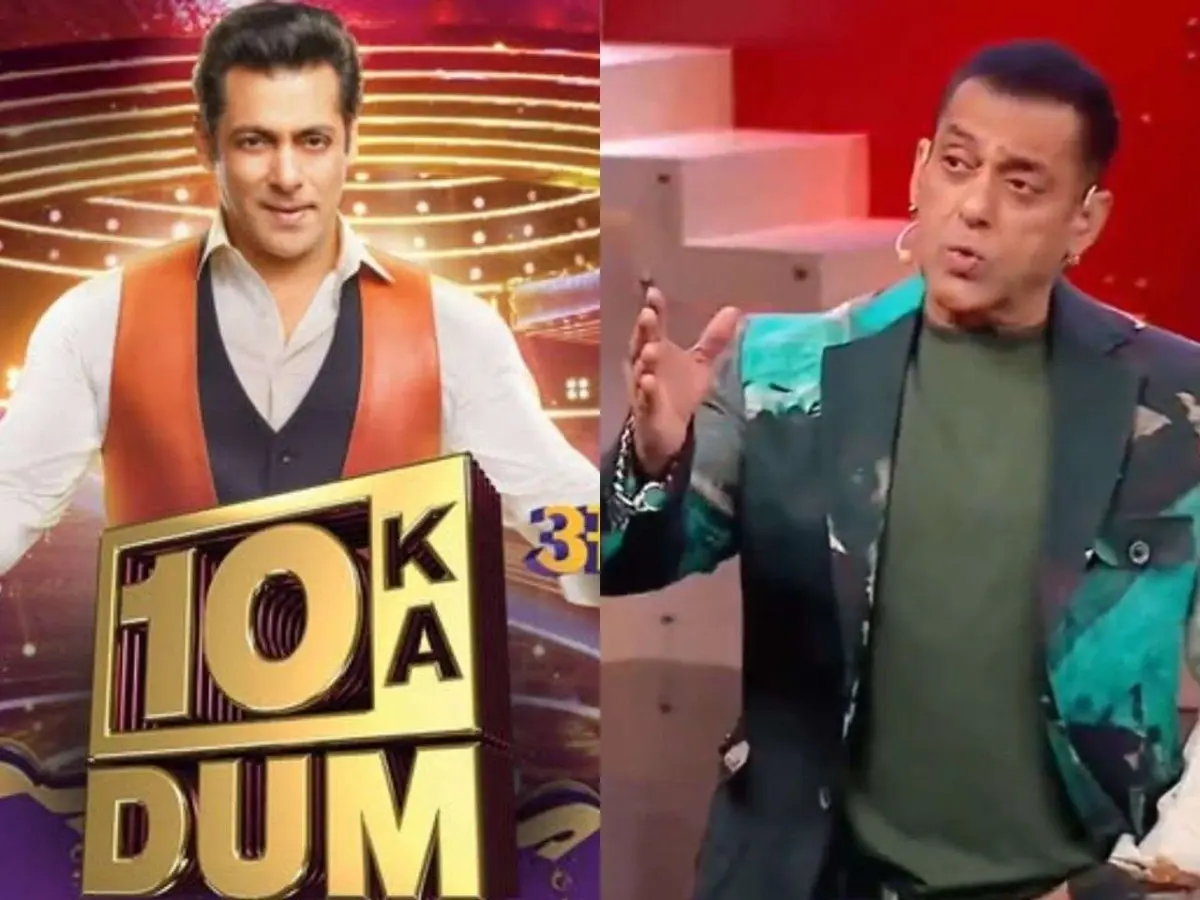
Mumbai, India – In the often tumultuous world of Bollywood, where public perception can shift as rapidly as box office trends, superstar Salman Khan has candidly revisited a particularly challenging period in his career. During a recent episode of the reality show "Bigg Boss," Khan, known for his larger-than-life persona, revealed a time when he felt "mocked, trolled, and ridiculed by the press," leading to a profound reluctance to even consider taking on the immensely popular game show "Dus Ka Dum." It was his esteemed father, veteran screenwriter Salim Khan, whose profound counsel and unwavering belief in his son’s character ultimately convinced Salman to embrace this pivotal television venture, marking a significant turning point in his professional journey.

The narrative of Salman Khan’s career is often punctuated by periods of immense success and public adoration, interspersed with moments of controversy and intense media scrutiny. While many associate his "second innings" of blockbuster hits with the release of "Wanted" in 2009, the true bridge that began to mend the rift between Khan and the masses, and importantly, allowed them to see the "real" Salman beyond the tabloid headlines, was the television show "Dus Ka Dum." This game show, which debuted in 2008, offered a unique platform for the actor to connect with his audience on a more personal level, revealing a side of his personality that was often overshadowed by the "bad boy" image the media frequently portrayed.
)
The Dark Cloud of Negative Publicity
Salman Khan’s candid admission during the "Weekend Ka Vaar" segment of "Bigg Boss 20" provided a poignant glimpse into the psychological toll that relentless negative publicity can have on even the most seasoned celebrities. He addressed the contestants, including Qazi Touqeer and Mahhi Vij, urging them not to be consumed by negativity, drawing parallels to his own experiences. Khan recounted how, despite delivering a string of successful films such as "Maine Pyar Kiya," "Karan Arjun," and "Tere Naam," he found himself constantly under fire from media outlets.

"A certain section of the media would love to mock me, my controversies, my legal troubles, and write me off," Khan confessed, highlighting the pervasive nature of the negative press. This period was marked by intense focus on his personal life, including his high-profile relationships and legal battles, which often overshadowed his professional achievements. The constant barrage of critical reporting and speculative journalism created an environment where Khan felt increasingly isolated and misunderstood. It was during this challenging phase that the offer for "Dus Ka Dum" arrived. While the opportunity presented itself as a potential avenue for reconnecting with the public, Khan harbored significant reservations. The weight of negative press had made him hesitant, questioning his readiness to step into the public eye in such a direct and unscripted format.
)
The Guiding Hand of Salim Khan: A Father’s Wisdom
Faced with this internal conflict and uncertainty, Salman Khan sought the counsel of his father, Salim Khan, a towering figure in the Indian film industry and a man whose insights have shaped the careers of many. The conversation between father and son, as recounted by Salman, underscores the deep-seated trust and respect that exists between them, and the profound impact of a father’s guidance during times of doubt.
)
"I was confused," Salman admitted, explaining his apprehension about taking on "Dus Ka Dum." He shared his doubts with Salim Khan, who, in his characteristic pragmatic and profound manner, posed a question that cut to the core of Salman’s self-belief: "Tumko tumhare personality, mind, dil, upbringing pe bharosha hai ya nahi?" (Do you trust your personality, mind, heart, and upbringing?).
)
This simple yet powerful question served as a catalyst for Salman. His affirmative response, expressing his faith in his upbringing and his inherent self, prompted Salim Khan’s encouraging retort: "Then fir karo, and be yourself in the show." (Then do it, and be yourself in the show). This directive from his father was not merely an encouragement to accept the television role; it was a profound affirmation of his character and a call to authenticity. Salim Khan’s wisdom lay in recognizing that Salman’s true strength resided in his genuine personality, a quality that the often-cynical media had failed to acknowledge. By urging him to "be himself," Salim Khan empowered Salman to shed the persona that had been constructed by external narratives and to present his authentic self to the world.
)
Salman Khan himself acknowledged the transformative impact of this advice and the subsequent show. He affirmed that "Dus Ka Dum" indeed allowed fans to "know who he is as a personality," a testament to the success of his father’s guidance. The game show became a platform where his natural wit, humility, and genuine interactions with contestants and the audience resonated deeply, gradually dismantling the negative stereotypes that had been so assiduously built around him.
)
"Dus Ka Dum": A Bridge to the Masses
The decision to participate in "Dus Ka Dum" was a strategic and deeply personal one for Salman Khan. At a time when his public image was under severe strain, the television medium offered a unique opportunity for direct engagement with a vast audience, bypassing the filters of traditional media. The format of the show, which revolved around polling the general public on various questions and then having contestants guess the percentages, allowed for a more informal and relatable interaction.
)
Salman’s role as the host was not merely to read out questions or manage the game; it was to embody the spirit of the show and to connect with the contestants and viewers on a human level. His inherent charm, his ability to laugh at himself, and his genuine empathy for the contestants’ situations shone through. Unlike the often-critical and sensationalized portrayals in newspapers and magazines, "Dus Ka Dum" showcased Salman’s warmth, his sense of humor, and his surprising ability to listen and engage.
)
This shift in perception was crucial. For years, the media had focused on Salman’s alleged run-ins with the law, his tumultuous relationships, and his public spats. While these events were often sensationalized and amplified, they painted an incomplete picture of the man. "Dus Ka Dum" allowed viewers to witness his interactions, his reactions to the contestants’ personal stories, and his candid responses to the questions posed. This direct exposure helped to humanize him in the eyes of the public, demonstrating that beneath the controversial headlines lay a person with a good heart and a relatable personality.
)
The success of "Dus Ka Dum" was not just a personal triumph for Salman Khan; it was a validation of Salim Khan’s belief in his son’s inherent goodness and his ability to connect with the common person. The show effectively bridged the perceived gap between the larger-than-life movie star and the everyday audience, proving that authenticity and genuine connection could overcome even the most persistent negative narratives.
)
The Legacy of Resilience and Authenticity
The story of Salman Khan’s reluctance to do "Dus Ka Dum" and his father’s timely intervention serves as a powerful narrative of resilience and the importance of staying true to oneself. It highlights how external pressures and negative publicity can create significant internal doubt, but how the unwavering support and wisdom of loved ones can provide the strength to overcome such challenges.
)
Salim Khan’s simple yet profound question, "Do you trust your personality, mind, heart, and upbringing?", acted as a reminder to Salman of his own intrinsic value and his deep-rooted values. It was a call to tap into his authentic self, to trust that his true nature would resonate with the audience more powerfully than any fabricated image.
)
The success of "Dus Ka Dum" paved the way for a significant resurgence in Salman Khan’s career. It not only re-established his popularity but also laid the groundwork for his subsequent blockbuster films. The public’s renewed appreciation for his personality translated into a stronger connection at the box office, with audiences now more receptive to his on-screen persona.
)
Furthermore, Salman’s encouragement to the "Bigg Boss" housemates to "up the ante, give their best shot, without fearing the negativity" is a direct reflection of the lessons learned during that difficult period. He understands the psychological impact of criticism and the importance of maintaining self-belief in the face of adversity. His own journey from feeling "written off" to becoming one of Bollywood’s most enduring stars is a testament to his tenacity and the invaluable guidance he received.
)
The implications of this episode extend beyond Salman Khan’s personal story. It serves as a broader commentary on the power of media narratives, the importance of authentic representation, and the enduring influence of family support. In an era where public figures are constantly under scrutiny, the story of Salman Khan and "Dus Ka Dum" reminds us that true success often lies in embracing who you are and trusting in the strength of your character, especially when guided by the wisdom of those who know you best. The legacy of that period is not just a successful game show, but a profound reaffirmation of an actor’s ability to connect with his audience by simply being himself.
