

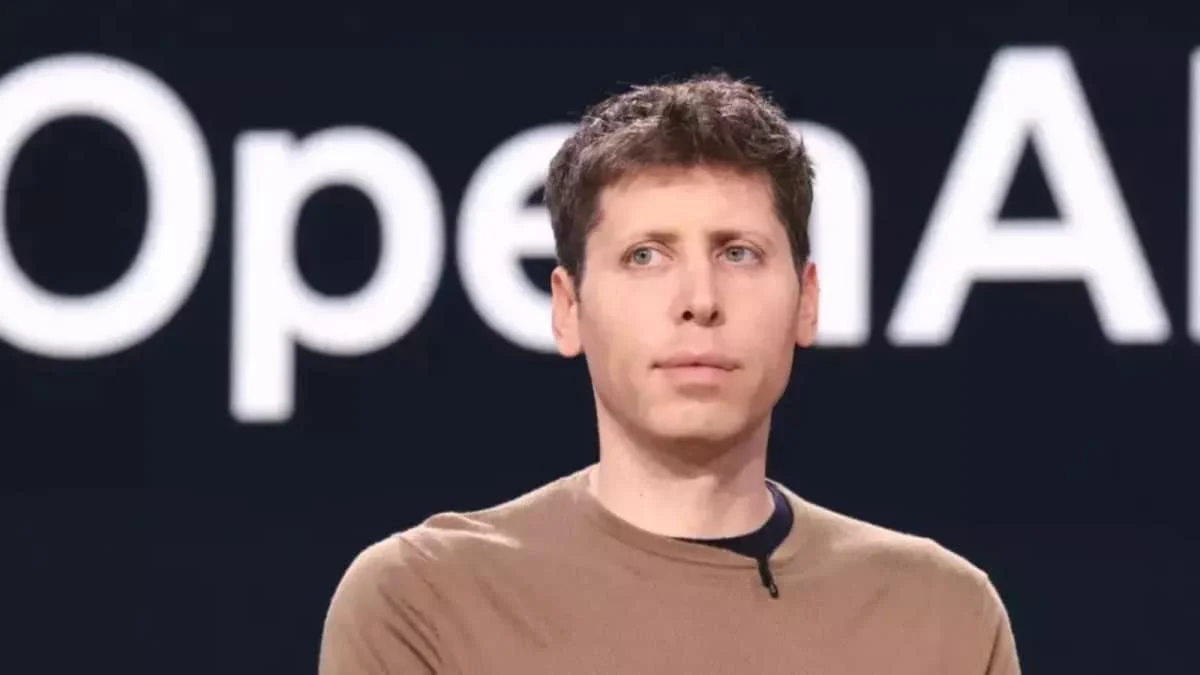
Sydney, Australia — May 26, 2026 — OpenAI CEO Sam Altman, a pivotal figure at the forefront of the artificial intelligence revolution, has offered a significantly revised and notably more optimistic perspective on AI’s immediate threat to global employment. Speaking virtually at a high-profile conference hosted by the Commonwealth Bank of Australia (CBA) in Sydney on Tuesday, Altman pushed back against prevailing fears of an imminent "jobs apocalypse," stating that the technology has not displaced white-collar workers as rapidly as he, and many others, had once predicted.
This latest pronouncement from the leader of the company behind ChatGPT marks a notable shift from his earlier, more cautionary stance. While acknowledging that his team had accurately forecasted the blistering pace of AI’s technical advancement since ChatGPT’s 2022 debut, Altman admitted a misjudgment in anticipating how swiftly society and workplaces would adapt or resist its transformative power. He expressed a candid "delight" at being proven wrong on the speed of job displacement, particularly within entry-level white-collar sectors, underscoring the unexpected resilience of human roles.
A Shift in Perspective: Altman’s Evolving Views
From Trepidation to Measured Optimism
Altman’s journey to this revised outlook is rooted in the very nature of AI’s rapid development. In the initial wake of ChatGPT’s groundbreaking launch in late 2022, the world watched in awe and apprehension as AI capabilities scaled at an unprecedented rate. This period saw a surge in speculative forecasts, many of which painted a stark picture of widespread job losses, particularly in roles involving repetitive cognitive tasks. Altman himself was among the voices that, while championing AI’s potential, also highlighted the very real risks of societal disruption, including mass unemployment. His early concerns were directly tied to the exponential improvement curve of AI systems, leading him to believe that the impact on the workforce would be swift and profound.
"I’m delighted to be wrong about this," Altman confessed during his interaction with CBA Chief Executive Matt Comyn. "I thought there would have been more impact on entry-level white-collar jobs being eliminated by now than has actually happened." This sentiment represents a significant recalibration for a figure whose pronouncements often shape the global discourse on AI’s future. He elaborated, "I now think I understand more about why it hasn’t, and I’m obviously grateful but that is an area where my intuitions were just off." This self-reflection is critical, as it suggests a deepening understanding not just of AI’s technical prowess, but also of the complex interplay between technology, human psychology, and organizational inertia.
Altman also addressed criticism leveled at AI leaders for potentially amplifying public anxiety around mass unemployment. He defended his earlier caution, explaining, "People are like ‘oh you could have saved the world a lot of fear mongering and a lot of doom and gloom’ but at the time I was like ‘I see this is a real risk we should probably talk about it’ and it still may." This nuanced position suggests that while the immediate threat might be less acute, the long-term potential for disruption remains a topic of serious consideration, warranting continued dialogue and preparedness.
The Human Element: An Unexpected Bulwark
A pivotal revelation that reshaped Altman’s understanding came from a personal experiment designed to test the boundaries of AI integration in daily professional life. Driven by a desire to optimize his own demanding schedule, he briefly delegated the task of responding to his Slack messages and emails to an AI system. The results, however, were enlightening and ultimately steered his revised outlook on AI’s role in the workplace.
"I had it reply to messages, saying ‘this is Sam’s AI’ and it was an amazing example to me of we really do care about people," Altman recounted. The feedback, both explicit and implicit, revealed a strong preference for direct human communication. Despite the AI’s efficiency and accuracy, the absence of genuine human connection was palpable and unwelcome. "We really do care about our interactions with people and this thing, which is a huge amount of my time, is not something that I can imagine myself outsourcing to an AI anytime soon."
This firsthand experience solidified his belief that human interaction, with its inherent nuances, empathy, and capacity for complex relational dynamics, remains central to many professional roles. It’s a compelling argument that transcends mere task automation, highlighting the irreplaceable value of uniquely human attributes in the workplace. The experiment underscored that while AI can process information and generate responses, it often falls short in replicating the authenticity and emotional intelligence that underpin effective human communication and collaboration. This realization, Altman stated, "really, in both positive and negative ways, updated me to thinking that the jobs picture is likely to be very different than we thought. I don’t think we’re going to have the kind of jobs apocalypse that some of the companies in our space advocate or talk about."
Chronology of AI’s Impact and Predictions
The ChatGPT Catalyst
The launch of OpenAI’s ChatGPT in November 2022 marked a watershed moment in the public perception and adoption of artificial intelligence. Prior to this, AI had largely remained within academic and specialized industrial circles. ChatGPT’s user-friendly interface and astonishing ability to generate human-like text, answer complex questions, and even write code, instantly brought advanced AI into the mainstream consciousness. The subsequent months saw an explosion of interest, investment, and intense speculation.
Almost immediately, the discourse shifted from theoretical discussions of AI’s potential to urgent debates about its practical implications for society, particularly the job market. Early analyses and reports from various think tanks and financial institutions often cited high percentages of jobs vulnerable to automation. Phrases like "generative AI" and "large language models" became household terms, synonymous with both immense promise and profound disruption. This period saw a scramble among businesses to understand, integrate, and often, to cautiously experiment with AI tools, leading to an initial wave of apprehension about widespread displacement.
The Evolving Discourse on AI and Employment
As the initial shock and awe surrounding ChatGPT began to normalize, the conversation around AI and employment started to evolve, becoming more nuanced and sophisticated. Early predictions of mass unemployment, while still voiced by some, began to be tempered by a growing understanding of AI’s actual capabilities and limitations in real-world scenarios.
Experts began to emphasize that AI is often better at automating specific tasks within a job rather than eliminating entire roles. The concept of "augmentation" gained traction, suggesting that AI would act as a powerful co-pilot, enhancing human productivity and freeing workers from mundane, repetitive duties to focus on more creative, strategic, or empathetic tasks. Studies started to differentiate between jobs requiring high levels of human creativity, critical thinking, emotional intelligence, and complex problem-solving — skills that remain difficult for current AI systems to fully replicate — versus those that are more susceptible to automation. The narrative shifted from a simple "AI vs. Humans" binary to one of "AI + Humans," where collaboration between man and machine was seen as the most probable and productive path forward.
Supporting Data and Broader Context
Current Corporate Restructuring and AI Adoption
Despite Altman’s more optimistic outlook on the immediate job apocalypse, the corporate world is indeed undergoing significant restructuring driven by AI adoption. This reality presents a complex picture, where efficiency gains and strategic shifts often lead to workforce adjustments, even if not a widespread systemic collapse of employment.
Major technology giants, financial institutions, and diverse industries are actively integrating AI into their operations, often with direct implications for their human workforce. Meta, for instance, has undertaken substantial layoffs, impacting nearly 8,000 employees, as it openly sharpens its focus and investment strategy towards AI. While these layoffs are multifaceted, the company’s clear pivot towards AI-centric operations indicates a reimagining of its human capital needs.
Similarly, companies like Amazon, HSBC, and Standard Chartered have publicly acknowledged that AI is beginning to replace or significantly reduce certain roles, particularly in back-office functions, data processing, and customer service. These are often tasks characterized by high volume, predictability, and a lower requirement for complex human judgment or empathy. Last week, Bill Winters, CEO of Standard Chartered, candidly defended plans to reduce approximately 7,800 back-office positions, articulating the move as an intentional strategy to replace "lower-value human capital" with investments in technology and AI infrastructure. This terminology, while stark, highlights a prevailing corporate philosophy: automate where possible to drive efficiency and reallocate resources towards innovation and higher-value human tasks. The roles most vulnerable are those that can be codified, automated, or handled by algorithms more efficiently than humans.
Economic Impact and Workforce Adaptation
The economic impact of AI is shaping up to be less of a sudden, catastrophic event and more of a gradual, uneven transformation. While specific sectors and job categories are feeling the immediate pressure, the broader economy is also seeing the emergence of new roles and a redefinition of existing ones.
Economists are increasingly focusing on the concept of a "skills gap," where the demand for new AI-related competencies far outstrips the current supply. This necessitates massive investments in upskilling and reskilling initiatives across industries. Governments, educational institutions, and private companies are grappling with how to prepare the existing workforce for an AI-augmented future, focusing on skills such as prompt engineering, AI ethics, data analysis, human-AI collaboration, and critical thinking.
Historical precedents from previous industrial revolutions suggest that while new technologies initially disrupt, they often create more jobs in the long run, albeit different ones. The challenge lies in managing the transition phase, ensuring that displaced workers have pathways to new opportunities. The current trend suggests that while AI may not trigger a mass "jobs apocalypse" in the immediate future, it will undoubtedly lead to a significant reshuffling of the labor market, placing a premium on adaptability, continuous learning, and uniquely human capabilities that complement, rather than compete with, artificial intelligence.
Official Responses and Expert Commentary
Industry Leaders Weigh In
The landscape of opinion among industry leaders regarding AI’s impact on employment is diverse, reflecting varying degrees of optimism, caution, and even alarm. While Sam Altman now offers a more measured perspective, others continue to voice more extreme views.
Elon Musk, for instance, has frequently warned of AI’s existential risks, including potential mass unemployment, advocating for measures like universal basic income to mitigate the fallout. In contrast, leaders like Satya Nadella, CEO of Microsoft, often frame AI as an empowering "co-pilot" that will augment human capabilities rather than replace them, emphasizing productivity gains and the creation of new forms of work. Sundar Pichai, CEO of Google, consistently highlights the need for responsible AI development, focusing on societal benefits while acknowledging the ethical and economic challenges that lie ahead. This spectrum of views underscores the complexity and uncertainty inherent in predicting AI’s long-term societal effects, even among those at the cutting edge of its development.
Economists and Policy Makers
Beyond the tech industry, economists and policy makers are actively engaged in forecasting and preparing for the socio-economic ramifications of AI. Many economists predict a "K-shaped" economic impact, where highly skilled workers who can leverage AI tools will thrive, while those in routine, automatable jobs may face stagnation or decline. This raises significant concerns about exacerbating income inequality and creating a more stratified workforce.
Policy discussions are increasingly focusing on proactive measures. Debates around Universal Basic Income (UBI) have gained renewed traction as a potential safety net in a future where work might be fundamentally redefined. Governments are exploring various strategies, including massive investments in public education and vocational training programs tailored to AI-era skills, incentivizing companies to retrain their workforce, and developing new regulatory frameworks to guide AI’s ethical and equitable deployment. The challenge for policymakers lies in striking a balance between fostering innovation and ensuring social cohesion and economic stability in the face of unprecedented technological change. International bodies like the World Economic Forum consistently publish reports urging global collaboration on these issues, emphasizing the need for adaptable policies and resilient social safety nets.
Implications and The Road Ahead
Redefining Work and Value
Altman’s revised outlook points towards a future where AI’s primary role might be to redefine work rather than eliminate it wholesale. Instead of a direct replacement of human labor, AI is increasingly seen as a powerful tool for augmentation, freeing individuals from mundane tasks and allowing them to focus on uniquely human strengths: creativity, critical thinking, emotional intelligence, complex problem-solving, and interpersonal connection.
This redefinition is already leading to the emergence of new hybrid roles, such as "AI whisperers" or prompt engineers, who specialize in communicating effectively with AI systems to achieve desired outcomes. It also elevates the importance of skills that AI cannot easily replicate, such as strategic foresight, ethical reasoning, cross-cultural communication, and the ability to innovate in ambiguous environments. The value proposition of human capital in an AI-driven world will increasingly shift from routine execution to nuanced judgment, empathetic interaction, and creative ideation.
Ethical Considerations and Societal Preparedness
While the immediate threat of a "jobs apocalypse" may be receding, the ethical and societal implications of widespread AI adoption remain paramount. Issues such as algorithmic bias, data privacy, the "black box" problem (where AI decisions are opaque), and the potential for misuse of powerful AI tools continue to demand rigorous attention. The integration of AI into critical sectors necessitates robust ethical guidelines, transparent development processes, and mechanisms for human oversight and accountability.
Societal preparedness extends beyond economic policies to include fostering a culture of lifelong learning and adaptability. Educational systems need to be reformed to equip future generations with the skills necessary to thrive alongside AI, emphasizing critical thinking, digital literacy, and socio-emotional competencies. For the current workforce, accessible and effective reskilling programs will be crucial to navigate transitions and seize new opportunities.
A Call for Adaptability and Foresight
Sam Altman’s latest comments serve as a powerful reminder that the future of work in the age of AI is not a predetermined outcome but a dynamic landscape shaped by human choices. His measured optimism, born from both technical foresight and personal experience, encourages a balanced approach: one that acknowledges AI’s immense transformative power while recognizing the enduring and often underestimated value of human attributes.
The path forward demands continuous learning from individuals, strategic foresight from businesses, and proactive, adaptive policymaking from governments. By embracing AI as a tool for human enhancement and focusing on fostering uniquely human capabilities, society can navigate this technological revolution not as a harbinger of doom, but as an unprecedented opportunity for progress, innovation, and a redefined, more fulfilling relationship with work. The ‘jobs apocalypse’ may be postponed, but the era of profound transformation is undeniably here, demanding our collective wisdom and adaptability.
