

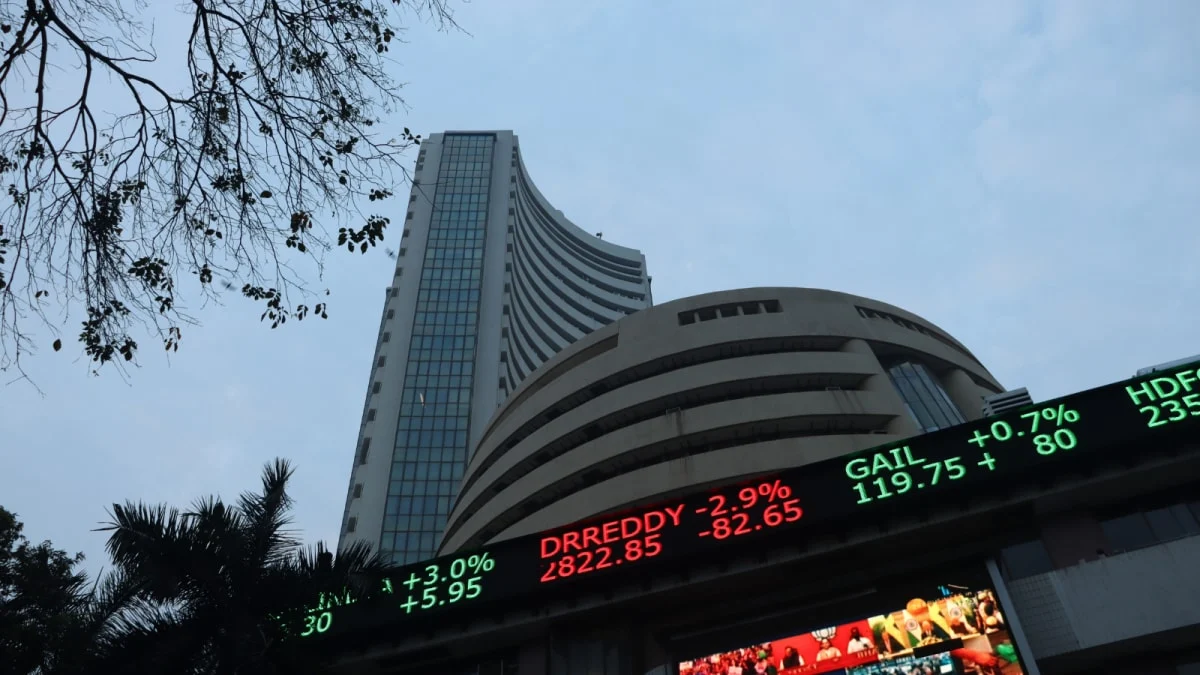
NEW DELHI, India – May 27, 2026 – The Indian equity market commenced Tuesday’s trading session on a largely subdued note, reflecting a complex interplay of mixed domestic indicators and a generally supportive, albeit cautious, global sentiment. While benchmark indices like the Nifty 50 managed a marginal uptick and the Sensex hovered near the flatline, the broader market segments demonstrated robust performance, signaling continued investor appetite for mid- and small-cap stocks.
At precisely 9:17 am IST, the Nifty 50 index recorded a modest gain of 10 points, trading at 23,921.95. Concurrently, the S&P BSE Sensex, the bellwether for Indian large-caps, was largely range-bound, oscillating around the 76,025 mark. This early morning inertia suggests a period of consolidation and cautious assessment among frontline investors, particularly after the previous session’s profit-booking.
Early Market Dynamics: A Cautious Start to the Trading Day
The opening hour of trading on Tuesday painted a picture of selective strength rather than a broad-based rally. The marginal movements in the Nifty 50 and Sensex underscore the current indecisiveness prevailing at the top tier of the market. Investors appear to be digesting a confluence of factors, ranging from recent corporate earnings reports to evolving macroeconomic projections and global market trends.
The Nifty 50’s hesitant climb above the flatline, while positive, falls short of indicating strong directional conviction. Similarly, the Sensex’s tight trading range around its previous close highlights a delicate balance between buying and selling pressures. This subdued opening follows a pattern observed in recent weeks where benchmarks have struggled to maintain significant momentum without strong catalysts, often succumbing to intermittent profit-booking at higher levels. The market’s current posture suggests a period of technical consolidation, with key resistance levels being tested and re-tested by traders.
Broader Markets Defy Benchmarks: A Sign of Underlying Strength?
In stark contrast to the benchmark indices, the broader market segments displayed remarkable resilience and positive momentum in early trade. This outperformance by mid- and small-cap stocks is a significant indicator, suggesting a deeper undercurrent of optimism and risk-taking within the Indian equity landscape.
The Nifty Midcap 100 index advanced by 0.38 per cent, reflecting a healthy interest in companies positioned for growth beyond the large-cap domain. Following suit, the Nifty Smallcap 100 index registered a gain of 0.39 per cent, reinforcing the narrative of sustained retail and institutional investor confidence in smaller, high-growth potential firms. Further underscoring this trend, the Nifty Microcap 250 index climbed an impressive 0.47 per cent, pointing towards a broadening of the market rally to even the smallest listed entities.
This consistent outperformance of broader markets over benchmarks often signifies several key trends. Firstly, it indicates a healthy risk appetite among investors, who are willing to venture beyond the traditional safety of large-cap stocks in search of higher returns. Secondly, it could suggest a rotation of capital, where funds are flowing out of overvalued large-caps into mid and small-caps that are perceived to have more attractive valuations or stronger growth prospects. Lastly, the structural growth story of the Indian economy, coupled with a burgeoning domestic investor base, continues to fuel interest in companies that are direct beneficiaries of this expansion, many of which reside in the mid and small-cap segments. This segment of the market has often been a bellwether for future economic health, and its current strength provides a hopeful signal.
Sectoral Performance: Winners and Losers Emerge
The early trading session witnessed a clear divergence in sectoral performance, highlighting specific industry dynamics and investor preferences.
Metals and Cement Shine Bright
Leading the charge were metal stocks, with the Nifty Metal index climbing an impressive 1.15 per cent. This robust performance was fueled by strong buying interest in key players such as Tata Steel and Hindalco. The buoyancy in the metal sector can be attributed to several factors: a potential uptick in global commodity prices driven by recovering industrial demand from major economies, particularly China; expectations of increased infrastructure spending domestically, which directly benefits steel and other metal producers; and possibly, positive news flow regarding specific companies’ earnings outlook or capacity expansion plans. Analysts suggest that the recent easing of energy costs might also be contributing to improved margins for these energy-intensive industries.
Cement shares also found favor among investors, with the Nifty Cement index advancing by 0.69 per cent. Similar to metals, the cement sector is a direct beneficiary of infrastructure development and a robust housing market. Government initiatives for urban and rural housing, coupled with significant outlays for road and port construction, continue to provide a strong demand environment. Furthermore, the sector might be experiencing a boost from stable raw material prices and efficient logistics, translating into better profitability for cement manufacturers.
Beyond these leaders, sectors like Realty, Pharma, Public Sector Undertaking (PSU) Banks, and Consumer Durables traded with mild gains. The realty sector often tracks broader economic sentiment and interest rate outlooks, suggesting a cautious optimism. Pharma stocks continue to be driven by innovation, regulatory approvals, and global healthcare demand. PSU banks, having largely cleaned up their balance sheets, are now benefiting from increased credit growth and improving asset quality. Consumer durables, meanwhile, reflect the resilience of domestic consumption, a cornerstone of India’s economic growth.
Oil & Gas Under Pressure, Financials Subdued
Conversely, the oil & gas sector faced significant headwinds in early trade, with the Nifty Oil & Gas index declining by 0.84 per cent, making it the top sectoral loser. This underperformance could be linked to fluctuations in international crude oil prices, which have seen some volatility recently, impacting the profitability of upstream exploration and production companies. For downstream marketing companies, any government intervention or pressure to absorb higher crude costs can compress marketing margins. Furthermore, sector-specific regulatory concerns or updates on environmental policies might also be contributing to investor apprehension.
Financials, including both the Nifty Bank and Nifty Financial Services indices, traded marginally lower, indicating a subdued sentiment. Despite healthy credit growth and improving asset quality across the banking system, concerns about potential future interest rate movements, stiff competition, and the impact of evolving regulatory frameworks might be weighing on investor minds. The sector, being highly sensitive to macroeconomic shifts, often experiences periods of consolidation as market participants await clearer guidance on monetary policy and economic trajectory.
India VIX Retreats: Easing Volatility or Temporary Respite?
A notable development in the early session was the significant slip in the India VIX, often referred to as the market’s "fear gauge." The volatility index declined by 3.84 per cent, settling at 15.51. This reduction in the VIX is typically interpreted as a sign of easing market volatility concerns, suggesting that investors perceive a lower probability of sharp, unexpected price swings in the near term.
The retreat of the India VIX comes on the heels of Monday’s trading session, which saw a noticeable correction in the benchmarks due to profit booking. A falling VIX can instill a sense of calm and encourage participation, particularly from institutional investors who prefer less volatile market conditions. However, it’s crucial to consider whether this is a sustained trend or merely a temporary respite. A VIX below 20 generally indicates a relatively stable market environment, but its rapid movements warrant continuous monitoring. Traders and analysts will be closely watching if the VIX continues its downward trajectory or if it bounces back, which would signal renewed uncertainty. The current level of 15.51, while lower, still suggests a degree of underlying caution in the market, rather than outright complacency.
Global and Domestic Cues: A Complex Tapestry
The Indian market’s opening performance is rarely an isolated event; it is intricately woven into a broader fabric of global and domestic economic and political developments.
Supportive Global Backdrop
Globally, the sentiment has largely remained positive, providing a supportive external environment for Indian equities. Major global markets, particularly in the US and Europe, have shown resilience. This positivity has been underpinned by a few key factors:
- US Market Stability: The US indices, despite occasional profit-booking, have generally held up, buoyed by robust corporate earnings from technology giants and a relatively stable economic outlook, even as inflation remains a concern. The anticipation of the Federal Reserve’s future interest rate trajectory continues to be a dominant theme, with any dovish signals quickly assimilated by the market.
- European Recovery: European markets have also shown signs of recovery, supported by improving economic data and reduced concerns over energy supply. The European Central Bank’s stance on monetary policy and efforts to contain inflation are closely watched.
- Asian Market Performance: While China’s economic recovery remains a mixed bag, other Asian markets have largely tracked global sentiment, with Japan and South Korea showing intermittent strength.
- Easing Geopolitical Concerns: While regional conflicts persist, a perceived easing of broader geopolitical tensions, particularly regarding major global powers, has contributed to a more stable investor sentiment, allowing for a greater focus on economic fundamentals.
Navigating Domestic Crosscurrents
Despite the broadly positive global cues, the Indian market is navigating a series of mixed domestic signals, contributing to the cautious opening:
- Inflationary Pressures: While headline inflation has shown signs of moderation, core inflation remains sticky, keeping the Reserve Bank of India (RBI) on a vigilant stance. Market participants are constantly assessing the likelihood of future rate adjustments, which directly impacts borrowing costs for businesses and consumers.
- Corporate Earnings Season: The ongoing corporate earnings season has presented a mixed bag of results. While some sectors have reported strong growth, others have shown signs of margin pressure or slower revenue expansion. Investors are meticulously sifting through these reports to identify companies with robust fundamentals and sustainable growth trajectories.
- RBI Monetary Policy: The market is keenly awaiting further clarity on the RBI’s monetary policy outlook. Any indications regarding liquidity management or interest rate changes can significantly influence market sentiment, particularly for interest-rate sensitive sectors like financials and real estate.
- Policy Developments: Upcoming government policy announcements, particularly those related to infrastructure, manufacturing, or fiscal measures, are always a key determinant of investor confidence. Clarity on these fronts can unlock new investment opportunities and boost economic activity.
Technical Outlook: Key Levels and Patterns to Watch
From a technical analysis perspective, the market’s current positioning suggests a period of caution and consolidation. The Nifty 50’s previous session closure, 118 points lower, marked a significant profit-booking event after a sustained rally.
Hitesh Tailor, Research Analyst at Choice Equity Broking, noted, "Technically, the formation of a bearish kicker candlestick pattern indicates weakening short-term momentum and cautious market sentiment." A bearish kicker pattern typically forms when an upward gap is followed by a sharp downward move, often signaling a potential trend reversal or a strong shift in sentiment from bullish to bearish. This pattern, combined with the previous day’s decline, underscores the need for prudence.
Tailor further elaborated on key levels for traders to monitor: "Immediate support is placed around the 23,700-23,750 zone, while resistance is seen near the 24,050-24,100 range." A breach of the support level could trigger further downside, potentially leading to a deeper correction. Conversely, a decisive break above the resistance zone would be a bullish signal, indicating renewed buying interest and a potential resumption of the uptrend. Volume analysis will be crucial at these levels; a breakout on strong volumes would lend more credibility to the move. The Relative Strength Index (RSI) and other momentum oscillators will also be closely watched for signs of overbought or oversold conditions, further informing traders’ decisions.
Expert Perspectives: Navigating the Nuances
The current market environment, characterized by nuanced movements and selective strength, warrants careful analysis from market experts.
Hitesh Tailor of Choice Equity Broking reiterated his view on the opening, stating, "Indian equity markets are expected to open on a flat to mildly negative note. Global markets remained largely positive amid stable investor sentiment and easing geopolitical concerns, though cautious trading near higher levels may keep domestic markets range-bound during the early part of the session." His assessment highlights the dichotomy between a generally benign global landscape and the specific domestic factors that are injecting a dose of circumspection into local trading.
A senior fund manager at a leading domestic mutual fund, who wished to remain anonymous, commented, "The divergence between benchmarks and broader markets is a healthy sign. It suggests that liquidity is not just chasing a few large names but is actively seeking out value and growth stories across the market capitalization spectrum. While the headlines might focus on the Sensex and Nifty, the real action and potential for alpha generation often lie in the mid and small-cap segments during such phases." This perspective reinforces the idea that smart money might be rotating into areas with more compelling growth narratives.
Another market strategist emphasized the importance of selective stock picking. "In a market that lacks strong directional conviction for the benchmarks, a bottom-up approach becomes paramount. Investors need to focus on companies with strong fundamentals, clear earnings visibility, and resilient business models, irrespective of their market capitalization. Sector-specific tailwinds and management quality will be key differentiators."
Implications for Investors: Strategy in a Mixed Market
For investors, the current market scenario presents both challenges and opportunities, demanding a well-thought-out strategy.
For Long-Term Investors: The underlying strength in broader markets and India’s robust economic growth narrative continue to make a compelling case for long-term equity allocation. Periods of consolidation and minor corrections can be viewed as opportunities to accumulate quality stocks at attractive valuations. Diversification across sectors and market capitalizations remains crucial. Focusing on themes like infrastructure, manufacturing, domestic consumption, and digital transformation could yield significant returns over the long haul.
For Short-Term Traders: The range-bound nature of the benchmarks and the technical indicators suggesting weakening momentum call for a cautious approach. Strict risk management, adherence to stop-losses, and precise entry and exit points are essential. The volatility in specific sectors offers opportunities for tactical trading, but requires agility and deep market understanding. Monitoring the India VIX, support and resistance levels, and global news flow will be critical for navigating daily price movements.
Key Risks to Watch:
- Global Economic Slowdown: Any significant slowdown in major global economies could impact India’s export-oriented sectors and overall investor sentiment.
- Inflationary Resurgence: A renewed surge in domestic inflation could force the RBI to adopt a more hawkish stance, potentially dampening corporate earnings and consumer demand.
- Geopolitical Instability: Escalation of global conflicts could trigger risk aversion and capital outflows from emerging markets.
- Policy Uncertainty: Any ambiguity or unexpected shifts in government policy could create uncertainty for businesses and investors.
Opportunities:
- Sectoral Rotation: The current market environment might favor sectors that are undervalued or poised for growth due to specific tailwinds (e.g., capital goods, select manufacturing, renewable energy).
- Value Investing: Periods of consolidation can unearth quality companies trading below their intrinsic value, offering long-term buying opportunities.
- Small and Mid-Cap Growth: The sustained interest in broader markets suggests that well-researched small and mid-cap companies could deliver superior returns.
Conclusion: A Day of Selective Optimism and Vigilance
Tuesday’s early trading session reflects a market grappling with complex forces. While the benchmarks showed limited conviction, the spirited performance of broader markets indicates a deeper reservoir of optimism regarding India’s growth story. The easing of the India VIX provides a measure of comfort, suggesting reduced immediate volatility fears. However, the technical signals and the mixed domestic cues warrant continued vigilance.
As the trading day progresses, market participants will keenly observe global developments, any further shifts in domestic macroeconomic data, and specific corporate announcements. The ability to discern genuine growth opportunities amidst the noise, coupled with disciplined risk management, will be paramount for investors aiming to navigate this intricately balanced market environment. The market remains poised, awaiting clearer catalysts to dictate its next decisive move.
