

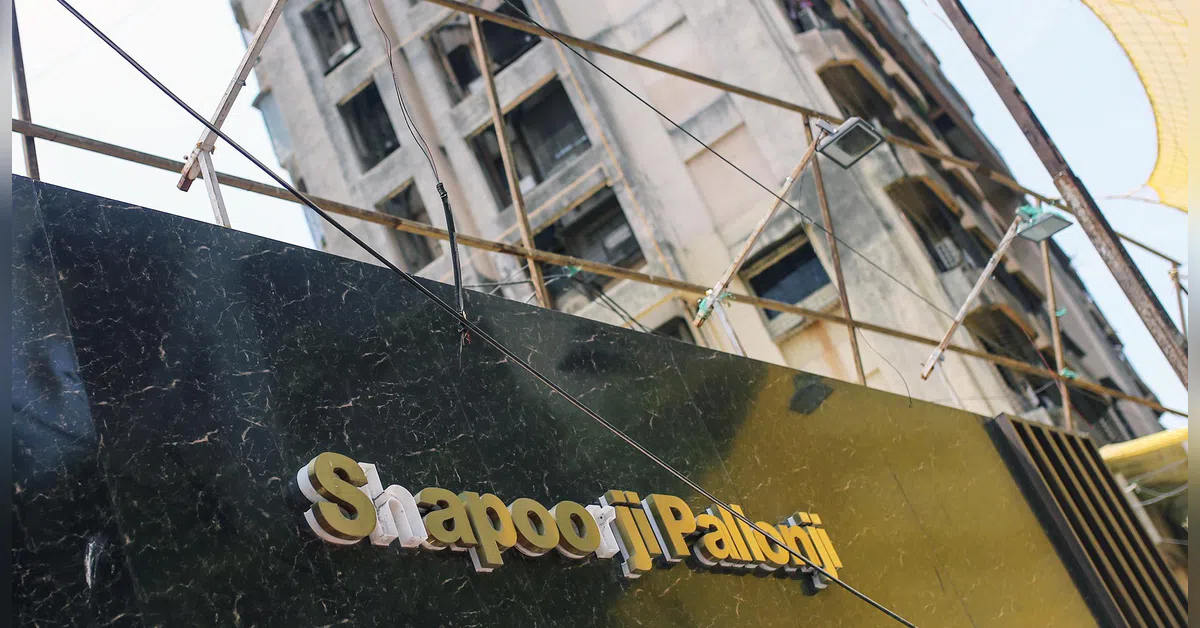
MUMBAI, India – The Shapoorji Pallonji (SP) Group, one of India’s venerable infrastructure and construction conglomerates, is on the cusp of securing a crucial financial lifeline, proposing to raise 143 billion rupees (approximately $1.5 billion) through a high-yield rupee debt offering. This ambitious fundraising effort has attracted the attention of a formidable array of global private credit investors, including prominent names such as Cerberus Capital Management, Farallon Capital Management, and Ares Management Corp., all reportedly in advanced discussions to participate.
The proposed transaction, which would see the SP Group’s unit, Goswami Infratech Pvt., issue zero-coupon bonds at an extraordinary 18.75% yield, underscores the urgency of the conglomerate’s refinancing strategy and highlights the increasing appetite among international funds for high-risk, high-reward opportunities within India’s private credit market. Sources familiar with the ongoing, private discussions indicate that while terms are still subject to change, the sheer scale and attractive yield of the offering have garnered significant interest.
This strategic debt issuance is a cornerstone of a broader initiative by the SP Group, helmed by billionaire Shapoor Mistry, to restructure and refinance its substantial existing borrowings. The conglomerate recently secured a critical extension from its creditors, pushing the repayment deadline to June, thereby creating a narrow window for this new capital injection. A successful close to this deal is not merely a financial transaction; it is being closely watched across financial markets as a litmus test for investor confidence in India’s high-yield debt segment and, more specifically, in the SP Group’s long-term financial stability and its ability to unlock value from its most prized asset: an 18.4% stake in Tata Sons, the holding company of the vast Tata Group.
However, the path to completion has encountered a slight delay. Originally targeted for mid-May, the transaction’s finalization has been pushed back by several weeks, as investors reportedly await greater clarity regarding a potential listing of Tata Sons. This pivotal stake serves as partial collateral for the proposed borrowing, and its future valuation trajectory is a significant determinant for the global funds assessing the risk profile of their potential investment.
Main Facts: A Bold Bet on High Yield
The core of the Shapoorji Pallonji Group’s current financial maneuver revolves around a substantial debt offering designed to shore up its balance sheet and provide much-needed liquidity. At 143 billion rupees, or approximately $1.5 billion, this is a significant sum in the context of India’s corporate debt market, particularly when structured as private credit. The group, a diversified conglomerate with deep roots in India’s infrastructure, real estate, and construction sectors, is seeking this capital through its subsidiary, Goswami Infratech Pvt. Ltd. The choice of a subsidiary as the issuer often serves to ring-fence specific assets or operations, providing a more defined credit profile for potential investors.
What truly distinguishes this offering, however, is the proposed yield: a staggering 18.75% on zero-coupon bonds. Zero-coupon bonds are debt instruments that do not pay interest periodically. Instead, they are sold at a discount to their face value and mature at their full face value, with the investor’s return derived from the difference between the purchase price and the redemption value. An 18.75% yield on such an instrument signifies a substantial implied discount and reflects a significant risk premium demanded by investors. This yield is exceptionally high by conventional market standards, even for emerging markets, indicating the perceived credit risk associated with the SP Group’s current financial standing. For global private credit funds, accustomed to seeking higher returns than traditional public markets offer, such a yield presents a compelling, albeit risky, proposition.
The list of potential investors underscores the global nature of this search for yield. Cerberus Capital Management, a renowned private equity firm known for its expertise in distressed investing, and Farallon Capital Management, a diversified global institutional asset manager, are reportedly in advanced stages of discussions. Ares Management Corp., another global alternative investment manager, is also said to be exploring participation. These firms represent a segment of the financial market that thrives on identifying undervalued assets or providing bespoke financing solutions to companies facing unique challenges, often demanding higher returns commensurate with the elevated risk. Deutsche Bank, serving as the arranger for this complex deal, is also expected to commit a significant portion of the capital, reportedly around $400 million, signaling its confidence in structuring and placing such a high-yield instrument. Other key players considering substantial investments include Davidson Kempner, potentially committing up to $200 million, and investment banking giants JPMorgan and Bank of America, who are also evaluating subscribing to a portion of the bonds.
The primary objective of this massive fundraise is to refinance the SP Group’s existing borrowings. Like many large Indian conglomerates that expanded aggressively during periods of easy credit, the SP Group has faced considerable debt pressures in recent years. This proposed capital injection is therefore not merely for growth but fundamentally for financial restructuring and stability. The urgency is further highlighted by the fact that the group’s creditors recently agreed to extend its current borrowing obligations only until June, placing a tight deadline on the successful execution of this new financing. The collateral underpinning this significant borrowing is a critical element: the SP Group’s 18.4% stake in Tata Sons. This holding is not just any asset; it is a legacy stake in India’s most iconic conglomerate, a stake whose value is immense but also fraught with historical complexities and current uncertainties regarding its liquidity and potential for monetization.
Chronology: A History of Financial Maneuvers and Strategic Pivots
The Shapoorji Pallonji Group’s journey to this critical juncture is rooted in a history of ambitious expansion, intertwined with periods of financial strain and strategic asset management. For decades, the SP Group has been a foundational pillar of India’s industrial and urban development, constructing iconic buildings, developing vast infrastructure projects, and diversifying into various sectors. However, like many large family-owned conglomerates, its rapid expansion often necessitated significant capital expenditure, leading to the accumulation of substantial debt.
In recent years, the group has faced increasing pressure to deleverage its balance sheet. This pressure intensified following the public and contentious ousting of Cyrus Mistry, a scion of the Shapoorji Pallonji family, from the chairmanship of Tata Sons in 2016. The ensuing legal battles, which saw the SP Group attempting to monetize its 18.4% stake in Tata Sons to ease its financial burdens, brought its debt challenges into sharp focus. While the Supreme Court ultimately upheld Tata Sons’ right to prevent the SP Group from pledging or selling its shares without the consent of the Tata trusts, the underlying need for capital remained.
In response to these persistent financial pressures, the SP Group has previously tapped into private credit markets, demonstrating a pattern of seeking alternative financing solutions beyond traditional banking channels. These earlier transactions often involved pledging portions of its valuable Tata Sons holding, albeit under complex conditions, to secure short-term liquidity. Such moves underscore the group’s reliance on its marquee asset as a financial backstop.
The immediate impetus for the current $1.5 billion debt offering stems from recent agreements with its existing creditors. Recognizing the group’s efforts and the potential for a structured refinancing, creditors had reportedly granted an extension on existing borrowing obligations, setting a new deadline in June. This extension provided the SP Group with a crucial, albeit brief, window to orchestrate a more comprehensive and sustainable refinancing package. The current proposed debt issuance is precisely that — a "broader effort" to rationalize its debt structure, extend maturities, and alleviate near-term liquidity concerns.
Initial targets for closing this significant transaction were set for mid-May. However, according to sources, the deal has encountered a delay of "a few weeks." This postponement is not attributed to a lack of interest or fundamental issues with the SP Group’s underlying assets but rather to external market dynamics. Specifically, investors are seeking "greater clarity on Tata Sons listing." The prospect of Tata Sons, India’s largest conglomerate, going public has been a subject of intense speculation for years. Such an event would likely unlock immense value for shareholders, including the SP Group, by providing a clear market valuation and potentially an avenue for future monetization of its stake. The uncertainty surrounding the timing and even the certainty of such a listing introduces a variable into the risk assessment models of potential investors, leading them to exercise caution and await further developments before committing substantial capital to a deal partially collateralized by this very stake. This waiting game highlights the intricate interplay between the SP Group’s financial health and the broader strategic decisions of the Tata Group, making the current refinancing a saga watched closely across India’s corporate landscape.
Supporting Data: The Allure of Yield and the Weight of Collateral
The proposed 18.75% yield on Shapoorji Pallonji Group’s zero-coupon bonds is a critical data point that anchors this entire transaction within the context of global private credit markets. In an environment where institutional investors are constantly searching for higher returns to meet their liabilities, particularly pension funds, endowments, and sovereign wealth funds, a yield approaching 19% stands out dramatically. While central banks globally have been tightening monetary policy, leading to a general rise in interest rates, such a high yield still significantly surpasses returns available from investment-grade corporate bonds or even most high-yield public market instruments. This reflects the specific risk profile of the SP Group, its current debt load, and the bespoke nature of private credit deals, which often carry higher coupons due to their illiquidity, complexity, and the heightened credit risk involved. For a sophisticated investor like Cerberus or Farallon, this yield is not just attractive; it compensates for the substantial due diligence required and the potential for a longer holding period compared to publicly traded securities.
The structure of zero-coupon bonds, where investors purchase them at a discount and receive the full face value at maturity, defers the actual cash outflow for the issuer until the bond matures. This can be advantageous for companies like the SP Group that might be managing tight cash flows in the near term, allowing them to raise capital without the immediate burden of periodic interest payments. However, it also means that the "effective" interest accrues over time, leading to a significant lump sum payment at the end of the bond’s term. The implied discount for an 18.75% yield on a zero-coupon bond, depending on its tenor, would be substantial, allowing investors to acquire the debt at a deeply reduced price relative to its eventual redemption value.
The partial backing of the borrowing by the SP Group’s 18.4% stake in Tata Sons is arguably the most crucial piece of supporting data for this deal. This stake is a generational asset, estimated to be worth tens of billions of dollars, given Tata Sons’ controlling interest in a sprawling empire that includes listed giants like Tata Consultancy Services (TCS), Tata Motors, Tata Steel, and Titan. The sheer value of this underlying collateral provides a significant comfort factor for potential lenders, acting as a powerful incentive despite the SP Group’s credit challenges. However, the legal complexities and the historical feud with the Tata Group have rendered this stake largely illiquid for the SP Group. The Supreme Court’s ruling preventing its easy sale or pledge without Tata Sons’ consent creates a unique challenge. This means that while the value is undoubtedly there, its "unlocking" is contingent on a listing or a negotiated buyback, both of which are uncertain.
This uncertainty is precisely why investors are "awaiting greater clarity on Tata Sons listing." A public listing of Tata Sons would immediately provide a transparent market valuation for the SP Group’s stake, making it easier to assess its true collateral value and potentially offering a clear exit route for investors if the SP Group were to default or seek further refinancing. Without this clarity, investors are forced to apply a higher discount rate to the collateral’s theoretical value, thus demanding a higher yield on the debt. The delay in the transaction, therefore, reflects a strategic pause by sophisticated investors who understand the leverage they hold in such a bespoke financing arrangement.
Specific commitments from global players highlight the robust demand for such opportunities. Farallon Capital Management, a hedge fund with a long history of opportunistic investing, is reportedly considering an investment of at least $300 million, signaling a strong conviction in the deal’s risk-reward profile. Cerberus Capital Management, a distressed asset specialist, is in discussions to buy around $150 million. Deutsche Bank’s expected commitment of about $400 million, as the arranger, not only demonstrates its confidence in the deal’s viability but also serves as a strong signal to other potential investors. Davidson Kempner, another global alternative investment manager, is also eyeing a significant allocation of up to $200 million. The potential participation of JPMorgan and Bank of America, two of the world’s largest investment banks, further underscores the institutional interest and the sheer size of the capital pool willing to engage in such high-yield private transactions. These commitments collectively indicate a substantial portion of the $1.5 billion target is already being provisioned, suggesting a high likelihood of the deal successfully closing once the "clarity" on Tata Sons’ listing is addressed or deemed sufficiently priced into the terms. This deal is thus a vivid illustration of the growing prominence of the private credit market as a flexible and potent source of capital for Indian corporates facing unique financing requirements.
Official Responses: A Wall of Silence
In the high-stakes world of corporate finance, particularly when deals are in their private and sensitive negotiation phases, official commentary is often scarce. True to form, representatives for the Shapoorji Pallonji Group did not immediately respond to requests seeking comments on the proposed $1.5 billion debt offering and the ongoing discussions with global investors. This lack of immediate public statement is standard practice for companies engaged in complex financial restructuring, where premature disclosures can impact negotiations or market perceptions.
Similarly, the major financial institutions and investment firms reportedly involved in the transaction have largely maintained a professional silence. JPMorgan and Davidson Kempner explicitly declined to comment when contacted, adhering to their policies regarding private client matters and ongoing deal discussions. Emails sent to Deutsche Bank, which is serving as the arranger for the deal and is expected to commit a significant portion of the capital, remained unanswered. Likewise, inquiries directed to the offices of Cerberus Capital Management, Ares Management Corp., and Farallon Capital Management also did not elicit immediate responses. Bank of America, another institution reportedly considering subscribing to a portion of the bonds, also remained unresponsive to media queries.
This collective silence, while standard, underscores the sensitive nature of the discussions. The terms of the potential offering, including the yield, specific investor allocations, and the intricate details concerning the collateral, are still being finalized. Any public statements at this stage could potentially disrupt the delicate balance of negotiations, influence investor sentiment, or even attract unwanted regulatory scrutiny. The market will likely have to wait for an official announcement from the SP Group itself, or from its financial advisors, once the deal is fully concluded and all terms are legally binding. Until then, the intricate dance of private negotiations and the careful balancing of risk and reward continue behind closed doors.
Implications: A Critical Juncture for SP Group and India’s Debt Market
The successful conclusion of this $1.5 billion high-yield debt offering carries profound implications, not just for the Shapoorji Pallonji Group but also for the broader landscape of India’s corporate debt market and the evolving role of global private credit.
For the Shapoorji Pallonji Group, this transaction is nothing short of a make-or-break moment. A successful fundraise would immediately address its near-term liquidity concerns, providing crucial breathing room to manage its existing debt obligations and allowing it to pivot from a defensive stance to one focused on strategic growth and value creation. It would signal to the market, and importantly to its other stakeholders, that the group can access significant capital even under challenging circumstances, leveraging its assets and reputation. This capital infusion could enable the group to stabilize its core businesses, invest in ongoing projects, and potentially explore new opportunities. Furthermore, securing this financing would represent a significant validation of the group’s ability to unlock value from its 18.4% stake in Tata Sons, even amid the prolonged uncertainty surrounding a potential listing. It demonstrates that the market is willing to assign value to this illiquid but immensely valuable asset, provided the returns are sufficiently compelling.
For the participating global investors, this deal represents a classic high-risk, high-reward proposition. The 18.75% yield offers a substantial return profile that aligns with the mandates of distressed asset funds and opportunistic credit providers. For firms like Cerberus and Farallon, known for their prowess in complex, special situations, the SP Group deal provides an opportunity to deploy significant capital into a large, established Indian conglomerate with a unique collateral package. While the risks associated with the high yield and the illiquidity of the Tata Sons stake are considerable, the potential for outsized returns, especially if the Tata Sons listing materializes or the SP Group successfully navigates its restructuring, is a powerful draw. The deal could also set a precedent for how global private credit funds evaluate and structure financing for other Indian conglomerates facing similar debt challenges but possessing valuable, albeit complex, assets.
For the Indian high-yield debt market, this transaction is a significant stress test and a potential game-changer. It demonstrates the depth of global capital willing to flow into India for specific, high-return opportunities, even in the private credit space. As traditional bank lending faces increasing regulatory scrutiny and public bond markets have their own set of constraints, private credit is emerging as a vital alternative funding source for Indian companies. The sheer size of this deal and the involvement of such prominent global players could encourage other Indian corporates to explore similar avenues, thereby deepening and diversifying India’s corporate debt market. It also highlights the growing sophistication of financial engineering required to bridge the gap between issuer needs and investor demands in an evolving economic landscape.
The implications for Tata Sons are indirect but notable. While Tata Sons is not the issuer, its potential listing is a critical external factor influencing the SP Group’s financing. Any progress or clarity on a Tata Sons IPO would directly impact the perceived value and liquidity of the SP Group’s collateral, thereby influencing the ease of future refinancing or monetization strategies. The ongoing financial maneuvers of a major shareholder like the SP Group naturally draw attention, and while unlikely to directly impact Tata Sons’ operations, they certainly add another layer to the complex shareholder dynamics of India’s largest conglomerate.
In conclusion, the Shapoorji Pallonji Group’s quest for $1.5 billion through high-yield zero-coupon bonds is a multifaceted financial saga. It embodies the pressures faced by legacy Indian conglomerates, the strategic importance of flagship assets like the Tata Sons stake, and the growing influence of global private credit in emerging markets. Its successful closure will not only provide a crucial lifeline to the SP Group but also serve as a landmark transaction, shaping investor appetite and financing structures in India’s dynamic corporate landscape for years to come.
