

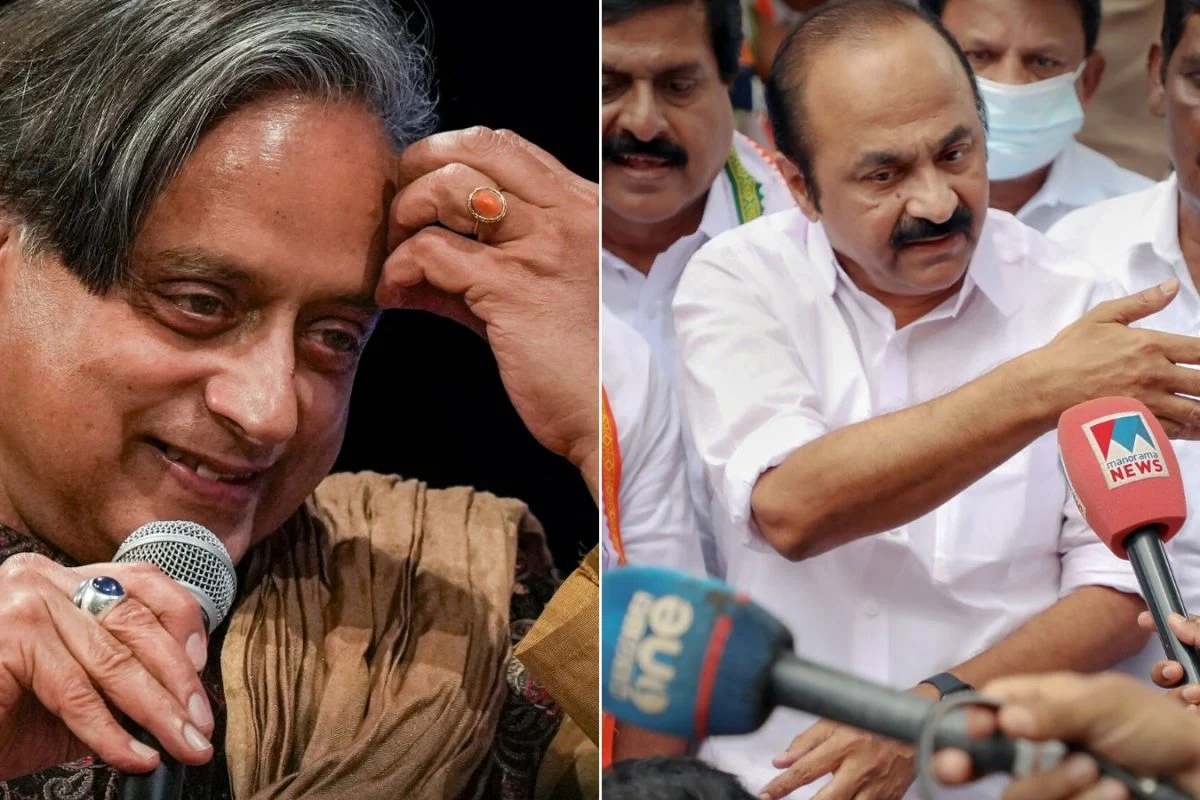
New Delhi, India – As Kerala heralds a new political era with the swearing-in of V.D. Satheesan as its Chief Minister on May 18, a significant figure in the state’s political landscape, Thiruvananthapuram MP Dr. Shashi Tharoor, will be conspicuously absent. His absence, announced through a social media post, cites a prestigious academic engagement in the United States, yet it has inevitably ignited discussions within political circles regarding its timing and underlying implications for the intricate dynamics of the Kerala Congress.
The "Battle for the Throne," a period of intense speculation and internal jostling within the Congress party, has seemingly reached its resolution with Satheesan’s elevation. However, Tharoor’s scheduled participation in a dual milestone at his alma mater, the Fletcher School of Law & Diplomacy at Tufts University, has ensured that the embers of internal friction and ambition continue to glow, albeit from a distance. While the Lok Bhavan in Thiruvananthapuram prepares for a historic transition of power, Dr. Tharoor will be precisely 8,112 miles away, celebrating a half-century of personal history and intellectual engagement in the United States.
V.D. Satheesan: The New Helm of Kerala Congress
The selection of V.D. Satheesan as Kerala’s new Chief Minister marks a pivotal moment for the Congress party in the state, signaling a potential shift in its leadership paradigm. Satheesan, a seasoned politician with a reputation for articulate debate and a clean public image, emerged as the consensus candidate after days of intense deliberations within the party’s high command and extensive consultations with state leaders. His appointment is seen by many as a strategic move to infuse new energy and a sense of direction into the party, which has often been plagued by factionalism.
Satheesan’s journey to the top has been a steady ascent, characterized by diligent parliamentary work and a strong connection with the grassroots. Hailing from Paravur, he has consistently demonstrated a capacity for leadership and a nuanced understanding of Kerala’s complex social and political fabric. His elevation is a testament to his persistent efforts and his ability to navigate the often-turbulent waters of state politics, positioning him as a leader capable of uniting diverse factions and steering the party towards a cohesive future. His mandate is not merely to govern but also to rejuvenate the party’s organizational structure and electoral prospects in the long run.
Tharoor’s Absence: A Scheduled Engagement Across Continents
Dr. Shashi Tharoor, known globally for his intellectual prowess, diplomatic background, and prolific writings, publicly clarified his unavoidable absence from the swearing-in ceremony. Taking to X (formerly Twitter), the Thiruvananthapuram MP, whose name was also floated during the Chief Ministerial candidate discussions, revealed his commitment to a significant academic engagement in Boston.
"I’m sorry to be missing the swearing-in ceremony of my @incKerala colleague and new CM of Kerala @vdsatheesan. I am in Boston this weekend to deliver the Commencement address at the graduation ceremony of my alma mater, the Fletcher School of Law & Diplomacy at @TuftsUniversity," Tharoor posted. He further elaborated on the dual nature of his visit, stating it was also to participate in the 50th-anniversary reunion of his graduating class. This confluence of delivering a prestigious commencement address and celebrating a personal milestone makes his reason, on the surface, entirely understandable and indeed, unassailable. Such an honor, particularly after five decades, is a rare and career-defining moment that few public figures would willingly decline.
The Road to the Throne: Kerala Congress’s Internal Saga
The period leading up to V.D. Satheesan’s selection as Chief Minister was characterized by intense politicking and a delicate balancing act within the Kerala Pradesh Congress Committee (KPCC) and the All India Congress Committee (AICC). The "Battle for the Throne" was less a direct confrontation and more a strategic dance, with multiple aspirants vying for the coveted position.
Post-Election Deliberations and the High Command’s Role
Following the electoral victory, the Congress high command in New Delhi initiated a rigorous process of consultations. Observers from the central leadership were dispatched to Kerala to gauge the mood of the newly elected MLAs, senior party functionaries, and allied partners. These deliberations, often behind closed doors, involved intricate negotiations and a careful assessment of each candidate’s strengths, weaknesses, and their potential to unite the disparate factions within the state unit. The party leadership was acutely aware of the need to project a unified front, especially after a hard-fought election, and avoid any appearance of internal discord that could undermine the new government’s stability.
Contenders and Calculations: A Field of Aspirants
While V.D. Satheesan eventually emerged victorious, the race was not without other prominent contenders. Most notably, AICC General Secretary K.C. Venugopal, a powerful figure within the national Congress hierarchy and a close confidante of the Gandhi family, was widely perceived as a strong candidate. His national stature and proximity to the central leadership made him a formidable choice, and reports suggested significant lobbying efforts on his behalf. However, the state unit, particularly many MLAs, reportedly favored a leader with a more direct and long-standing connection to Kerala’s legislative and political landscape, leading to a complex tug-of-war between central preferences and state aspirations.
Dr. Shashi Tharoor’s name was also intermittently floated in media speculation as a possible dark horse candidate. His immense popularity, intellectual appeal, and global recognition presented a different kind of leadership proposition. While he had largely maintained an ambiguous stance, often stating, "we have enough contenders," the very mention of his name highlighted a desire within certain sections of the party and the public for a fresh, unconventional approach to state leadership. His national and international profile, however, also raised questions about his suitability for the intensely localized and grassroots-driven politics of Kerala. The ultimate decision to back Satheesan reflected a nuanced understanding by the high command of the need for a leader who could effectively bridge the gap between national party directives and regional political realities.
The High Command’s Verdict: Prioritizing Stability
The eventual selection of V.D. Satheesan was a carefully weighed decision aimed at ensuring stability and fostering unity within the state Congress. It was a clear signal that the party prioritized a leader who enjoyed broad support among the state’s MLAs and had a proven track record in Kerala politics. The outcome also meant that the central leadership, particularly those who might have preferred Venugopal, had to "eat humble pie" and respect the collective will emerging from the state unit, thereby empowering the regional leadership. This decision, while resolving the immediate leadership question, laid the groundwork for future dynamics within the party, particularly concerning the roles of those who were considered but not chosen.
Tharoor’s Public Statement: Academics and Anniversaries
Dr. Tharoor’s public clarification via social media was precise and direct, emphasizing the significance of his commitment. The Fletcher School of Law & Diplomacy at Tufts University is globally recognized as one of the oldest and most prestigious graduate schools of international relations in the United States. Its alumni network includes numerous ambassadors, diplomats, heads of state, and leaders in various international organizations and corporate sectors. For Tharoor, a distinguished alumnus himself, to be invited to deliver the commencement address—a keynote speech to graduating students—is an extraordinary honor, symbolizing recognition of his career achievements and intellectual contributions on a global stage.
Furthermore, his participation in the 50th-anniversary reunion of his graduating class adds a deeply personal layer to his absence. Such reunions are not merely social gatherings but occasions for reflection, networking, and celebrating enduring bonds forged during formative years. The confluence of these two events—a high-profile public address and a deeply personal milestone—provides a compelling and, as many observers noted, "unassailable" reason for his absence. His concluding remark in the tweet, "An occasion for celebrating the past in the US even as I look forward to the future in Kerala," encapsulated the duality of his current focus, subtly linking his global endeavors with his enduring commitment to his home state.
The Implications: Beyond the Surface of Absence
In the highly charged and symbolic arena of Kerala Congress politics, timing is seldom regarded as a mere coincidence. While Tharoor’s reasons for absence are academically impeccable, his physical distance from the swearing-in ceremony has spurred a deeper analysis of its political implications.
The Optics of Absence: A Strategic Pause?
Tharoor’s absence, intentional or not, offers a convenient "strategic pause" from the immediate optics of the internal party dynamics. The leadership tussle, particularly the nuanced "KC Venugopal vs. VD Satheesan fallout," created a charged atmosphere within the party. While the central leadership was compelled to acknowledge the strong preference for Satheesan over a high-profile national figure like Venugopal, Tharoor’s presence would have inevitably placed him squarely within the immediate aftermath of this resolution. His absence allows him to remain untouched by the visible awkwardness or potential undercurrents of discontent that might accompany such a significant leadership transition.
This strategic distance can be interpreted in several ways. For some, it might be seen as a shrewd move to avoid taking sides or being perceived as aligned with any particular faction during a moment of delicate power consolidation. For others, it reinforces his image as an independent voice, someone who operates on a different plane, prioritizing global commitments while maintaining a connection to local politics. In a party often defined by entrenched groups, maintaining a degree of detachment can, paradoxically, enhance one’s political capital.
The "Outsider-Insider" Conundrum
There is a subtle irony in Tharoor celebrating a "reunion" in Boston while his own party in Kerala attempts a messy reunion of its warring factions. This situation vividly highlights Tharoor’s unique position as the "outsider-insider." He is an elected representative from Kerala, deeply committed to his constituency and the state, yet his illustrious career as an international diplomat and his intellectual persona often set him apart from the traditional, grassroots-focused politicians of Kerala. He operates on a global plane, engages with international thought leaders, and contributes to national policy debates, even as he eyes the local "future" in Kerala.
This dual identity has often been a source of both strength and challenge for Tharoor. It allows him to bring a fresh perspective and a broader vision to state politics, but it also sometimes leads to him being perceived as distant from the daily grind of state-level party organization, which is dominated by established "A" and "I" groups (the traditional factions within Kerala Congress). His overseas trip, while legitimate, inadvertently reinforces this image, positioning him as a leader who transcends the immediate provincial squabbles, even as he remains a crucial player in the state’s political narrative.
Expert Perspectives: Decoding the Silence
Political analysts offer varied interpretations of Tharoor’s absence and its potential long-term implications. Dr. Renjith S. Kumar, a political science professor at Kerala University, suggests, "Tharoor’s move, whether coincidental or calculated, allows him to maintain a degree of strategic ambiguity. In a party where factionalism is endemic, a leader who can rise above the immediate fray often gains respect. It’s a way of saying, ‘My contributions are not limited to the immediate power struggles.’"
Conversely, a veteran journalist and political commentator, Ms. Meena Gopal, posits, "While the academic reason is valid, the timing is undeniably significant. For a leader who was himself considered for the CM post, missing the swearing-in of the chosen candidate can be interpreted in multiple ways. It could be seen as a subtle statement of independence, or perhaps, a missed opportunity to demonstrate unequivocal solidarity with the new leadership at a crucial juncture."
Sources close to the party, who wished to remain anonymous, hinted at the underlying tension. "Tharoor has always carved his own path. His absence, while explained, will still be discussed within the party. Satheesan, as an independent-minded CM, will naturally look to consolidate his own power base. The dynamic between these two prominent figures will be keenly watched."
Future Tense: Tharoor’s Kerala Ambitions
The closing line of Tharoor’s X post, emphasizing his look towards the "future in Kerala," has not gone unnoticed. It serves as a subtle, yet powerful, declaration of his continued political aspirations and commitment to the state. With V.D. Satheesan now firmly established as a powerful and independent-minded Chief Minister, the precedent for leaders who don’t fit the traditional "subservient" mould has been set. This new dynamic raises compelling questions about Tharoor’s role and trajectory in the evolving political landscape of Kerala.
The Significance of "Future in Kerala"
What does Tharoor’s "future in Kerala" entail? It could signify a desire for a more active and prominent role within the state’s political machinery, beyond his current capacity as a Lok Sabha MP. This might involve a cabinet position in the new government, a significant organizational role within the KPCC, or even positioning himself for a future leadership bid. The statement is ambiguous enough to allow for multiple interpretations, yet clear enough to signal his enduring ambition and commitment to the state’s political narrative. It suggests that while his global engagements are important, his political heart remains firmly in Kerala.
A New Dynamic with Satheesan
The relationship between Dr. Tharoor and the new Chief Minister, V.D. Satheesan, will be a crucial subplot in Kerala politics. Satheesan, known for his assertive leadership, is likely to stamp his authority firmly on the state administration and the party. The question is whether Tharoor, with his distinct brand of politics, will be seamlessly integrated into this new structure or if he will continue to operate as an influential voice from a slightly external position. The success of the Congress government will partly depend on its ability to leverage the strengths of all its prominent leaders, including Tharoor’s national and international standing.
Potential Roles and Challenges
Tharoor’s potential roles could range from a prominent ministerial portfolio, perhaps leveraging his expertise in external affairs or cultural policy, to being a key strategist and intellectual voice for the party, shaping its policy discourse. However, integrating a figure of Tharoor’s stature and independent thought into the state’s often hierarchical and faction-driven political culture will present its own set of challenges. He will need to navigate the expectations of the state unit, align with the Chief Minister’s vision, and continue to engage effectively with his Thiruvananthapuram constituency, all while maintaining his unique public persona.
Conclusion: The Unfolding Narrative
As the curtains rise on V.D. Satheesan’s Chief Ministership in Kerala, the narrative is undeniably rich with immediate triumphs and lingering questions. Dr. Shashi Tharoor’s absence, a blend of legitimate academic commitment and political symbolism, underscores the intricate layers of ambition, strategy, and personal trajectory that define Indian politics. While one chapter of leadership uncertainty has closed for the Kerala Congress, another complex narrative unfolds, focusing on unity, governance, and the evolving roles of its most prominent figures. The "future in Kerala" that Tharoor speaks of remains an open book, its pages yet to be written, promising an intriguing dynamic in the state’s political theatre for years to come.
