

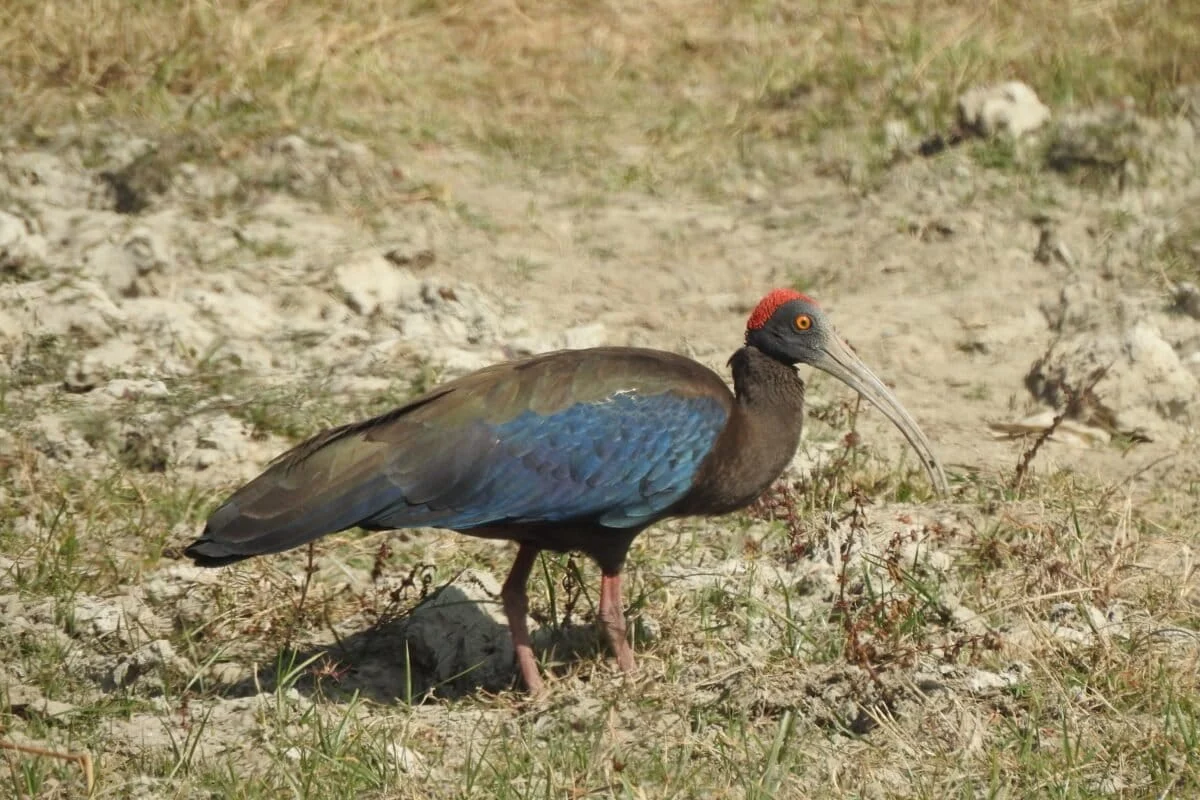
In the sun-drenched landscapes of Udaipur, Rajasthan, a common sight is the red-naped ibis—a sturdy, dark-plumaged wading bird with a distinctive crimson patch on its crown. While these birds have long been part of the city’s urban and peri-urban tapestry, a groundbreaking study has revealed that they are carrying more than just the weight of their ecological roles. They are carrying a silent, microscopic threat: multidrug-resistant bacteria.
Antibiotic resistance (AMR), often dubbed the "silent pandemic," is typically framed as a crisis within the confines of human hospitals and intensive livestock farming. However, research emerging from the Wildlife Research Laboratory at Mohanlal Sukhadia University suggests that the boundaries of this crisis are porous. By foraging in contaminated water, scavenging through human waste, and navigating the interface between the wild and the urban, the red-naped ibis has become an inadvertent reservoir and potential disperser of bacteria that no longer succumb to standard medical treatments.
Main Facts: The Ibis as a Bio-Indicator
The red-naped ibis (Pseudibis papillosa) is a resident, non-migratory species. Unlike many other waterbirds that travel thousands of miles across continents, the ibis stays local, making it a perfect subject for studying the specific environmental health of a region. Its opportunistic diet—ranging from insects and small reptiles to carrion and garbage—places it at the very heart of the wildlife-human-environment interface.
The study, led by a team of dedicated microbiologists and wildlife biologists, sought to determine whether these birds were picking up antibiotic-resistant bacteria from their surroundings. The findings were sobering: diverse bacterial strains, including those resistant to multiple classes of antibiotics, were present in the birds’ faecal matter.

Why the Red-Naped Ibis?
Vijay Kumar Koli, an assistant professor and in-charge head of the Wildlife Research Laboratory, explains that the choice of the ibis was strategic. "It was not simply a matter of choosing a common and easily observable bird," Koli notes. "Its year-round presence, broad habitat use, feeding behaviour, and frequent contact with human-influenced environments make it a useful species for investigating how environmental bacteria and antibiotic resistance may circulate."
Because these birds frequent agricultural fields (where they may encounter livestock waste), wetlands (often contaminated by sewage), and garbage dumps, they act as ecological sponges, absorbing the microbial profile of the landscape. When they move from a waste site to a nesting tree in a residential area, they potentially transport these resistant strains via their droppings.
Chronology: A Year of Systematic Sampling
The research was conducted over a full annual cycle, providing a comprehensive look at how bacterial loads shift with the changing Indian seasons. Between July 2022 and June 2023, the team collected 45 faecal samples, meticulously divided into three phases: 15 samples each for the summer, monsoon, and winter seasons.
The Challenge of Non-Invasive Collection
One of the primary hurdles for the researchers was obtaining samples without causing distress to the birds or altering their natural behavior. The team opted for a strictly non-invasive approach.

Namita Ashish Singh, from the Applied Microbiology and Food Safety Laboratory at Mohanlal Sukhadia University, describes the process: "We did not capture or handle the ibises. Instead, when an ibis was encountered, it was observed from a distance of more than 15 metres until it defecated. The fresh faecal material was collected immediately after the bird left the site using a sterile swab in saline solution."
This methodology ensured that the bacteria identified were a true reflection of the bird’s natural gut flora and environmental exposure, rather than a result of stress-induced shedding or contamination from handling.
Laboratory Analysis and DNA Sequencing
Once the samples were secured, they underwent a rigorous multi-step analysis:
- Isolation: Researchers first isolated coliforms—bacteria like E. coli that are standard indicators of fecal contamination.
- Biochemical Testing: The physical and chemical traits of the bacteria were documented.
- Genomic Identification: The team used DNA sequencing to precisely identify the bacteria. This resulted in the identification of 60 bacterial isolates representing eight distinct genera.
- Susceptibility Testing: 30 representative isolates were subjected to the Kirby-Bauer disk diffusion method to see which antibiotics could still kill them.
Supporting Data: Seasonal Shifts and Resistant Strains
The data revealed a complex relationship between the environment and the birds’ internal microbiology. The researchers found that the bacterial communities were not static; they ebbed and flowed with the weather.

Seasonal Variations
- Winter: This season saw the highest coliform counts. The researchers suggest that the concentration of birds around limited water sources or specific roosting sites during the cooler months might contribute to higher bacterial density.
- Monsoon: This season boasted the highest bacterial diversity. The rains likely wash a variety of terrestrial bacteria—from soil, animal waste, and urban runoff—into the wetlands where the ibises forage, introducing new taxa to their digestive systems.
- Summer: This season showed the lowest bacterial diversity, possibly due to the harsh heat and the drying up of smaller water bodies, which limits the variety of foraging sites.
Key Bacterial Findings
- Escherichia coli (E. coli): The most dominant bacterium, accounting for nearly half (29 of 60) of the isolates.
- *Enterobacter and Klebsiella: These were also frequently detected. Both are known to cause opportunistic infections in humans.
- Novel Taxa: The study made a global scientific contribution by identifying four bacterial taxa never before reported in the red-naped ibis: Enterobacter mori, Enterobacter soli, Citrobacter freundii, and Leclercia adecarboxylata. The presence of E. mori (typically found in mulberry roots) and E. soli (found in soil) confirms that the birds are picking up a significant portion of their microbiome directly from the earth and plants while foraging.
The Resistance Profile: A Public Health Concern
The most alarming aspect of the data was the antibiotic susceptibility results. The researchers tested the isolates against several classes of drugs, with the following results:
- Multidrug Resistance (MDR): 40% of the tested isolates were classified as multidrug-resistant, meaning they were resistant to at least three different classes of antibiotics.
- The Penicillin Group: 50% of isolates were resistant to amoxicillin, and 30% showed intermediate resistance to ampicillin.
- Last-Resort Concerns: 16% of isolates showed resistance to imipenem, a carbapenem antibiotic. Carbapenems are often considered "drugs of last resort" for treating severe, multidrug-resistant infections in human hospitals.
- Universal Resistance: All Enterobacterales isolates were resistant to linezolid and rifampicin.
Conversely, there was some "good" news: all isolates remained susceptible to chloramphenicol, ciprofloxacin, cefepime, and ofloxacin, suggesting that these specific drugs might still be effective against the strains carried by the ibises.
Official Responses and Expert Perspectives
The research team is careful to frame their findings within the broader context of urban ecology and public health, avoiding alarmism while emphasizing the need for vigilance.
Vijay Kumar Koli stresses that the ibis should not be demonized. "Our study does not establish that the ibis is a major source of antibiotic resistance or that it transmits resistant bacteria to humans or livestock," he clarifies. "Rather, it indicates that the species can carry resistant bacteria and may potentially contribute to their environmental dispersal."

This distinction is vital. The birds are not the creators of the resistance; they are the messengers. They pick up the resistance from human-driven pollution—untreated sewage, pharmaceutical runoff, and agricultural waste—and move it across the landscape.
Alka Kumari, the study’s lead author and a research scholar at Mohanlal Sukhadia University, highlights the connectivity revealed by the research. "Wild birds move across wetlands, agricultural fields, and urban areas. Detecting multidrug-resistant bacteria in these birds highlights the importance of looking at antimicrobial resistance through a ‘One Health’ lens."
The "One Health" approach is a global strategy that recognizes that the health of people is closely connected to the health of animals and our shared environment. When a bird in Udaipur carries resistance to a hospital-grade antibiotic like imipenem, it signals a breakdown in the environmental "barrier" that should ideally keep such resistance contained.
Implications: Waste Management and the Road Ahead
The presence of MDR bacteria in a common bird species has significant implications for how India, and the world, manages its urban ecosystems and waste.

The Role of Urban Infrastructure
The fact that these ibises forage in garbage and near carrion is a direct link to human waste management practices. Open landfills and inefficient sewage treatment in growing cities like Udaipur create "hotspots" where bacteria can mingle, swap genetic material (horizontal gene transfer), and develop resistance. Improving waste infrastructure is, therefore, not just an aesthetic or logistical issue—it is a public health necessity to curb the spread of AMR.
Limitations and Future Research
The researchers acknowledge that their study is a snapshot in time and space. With only 45 samples from one city, the findings cannot be generalized to the entire global population of red-naped ibises. Furthermore, because the study focused on "culturable" bacteria (those that can be grown in a lab), it likely missed many other types of bacteria and resistance genes that are harder to grow.
To address this, the team’s next steps include:
- Genomic Analysis: Moving beyond just identifying the bacteria to identifying the specific genes that confer resistance. This will help determine if the resistance in the birds is genetically identical to the resistance found in local hospitals.
- Comparative Studies: Comparing birds in "pristine" natural habitats with those in heavily urbanized areas to quantify exactly how much human proximity increases the risk of carrying MDR bacteria.
- Expanded Species Range: Investigating other urban-adapted birds, such as kites and crows, to see if they follow similar patterns.
Conclusion
The red-naped ibises of Udaipur are living barometers of our environmental health. Their presence in our cities is a sign of a hardy, adaptable species, but their internal microbial load is a warning. As they fly from the edges of our landfills to the trees above our homes, they remind us that in the world of microbiology, there are no borders. Addressing antibiotic resistance requires more than just better prescriptions in clinics; it requires a fundamental shift in how we manage the waste and water that we share with the wild.
