In a move that signals a significant shift in its premium electric vehicle (EV) strategy, Tata Motors has reportedly pivoted the underlying architecture for its highly anticipated Avinya range. While the project was initially slated to utilize Jaguar Land Rover’s (JLR) Electrified Modular Architecture (EMA), the Indian automotive giant is now moving toward a modified version of the platform underpinning the recently resurrected ‘Freelander’ EV. This architecture is a product of the long-standing joint venture between JLR and the Chinese automotive powerhouse, Chery.
This strategic realignment marks a crucial chapter in Tata Passenger Electric Mobility’s (TPEM) journey to dominate the premium EV segment in India and potentially in global markets. The shift reflects a pragmatic approach to balancing high-end technology with commercial viability and speed-to-market.
1. Main Facts: The Structural Shift of the Avinya Project
The Avinya brand, derived from the Sanskrit word for "Innovation," represents Tata Motors’ leap into the "Born Electric" era—vehicles designed from the ground up as EVs rather than being adapted from internal combustion engine (ICE) platforms. The centerpiece of this pivot is the transition from the EMA platform to the Chery-developed EOX platform (internally referred to as the iMAX platform).
Key Developments:
- The Lead Model: The first vehicle to emerge from this new strategic direction will be the Avinya X, a high-performance Coupe SUV. It is expected to be followed by a flagship three-row premium electric SUV.
- Platform Specifics: The EOX/iMAX architecture is a modular, high-end EV platform capable of supporting an 800V electrical system. This allows for ultra-fast charging capabilities (up to 350 kW DC), significantly reducing downtime for users.
- Manufacturing Hub: Production is slated for the state-of-the-art facility in Panapakkam, Tamil Nadu. This plant is a joint investment between Tata Motors and JLR, representing a combined commitment of approximately ₹9,000 crore.
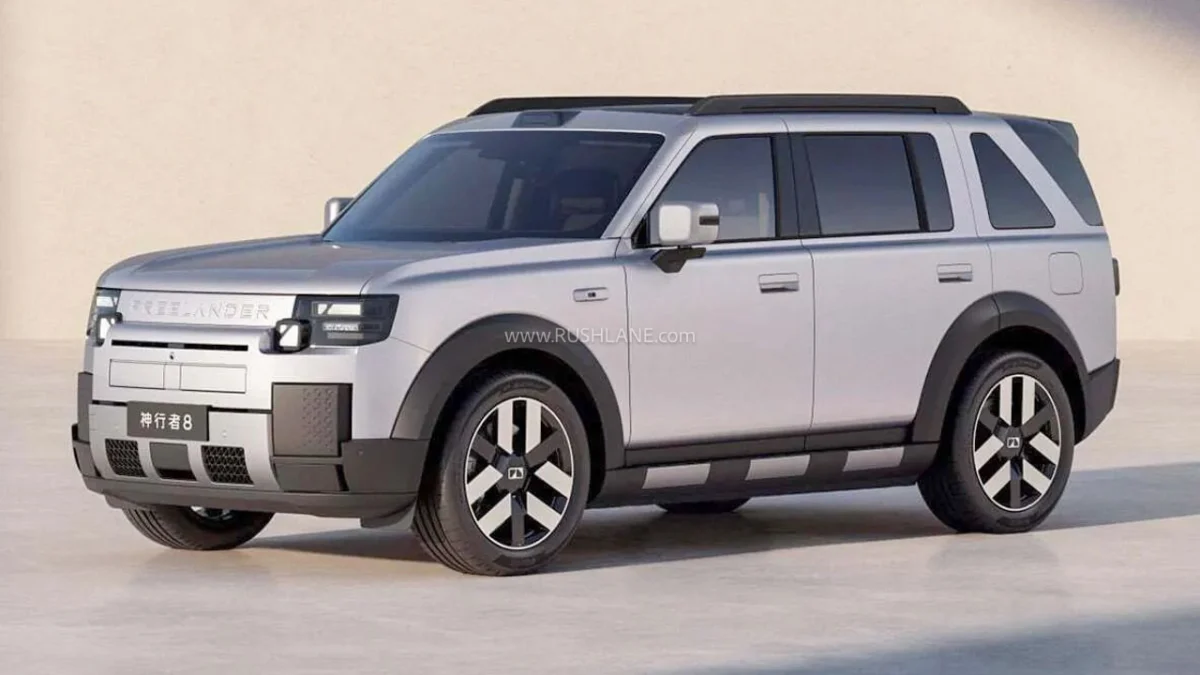
- The Chery Connection: The platform was originally developed by Chery and is currently being utilized by the Chery-JLR (CJLR) joint venture in China to relaunch the Freelander brand as a dedicated EV entity.
2. Chronology: From Concept to Strategic Realignment
To understand the weight of this decision, one must look at the timeline of the Avinya’s development and Tata’s broader EV roadmap.
- April 2022: Tata Motors unveils the Avinya Concept. It showcases a radical "Pure EV" design with a long wheelbase, lounge-like interiors, and a focus on minimalist luxury. At this stage, the platform details remain fluid, but the intent is clear: a global-standard EV.
- Late 2023: Tata Motors officially announces a Memorandum of Understanding (MoU) with JLR to license the EMA platform. This move is hailed as a major synergy between the parent company and its British subsidiary, promising JLR-level sophistication for Indian consumers.
- Early 2026: Tata Motors enjoys a period of intense market activity. The company begins deliveries of the reborn Sierra SUV and refreshes its volume drivers, including the Punch EV and Tiago EV facelifts. However, internal evaluations of the EMA-based Avinya project begin to raise red flags regarding cost-to-volume ratios.
- Mid-2026: Reports emerge that the EMA strategy has been sidelined. The high cost of the EMA architecture—designed for JLR’s luxury price points—proves difficult to justify for the projected sales volumes of the Avinya in the Indian market.
- Late 2026/Early 2027 (Projected): Engineering validation for the new EOX-based platform begins. Prototype testing is scheduled to commence, shifting the official launch and production timeline of the Avinya X to early or mid-2027.
3. Supporting Data and Technical Specifications
The decision to switch platforms is not merely a cost-cutting measure; it is a technical optimization. The Chery EOX platform offers a competitive edge that aligns closely with the needs of the Indian premium market.
Architecture and Charging
The EOX platform is designed for versatility. By supporting an 800V architecture, Tata can position the Avinya X against global rivals like the Hyundai Ioniq 5 and Kia EV6, but with a more competitive cost structure. The 350 kW DC fast-charging capability means that the vehicle could theoretically add 200-250 kilometers of range in just 15 to 20 minutes.
Battery and Powertrain
The Avinya range will likely source its energy cells from Agratas, Tata Group’s dedicated battery manufacturing venture.
- Capacity: Expected battery packs will range between 65 kWh and 80 kWh.
- Range: Given the efficiency of a dedicated EV platform, these capacities are expected to deliver a real-world range of 500 km to 650 km on a single charge.
- Drivetrain: The modular nature of the platform allows for both Single Motor (Rear-Wheel Drive) and Dual Motor (All-Wheel Drive) configurations.
Localization and Cost Management
A significant portion of the "Indian-isation" process involves adapting the suspension geometry for Indian road conditions and localizing the supply chain for components. By leveraging a platform already utilized by the CJLR joint venture, Tata benefits from existing economies of scale that the JLR-exclusive EMA platform could not provide.
4. Official Responses and Strategic Context
In a statement provided to industry analysts and publications, Tata Motors confirmed that the first Avinya vehicle, scheduled for a 2027 debut, will indeed leverage the Freelander platform produced by the Chery-JLR (CJLR) partnership.

The JLR-Chery Synergy
The use of the Freelander platform is a masterstroke of corporate diplomacy and resource sharing. JLR and Chery have operated a successful 50:50 joint venture in China for over a decade. By using this architecture, Tata Motors gains access to cutting-edge Chinese EV technology—which currently leads the world in cost-efficiency and software integration—without having to form a direct, front-facing partnership with a Chinese firm, which can be politically sensitive in the current Indian climate.
The "Born Electric" Vision
Tata Motors’ leadership has emphasized that the Avinya is not just a car but a "philosophy." The company remains committed to the high standards of safety, space, and sustainability promised at the concept’s unveiling. The shift to the EOX platform is framed as a "strategic evolution" to ensure that the final product is not only technologically superior but also accessible to the burgeoning "upper-middle" and "luxury" segments in India.
5. Implications for the Indian and Global Automotive Market
The shift in the Avinya’s DNA has far-reaching implications for Tata Motors, its competitors, and the Indian automotive landscape at large.
A Challenge to Premium Rivals
By adopting an 800V architecture, Tata is bypassing the standard 400V systems found in most current mass-market EVs. This puts the Avinya X in direct competition with premium offerings from European and Korean manufacturers. If Tata can price the Avinya X in the ₹35 lakh to ₹50 lakh bracket, it could disrupt the luxury SUV market.
The Chery Factor in India
Interestingly, Chery is also reportedly in talks or providing components to JSW Motors (the joint venture between JSW Group and MG Motor). This creates a unique situation where two of India’s biggest automotive players may be utilizing underlying technology from the same Chinese source. This commonality could lead to a localized ecosystem of suppliers for EOX-platform components, further driving down costs for Tata.
Impact on JLR’s EMA Platform
The decision to move Avinya away from the EMA platform suggests that JLR will keep that architecture strictly for its high-end luxury EVs (such as the electric Range Rover and Defender). This maintains the "exclusivity" of the JLR brand while allowing Tata Motors to scale up using a more volume-appropriate, yet still highly advanced, platform.
Export Potential
With the EOX platform meeting global standards for safety and performance, the Avinya X becomes a viable candidate for export. Tata Motors has long harbored ambitions to return to global markets (beyond small-scale commercial vehicles), and a sophisticated, Chery-JLR-backed EV could be the perfect flagship for Europe or Southeast Asia.
Conclusion: A Pragmatic Leap Forward
The transition of the Tata Avinya from the JLR EMA to the CJLR Freelander platform is a testament to Tata Motors’ agility. While the delay to 2027 might disappoint some enthusiasts, the result is likely to be a more robust, cost-competitive, and technologically relevant vehicle. By leveraging the best of British design, Chinese EV prowess, and Indian manufacturing excellence, Tata Motors is positioning the Avinya not just as a new model, but as the benchmark for the next generation of electric mobility.