

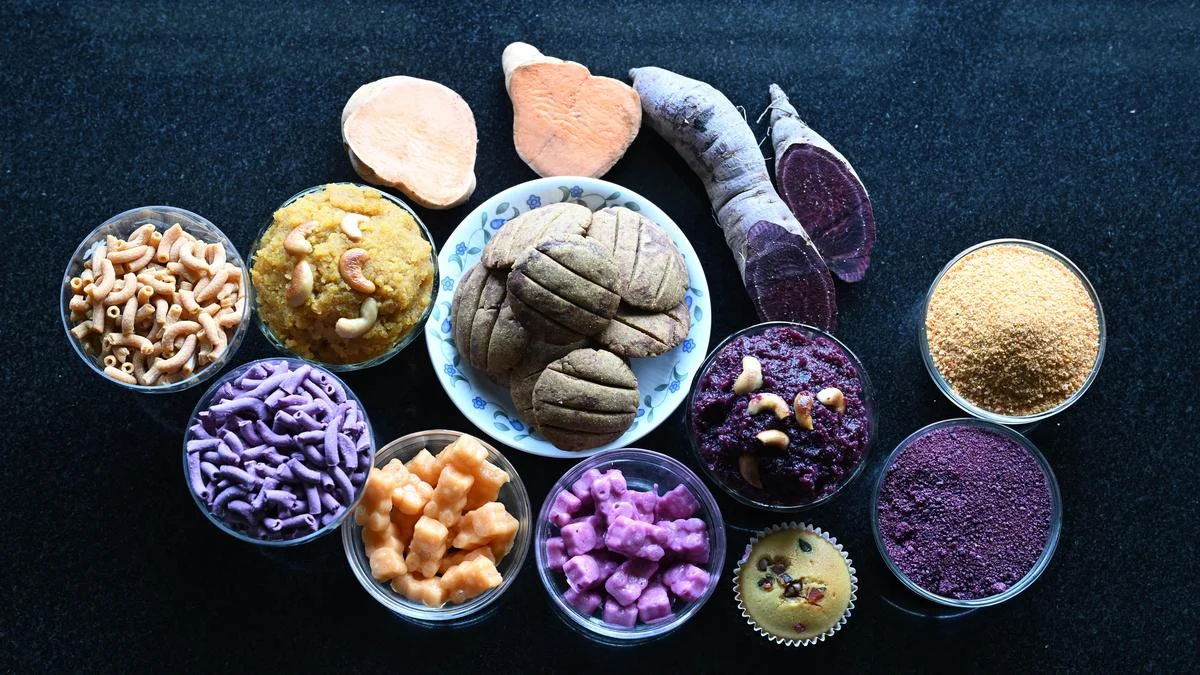
Thiruvananthapuram, Kerala – A silent culinary revolution is brewing at the ICAR-Central Tuber Crops Research Institute (CTCRI) in Thiruvananthapuram, where the humble sweet potato is shedding its traditional image and embracing a vibrant future. Gone are the days when sweet potato was merely a starchy staple. Researchers at ICAR-CTCRI are transforming orange-fleshed and purple-fleshed varieties into an array of delectable and nutritious products, from decadent kulfi and fluffy muffins to vibrant gummies and even gut-friendly ice cream. This pioneering initiative not only showcases the versatility of sweet potato but also highlights its significant potential as a bio-fortified food source.
The Institute, a leading research institution under the Indian Council of Agricultural Research (ICAR) dedicated to tropical tuber crops since 1963, has achieved a significant milestone by obtaining licenses to commercially manufacture four distinct products derived from its newly developed sweet potato varieties: Bhu Sona (orange-fleshed) and Bhu Krishna (purple-fleshed). These varieties, first introduced about a decade ago, are now poised to enter the market in novel forms, promising a delightful and healthy addition to the Indian palate.
From Field to Feast: A Culinary Showcase
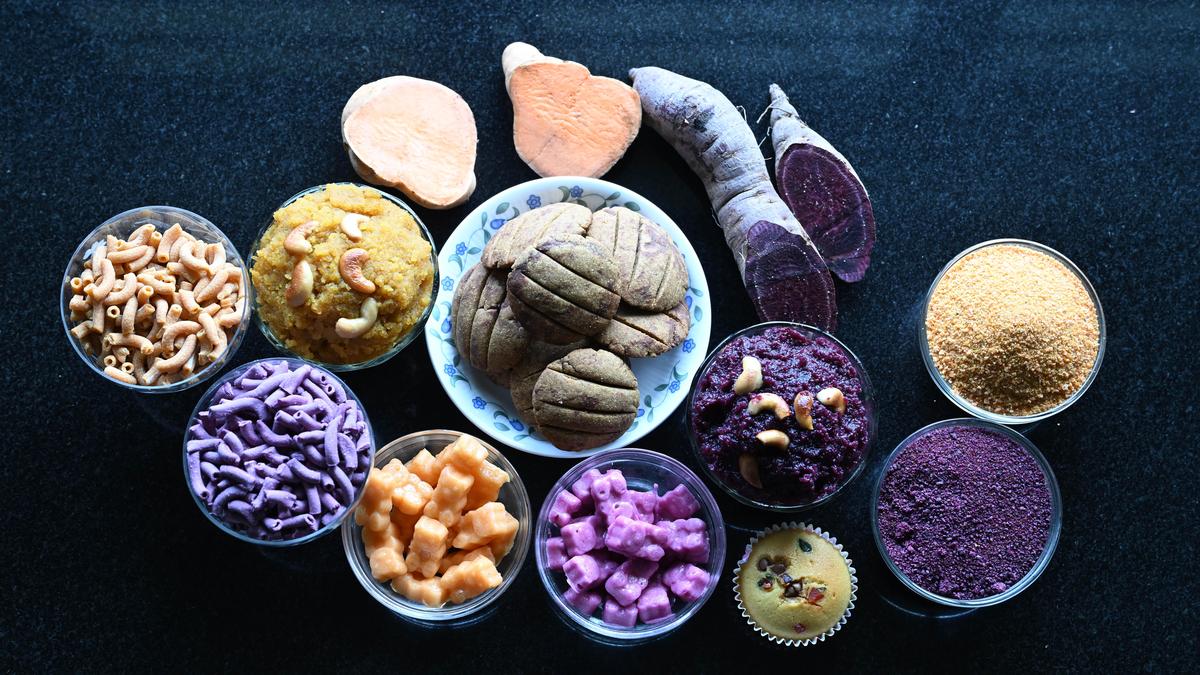
The sheer visual appeal of the products on display at ICAR-CTCRI was a testament to the institute’s innovative spirit. Delicate muffins, their texture subtly grainy yet remarkably soft, offered no hint of their orange-fleshed sweet potato origin. Following closely were charming purple gummies, a delightful surprise crafted from the equally vibrant Bhu Krishna variety. The exhibition extended beyond these initial delights, featuring an impressive spread of cookies, chips, kulfi, kesari, ice cream, and even ready-to-cook pasta, all presented in captivating shades of orange and purple, arranged artfully in glass bowls. This diverse range underscores the extensive possibilities for value-addition in sweet potato processing.
A Decade of Development Culminates in Commercialization
The journey to this point has been a decade-long endeavor. The launch of Bhu Sona and Bhu Krishna varieties marked the beginning of a focused research effort at ICAR-CTCRI. While research on sweet potato’s nutritional benefits and processing potential has been ongoing for many years, both at the Thiruvananthapuram headquarters and its regional center in Bhubaneswar, Odisha, this marks the first time ICAR-CTCRI is venturing into the commercial production of value-added products from any sweet potato variety. Previously, the institute had successfully developed numerous products from cassava.
The obtained licenses are for the commercial production of kulfi, muffins, gummies, and cookies. This strategic selection of products aims to cater to diverse consumer preferences and introduce sweet potato into everyday culinary experiences in innovative ways.
Empowering Communities: Training and Incubation
A key aspect of ICAR-CTCRI’s strategy is to empower local communities through skill development and entrepreneurship. "To start with, we will train members of Kudumbashree later this month," stated G. Byju, Director of ICAR-CTCRI. Kudumbashree, Kerala’s women-oriented poverty eradication mission, will be the first to benefit from this initiative.
"Once they learn the technique, they can go ahead with making the products and sell through respective Kudumbashree units," Byju added. This collaborative approach not only aims to create livelihood opportunities but also to disseminate knowledge about the benefits and versatility of these bio-fortified sweet potato varieties.
The hands-on training will be conducted at the institute’s Techno Incubation Centre. This state-of-the-art facility is equipped to support the production of tuber-based products, offering technical guidance, and serving as a crucial hub for production and processing. This center is envisioned as a catalyst for innovation, fostering the development of more tuber-based products in the future.
The Nutritional Powerhouse: Beyond Carbohydrates
Sweet potato, as a tuber, has garnered global recognition for its nutritional value. It is a rich source of carbohydrates, essential bioactive compounds, and vital vitamins. However, the real star of ICAR-CTCRI’s current focus lies in its bio-fortified varieties.
"The orange and purple varieties are bio-fortified, meaning they have higher nutrient density," explained Sajeev M.S., Principal Scientist at ICAR-CTCRI. "While Bhu Sona is rich in beta-carotene, which the body converts to Vitamin A, Bhu Krishna is abundant in anthocyanins, potent antioxidant and anti-inflammatory compounds."
This increased nutritional density is a significant advantage, particularly in regions where micronutrient deficiencies are prevalent. By incorporating these bio-fortified sweet potatoes into everyday foods, ICAR-CTCRI aims to contribute to improved public health.
The Science Behind the Flavors: A Food Technologist’s Art
The creation of these novel products is a testament to the meticulous research and culinary expertise at ICAR-CTCRI. C. Pradeepika, a scientist spearheading the research and development of these products, shared insights into the process.

"We started with kulfi. The base is sweet potato puree," she explained. "You boil or bake the sweet potato to make the puree. Then you add the usual ingredients that go into a kulfi – fresh cream, milk/milk powder, sugar, etc."
For muffins and cookies, sweet potato flour is utilized. "A small amount of maida is used as a binding agent," Pradeepika noted. She further highlighted that the cookies are a blend of sweet potato and finger millet, often incorporating choco-chip fillings, offering a healthier alternative to traditional cookies.
The process, according to Pradeepika, involves a delicate balance of ingredients and techniques. "It takes time to arrive at the exact combination. As a food technologist, I research different formulations and study various biochemical parameters before presenting them for consumer acceptance."
Beyond the licensed products, ICAR-CTCRI is also exploring the potential of these varieties in other food items. Kesari and pasta, showcased to demonstrate the broader scope of value-addition, retained their natural vibrant colors, a deliberate choice to highlight the inherent appeal of these sweet potato varieties.
Patented Innovations: Synbiotic Ice Cream and Color-Retaining Rava
The innovation at ICAR-CTCRI doesn’t stop at the licensed products. The institute is actively pursuing patents for the technologies involved in preparing specialized ice cream, rava (semolina), and flour from Bhu Sona and Bhu Krishna.
The synbiotic ice cream is a particularly exciting development. "The ice cream is synbiotic, meaning it is both prebiotic (has fiber that feeds live bacteria) and probiotic (has live beneficial bacteria). Basically, it is a gut-friendly frozen dessert," Pradeepika elaborated. This fusion of taste and gut health offers a novel approach to dessert consumption.

Furthermore, ICAR-CTCRI is seeking patents for its technology that preserves the natural vibrant colors of the sweet potato in rava and flour. "The color usually fades when we dry the potato in the sun or in a dryer. The new technology retains the natural color," she emphasized. This innovation ensures that the aesthetic appeal of the sweet potato is maintained in its processed forms, making them more attractive to consumers.
Cultivation and Promotion: Bridging the Gap
While Odisha currently leads the country in sweet potato cultivation, Kerala lags significantly behind. However, ICAR-CTCRI is actively working to bridge this gap by promoting the cultivation of various bio-fortified sweet potato varieties across Kerala, with a particular focus on the Palakkad and Idukki districts.
The institute’s efforts extend beyond research and product development to encompass agricultural extension and farmer engagement. By encouraging the cultivation of these nutrient-rich varieties, ICAR-CTCRI aims to create a sustainable supply chain for its innovative value-added products, benefiting both farmers and consumers.
The transformation of sweet potato from a staple crop to a source of diverse, nutritious, and appealing food products represents a significant advancement. ICAR-CTCRI’s pioneering work not only showcases the immense potential of tuber crops but also underscores the importance of bio-fortification in addressing nutritional challenges. As these colorful creations make their way to the market, they promise to add a vibrant and healthy dimension to the Indian culinary landscape.
