

JAIPUR – In an era defined by polarized discourse, the resurgence of conspiracy theories, and an increasingly volatile digital public square, the quest for human reason has never felt more urgent—or more elusive. At the 2022 Jaipur Literature Festival (JLF), renowned Canadian-American cognitive psychologist and Harvard professor Steven Pinker took the stage to dissect this very paradox.
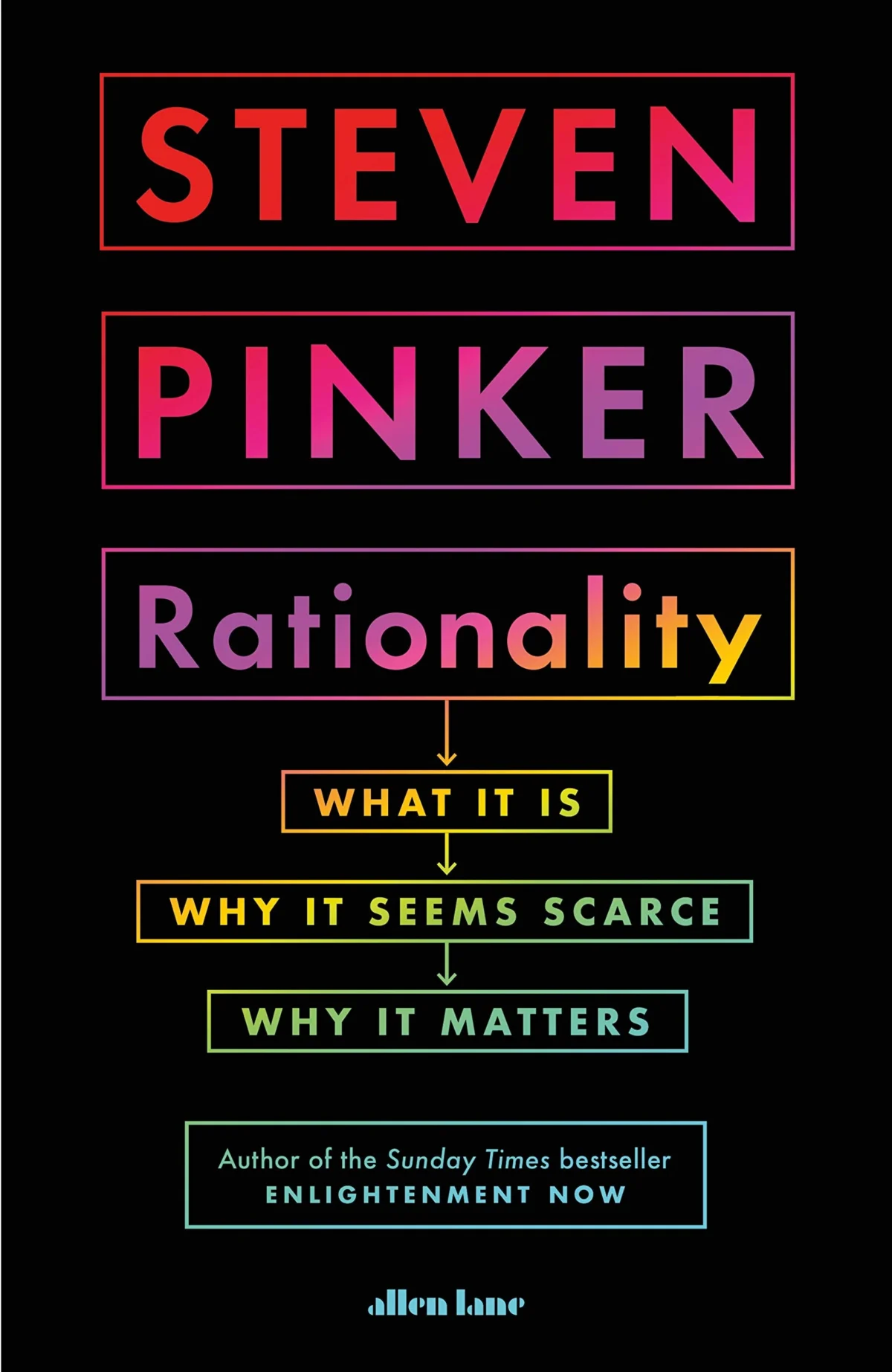
In a deep-dive session moderated by economist and author Mihir S. Sharma, Pinker explored the themes of his latest work, Rationality: What It Is, Why It Seems Scarce, Why It Matters. The discussion served as a powerful defense of Enlightenment values, a critique of the "cancel culture" permeating modern institutions, and a reminder that human progress is not an inevitability, but a hard-won victory of the rational mind over the entropic forces of nature.
The Core Thesis: Rationality as the Engine of Civilization
Steven Pinker’s appearance at JLF was more than a book promotion; it was a philosophical homecoming. Pinker, who rose to international fame with The Language Instinct and The Better Angels of Our Nature, noted that his latest work returns him to his professional roots in cognitive psychology.
"Rationality, in many ways, is a return to my home turf," Pinker told the audience. "I am trained as a cognitive psychologist. So my specialty is how the mind works and, by extension, what is human nature. It is not just about what we think, but also about what are our motives and emotions."
The central argument of Pinker’s session was that rationality is the primary driver of human flourishing. He challenged the notion that the universe has an inherent "arc" that bends toward justice or improvement. Instead, he posited that the natural state of the universe is one of decay and disorder—entropy.
"Progress doesn’t happen just like that," Pinker asserted. "There is no magical force in the universe that makes life better. Contrarily, the laws of nature tend to make life worse. To the extent that we have reduced famine and disease, and today have reduced war, it is because of rationality."
A Chronology of Intellectual Evolution: From Syntax to Society
To understand Pinker’s current focus on rationality, one must look at the trajectory of his three-decade career. His intellectual journey began with the study of linguistics, where he argued that language is an innate human instinct. This realization led to a broader question: if language is hard-wired, what else is?
1. The Biological Blueprint
In the 1990s, Pinker’s work focused on how evolution shaped the human mind. By identifying the "innate structure" of the brain, he began to explore the political and social implications of human nature. If humans are born with specific cognitive toolkits, then our social systems must be designed to accommodate those biological realities.
2. The Historical Trajectory
Pinker then shifted his focus to history and data. In The Better Angels of Our Nature (2011), he used extensive statistical evidence to show that violence has declined over centuries. He followed this with Enlightenment Now (2018), arguing that reason, science, and humanism have led to unprecedented gains in health, wealth, and safety.

3. The Contemporary Crisis
His latest work, Rationality (2021), acts as the third pillar of this intellectual edifice. Having established that humans can improve the world, he now addresses why we so often seem to act against our own interests. The JLF session highlighted this shift, focusing on the cognitive biases that prevent us from applying the very tools—logic, probability, and critical thinking—that created the modern world.
Supporting Data: Why Rationality Seems Scarce
A significant portion of the discussion at JLF centered on the "scarcity" of reason. Pinker addressed the baffling reality that a species capable of sequencing the genome and landing rovers on Mars is also prone to believing in QAnon, anti-vaccination myths, and "fake news."
Pinker explained that human evolution did not necessarily design the brain for "truth-seeking" in the scientific sense. Instead, our brains evolved for "fitness-seeking" in small-scale tribal environments. This has left us with several systemic cognitive flaws:
- The Myside Bias: The tendency to evaluate evidence in a way that favors our own political or social group. Pinker noted that high intelligence does not protect against this; in many cases, smarter people are simply better at "rationalizing" their pre-existing tribal beliefs.
- Heuristics and Biases: Humans are notoriously bad at understanding probability. We fear plane crashes more than car accidents because a plane crash is "available" in our memory (the availability heuristic), even though the data shows cars are far more dangerous.
- The Tragedy of the Commons: Rationality at the individual level (e.g., using more of a shared resource) can lead to irrationality at the collective level (e.g., environmental collapse).
Pinker argued that "rationality" is not a single spark of genius but a "toolkit" of cognitive rules—logic, Bayesian reasoning, and game theory—that must be taught and reinforced by institutions.
The Repercussions of Cancel Culture and the "Infallibility Fallacy"
One of the most provocative segments of the JLF session involved Pinker’s critique of modern "cancel culture" and institutional censorship. As a psychologist, Pinker views these social phenomena through the lens of human fallibility.
He warned that the current trend of silencing controversial speakers or "canceling" writers stems from a dangerous psychological state: a feeling of infallibility.
"There is institutional censorship that cancels controversial writers or speakers in many countries," Pinker observed. "The implicit rationale for silencing people is they should not be allowed to spread misinformation… The problem is that people who are doing the censoring or cancelling others have to assume that they are infallible."
Pinker argued that the act of suppression is fundamentally "indefensible" because it presupposes that the censor has a "pipeline to the truth." He outlined a clear danger: when institutions (universities, media outlets, tech platforms) remove opposing views, they destroy the very mechanism by which we correct errors.
"The biggest bias is to assume that we are not biased but somebody else is," Pinker said. "The only way to get to the truth is open debate and evaluation of ideas."

Wider Discourse: Responses to the Pinker Paradigm
Pinker’s stance at JLF reflects a broader debate occurring in global academia. While he is celebrated by many as a champion of free speech and objective truth, his work has not been without detractors.
The Critics’ Perspective
Critics often argue that Pinker’s focus on data-driven progress ignores the lived experiences of marginalized groups who still face systemic oppression. Regarding cancel culture, some academics argue that what Pinker calls "censorship" is actually "accountability"—a way for historically silenced voices to push back against harmful rhetoric.
The Institutional Response
In recent years, organizations like the American Civil Liberties Union (ACLU) and various university faculty boards have grappled with the tension between protecting "inclusive environments" and maintaining "academic freedom." Pinker’s comments at JLF place him firmly in the camp of the Chicago Principles—a set of guiding standards that prioritize free and open inquiry above the "comfort" of the student body or faculty.
Implications: The Future of Reason in a Fragmented World
As the session concluded, the implications of Pinker’s message were clear: the survival of democratic society depends on our ability to safeguard the "public square" from authoritarian impulses, whether they come from the state or from social mobs.
1. The Risk to Scientific Progress
If rationality is the engine of progress, then the erosion of open debate could lead to a stagnation in scientific and social advancement. Pinker’s warning suggests that if we cannot discuss "uncomfortable" hypotheses, we may never find the solutions to complex problems like climate change or future pandemics.
2. The Role of Education
The session underscored the need for a shift in education. Rather than just teaching what to think, Pinker advocates for teaching how to think. This involves integrating "rationality toolkits"—statistics, logic, and the philosophy of science—into early education to inoculate the public against misinformation.
3. Emotional Considerations vs. Rational Thought
Pinker made a final, vital distinction: rationality is not the enemy of emotion. In fact, rationality is what allows us to fulfill our emotional goals—such as the desire for peace, health, and happiness. He argued that we should not suppress our rational "gift" to keep emotional considerations intact; rather, we should use reason to ensure our emotional aspirations are actually achieved.
"Rationality matters because it is responsible for most of our progress," Pinker concluded. In a world that often feels like it is sliding back into tribalism and superstition, his call for a "return to reason" at the Jaipur Literature Festival serves as both a warning and a roadmap for the 21st century.
Steven Pinker’s session at JLF 2022 remains a touchstone for discussions on the intersection of cognitive science and social policy. His book, "Rationality: What It Is, Why It Seems Scarce, Why It Matters," continues to be a bestseller, sparking debates across the globe on the future of the Enlightenment project.
