

Mountain View, California – In an era increasingly defined by the burgeoning power of artificial intelligence, the insatiable energy demands of the digital realm are casting a long, dark shadow over global sustainability efforts. Data centers, the unseen behemoths powering our interconnected world, are rapidly becoming a dominant force in global electricity consumption. At the vanguard of this escalating energy appetite is Artificial Intelligence, particularly the intensive training and deployment of large language models (LLMs) and other machine learning workloads, which rely on dense clusters of Graphics Processing Units (GPUs). With industry estimates projecting a staggering $3 trillion in planned investments by 2030, the generative AI boom shows no signs of abating, forcing data centers to guzzle ever more energy from any available source.
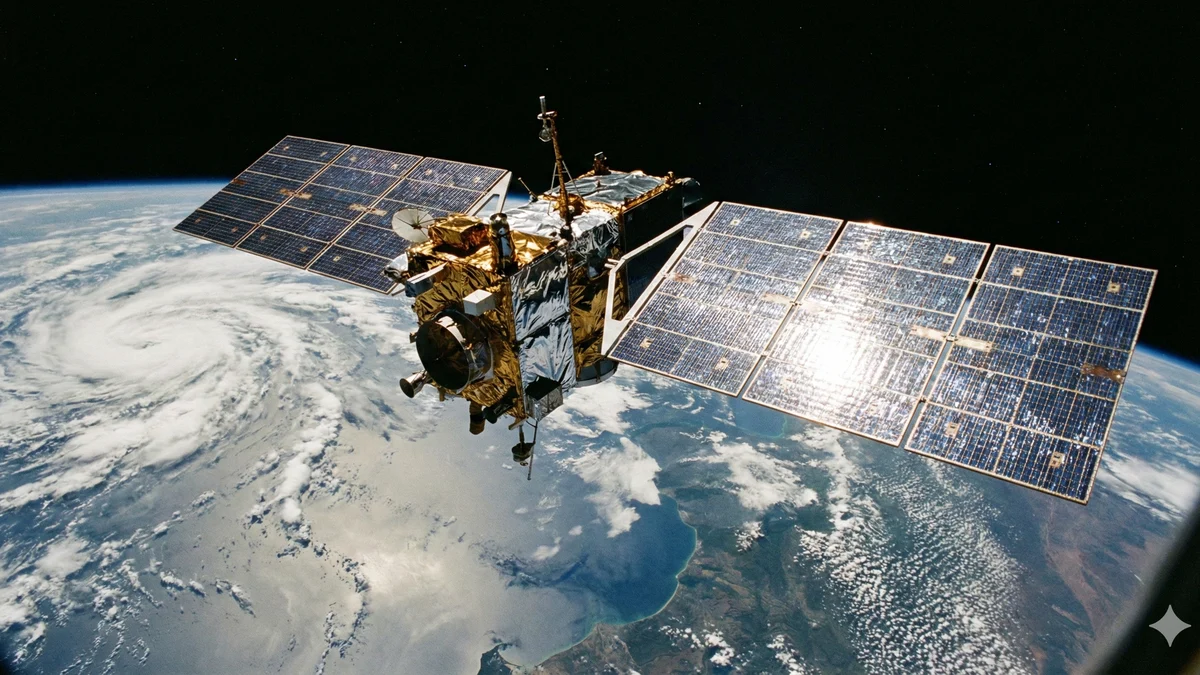
This accelerating energy crisis has pushed technological pioneers to consider solutions once confined to the pages of science fiction. Google Research, a division known for its audacious long-term bets, has embarked on what many might consider an "outlandish prospect": launching data centers into outer space, powered entirely by an unyielding source of solar energy. This ambitious endeavor, internally dubbed "Project Suncatcher," proposes a revolutionary paradigm shift, moving the very infrastructure of AI into the cosmos to harness the sun’s unadulterated power.
A Timeline of Innovation: From Terrestrial Strain to Orbital Vision
The journey towards celestial computing is rooted in the evolving demands of information technology and the persistent pursuit of efficiency. For decades, data centers have been the quiet workhorses of the internet, steadily growing in size and complexity to meet the world’s burgeoning digital needs.
The Early Era: Content-Driven Expansion:
Traditional data centers emerged primarily to serve the increasing consumption of digital content. In regions like India, this was largely driven by video streaming – one of the most data-intensive use cases by volume. The architecture of these facilities was, therefore, optimized for external bandwidth. Data centers needed robust connections to the outside world, necessitating massive investments in global networking infrastructure like undersea cables to keep pace with the flow of information to and from users. The bandwidth required within the data center’s own premises was theoretically on par with the bandwidth it delivered to or received from external networks.
The AI Revolution: Internal Bandwidth Takes Center Stage:
The advent of sophisticated AI, particularly deep learning and generative models, fundamentally altered this architectural imperative. Unlike traditional data centers, AI data centers demand extraordinarily high levels of bandwidth not between their hosted infrastructure and external users, but within the data center itself, and often with other geographically proximate data centers. Machine learning workloads, especially the training of gargantuan models, involve immense parallel processing and continuous data exchange between thousands of GPUs. This requires ultra-fast, low-latency communication links inside the computing complex.
Microsoft’s "Fairwater" AI data center complexes, for instance, boast petabit-per-second links between their facilities. To put this in perspective, one petabit per second is equivalent to 10 lakh gigabits per second – a million times faster than the premium consumer-grade internet connections typically found in major metropolitan areas. This paradigm shift, where internal network speed trumps external connectivity, is a cornerstone of Project Suncatcher’s viability. If the majority of the bandwidth is consumed within a distributed network of orbiting satellites, the downlink bandwidth to Earth-based ground stations becomes a secondary concern. The analogy is simple: ChatGPT’s massive internal infrastructure requires these superfast connections, but the user only needs sufficient bandwidth for their query and the received response.
Google’s Orbital Gambit:
While Google Research has not provided a precise public chronology for Project Suncatcher’s inception, the foundational research and conceptualization likely began as the true energy implications of the AI boom became evident. A key insight into their progress came in November of the previous year, when Google researcher Travis Beals offered a glimpse into the project’s technical advancements and challenges in a public post. This revelation cemented Google’s serious intent to explore this ‘outlandish’ prospect, moving it from mere speculation to an active research initiative.
The historical context of ambitious, unconventional computing experiments is also relevant. Microsoft’s "Project Natick," which explored underwater data centers for easier water-cooling, serves as a cautionary tale of bold experiments that, despite initial promise, were ultimately abandoned. However, the resounding success of SpaceX’s Starlink constellation, which defied early skepticism to provide widespread satellite internet, offers a powerful counter-narrative, fueling optimism for Google’s orbital ambition.

Deconstructing the Orbital Blueprint: Technical and Economic Realities
Project Suncatcher envisions a future where AI’s computational might resides not on Earth, but in carefully orchestrated constellations of satellites, continuously bathed in the sun’s energy.
The Unique Demands of AI Data Centers
To appreciate the design philosophy of Project Suncatcher, one must first grasp the distinct networking requirements of modern AI. Traditional data centers, as mentioned, are "north-south" traffic intensive – data flows primarily between users (north) and the core infrastructure (south). Their design prioritized external connectivity and efficient data ingress/egress.
AI data centers, particularly those supporting large-scale machine learning, are "east-west" traffic intensive. This means the vast majority of data transfer occurs laterally, between thousands of processing units (GPUs, TPUs) and memory modules within the same cluster or across adjacent clusters. Training a massive AI model involves iterative calculations, where intermediate results are constantly exchanged between interconnected processors. This requires an internal network fabric of unprecedented speed and low latency. The petabit-per-second links in Microsoft’s Fairwater are not for connecting to the internet but for enabling this intricate dance of data within its own walls.
This architectural shift is crucial for Project Suncatcher because it implies that the primary networking challenge is within the satellite constellation, not between the constellation and Earth. While Earth-to-orbit bandwidth for data transmission is inherently limited due to frequency spectrum availability and physical distance (as evidenced by Starlink "selling out" in certain regions), the core computational work of AI processing can proceed largely independently within the tightly knit orbital clusters. The "output" of this processing – the trained model, or the response to a query – would then be transmitted to Earth, requiring far less bandwidth than the internal computational processes.
Harnessing the Sun: Project Suncatcher’s Architecture
Google’s Project Suncatcher proposes a satellite constellation reminiscent of Starlink, but with a critical difference in configuration. Instead of an evenly spread swarm designed to blanket the Earth with connectivity, Suncatcher’s equipment architecture would rely on densely choreographed clusters. Each satellite would be no more than a few kilometers from its neighbors, fostering the ultra-low-latency, high-bandwidth internal communication critical for AI workloads.
These clusters would follow specific orbits designed to maintain a perpetual line of sight with the sun. This continuous exposure, unimpeded by atmospheric dilution or obstruction, promises an incredible and constant power source. Combined with advanced technologies like multiplexing – which allows multiple data streams to be packed into a single radio beam – this setup would theoretically enable the satellites to distribute their computational work while having an abundance of power to operate efficiently.
Confronting the Cosmic Gauntlet: Engineering Challenges
While the concept is compelling, the practicalities of operating data centers in space introduce a host of formidable engineering challenges that Google Research is actively tackling.
-
Solar Radiation: The vacuum of space, while offering direct solar power, also exposes electronics to intense solar radiation and cosmic rays. These can cause "soft errors" (bit flips) or even permanent damage to silicon components over time. Tensor Processing Units (TPUs), Google’s custom-designed AI accelerators, along with their High Bandwidth Memory (HBM) subsystems, are particularly sensitive.
Google has, however, made significant headway. Travis Beals reported encouraging results: "While the High Bandwidth Memory (HBM) subsystems were the most sensitive component, they only began showing irregularities after a cumulative dose of 2 krad(Si) – nearly three times the expected (shielded) five-year mission dose of 750 rad(Si)." Even more remarkably, Beals stated, "No hard failures were attributable to total ionizing dose up to the maximum tested dose of 15 krad(Si) on a single chip, indicating that Trillium TPUs are surprisingly radiation-hard for space applications." This suggests that Google’s specialized hardware may possess an inherent resilience suitable for the harsh space environment.
-
Thermal Management: On Earth, terrestrial data centers often employ sophisticated liquid cooling systems to dissipate the immense heat generated by GPUs and other processors. In space, this becomes a "significant engineering challenge." With data centers constantly blasted by direct solar energy and lacking the convective cooling of an atmosphere, efficiently dissipating heat to allow silicon components to run optimally is incredibly complex. Passive radiative cooling, active heat pipes, and advanced thermal management materials would be essential, but scaling these to data center levels in a zero-gravity, vacuum environment presents monumental hurdles.
-
Maintenance and Longevity: Data centers require continuous maintenance, upgrades, and troubleshooting. Once equipment is in orbit, there is no "cheap way" to send technicians for repairs. This necessitates an unprecedented level of reliability, redundancy, and potentially, autonomous self-repair capabilities. The design must account for eventual end-of-life, with robust de-orbiting or servicing mechanisms to prevent the proliferation of space debris. Each component must be designed for an extended lifespan, far exceeding typical terrestrial counterparts, to justify the immense launch costs.
-
Orbital Mechanics and Precision Choreography: Maintaining dense clusters of satellites, each within a few kilometers of its neighbors, while ensuring constant line-of-sight with the sun, requires incredibly precise orbital mechanics and station-keeping. Fuel consumption for maneuvering, collision avoidance protocols, and the complexity of managing thousands of interconnected moving targets are significant challenges.
The Economic Equation: Launch Costs and Power Savings
Ultimately, the viability of space-based data centers hinges not just on technological feasibility but on economic competitiveness. The cumulative cost of researching, developing, launching clusters into space, and undertaking fresh launches to replace or upgrade individual satellites must be competitive with the existing, continuously advancing ground-based solutions.
Google is banking on a significant decline in satellite launch prices. They project that costs could drop to $200 per kilogram by the mid-2030s. This reduction, coupled with the potential for massive power savings due to the solar-first design of this architecture, could, in theory, create a compelling economic case for space-based data centers. The complete absence of electricity grid costs, and the potentially lower cooling costs (if thermal challenges are overcome efficiently), could offset the high upfront investment in launch and space-hardened hardware. However, this is a delicate balance, and the economics must remain favorable even as ground-based data center technology continues to improve in efficiency and sustainability.
Industry Echoes and Official Stances
Google Research’s Travis Beals’ post remains the primary official communication regarding Project Suncatcher. This suggests that while the research is active and promising, Google’s corporate stance is likely one of cautious optimism, typical for early-stage, highly speculative projects. Major corporations often allow their research divisions to explore such "moonshot" ideas without fully committing the entire company to the venture until technical and economic feasibility are more firmly established.
Interestingly, Google is not alone in contemplating orbital computing. Reports indicate that the Indian Space Research Organisation (ISRO) is also studying space-based data center technology. This suggests a growing recognition across national and private entities that the energy demands of AI necessitate radical solutions, and space offers unique advantages. While other major tech giants like Amazon (with AWS) and Microsoft (with Azure) are heavily invested in terrestrial data centers and sustainable practices (e.g., renewable energy procurement), public statements about deploying data centers in space have been scarce, positioning Google and ISRO at the forefront of this particular frontier.
The Future Horizon: Ramifications and Unforeseen Potentials
Should Project Suncatcher or similar initiatives succeed, the implications would be profound, reshaping not just the tech landscape but potentially global energy grids, geopolitics, and even our relationship with space.

Energy Independence and Sustainability
The most immediate and significant impact would be the potential for truly energy-independent and sustainable data centers. By tapping into the boundless solar energy of space, orbital data centers could drastically reduce the strain on terrestrial electricity grids, mitigating the environmental footprint of AI. This could free up vast amounts of green energy for other sectors, accelerating the global transition away from fossil fuels. It would represent a monumental step towards decoupling computational growth from ecological impact.
Geopolitical and Security Dimensions
The deployment of such critical infrastructure in space would introduce complex geopolitical and security considerations. Who would control these orbital assets? What international frameworks would govern their operation, data sovereignty, and potential weaponization? Space-based data centers could become strategic assets, raising questions about national security, cyber warfare, and the equitable distribution of computational power. Their vulnerability to space debris, jamming, or even anti-satellite weapons would also be a critical concern.
Redefining Data Locality and Latency
While the primary bandwidth needs for AI data centers are internal, the eventual interaction with Earth-based users still carries latency implications. Data traveling from low Earth orbit (LEO) to ground stations, though fast, would still introduce delays. However, for certain applications, such as training foundation models that can then be deployed terrestrially, or for distributed AI tasks that are less sensitive to real-time interaction, this might be acceptable. It could also lead to new models of distributed computing, where some tasks are offloaded to orbital platforms, while others remain on Earth.
The Pace of Innovation and Overcoming Skepticism
The history of technology is replete with examples of groundbreaking innovations that were initially met with skepticism. Starlink’s journey from a nascent idea to a global internet provider, covering practically the whole Earth with serviceable speeds in a mere few years, stands as a testament to the power of audacious vision and rapid iteration. Google’s Project Suncatcher, much like Starlink in its early days, faces immense technical and economic hurdles. Yet, if Google, or any other entity like ISRO, can overcome these challenges, the transformation of data center infrastructure could be as revolutionary as the internet itself.
Broader Space Economy Impact
Success in space-based data centers would catalyze further growth in the nascent space economy. It would drive demand for more reliable and cheaper launch services, stimulate innovation in space manufacturing, robotics, and in-orbit servicing, and create entirely new markets for space-hardened components and orbital infrastructure. This could fuel a virtuous cycle of investment and innovation, accelerating humanity’s presence and capabilities beyond Earth.
Environmental Concerns: Space Debris
While addressing terrestrial energy concerns, a massive constellation of data center satellites would inevitably raise new environmental questions, particularly concerning space debris. Each satellite has a lifespan, and their eventual de-orbiting or disposal must be meticulously planned to avoid contributing to the already growing problem of orbital junk, which poses a threat to all space-based assets. Responsible space stewardship would be paramount.
Time will tell if Google’s Project Suncatcher – or similar initiatives from ISRO and others – will be able to hit all these technological and economic targets while keeping pace with the relentless advancements for ground-based data centers. The audacious prospect of moving the very heart of artificial intelligence into the boundless expanse of space is a testament to humanity’s ingenuity and its relentless pursuit of efficiency. It may seem like science fiction today, but as history has repeatedly shown, yesterday’s impossibilities often become tomorrow’s realities.
