

The history of Indian cinema is often told through the lens of its "superstars"—the larger-than-life figures who commanded the screen with stylized mannerisms and invincible personas. Yet, nestled within the Golden Age of Bollywood was an actor who defied every conventional trope of stardom. Sanjeev Kumar, born Harihar Jethalal Jariwala, was not a "hero" in the traditional sense; he was a chameleon. Whether playing a vengeful armless man in Sholay, a middle-aged estranged husband in Aandhi, or nine distinct characters in Naya Din Nai Raat, Kumar brought a grounded realism to a medium often defined by melodrama.
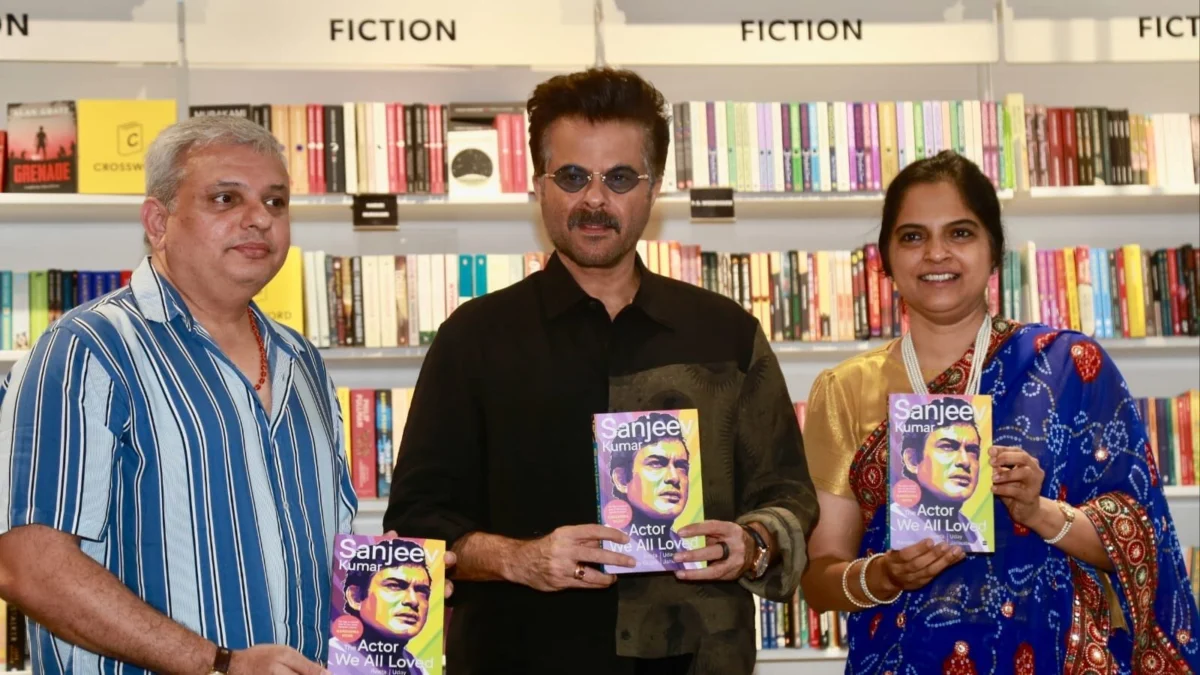
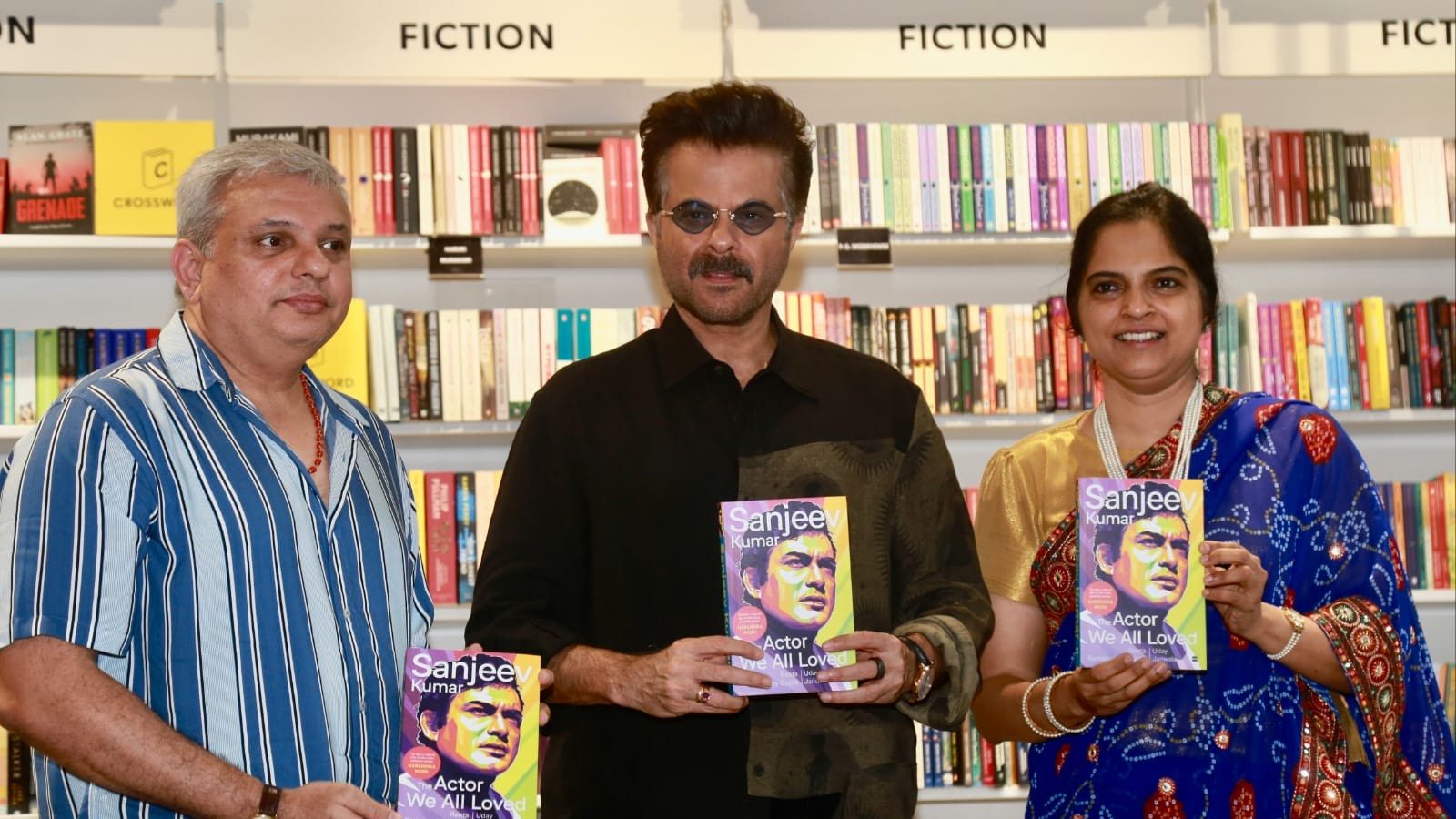
Decades after his untimely passing in 1985 at the age of 47, the legendary actor’s life has finally been chronicled in a comprehensive biography titled Sanjeev Kumar: The Actor We All Loved. Co-authored by the actor’s nephew, Uday Jariwala, and renowned biographer Reeta Ramamurthy Gupta, the book was recently launched in Mumbai in the presence of industry stalwarts, including Anil Kapoor. The biography aims to peel back the layers of the man behind the makeup, offering a poignant look at his professional triumphs and his deeply private, often misunderstood, personal life.
Main Facts: A Long-Overdue Tribute
The launch of Sanjeev Kumar: The Actor We All Loved marks a significant milestone in Indian cinematic literature. Despite his status as one of the greatest actors to ever grace the Indian screen, a definitive biography of Sanjeev Kumar had been conspicuously absent from bookshelves for nearly forty years.
The project, which began in 2018, was born out of a desire to rectify this historical oversight. Reeta Ramamurthy Gupta, the lead author, expressed her shock at the lack of documented history regarding Kumar’s life. The biography is the result of extensive research and interviews with family members, co-stars, and directors who worked closely with him.
The book serves two primary purposes:
- Preserving History: It documents the technical prowess and artistic philosophy of an actor who bridged the gap between commercial "masala" cinema and "middle-of-the-road" art films.
- Humanizing the Icon: It moves past the gossip columns of the 1970s and 80s to present a man who was profoundly simple, family-oriented, and remarkably devoid of the "star ego" that typically plagued his contemporaries.
Chronology: From the Stage to Satyajit Ray
Sanjeev Kumar’s journey was one of persistent evolution. Born in 1938 in Surat, Gujarat, his family eventually moved to Mumbai, where his tryst with the performing arts began. Unlike many of his peers who sought immediate stardom, Kumar’s foundations were built in the rigorous world of theatre.
The Theatre Years and Early Breakthroughs
Kumar began his career with the Indian People’s Theatre Association (IPTA) and later joined the Indian National Theatre. It was here that he developed his unique ability to play characters much older than his actual age—a trait that would define his film career. His cinematic debut came in 1960 with a small role in Hum Hindustani, but it was the 1968 film Sunghursh that truly announced his arrival. Acting alongside the legendary Dilip Kumar, the young Sanjeev Kumar held his own, a feat that few actors of that era could claim.
The 1970s: The Era of Versatility
The 1970s saw Kumar enter his most prolific phase. He became a favorite of director Gulzar, leading to a collaboration that produced masterpieces like Koshish (1972), where he played a deaf and mute man, and Aandhi (1975). During this decade, he also took on the role that would immortalize him in the global consciousness: Thakur Baldev Singh in Ramesh Sippy’s Sholay (1975). While Amitabh Bachchan and Dharmendra played the "action heroes," Kumar provided the film’s emotional and moral anchor.
The Late Career and Global Recognition
In 1977, Kumar reached a pinnacle of artistic achievement by starring in Satyajit Ray’s Shatranj Ke Khiladi (The Chess Players). Ray, a filmmaker known for his exacting standards, chose Kumar to represent the decadent nobility of Oudh, further cementing his reputation as an "actor’s actor." This film remains a staple on international "must-watch" lists, including that of Martin Scorsese.
Supporting Data: The Statistics of a Masterclass
To understand Sanjeev Kumar’s impact, one must look at the sheer diversity of his filmography. He was a two-time National Film Award winner for Best Actor (Koshish and Dastak) and received several Filmfare Awards.
The Range of Roles
One of the most cited examples of his range is the film Naya Din Nai Raat (1974), where he played nine different characters, each representing a different rasa (emotion). This remains a benchmark for acting students in India.
Furthermore, his willingness to play "unconventional" roles was statistically rare for a leading man:
- Age-Defying Roles: In Parichay and Sholay, he played characters significantly older than himself.
- Genre Fluidity: He moved seamlessly from intense dramas like Khilona to slapstick comedies like Angoor, which is still considered one of the finest comedies in Indian cinema.
- Commercial Success: Despite his "artistic" leanings, Kumar was a bankable star. His films consistently performed well at the box office, proving that audiences were hungry for performance-driven content.
Official Responses: Voices from the Launch
The book launch in Mumbai was not just a promotional event but a nostalgic gathering of those whose lives were touched by Kumar.
Reeta Ramamurthy Gupta’s Perspective
Gupta highlighted the cultural necessity of the book. "I conceptualized the book in 2018 because I was shocked to know that no one had made a book about him before," she revealed. For her, the turning point was watching Shatranj Ke Khiladi. She noted the actor’s ability to leave a lasting impression on the subconscious of the audience, recounting how her father would sing "Thande Thande Pani Se Nahaana Chahie" (from the film Pati Patni Aur Woh), a song that became an "embedded memory" before she even knew the man behind the character.
Uday Jariwala’s Personal Insights
For Uday Jariwala, the biography was a mission to clear the air. "I just wanted that people should know what kind of person he was in real life. There are a lot of gossips and rumours about him; I wanted people to know who Sanjeev Kumar was in reality," Jariwala stated. He described a man who was "down to earth and very simple," someone who enjoyed driving his family to see Charlie Chaplin movies without the entourage of drivers or security that usually follows a superstar.
Anil Kapoor’s Tribute
Anil Kapoor, representing the subsequent generation of actors, recalled the first time he noticed Kumar’s brilliance. Watching Sunghursh as a young man, Kapoor found himself mesmerized not just by Dilip Kumar, but by the "other actor" on screen. "I have been a fan of his ever since. I have watched all his films," Kapoor remarked, acknowledging that Kumar’s work served as a textbook for his own career.
Implications: The Legacy in the Modern Era
The release of Sanjeev Kumar: The Actor We All Loved carries significant implications for the contemporary Indian film industry and its audience.
1. Bridging the Generational Gap
For millennials and Gen Z, Sanjeev Kumar is often reduced to "The Thakur" from Sholay or a series of internet memes. This biography serves to re-introduce the depth of his work to a younger audience, ensuring that his contributions to the craft of acting are not lost to time. It places his work in the context of global cinema, highlighting why directors like Satyajit Ray and fans like Martin Scorsese held him in such high regard.
2. The Importance of Archiving
The four-decade delay in Kumar’s biography highlights a systemic issue in the Indian film industry: the lack of formal archiving and documentation of its legends. This book sets a precedent for other families and historians to document the lives of those who built the foundations of Indian cinema.
3. Redefining Masculinity on Screen
Kumar’s legacy is a reminder that a leading man does not always need to be a "macho" figure. He portrayed vulnerability, failure, and domesticity with a nuance that was ahead of its time. In an era where "Alpha" protagonists are once again dominating the box office, Kumar’s filmography offers an alternative template for what a male lead can represent.
4. A Corrective Narrative
By addressing the "rumour mills" mentioned by Uday Jariwala, the book provides a corrective narrative to the tabloid culture of the 70s. It replaces sensationalism with a dignified account of a man who was a dedicated professional and a beloved family member.
Conclusion: The Actor Who Never Left
Sanjeev Kumar’s life was tragically short, but his impact remains perennial. He was an actor who didn’t just play a character; he inhabited it so completely that the actor himself often disappeared. As Reeta Ramamurthy Gupta and Uday Jariwala’s biography hits the shelves, it offers more than just a trip down memory lane; it provides a roadmap for future actors.
In the final analysis, Sanjeev Kumar remains an enigma not because he was secretive, but because his talent was so vast it seemed impossible to contain within a single human life. Through this biography, the man from Surat finally receives the documented immortality he deserves, ensuring that while the man is gone, the "Actor We All Loved" will continue to inspire generations to come.
