

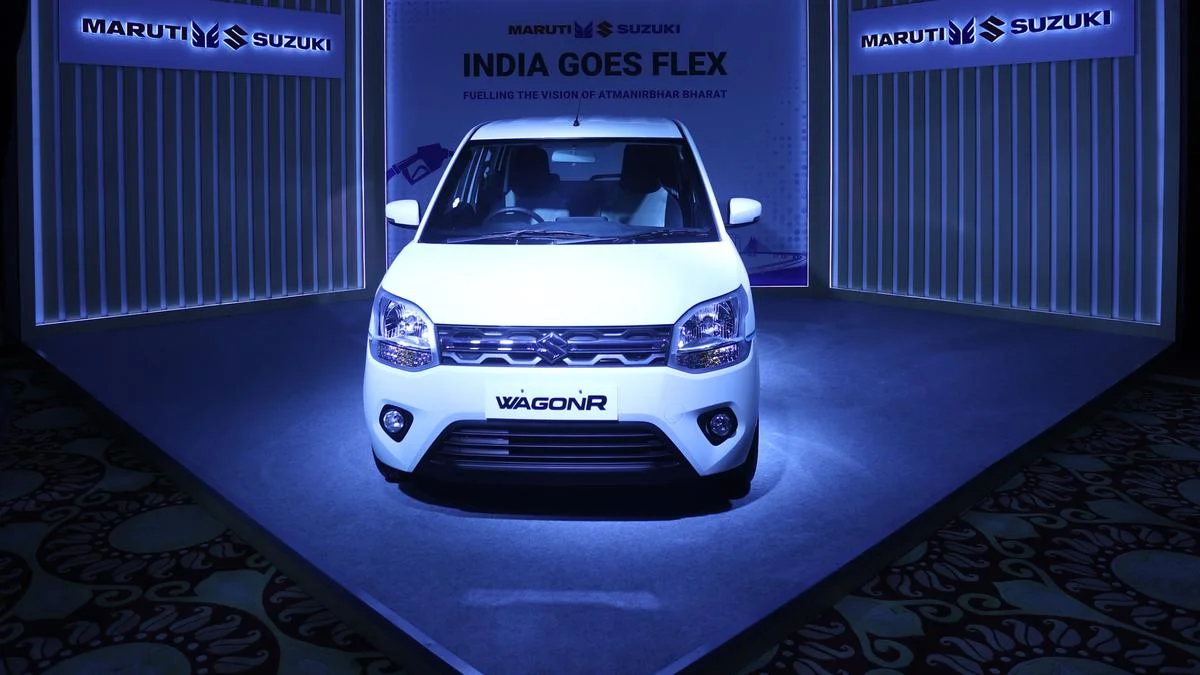
The Indian automotive landscape is currently undergoing a transformation of historic proportions. As the world’s third-largest energy consumer, India faces a dual imperative: the urgent need to decarbonize its transport sector and the economic necessity of reducing a staggering reliance on imported crude oil. While the global narrative has largely centered on Battery Electric Vehicles (BEVs), India is pioneering a more diversified approach. At the heart of this strategy lies the "Flex Fuel" movement—a bridge between the familiar internal combustion engine (ICE) and a sustainable future.
The recent showcase of the Maruti Suzuki Wagon R Flex Fuel is not merely the unveiling of a new variant of a popular hatchback; it is a calculated statement of intent from India’s largest carmaker. By integrating high-blend ethanol technology into one of the country’s most accessible and recognizable nameplates, Maruti Suzuki is signaling that the transition to green energy will not be reserved for the premium segments, but will be driven by the mass market.
Main Facts: Engineering a Mass-Market Alternative
The Maruti Suzuki Wagon R Flex Fuel represents a significant technological leap from the standard petrol-powered model. While it retains the iconic "tall-boy" silhouette that has made it a household name, the engineering under the hood has been extensively overhauled to accommodate the unique chemical properties of ethanol.
The E20 to E100 Capability
The defining feature of this vehicle is its ability to operate on ethanol-petrol blends ranging from E20 (20% ethanol) to E100 (100% ethanol). This flexibility is crucial in a developing market where fuel infrastructure is still evolving. To achieve this, Maruti Suzuki engineers have implemented an advanced Engine Control Unit (ECU). This system utilizes a suite of sensors to continuously monitor the fuel composition in real-time, adjusting ignition timing and fuel injection parameters to ensure optimal performance regardless of the ethanol concentration.
Technical Modifications
Ethanol is chemically different from gasoline; it is more corrosive and has a higher affinity for water (hygroscopy). Consequently, "Flex Fuel" is not just a software update. The Wagon R Flex Fuel features:
- Upgraded Fuel Systems: Reinforced fuel pumps, injectors, and fuel lines designed to resist the corrosive nature of high-concentration ethanol.
- Enhanced Engine Components: Hardened valve seats and modified piston rings to withstand the different combustion temperatures and lubrication requirements of ethanol.
- Cold-Start Technology: Since ethanol has lower volatility than petrol, starting a 100% ethanol engine in cold climates can be challenging. The prototype includes specialized heating elements or auxiliary systems to ensure reliable ignition in all Indian weather conditions.
Market Positioning
With an expected price bracket of INR 7.50 – 8.00 lakh, the Wagon R Flex Fuel is positioned to be the entry point for eco-conscious buyers. By choosing the Wagon R—a car that consistently tops sales charts—Maruti Suzuki is moving flex-fuel technology out of the "experimental" category and into the "mainstream" category.

Chronology: The Road to Ethanol Blending in India
India’s journey toward ethanol adoption has been a decades-long pursuit of energy security, gaining significant momentum over the last five years.
- 2003: The Pilot Phase: The Government of India launched the Ethanol Blended Petrol (EBP) programme, initially targeting a 5% blend in select states. However, supply chain constraints and inconsistent agricultural output hindered early progress.
- 2018: National Policy on Biofuels: A pivotal shift occurred with the introduction of this policy, which aimed to allow the production of ethanol from a wider range of feedstocks, including B-heavy molasses, sugarcane juice, and damaged food grains like broken rice and maize.
- 2021-2022: Accelerated Targets: Recognizing the success of early blending efforts, the Prime Minister moved the target for 20% ethanol blending (E20) forward from 2030 to 2025.
- 2023: The E20 Rollout: E20 fuel began appearing at select petrol pumps across major Indian cities. During the same period, Maruti Suzuki showcased its first flex-fuel prototype at the Auto Expo, demonstrating readiness for the upcoming shift.
- 2024: The Bharat Mobility Expo and Beyond: The showcase of the Wagon R Flex Fuel marks the "near-production" stage. It serves as a precursor to the commercial launch, aligning with the government’s push to have E100 fuel available in specific corridors.
Supporting Data: The Economic and Environmental Case
The push for flex-fuel technology is backed by compelling data regarding India’s macro-economic health and its environmental commitments under the Paris Agreement.
Reducing the Import Bill
India imports over 85% of its crude oil requirements. In the 2022-23 fiscal year alone, the oil import bill exceeded $150 billion. According to NITI Aayog, achieving the E20 target by 2025 could save the country approximately INR 30,000 crore (roughly $3.6 billion) in foreign exchange annually. Moving toward E85 or E100 would exponentially increase these savings.
The Agricultural Synergy
India is the world’s second-largest producer of sugar. Historically, the sugar industry has suffered from cyclical gluts, leading to unpaid dues for farmers. Converting surplus sugarcane into ethanol provides a stable, secondary revenue stream for the agricultural sector. Data suggests that the EBP programme has already resulted in over INR 50,000 crore being paid to farmers over the last eight years, strengthening the rural economy.
Emission Reductions
From an environmental standpoint, ethanol is a "well-to-wheel" winner. Being a plant-based fuel, the carbon dioxide released during combustion is largely offset by the CO2 absorbed by the crops during their growth. Studies indicate that E100 can reduce greenhouse gas (GHG) emissions by up to 63% compared to conventional gasoline. Furthermore, ethanol contains oxygen, which leads to more complete combustion and a significant reduction in carbon monoxide and particulate matter emissions.
Official Responses: Industry and Government Alignment
The transition to flex-fuel is a rare instance of near-perfect alignment between the Ministry of Road Transport and Highways (MoRTH) and the Society of Indian Automobile Manufacturers (SIAM).

Government Vision
Union Minister Nitin Gadkari has been a vocal proponent of flex-fuel vehicles (FFVs). In several public forums, the Minister has urged manufacturers to provide consumers with the "power of choice." The government’s stance is that India cannot rely on a single technology like EVs due to the sheer scale of the population and the limitations of the current power grid. Instead, a "rainbow of fuels"—CNG, LNG, Ethanol, Hydrogen, and Electric—is the official mandate.
Maruti Suzuki’s Corporate Strategy
Hisashi Takeuchi, Managing Director & CEO of Maruti Suzuki India, has emphasized that the company’s "Carbon Neutral" goal involves a multi-pronged approach. "We believe that for a country as diverse as India, one solution will not fit all," Takeuchi has stated in various industry addresses. By developing the Wagon R Flex Fuel, Maruti Suzuki is addressing the segment of the population that requires the long-range capability and quick refueling of an ICE vehicle but wants to contribute to a greener planet.
Challenges Noted by Stakeholders
However, industry experts have raised concerns regarding the "caloric value" of ethanol. Ethanol has about 33% less energy density than petrol. This means that a car running on E100 will typically see a drop in fuel economy (mileage) by 15-25%. Official responses from manufacturers suggest that this must be offset by lower fuel prices at the pump or tax incentives (such as lower GST on FFVs) to make the technology attractive to the end consumer.
Implications: Navigating the Road Ahead
The introduction of the Wagon R Flex Fuel carries profound implications for the Indian consumer, the infrastructure, and the global automotive market.
Consumer Acceptance and Education
The greatest hurdle is not the technology, but public perception. Many vehicle owners remember the confusion surrounding the transition from BS4 to BS6 emission norms. There is a lingering fear that higher ethanol blends might damage older engines. For the Wagon R Flex Fuel to succeed, there must be a massive public awareness campaign explaining that these vehicles are "born" for ethanol. Consumers will also need to see a clear price benefit; if ethanol fuel is not significantly cheaper than petrol, the lower mileage will deter the budget-conscious "A-segment" and "B-segment" buyers.
Infrastructure: The Chicken and Egg Problem
A flex-fuel vehicle is only as green as the fuel available to it. Currently, E20 is becoming common, but E85 and E100 are virtually non-existent at retail pumps. The success of Maruti’s initiative depends on the Ministry of Petroleum and Natural Gas (MoPNG) ensuring that Oil Marketing Companies (OMCs) like IOCL, BPCL, and HPCL roll out high-blend dispensers in tandem with vehicle launches.

India as a Global Hub
The development of indigenous flex-fuel technology positions India as a potential export hub. Countries in Southeast Asia and Africa with strong agricultural sectors are looking at the "Indian Model" of ethanol blending as a way to solve their own energy security issues. By perfecting the Wagon R Flex Fuel for the demanding Indian conditions, Maruti Suzuki and its parent company, Suzuki Motor Corporation, are creating a blueprint for emerging markets worldwide.
Conclusion
The Maruti Suzuki Wagon R Flex Fuel is more than just a car; it is a symbol of a pragmatic transition. It acknowledges that while the future may be electric, the present requires a solution that utilizes existing infrastructure, supports the domestic economy, and remains affordable for the common man.
As the expected launch date approaches, the focus shifts from the laboratory to the ecosystem. The engineering is ready, and the product is proven. Now, the success of India’s ethanol dream will depend on whether the infrastructure and the policy framework can keep pace with the wheels of innovation. If executed correctly, the humble Wagon R might just be the vehicle that drives India toward a more self-reliant and cleaner energy future.
Maruti Suzuki Wagon R Flex Fuel expected price: (INR 7.50 – 8.00 lakh)
Motorscribes, in association with The Hindu, brings you the latest in cars and bikes. Follow them on Instagram @motorscribes
