

In an automotive landscape increasingly dominated by the high-riding silhouettes of SUVs and the aggressive, turbocharged posturing of European sedans, the Honda City has long occupied a position of dignified stability. For nearly three decades in the Indian market, the "City" badge has been synonymous with executive aspiration and mechanical reliability. However, as the mid-size sedan conversation shifted toward the enthusiast-centric Volkswagen Virtus and Skoda Slavia, many wondered if the City’s understated charm was enough to remain relevant.
The arrival of the 2026 Honda City—particularly in its strong-hybrid e:HEV avatar—provides a definitive answer. With a refreshed design language, a comprehensive suite of Level 2 ADAS features, and a powertrain that bridges the gap between internal combustion and full electrification, Honda is not merely participating in the segment; it is attempting to reclaim its throne.
Main Facts: The 2026 Refresh at a Glance
The 2026 Honda City enters the market with a pricing strategy designed to span a wide demographic, starting from INR 11.99 lakh and topping out at 20 lakh (ex-showroom). While the entry-level variants cater to the traditional sedan buyer, the flagship hybrid model represents Honda’s vision of sustainable performance.
Aesthetic Refinement
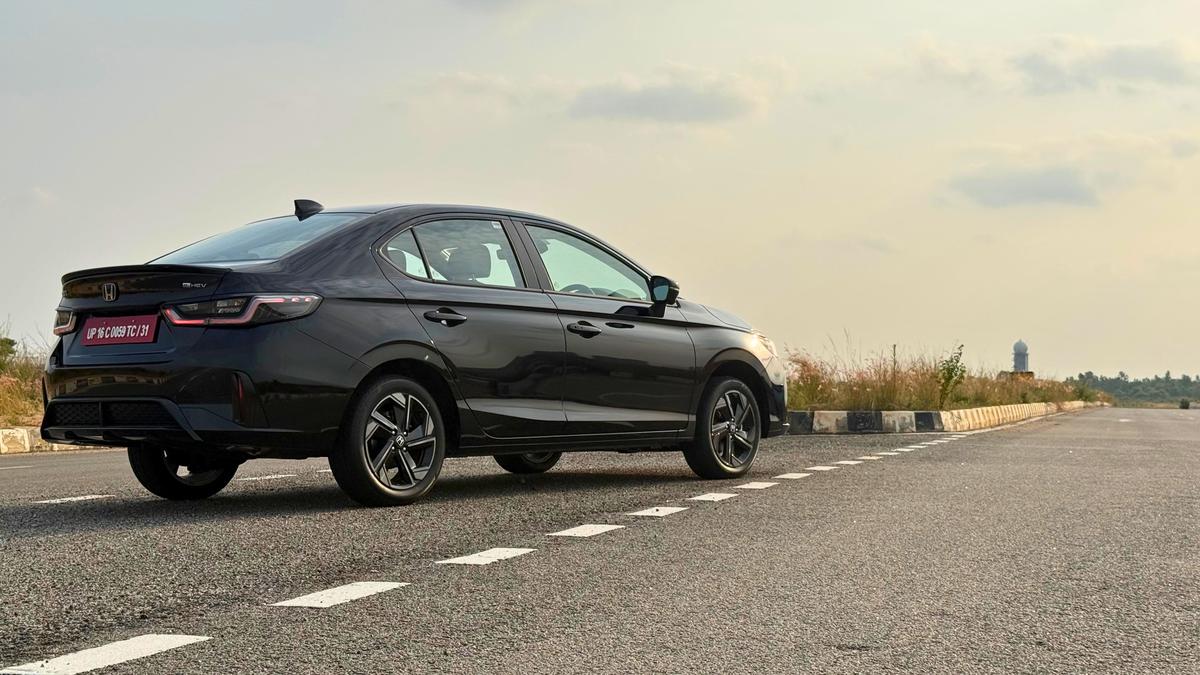
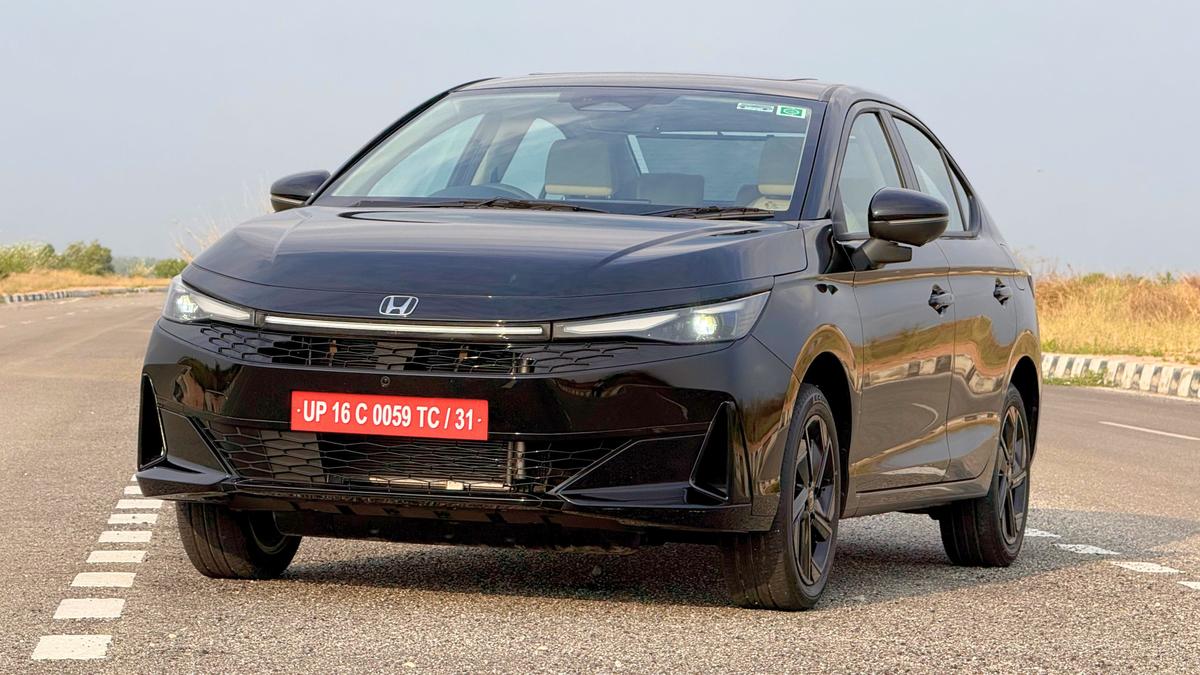
Honda has opted for "admirable restraint" in this update. The most striking changes are at the front fascia. The new "Blade-Eye" LED headlamps are slimmer and more technical in appearance, complemented by a connected light bar that aligns the City with Honda’s global design language seen in the Accord and Civic. The grille has been cleaned up, removing excessive chrome in favor of a more sophisticated, premium presence.
Dimensions and Presence
At 4,594 mm in length, the City remains one of the most substantial vehicles in its class. Unlike its rivals, who have embraced sharp creases and polarizing geometries, the City maintains a timeless silhouette. The 2026 update introduces redesigned diamond-cut alloy wheels and refreshed detailing on the rear bumper, ensuring the car looks contemporary without losing the "executive" maturity that defines the brand.
The Hybrid Powerhouse
The heart of the 2026 flagship is the self-charging strong-hybrid system. It pairs a 1.5-litre Atkinson-cycle i-VTEC petrol engine with a dual-motor electric setup and a lithium-ion battery. This configuration produces a combined output of 126 PS and a massive 253 Nm of peak torque, the latter being available almost instantaneously thanks to the electric motors.
Chronology: The Evolution of a Segment Leader
To understand the significance of the 2026 model, one must look at the City’s trajectory over the last twenty-five years in India.
- The Foundation (1998–2003): The first City introduced India to VTEC technology, establishing Honda as a performance leader.
- The "Dolphin" Era (2003–2008): A shift toward fuel efficiency and interior space, cementing its status as the "family" executive sedan.
- The Arrow-Shot Design (2008–2014): A return to sporty aesthetics and the introduction of the sunroof as a luxury staple.
- The Diesel & Modern Tech Era (2014–2020): The introduction of the i-DTEC engine and a focus on connectivity.
- The Hybrid Pivot (2022–Present): Recognizing the global shift toward electrification, Honda introduced the e:HEV, setting the stage for the 2026 model which refines this technology for a more demanding, tech-savvy audience.
The 2026 model represents the culmination of these eras: it retains the VTEC soul, the "Dolphin" space, the "Arrow-Shot" premium feel, and the hybrid future.
Supporting Data: Performance, Efficiency, and Safety
The 2026 Honda City’s appeal is backed by empirical data that positions it uniquely against both naturally aspirated and turbocharged rivals.
Real-World Efficiency
While turbocharged engines (like the 1.5 TSI found in the Virtus and Slavia) offer explosive mid-range punch, their fuel efficiency is highly sensitive to driving styles. In contrast, the Honda City Hybrid thrives in the variable conditions of Indian infrastructure. During testing across Bengaluru’s outskirts—including the demanding incline of Nandi Hills—the City returned an indicated fuel economy of 23.5 km/l. This makes it nearly twice as efficient as some of its petrol-only competitors in heavy traffic.
Performance Metrics
The hybrid powertrain allows for a 0-100 km/h sprint in just 7.9 seconds. While it lacks the "violent" kick-down of a DSG-equipped turbo-petrol, its power delivery is linear and relentless. The 253 Nm of torque is available from 0 RPM, providing a "point-and-shoot" capability in city traffic that conventional internal combustion engines cannot replicate.
Safety and ADAS (Honda Sensing)
Honda has democratized safety by making six airbags standard across the range. However, the standout feature is the Honda Sensing suite, which includes:
- Adaptive Cruise Control (ACC) with Low-Speed Follow: Essential for highway cruising and bumper-to-bumper traffic.
- Lane Keep Assist System (LKAS): Gently nudges the steering to keep the car centered.
- Collision Mitigation Braking System (CMBS): Can autonomously apply brakes to prevent or mitigate a frontal collision.
- Lead Car Departure Notification: A small but useful feature for distracted drivers at traffic lights.
The Driving Experience: Refinement as a Philosophy
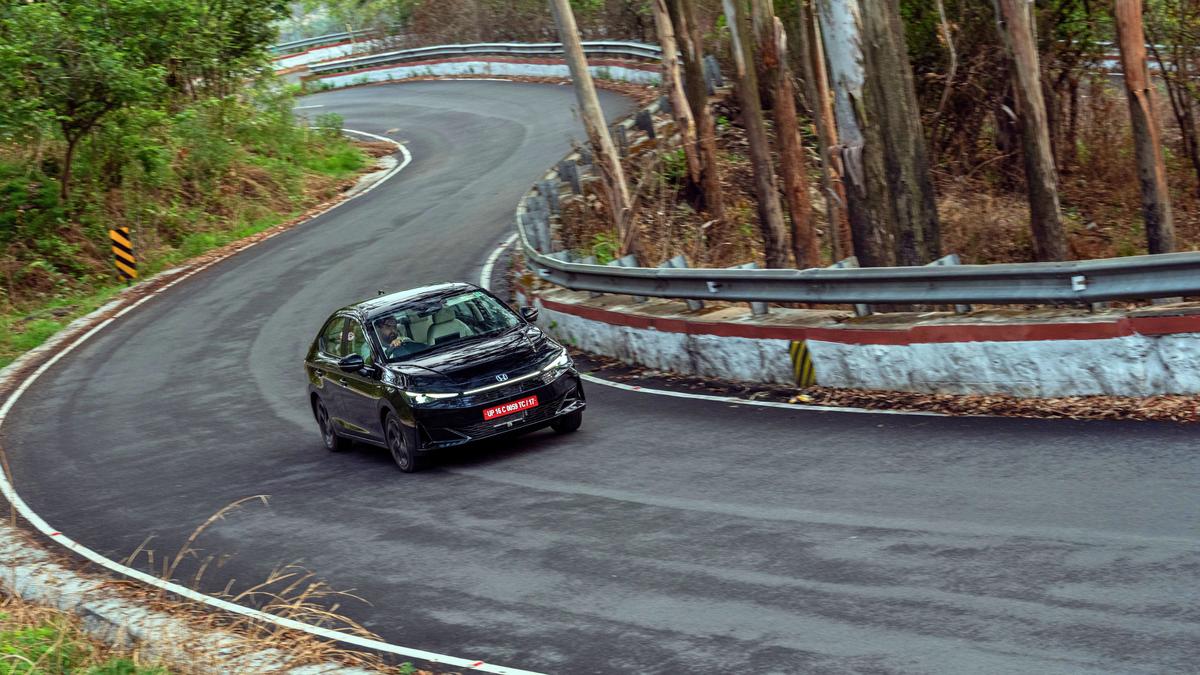
Driving the 2026 City through the winding roads of Nandi Hills reveals a chassis tuned for composure rather than raw aggression. The transition between the three drive modes—EV Drive, Hybrid Drive, and Engine Drive—is virtually imperceptible to the driver.
Ride Quality
One of the most significant takeaways from the 2026 update is the suspension tuning. The City manages to absorb highway expansion joints and broken country roads with a level of maturity that rivals entry-level luxury cars from brands like BMW or Audi. There is a "float-free" nature to the ride that keeps passengers comfortable even during spirited climbs up mountain hairpins.
Interior Ambience
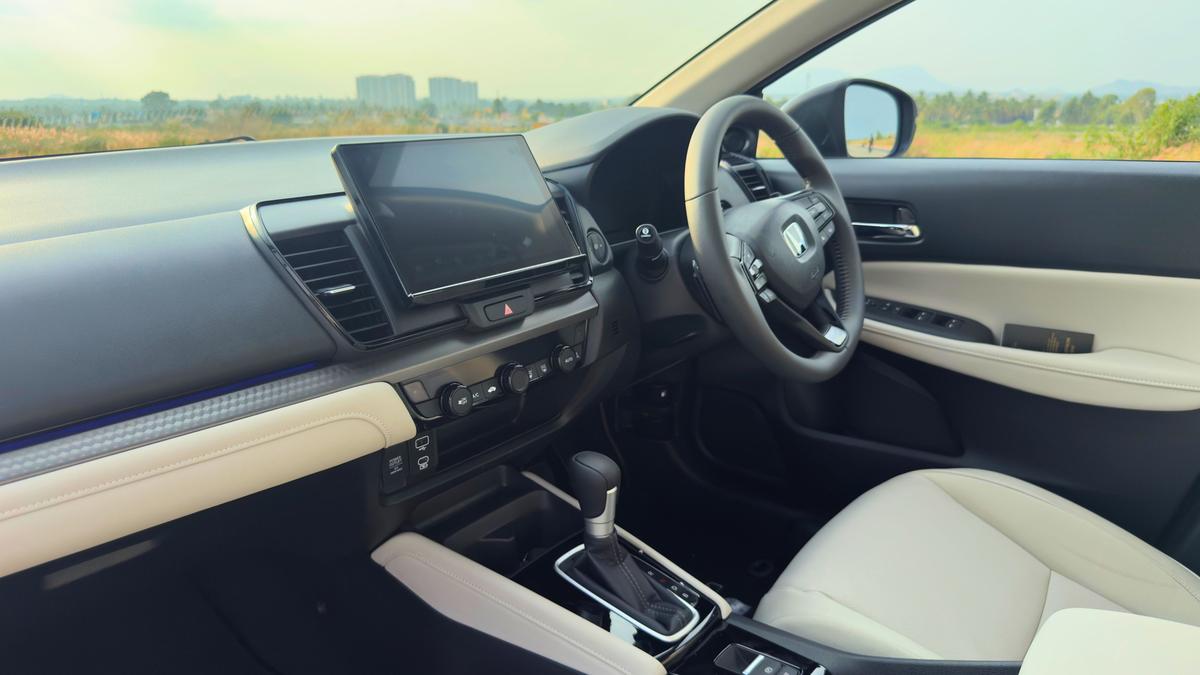
Inside, the ivory-and-black theme creates an airy, expansive feeling. Honda has focused on "human-centric" design, ensuring that all touchpoints feel premium. The inclusion of ventilated seats is a vital nod to the Indian climate, while the wireless smartphone integration (Apple CarPlay and Android Auto) works seamlessly.
However, no car is without its flaws. The infotainment system, while functional and larger than previous iterations, lacks the high-definition crispness and rapid-fire response times found in the Hyundai Verna or the Volkswagen Group twins. Similarly, the 360-degree camera, though a welcome addition for parking in tight spots, suffers from average resolution that feels slightly behind the curve for a car costing INR 20 lakh.
Official Responses and Market Positioning
Honda’s official strategy with the 2026 City appears to be one of "Calculated Premiumization." By pricing the car up to the 20-lakh mark, they are targeting a buyer who is perhaps considering a mid-size SUV but desires the status and driving dynamics of a sedan.
Industry analysts suggest that Honda is leaning into the "Strong Hybrid" narrative to differentiate itself from the "Mild Hybrids" offered by competitors like Maruti Suzuki or the pure "Turbo-Petrol" strategy of the Europeans. By offering a car that requires no external charging but delivers EV-like efficiency, Honda is addressing the primary barrier to EV adoption in India: range anxiety and charging infrastructure.
Implications: The Future of the Mid-Size Sedan
The 2026 Honda City arrives at a critical juncture. The "SUV-ification" of the Indian market has seen many iconic sedan nameplates discontinued. The City’s survival and evolution carry several implications for the industry:
- The Relevance of the Three-Box Design: The City proves that for a specific segment of the population—executives, small families, and chauffeur-driven owners—the comfort, boot space (506 litres in petrol variants), and "status" of a sedan remain unmatched.
- Hybridization as the Middle Path: As the government pushes for greener mobility, the City’s hybrid system offers a pragmatic solution. It provides the environmental benefits of reduced emissions without the logistical hurdles of a pure EV.
- Sophistication over Spectacle: In a market where "visual drama" often trumps mechanical depth, the City is a bet on the "smart" buyer. It appeals to those who value NVH (Noise, Vibration, and Harshness) levels, long-term reliability, and low cost of ownership over flashy LED strips or aggressive body kits.
Conclusion: The Smartest Contender
The 2026 Honda City may not be the "loudest" car in its segment. It doesn’t scream for attention with futuristic styling or boast the highest top speed. Instead, it offers a masterclass in balance. It is a car that understands its audience—offering space for the family, technology for the enthusiast, and efficiency for the pragmatist.
While the Virtus and Slavia will continue to win the hearts of those who live for the weekend drive, the Honda City Hybrid is arguably the better car for the other five days of the week. In the evolving landscape of 2026, being the "smartest" contender might just be the most valuable trait of all.
