

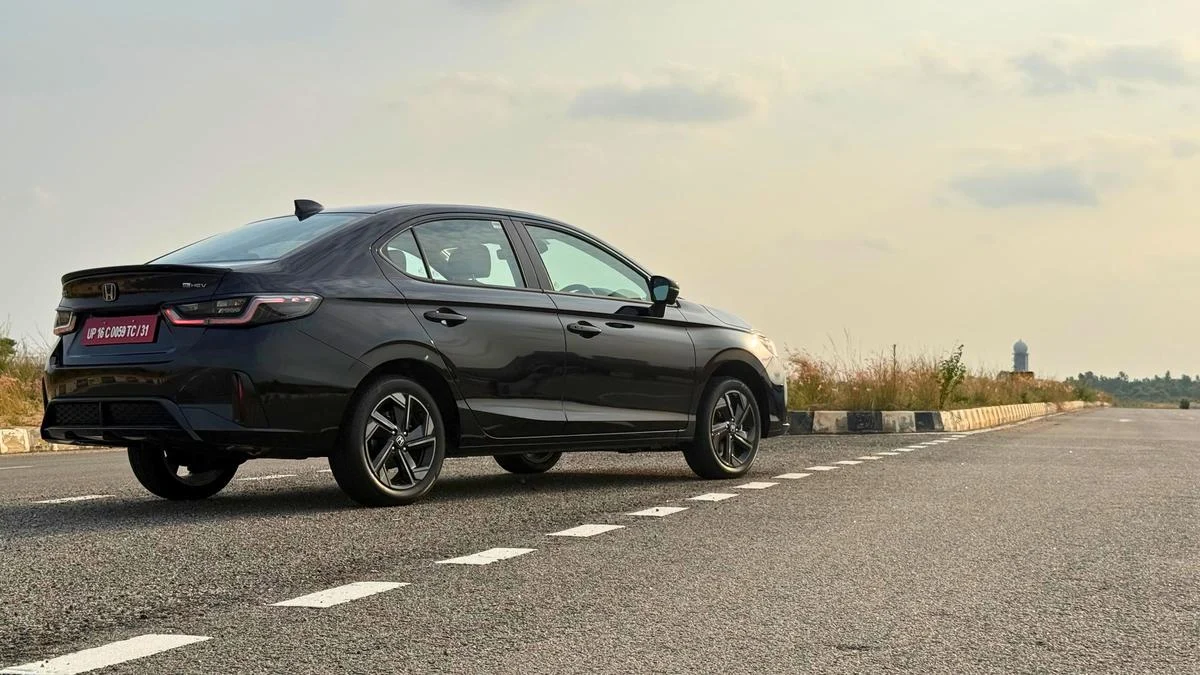
The midsize sedan segment in India, once the crowning jewel of the automotive market, has undergone a radical transformation over the last decade. After being momentarily eclipsed by the relentless rise of the SUV, the category has witnessed a spirited "sedan renaissance" driven by European performance and modern engineering. For the past few years, the conversation has been dominated by the "German-Czech twins"—the Volkswagen Virtus and the Skoda Slavia. These vehicles, with their TSI turbocharged engines and stiff, enthusiast-focused chassis, became the default choice for those seeking a "driver’s car."
However, the 2026 Honda City has emerged to challenge this narrative, not by mimicking its rivals, but by perfecting its own legendary formula. With a refreshed aesthetic, a significant technological overhaul, and a class-leading strong-hybrid powertrain, the City is no longer just a "safe" choice; it is arguably the most sophisticated all-rounder in the segment.
I. Main Facts: The 2026 Paradigm Shift
The 2026 Honda City represents a pivotal moment for Honda Cars India. Priced between INR 11.99 lakh and INR 20 lakh (ex-showroom), the lineup spans from the traditional internal combustion engine (ICE) variants to the high-tech e:HEV (Hybrid Electric Vehicle) flagship.
Key Specifications and Highlights:
- Powertrain: 1.5-litre Atkinson-cycle i-VTEC petrol engine paired with a dual-motor self-charging hybrid system.
- Performance: A combined output of 126 PS and a staggering 253 Nm of peak torque, enabling a 0-100 km/h sprint in just 7.9 seconds.
- Efficiency: An ARAI-certified mileage that translates to real-world figures of approximately 23.5 km/l.
- Safety: The inclusion of "Honda Sensing" (Level 2 ADAS) as a standard or near-standard feature across high-spec trims.
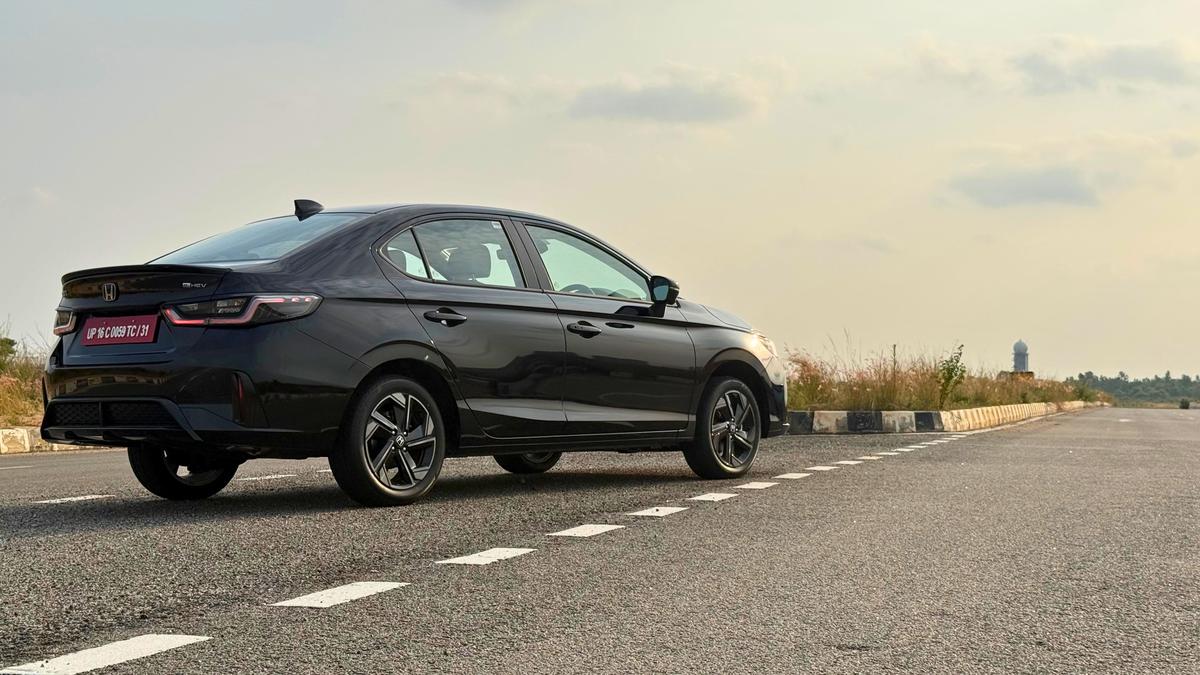
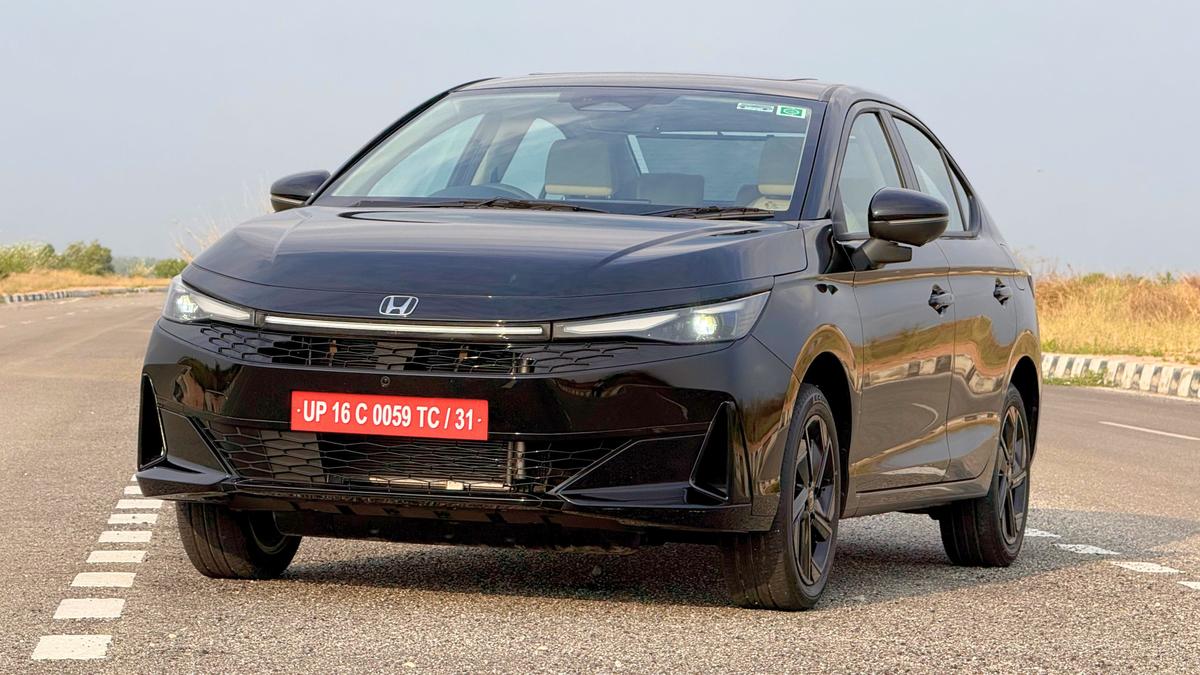
- Design Philosophy: "Understated Sophistication"—focusing on clean lines and premium presence over aggressive, polarizing styling.
While the Virtus and Slavia appeal to the heart with their explosive mid-range turbo-punch, the City e:HEV appeals to both the heart and the head. It offers the instantaneous torque of an electric vehicle without the range anxiety, packaged in a body that remains the gold standard for cabin ergonomics.
II. Chronology: The Evolution of an Icon
To understand the 2026 model, one must look at the City’s 25-year journey in the Indian market. Since its introduction in 1998, the City has survived the onslaught of the SUV craze, the decline of diesel, and the shift toward electrification.
- The Early Eras (1998–2013): The City established itself as the aspirational "white-collar" sedan. From the high-revving VTEC of the first generation to the "Arrow Shot" design of the third, it was the benchmark for refinement.
- The Diesel Pivot (2014–2019): With the fourth generation, Honda introduced the i-DTEC diesel engine to counter the Hyundai Verna. While successful, it lacked the "Honda-ness" of its petrol counterparts.
- The Hybrid Revolution (2022–Present): Realizing that the future lay in electrification rather than diesel, Honda introduced the e:HEV technology. The 2026 update is the culmination of this transition—a car that finally bridges the gap between traditional mechanical engineering and future-forward electric mobility.
The 2026 refresh is not a "ground-up" redesign but a calculated "refining of the formula." Honda has listened to feedback regarding the previous model’s ground clearance and tech-stack, implementing subtle but effective changes to ensure the car remains competitive against newer entrants.
III. Supporting Data: Engineering and Performance Analysis
The heart of the 2026 Honda City’s appeal lies in its technical data, specifically the way it manages power delivery and fuel consumption.
The e:HEV Powertrain: A Triple-Mode System
Unlike "mild hybrids" that merely assist the engine, Honda’s strong-hybrid system is a complex engineering feat. It operates in three distinct modes:
- EV Drive Mode: The car runs solely on the lithium-ion battery, utilizing the electric motor for silent, zero-emission city crawling.
- Hybrid Drive Mode: The petrol engine acts as a generator, supplying electricity to the motor, which then drives the wheels. This provides the "electric feel" and instant torque (253 Nm) that makes the City feel surprisingly quick.
- Engine Drive Mode: At high-speed cruising (above 80–100 km/h), a lock-up clutch connects the engine directly to the wheels, as internal combustion is most efficient at constant high speeds.
Real-World Dynamics
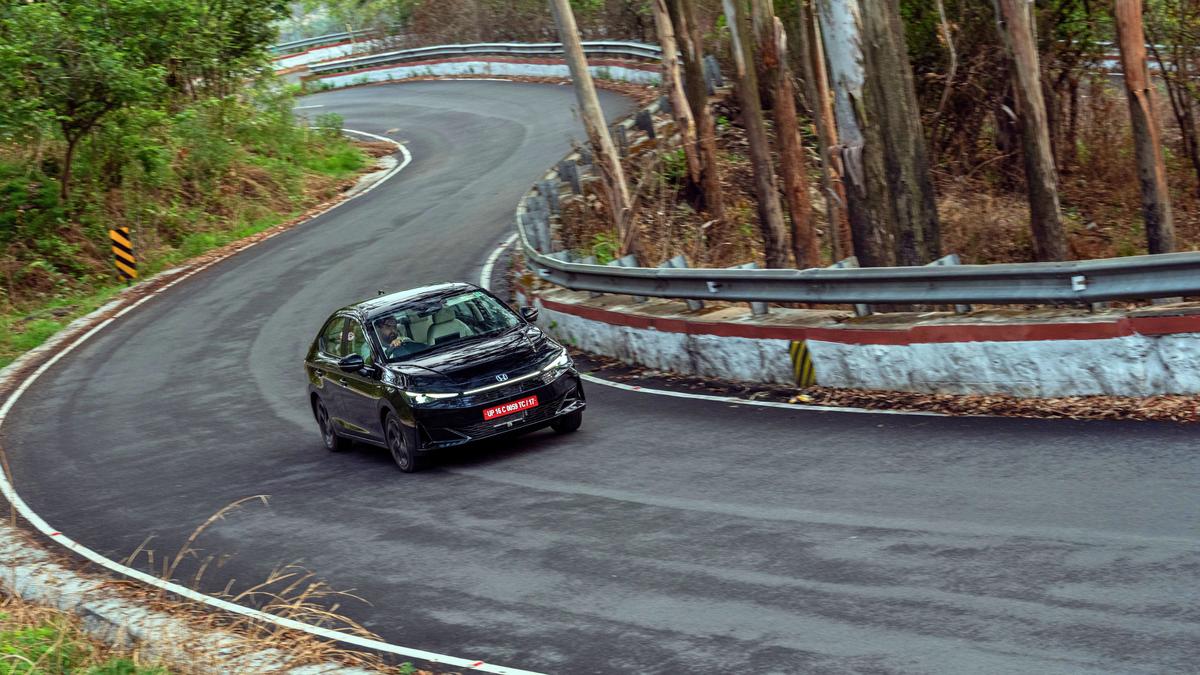
During extensive testing on the outskirts of Bengaluru—stretching from the high-speed airport toll roads to the technical, winding hairpins of Nandi Hills—the City’s composure was the standout trait. While the Volkswagen Virtus GT offers a more communicative steering rack, the City counters with a ride quality that feels "expensive."
The suspension tuning has reached a level of maturity where highway expansion joints and broken country roads are neutralized with minimal cabin intrusion. In the 0-100 km/h test, the City clocked 7.9 seconds, which puts it within striking distance of the 1.5 TSI engines of its rivals, yet it does so with far superior fuel economy.
Cabin and Ergonomics
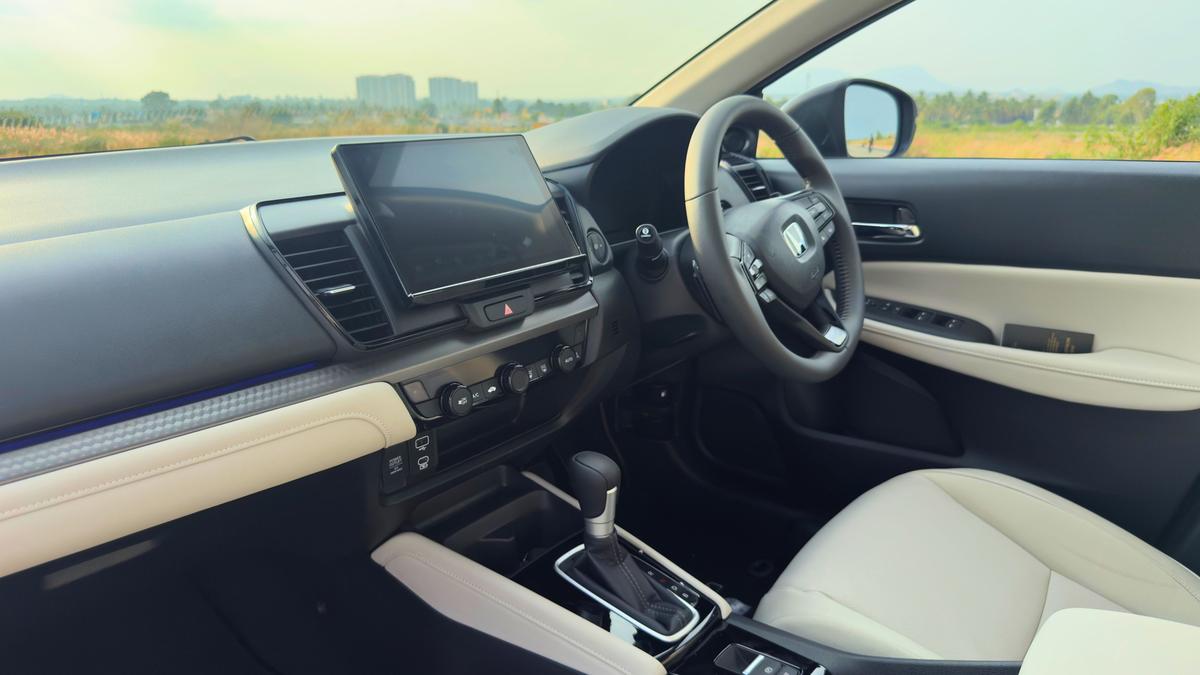
The City continues to lead in "Man Maximum, Machine Minimum" philosophy.
- Dimensions: At 4,594 mm, it utilizes its wheelbase to offer rear-seat legroom that rivals cars from the segment above (D-segment).
- Features: The 2026 update adds ventilated seats, a 360-degree camera system, and wireless smartphone integration. While the 8-inch infotainment screen is functional, data suggests that users find the UI slightly dated compared to the high-definition "glass cockpits" found in the Hyundai Verna.
IV. Official Responses: Honda’s Strategic Restraint
Industry analysts and Honda representatives suggest that the "restraint" shown in the 2026 design is a deliberate brand strategy. While the Hyundai Verna has gone for a "Parametric Dynamism" look with light bars and sharp creases that may age quickly, Honda is betting on "timelessness."
Market Positioning:
Honda’s internal data indicates that the City buyer is typically a professional who values reliability and "quiet luxury" over flashiness. "We aren’t chasing the loudest design," a source close to the development noted. "We are chasing the most seamless ownership experience."
Safety as a Standard:
Honda has been vocal about its "Safety for Everyone" global vision. By integrating the Honda Sensing ADAS suite—which includes Collision Mitigation Braking (CMBS) and Adaptive Cruise Control—Honda is positioning the City as the safest vehicle for families. The addition of "Low-Speed Follow" in the 2026 hybrid variant is a direct response to Indian traffic conditions, allowing the car to stop and go automatically in congestion.
V. Implications: The Future of the Midsize Sedan
The arrival of the 2026 Honda City Hybrid has significant implications for the Indian automotive landscape.
1. The Hybrid vs. Turbo Debate
For years, the choice was between a fuel-efficient but sluggish naturally aspirated engine and a thirsty but fast turbo-petrol. The City Hybrid breaks this dichotomy. It proves that you can have 250+ Nm of torque (rivaling 2.0L diesel engines) while maintaining the fuel economy of a small hatchback. This may force rivals like Volkswagen and Skoda to consider bringing their global hybrid powertrains to India.
2. The Resale Value Factor
In the Indian used-car market, the Honda City has historically held its value better than almost any other sedan. The 2026 model, with its simplified but robust hybrid tech, is expected to continue this trend. As fuel prices remain volatile, the high-efficiency hybrid will likely be a highly sought-after commodity in the secondary market five years from now.
3. A Challenge to entry-level Luxury
The review notes that the City’s ride quality and interior space "rival entry-level luxury sedans costing significantly more." This is a crucial observation. As the prices of the BMW 2 Series or Mercedes-Benz A-Class climb toward the INR 50 lakh mark, the 2026 Honda City at INR 20 lakh offers 80% of the luxury experience for 40% of the price.
Conclusion: The Smartest Contender
The 2026 Honda City does not try to be a sports car, nor does it try to be a spaceship. It is a masterclass in balance. It addresses the enthusiast’s need for torque, the family’s need for space, and the owner’s need for efficiency.
While the Virtus and Slavia will continue to be the darlings of the "track day" crowd, the Honda City remains the definitive choice for the discerning urban professional. It is a car that understands that in the real world, refinement and reliability are the ultimate luxuries. As the segment evolves, the City hasn’t just kept up; it has redefined what an executive sedan should be in an era of high fuel costs and increasing environmental consciousness. It may not be the loudest car in the room, but it is undoubtedly the smartest.
