

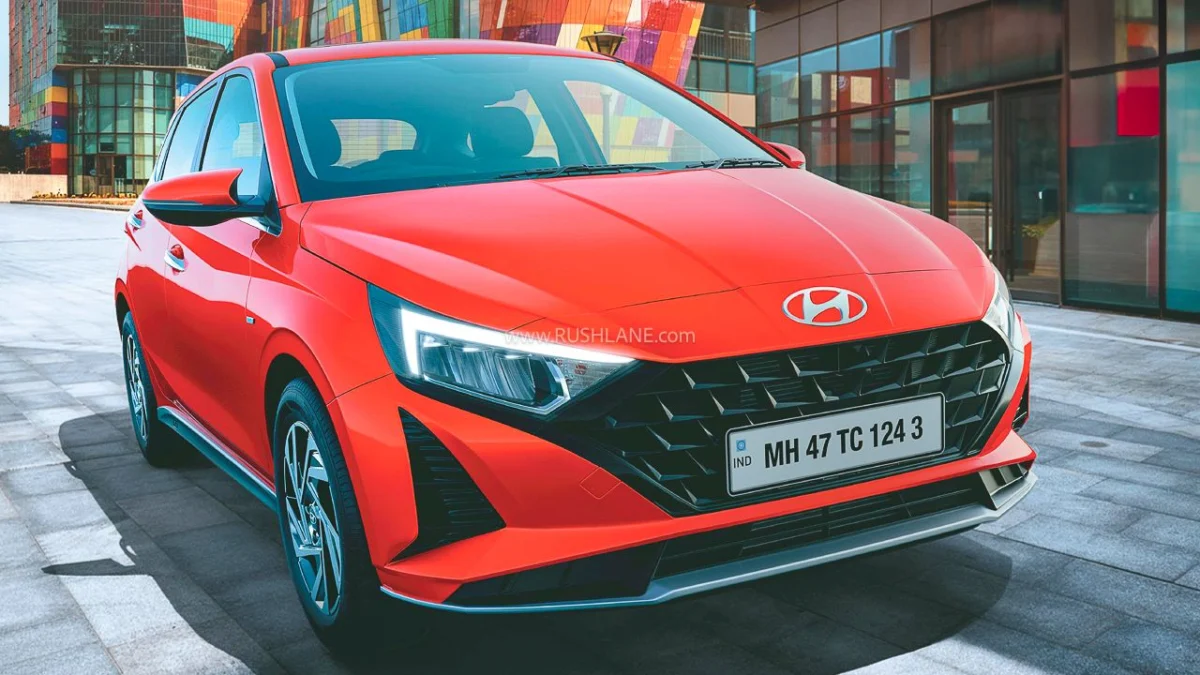
New Delhi, India – In an era where the Indian automotive landscape is increasingly dominated by SUVs and crossovers, Hyundai Motor India Limited (HMIL) has announced a monumental achievement for one of its most enduring nameplates. The Hyundai i20, the vehicle that arguably pioneered the "premium hatchback" segment in the country, has officially crossed the 15 lakh (1.5 million) cumulative sales milestone.
Since its debut in 2008, the i20 has not merely been a product in a portfolio; it has served as a barometer for the evolving tastes of the Indian middle class. Spanning nearly two decades and three distinct generations, the i20’s journey from a niche premium offering to a household name represents a significant chapter in India’s motoring history.
1. The Milestone: Analyzing the 15 Lakh Achievement
The achievement of 15 lakh sales is a testament to the i20’s sustained relevance. To put this figure into perspective, Hyundai has averaged approximately 83,333 units of the i20 every year for the past 18 years. This consistency is particularly noteworthy given the volatility of the Indian market, which has seen the rise and fall of several competitors, shifts in fuel preferences, and radical changes in safety and emission regulations.
While sales volumes have fluctuated—peaking during the mid-2010s when the "Elite i20" became a cultural phenomenon—the hatchback has maintained a steady presence. Even as the market shifts toward sub-compact SUVs like the Hyundai Venue and the micro-SUV Exter, the i20 continues to attract a specific demographic: those who prioritize driving dynamics, low-slung aesthetics, and a sophisticated feature set over the "tall-boy" stance of an SUV.
2. A Chronological Evolution: Three Generations of Innovation
The story of the i20 is the story of Hyundai’s growth in India. The vehicle has undergone three major generational shifts, each reflecting the technological advancements of its time.
The Genesis (2008–2014): Redefining the Small Car
When the first-generation i20 arrived in late 2008, it faced a skeptical market. At the time, hatchbacks were viewed as "budget" or "entry-level" transport. The i20, which replaced the aging Hyundai Getz, challenged this notion. It introduced features previously reserved for luxury sedans: multiple airbags, ABS, a cooled glovebox, and steering-mounted controls. It was the first car to prove that Indian buyers were willing to pay a premium for a "small car" if it offered world-class quality.
The "Elite" Era (2014–2020): Aesthetic Mastery
The second generation, rebranded as the "Elite i20," was perhaps the most successful iteration. Adopting the ‘Fluidic Sculpture 2.0’ design language, it won the prestigious Indian Car of the Year (ICOTY) award in 2015. This model solidified the i20’s reputation for having the best interiors in its class, featuring soft-touch materials and a European-inspired design that appealed to young professionals.
The Modern Standard (2020–Present): Tech and Performance
The current third-generation model moved toward a sharper, "Sensuous Sportiness" design language. This era marked a significant pivot in mechanical offerings. As India transitioned to BS6 Phase II norms, Hyundai streamlined the engine lineup, eventually phasing out the diesel engines that were once a staple of the i20 range. This generation also saw the introduction of the N Line, catering to the burgeoning enthusiast community.
3. Supporting Data: Technical Specifications and Market Positioning
The current Hyundai i20 lineup is strategically diversified to cover a wide price bracket, ranging from Rs 6.04 lakh to Rs 11.74 lakh (ex-showroom).
Powertrain Options
Hyundai currently offers two primary engine configurations for the i20 in India:

- 1.2-litre Kappa Petrol: A naturally aspirated four-cylinder engine designed for urban efficiency and smoothness. It produces 83 PS (MT) and 88 PS (IVT) with 115 Nm of torque. Transmission options include a 5-speed manual and an Intelligent Variable Transmission (IVT).
- 1.0-litre Turbo GDi Petrol (N Line Exclusive): For performance seekers, the N Line variant features a turbocharged direct-injection engine delivering 120 PS and 172 Nm of torque. It is paired with either a 6-speed manual or a lightning-fast 7-speed Dual Clutch Transmission (DCT).
Feature Parity
The i20’s sales success is underpinned by its "feature-first" philosophy. The top-tier Asta (O) and N Line trims include:
- Safety: Six airbags as standard across all variants, Electronic Stability Control (ESC), Hill Start Assist, and a Tyre Pressure Monitoring System (TPMS).
- Infotainment: A 10.25-inch touchscreen with integrated navigation and a premium 7-speaker Bose sound system.
- Connectivity: Hyundai’s Bluelink technology, offering over 60 connected-car features, including remote engine start/stop and SOS alerts.
- Luxury Touches: An electric sunroof, wireless charging, and ambient lighting.
4. Official Strategy: Adaptation in a Changing Market
While official statements from Hyundai celebrate the 15-lakh milestone, the company’s internal strategy reveals a pragmatic approach to the "SUV-ification" of India. Hyundai executives have frequently noted that while the SUV segment (comprising the Creta, Venue, and Exter) now accounts for over 60% of their total sales, the i20 remains a "pillar brand."
The introduction of the i20 Knight Edition and the N Line sub-brand is a calculated move to prevent the hatchback from becoming a commodity. By positioning the i20 as a "lifestyle" vehicle rather than just a commuter, Hyundai has managed to retain a premium price point even as volume hatchbacks face stiff competition from entry-level SUVs.
The recent spotlight on the i20 during the FIFA World Cup Finals in the United States—where the next-generation global model was showcased—further reinforces the brand’s international prestige. Hyundai continues to use the i20 as its primary contender in the World Rally Championship (WRC), a fact that the company leverages in its marketing for the N Line variants in India to build "aspirational value."
5. Market Implications: The Future of the Premium Hatchback
The i20’s milestone arrives at a crossroads for the Indian automotive industry. The premium hatchback segment, which once included heavyweights like the Honda Jazz and Volkswagen Polo, has seen significant contraction. Today, the i20 primarily competes with the Maruti Suzuki Baleno and the Tata Altroz.
The SUV Threat
The rise of the Tata Punch and Hyundai’s own Exter has created a price overlap. A consumer with a budget of Rs 8-10 lakh now faces a choice: a high-spec premium hatchback (i20) or a mid-spec micro-SUV (Exter/Punch). Data suggests that "first-time buyers" are increasingly leaning toward SUVs for their perceived road presence and higher ground clearance.
The Next Generation
With the next-generation i20 already launched in Brazil, the question of an Indian debut looms large. The Brazilian model features a redesigned grille, updated LED signatures, and a more minimalist interior. Given that India is one of Hyundai’s largest manufacturing hubs for the i20 (exporting to several markets), an update for the Indian domestic market is likely on the horizon for late 2025 or 2026.
6. Conclusion: A Legacy of "Premiumization"
The Hyundai i20’s journey to 15 lakh sales is more than just a numerical success; it is a testament to the "Premiumization" of the Indian car buyer. In 2008, the idea of a 10-lakh-rupee hatchback was unthinkable to many. Today, the i20 has made that the norm, proving that quality, safety, and technology are valued as much in a compact footprint as they are in larger vehicles.
As Hyundai looks toward the future, the i20 will likely serve as the brand’s bridge between traditional internal combustion excellence and the eventual shift toward electrification in the compact segment. For now, the 15 lakh units on Indian roads stand as a rolling tribute to a car that refused to be "just another hatchback."
Whether the i20 can reach the 20-lakh milestone in an SUV-heavy market remains to be seen, but its legacy as the car that raised the bar for the Indian automotive industry is already secure.
