Introduction: A Tale of Two Trajectories
The Indian two-wheeler landscape in late 2026 is undergoing a profound transformation, and no company exemplifies this shift more vividly than Bajaj Auto. The Pune-based automotive giant recently released its domestic sales figures for September 2026 and the third quarter (July–September) of the calendar year, revealing a complex narrative of declining entry-level volumes countered by an aggressive surge in electric mobility and premium motorcycles.
While the headline figure for September shows a double-digit decline in domestic sales, a deeper dive into the data suggests that Bajaj is successfully navigating a "premiumization" strategy. The company is trading off low-margin commuter volumes for high-value electric and mid-capacity performance bikes. As the Pulsar brand evolves and the Chetak electric scooter gains unprecedented traction, Bajaj Auto finds itself at a pivotal crossroads in its decades-long history.
I. Main Facts: The September Slump and the Quarterly Cushion
In September 2026, Bajaj Auto’s domestic two-wheeler sales reached 2,28,004 units. Compared to the 2,61,468 units sold in September 2025, this represents a significant year-on-year (YoY) decline of 12.80%. This contraction was primarily driven by a sharp downturn in the economy-commuter segment, which has historically been the volume backbone of the Indian market.
However, the quarterly performance offers a more stabilized view. For the July–September 2026 period (Q3), Bajaj registered 5,63,754 units, marking a marginal growth of 0.21% over the 5,62,594 units sold in the same period last year. This quarterly stability, despite a weak September, was made possible by a stellar performance in July and August, bolstered significantly by the exponential growth of the Chetak electric portfolio.
The Brand Hierarchy
- Pulsar: Remains the undisputed king of the portfolio, accounting for nearly 60% of total September sales.
- Chetak: Now the second-largest brand by volume, contributing 18.83% of sales in September and over 25% for the entire quarter.
- Platina: Once a volume driver, it saw a massive 39.04% decline in September.
- Dominar & Avenger: These niche brands provided a silver lining, with Dominar seeing a 73% jump in monthly sales.
II. Chronology: Tracking the Q3 2026 Performance
The journey through the third quarter of 2026 was marked by varying consumer sentiments and a shifting product mix.
July–August 2026: The Electric Momentum
The quarter began with strong momentum for the Chetak EV. Following a series of software updates and the expansion of the "Chetak Experience Centers" into Tier-2 and Tier-3 cities, the electric scooter saw a massive influx of bookings. During these two months, Bajaj managed to front-load its quarterly growth, offsetting the initial signs of fatigue in the 100-110cc internal combustion engine (ICE) segment.
September 2026: The Commuter Correction
As September arrived, the industry faced headwinds in the rural and semi-urban markets. High inflation and a shift in consumer preference toward either electric scooters or more aspirational performance bikes hit the Platina and CT brands hard. The Pulsar brand also felt the pinch in its entry-level 125cc variants.
The Launch of the 2026 Pulsar N250 SS
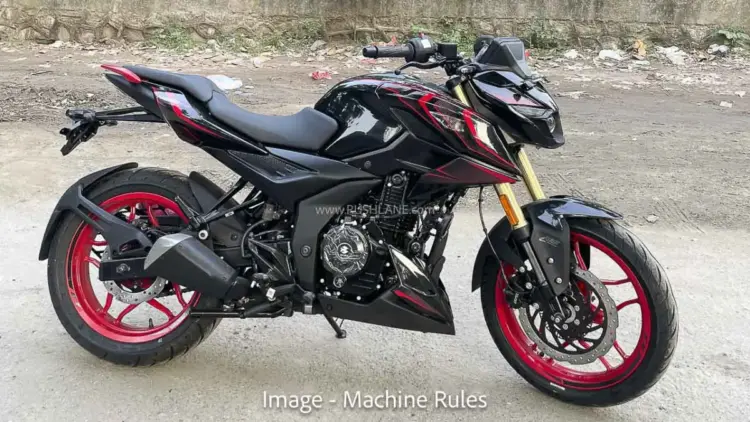
Late in the quarter, Bajaj introduced the 2026 Pulsar N250 SS (Super Sport), featuring a 6-speed gearbox and updated electronics. While this move helped bolster the 250cc segment growth (up 7.91%), it wasn’t enough to counteract the massive volume loss from the 125cc commuter-spec Pulsars during the same month.

III. Supporting Data: A Granular Look at Capacity and Brands
The data reveals a clear "K-shaped" recovery within Bajaj’s own portfolio—where expensive, high-capacity bikes are growing, while affordable, small-capacity bikes are shrinking.
1. The Pulsar Paradox
The Pulsar brand sold 1,36,313 units in September 2026, a 12.51% drop from the previous year. However, the capacity breakup tells the real story:
- 111–125cc: 66,330 units (Down 27.70%).
- 126–150cc: 20,251 units (Down 7.12%).
- 151–200cc: 38,799 units (Up 17.07%).
- 201–250cc: 8,365 units (Up 7.91%).
- 251–350cc: 2,568 units (Up 88.96%).
This data confirms that the "Pulsar" nameplate is successfully migrating upward. Enthusiasts are moving away from the "Pulsar 125" commuter and toward the "NS200" and "N250" performance models.
2. The Chetak Revolution
The most dramatic figures come from the EV division. In Q3 2026, Chetak sales skyrocketed by 153.52%, moving from 56,156 units in 2025 to 1,42,366 units in 2026. In September alone, it added 12,376 incremental units compared to the previous year. This growth is essential for Bajaj as it battles for market share against Ola Electric and TVS Motor Company.
3. The Struggle of the Commuter
The economy segment is in a state of distress.
- Platina: Sales plummeted to 37,952 units in September, a loss of over 24,000 units compared to September 2025.
- CT: Volumes fell by 32.09% to just 4,324 units.
- Freedom (CNG): Interestingly, the Freedom brand (Bajaj’s foray into CNG motorcycles) saw a 36.73% decline in September (2,074 units). This suggests that after the initial novelty, the CNG segment may be facing infrastructure or scalability challenges in 2026.
4. Premium Gains: Dominar and Avenger
The Dominar brand, often criticized for slow starts in previous years, found its stride in late 2026. Dominar sales grew by 73.37% in September (2,259 units). The shift was most notable in the 251–350cc category, which surged by 270.56% quarterly. Similarly, the Avenger cruiser brand grew 12.82% in September, driven entirely by the 220cc variant as the 160cc version was phased out.
IV. Official Responses and Strategic Outlook
While Bajaj Auto’s leadership has traditionally been cautious with monthly fluctuations, industry analysts point to a deliberate strategic pivot. In recent investor calls, the management has emphasized "Value over Volume."
Focus on Margins
Sources close to the company suggest that Bajaj is intentionally reducing its reliance on the hyper-competitive, low-margin 100cc segment. By focusing on the 200cc+ Pulsars and the Dominar range, the company is securing better EBITDA margins even if the total "headcount" of motorcycles sold appears lower.
The EV Ecosystem
Bajaj’s official stance on the Chetak has been one of "aggressive expansion." The company has ramped up its supply chain to ensure that the Chetak is no longer a "niche" product but a mainstream alternative to the ICE scooter. The 153% quarterly growth is a testament to the success of the new, more affordable Chetak variants launched earlier in the year.

The Festive Season Push
Heading into the final quarter of 2026, Bajaj is expected to launch aggressive marketing campaigns for the Pulsar N-series and the new Chetak 2901. Dealers have been instructed to focus on the "upgrade" buyer—the customer moving from a 100cc bike to a 150cc or 200cc Pulsar.
V. Implications: What This Means for the Future of Indian Biking
The September 2026 sales breakup is more than just a balance sheet; it is a roadmap for the future of the Indian two-wheeler industry.
1. The End of the "Basic" Commuter?
The nearly 40% drop in Platina sales suggests that the traditional Indian commuter is changing. With the rise of electric scooters that offer lower running costs and the availability of easy financing for premium bikes, the "basic" 100cc motorcycle is losing its luster. Bajaj’s ability to survive this transition depends on how quickly it can convert Platina loyalists into Chetak or Pulsar 125 buyers.
2. The Dominance of the 200cc+ Segment
The growth in the 251–350cc Pulsar and Dominar categories (up 161% and 270% respectively for the quarter) indicates that the "middleweight" motorcycle market is finally maturing in India. Bajaj is no longer just a "commuter king"; it is becoming a serious player in the performance-touring segment, challenging brands like Royal Enfield.
3. Electric is the New Normal
Chetak now accounts for 1 in every 4 Bajaj vehicles sold domestically. This is a staggering statistic for a company that was once solely defined by its internal combustion engines. If this trend continues, by 2028, electric vehicles could potentially represent 40-50% of Bajaj’s domestic portfolio.
4. Market Share Battle
The 12.80% decline in September domestic sales will likely result in a slight dip in overall market share for that specific month. However, the stability of the Q3 figures (0.21% growth) suggests that Bajaj is holding its ground better than some competitors who lack a strong EV presence.
Conclusion
Bajaj Auto’s performance in September 2026 reflects a company in the midst of a sophisticated evolution. While the decline in total units might worry short-term observers, the underlying data shows a healthy transition toward premiumization and electrification. By successfully growing the Pulsar brand in the 200cc+ space and turning the Chetak into a volume powerhouse, Bajaj is positioning itself not just as a survivor of the EV revolution, but as one of its primary architects. The road ahead may have fewer Platinas, but it will certainly be faster, cleaner, and more premium.