

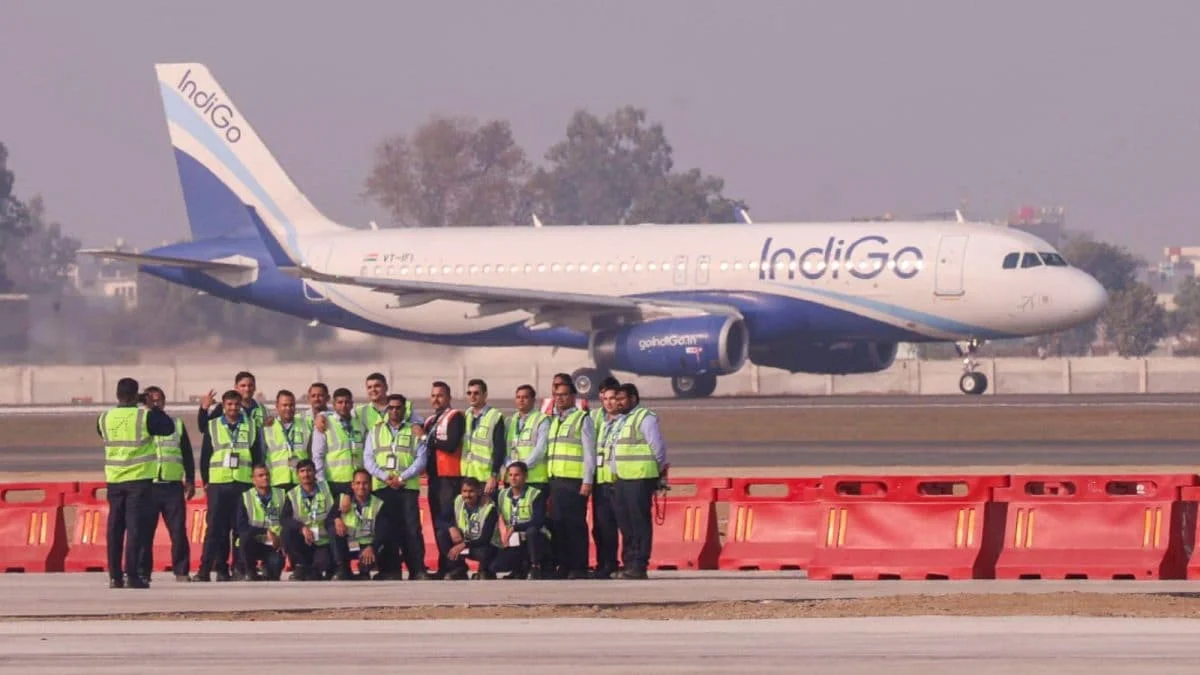
NOIDA – For years, the promise of the Noida International Airport (NIA), popularly known as Jewar Airport, was built on the foundation of accessibility and affordability. Positioned as the secondary aviation hub for the National Capital Region (NCR), it was marketed to the public as a relief valve for the congested Indira Gandhi International (IGI) Airport in Delhi—a place where lower taxes and state-of-the-art infrastructure would translate into cheaper tickets for the common traveler.
However, as the countdown to the June 15, 2026, operational launch begins, the first wave of commercial fare listings has sent shockwaves through the travel community. Far from being the budget-friendly alternative promised by officials, initial ticket prices from IndiGo—the airport’s debut carrier—reveal a startling reality: flying out of Jewar is currently significantly more expensive than flying out of Delhi or even the smaller Hindon Airport.
Main Facts: The Pricing Discrepancy
The primary cause for alarm among prospective passengers is the direct comparison of fares on high-traffic domestic routes. Despite the Uttar Pradesh government’s aggressive fiscal incentives to keep costs low, the market reality reflects a "launch premium" that few anticipated.
The Lucknow Anomaly
The most glaring price gap is observed on the Noida-to-Lucknow route. For the inaugural period in mid-June 2026, a one-way ticket from Jewar Airport to Lucknow is priced at approximately ₹5,401. In contrast, the same journey from Delhi’s IGI Airport is listed at roughly ₹3,394. This represents a staggering 59% price hike for travelers choosing the newer airport, amounting to an additional burden of over ₹2,000 per passenger.
The Metro Routes: Mumbai and Kolkata
The trend continues across other major Indian metros. For flights to Mumbai scheduled for June 15, 2026:
- Jewar Airport: ₹7,026
- IGI Airport (Delhi): ₹6,999
- Hindon Airport (Ghaziabad): ₹6,760
While the difference in the Mumbai route is marginal, the Kolkata route tells a different story. A flight from Jewar to Kolkata is priced at approximately ₹7,123, whereas travelers can fly from Delhi for about ₹5,894 or from Hindon for ₹5,930. For a family of four, choosing Jewar over Delhi for a trip to Kolkata would result in an extra expenditure of nearly ₹5,000 on airfare alone.
Chronology: From Vision to the 2026 Launch
To understand the current pricing frustration, one must look at the timeline of the Noida International Airport’s development and the expectations set by stakeholders over the last half-decade.
- November 2021: Prime Minister Narendra Modi lays the foundation stone for the airport, envisioning it as the "logistics gateway of Northern India." The project is touted to bring massive economic growth to the Yamuna Expressway region.
- 2022–2024: Construction proceeds under Zurich Airport International AG. The Uttar Pradesh government announces a series of tax breaks, including a monumental slash in Value Added Tax (VAT) on Aviation Turbine Fuel (ATF) to lure airlines.
- Late 2025: IndiGo and other carriers begin finalizing flight paths and slot allocations. The "affordable" narrative is reinforced in several investment summits.
- May 2026: Booking engines open for the June 15 launch. The public reacts with confusion as the "Jewar Premium" becomes evident in the pricing algorithms.
- June 15, 2026: Scheduled date for the first commercial flight to take off, marking a historic but controversial milestone in Indian aviation.
Supporting Data: The Hidden Costs of Connectivity
The "sticker shock" of the airfare is compounded by the logistical reality of reaching Jewar. Located approximately 75 to 80 kilometers from central Delhi and nearly 60 kilometers from parts of Noida, the "total cost of travel" for many NCR residents is reaching prohibitive levels.
The Taxi Fare Comparison
Data regarding ground transportation costs highlights a secondary financial hurdle for passengers. For a resident of Noida Sector-18:
- To Jewar Airport: The estimated taxi fare is ₹834.
- To Delhi IGI Airport: The estimated taxi fare is ₹625.
For residents of Greater Noida’s Pari Chowk, who are geographically closer to the new hub, the cab fare to Jewar is roughly ₹559. However, for the vast majority of the NCR population residing in South Delhi, West Delhi, or Gurugram, the commute to Jewar could cost upwards of ₹1,200–₹1,500 via app-based aggregators, not including the time cost of a 90-to-120-minute drive.
Infrastructure Gaps
While the airport is technically ready for flight operations, the supporting public transport infrastructure—such as the dedicated Metro link to the IGI airport and the expansion of the Rapid Rail (RRTS) to the airport terminal—is still in various stages of planning and construction. This leaves passengers dependent on private vehicles or taxis, further inflating the cost of choosing Jewar.
Official Responses: Government Incentives vs. Market Dynamics
The Uttar Pradesh government has not been silent regarding its efforts to lower costs. In fact, on paper, Noida International Airport should be one of the most cost-effective airports for airlines to operate from in Asia.
Fiscal Interventions
To ensure the airport’s success, the state government implemented two major financial levers:
- ATF Tax Reduction: The VAT on Aviation Turbine Fuel was slashed from 25% to just 1%. Since fuel accounts for nearly 40% of an airline’s operating costs, this was expected to result in a 10–15% reduction in ticket prices.
- UDF Waivers: The User Development Fee (UDF)—a charge levied on passengers to fund airport infrastructure—was reduced by 25% for the first three months of operation to incentivize early adoption.
Why the High Fares?
Industry analysts suggest several reasons why these savings haven’t reached the consumer yet:
- Monopoly Pricing: In the initial phase, IndiGo is the primary operator. Without intense competition from other low-cost carriers (LCCs) on the same routes from Jewar, there is little pressure to lower prices.
- Operational Readiness Costs: Launching operations at a greenfield airport involves significant "start-up" costs for airlines, including setting up ground handling, crew bases, and maintenance facilities, which are often amortized into initial ticket prices.
- Demand-Supply Imbalance: Despite the high prices, the novelty of the new airport and the convenience for travelers specifically located in the Yamuna Expressway and Agra-Mathura belt may be sustaining high demand for limited initial slots.
Implications: The Long-Term Outlook for NCR Aviation
The current pricing structure of Jewar Airport raises significant questions about its role in the regional aviation ecosystem. If the airport remains more expensive than IGI, it risks becoming a "niche" hub rather than a mass-market alternative.
The Risk of Underutilization
If price-sensitive travelers continue to flock to IGI or Hindon, Jewar may struggle to meet its initial passenger traffic targets. The airport has been designed to handle 12 million passengers annually in its first phase. Achieving this volume requires attracting the middle-class traveler who prioritizes cost over the "newness" of the facility.
The Competitive Response
The "Jewar Effect" may eventually force IGI Airport to become more competitive, or it may lead to a price war once other airlines like Akasa Air and Air India Express begin operations from NIA in the second half of 2026. Experts believe that by late 2026, as flight frequencies increase from the scheduled morning-to-evening slots to a 24-hour operation, prices will naturally stabilize.
Regional Economic Impact
Despite the fare concerns, the airport remains a catalyst for the "New Noida" and Yamuna Expressway industrial zones. The real estate sector in these areas has already seen a 30–50% appreciation based on the airport’s proximity. However, for the airport to truly succeed as a public utility, the disconnect between government policy (lower taxes) and airline pricing (higher fares) must be addressed.
Conclusion
As June 15, 2026, approaches, the Noida International Airport stands at a crossroads. It is a technological marvel and a testament to India’s infrastructure ambitions. Yet, the "Jewar Paradox"—the reality of an affordable airport selling expensive tickets—threatens to dampen the inaugural celebrations. For the residents of Noida and Greater Noida, the dream of a "local airport" is finally coming true, but for now, that dream comes with a premium price tag that many are not yet ready to pay.
The coming months will be crucial as the Ministry of Civil Aviation and the Uttar Pradesh government monitor these fares. Whether the "invisible hand" of the market will eventually lower these prices, or whether further regulatory intervention is required, remains the billion-rupee question for the NCR’s aviation future.
