

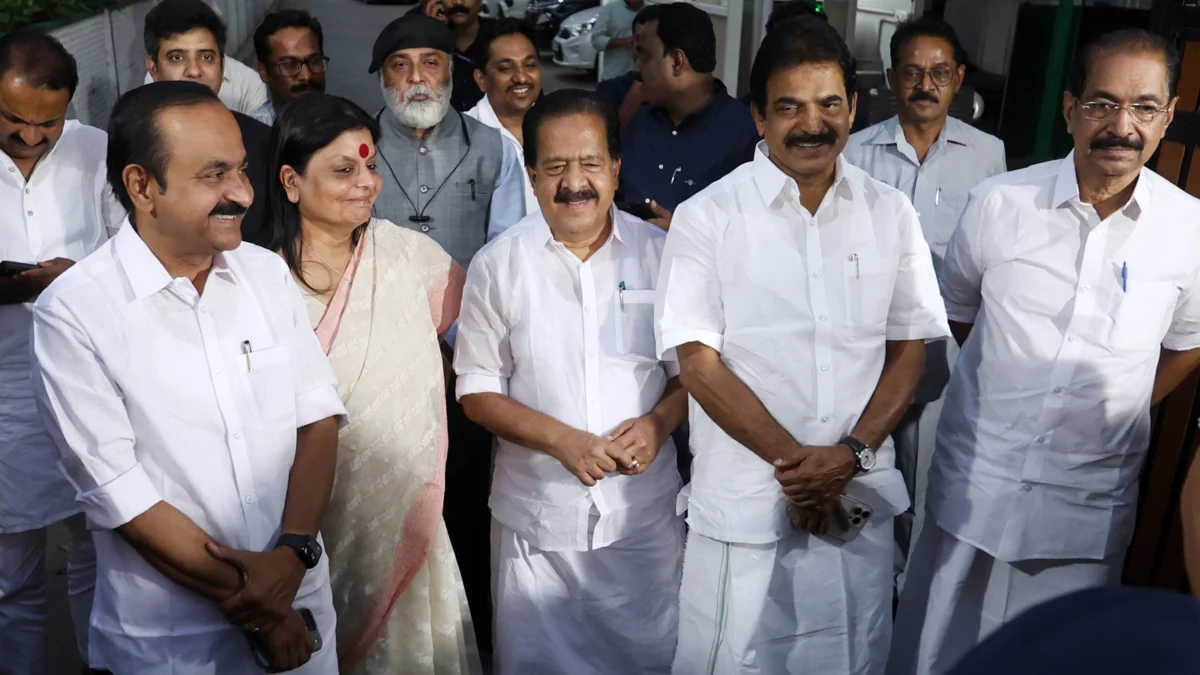
New Delhi, May 14, 2026 – After nine days of intense drama, relentless lobbying, and marathon discussions, the Indian National Congress announced on Wednesday that its much-anticipated Chief Ministerial pick for Kerala would finally be unveiled on Thursday. The decision, expected to resolve a protracted leadership tussle that has gripped the party since its emphatic victory in the recent Assembly elections, comes after a period of unprecedented deliberation, hinting at the deep divisions and complex power dynamics at play within the state unit.
The delay, extending far beyond the timelines observed in other states where the Congress has faced similar internal contests, underscores the unique challenges confronting the party’s high command. While officially declaring that "all discussions have concluded," the extended wait suggests that crafting a formula acceptable to all three prominent contenders – outgoing Leader of the Opposition (LoP) V.D. Satheesan, AICC General Secretary (Organisation) K.C. Venugopal, and former Kerala LoP Ramesh Chennithala – remains a delicate balancing act. The atmosphere in both Delhi and Thiruvananthapuram is thick with anticipation, as party cadres and the public await a resolution to this high-stakes political drama.
A Standoff After Stellar Victory
The Congress-led United Democratic Front (UDF) secured a decisive mandate in the recent Kerala Assembly elections, riding a wave of anti-incumbency and public discontent against the incumbent Left Democratic Front (LDF) government. The victory, hailed as a significant revival for the grand old party in the crucial southern state, was immediately followed by a scramble for the top executive post. What was initially expected to be a swift decision, given the party’s recent history of navigating such situations, morphed into a protracted negotiation, revealing the intricate web of loyalties, factionalism, and strategic considerations that define Kerala Congress politics.
The party’s central leadership, particularly Congress President Mallikarjun Kharge and Lok Sabha LoP Rahul Gandhi, found themselves in an unenviable position, tasked with anointing a leader who could not only unite the diverse factions but also effectively govern a state with a highly politically conscious electorate. The stakes are immense, not just for Kerala, but for the national image of the Congress, which seeks to project stability and decisive leadership in the face of national challenges.
The Three-Way Tussle: Satheesan, Venugopal, Chennithala
At the heart of the deadlock are three influential figures, each bringing a unique set of strengths and support bases to the table. V.D. Satheesan, who served as the Leader of the Opposition in the outgoing Assembly, is widely credited with spearheading the UDF’s aggressive campaign and sustained political mobilisation over the past five years. His articulate debates, sharp critiques of the LDF government, and tireless grassroots work have garnered him significant public favour and the strong backing of key UDF allies, most notably the Indian Union Muslim League (IUML).
K.C. Venugopal, a powerful AICC General Secretary (Organisation), wields considerable influence within the party’s national structure. Despite not being an MLA, his supporters argue that he commands the loyalty of a majority of the newly elected Congress legislators, a crucial factor in the conventional selection process. His proximity to the central leadership, particularly Rahul Gandhi, further strengthens his claim, positioning him as a formidable contender capable of bridging state and national party interests.
Ramesh Chennithala, a seasoned politician and former Leader of the Opposition, represents another significant faction. While the contest has largely narrowed down to Satheesan and Venugopal, Chennithala has not relinquished his claim, leveraging his extensive experience and traditional support base within the party. His continued presence in the race underscores the deeply entrenched factionalism that has historically characterized Kerala Congress politics.
A Prolonged Deliberation: Chronology of the Leadership Battle
The path to Thursday’s anticipated announcement has been anything but smooth, marked by a series of meetings, lobbying efforts, and strategic manoeuvres that have kept political observers and party workers on tenterhooks.
The Initial Euphoria and Subsequent Impasse
The UDF’s victory on May 8, 2026, sparked immediate celebrations across Kerala, with party workers anticipating a quick transition of power. However, the initial euphoria soon gave way to a simmering internal contest. Within days of the results, the three primary contenders and their respective camps converged on New Delhi, transforming the national capital into the epicentre of Kerala politics. The first few days saw a flurry of informal meetings, quiet lobbying, and strategic leaks to the media, each camp attempting to project its leader as the most suitable candidate.
Delegations from Kerala, comprising newly elected MLAs, senior state leaders, and representatives from alliance partners, made their way to the residences of top Congress leaders, including Kharge, Rahul Gandhi, and various AICC general secretaries. These meetings, often held behind closed doors, were aimed at presenting a unified front for their chosen candidate, while simultaneously downplaying the strengths of their rivals.
High Command’s Intervention and Intense Lobbying
As the impasse deepened, the Congress high command officially stepped in. Kharge and Rahul Gandhi held separate and joint meetings with the three contenders, as well as with other key stakeholders from Kerala. These discussions were described as "frank and extensive," delving into the merits of each candidate, the electoral dynamics, the need for party unity, and the broader implications for the UDF government.
Sources close to the leadership indicated that the discussions were not merely about counting heads in the Congress Legislature Party (CLP) but also about assessing the leaders’ public appeal, administrative capabilities, and their ability to command the respect of alliance partners and the broader electorate. The unique political landscape of Kerala, with its history of strong regional parties and a highly literate, politically engaged population, necessitated a more nuanced approach than simply endorsing the leader with the most legislative support.
The Kharge-Gandhi Summit and the Promise of a Resolution
The decisive turn in the marathon deliberations came on Wednesday, May 14, when Congress President Mallikarjun Kharge and Lok Sabha LoP Rahul Gandhi held a nearly 40-minute meeting. This summit, coming after days of individual consultations, was widely seen as the final step in synthesizing the various inputs and arriving at a consensus, or at least a high command directive.
Following this crucial meeting, Congress communications chief Jairam Ramesh issued a brief but significant statement. "As authorised by the members of the Congress Legislature Party (CLP) in Kerala, the high command of the Congress has completed all discussions, and the decision on who the next Chief Minister of Kerala will be will be announced tomorrow (Thursday)," Ramesh declared. While the statement affirmed the conclusion of discussions, the deliberate decision to hold off the announcement for another 24 hours only served to heighten the suspense, reinforcing the belief that the chosen formula was intricately crafted to minimize dissent and ensure a smooth transition.
Unpacking the Claims: Supporting Data and Factional Dynamics
The prolonged stalemate is a testament to the compelling arguments and strong support bases each contender enjoys, forcing the high command to weigh multiple factors beyond simple majority counts.
Satheesan’s Momentum: Public Appeal and Alliance Backing
V.D. Satheesan’s claim is perhaps the most rooted in public sentiment and alliance dynamics. As LoP, he consistently challenged the LDF government on critical issues ranging from governance failures to corruption allegations, effectively shaping the narrative that ultimately favoured the UDF. His aggressive, yet articulate, style resonated with a significant section of the electorate, who saw in him a dynamic and modern leader. Party strategists acknowledge that his consistent presence on television debates and public platforms played a crucial role in rejuvenating the party’s image and mobilising cadres.
Crucially, Satheesan enjoys the unequivocal support of the Indian Union Muslim League (IUML), the second-largest constituent of the UDF with 22 seats. The IUML’s endorsement is a powerful factor, as their backing is vital for the stability and success of any UDF government. Their argument is simple: Satheesan’s leadership was instrumental in the UDF’s victory, and overlooking him would be a disservice to the coalition’s collective effort and the mandate. They contend that his deep understanding of state politics and proven track record as an opposition leader make him the most suitable choice to lead the new government.
Venugopal’s Legislative Clout: The MLA Majority
K.C. Venugopal’s camp, on the other hand, emphasizes adherence to the established convention of appointing a Chief Minister who commands the support of the Congress Legislature Party (CLP). Although not an MLA himself, Venugopal’s extensive network and influence as AICC General Secretary (Organisation) are said to have garnered him the backing of a significant majority of the newly elected MLAs. Many legislators, especially younger ones, see him as a direct conduit to the national leadership, and supporting him could offer better prospects for their own political careers.
His supporters argue that while public sentiment is important, the party’s internal democratic process, as expressed through the CLP, must be respected. They point to his organizational prowess and his ability to work closely with the national leadership as assets that would benefit the state government, particularly in securing central assistance and navigating complex policy matters.
Chennithala’s Persistent Bid
Ramesh Chennithala, despite the narrative shifting towards Satheesan and Venugopal, has maintained his claim. A veteran leader with considerable experience, including stints as a minister and LoP, Chennithala commands a loyal following within certain sections of the party. His supporters argue for his experience and seniority, emphasizing his deep understanding of governance and party management. While his support base might be smaller compared to the other two, his influence cannot be entirely discounted, making his accommodation a key part of any comprehensive solution.
The Role of the Indian Union Muslim League (IUML)
The IUML’s role in this selection process cannot be overstated. As a critical and stable ally of the Congress for decades, their voice carries significant weight. Their public and private endorsements of V.D. Satheesan have put additional pressure on the high command. The IUML views Satheesan as a leader who understands the intricate social and political fabric of Kerala and can effectively represent the interests of all communities within the UDF. Disregarding their preference could risk alienating a vital coalition partner, potentially destabilising the nascent government and future alliance prospects.
Official Responses and Party Stance
In the midst of the intense speculation and behind-the-scenes negotiations, the official communication from the Congress party has been meticulously guarded, aimed at projecting an image of unity and methodical decision-making, despite the visible delays.
Jairam Ramesh’s Statement: Awaiting the Verdict
The statement by Congress communications chief Jairam Ramesh on Wednesday was the sole official pronouncement, confirming that the high command’s deliberations were complete and a decision was imminent. Ramesh’s carefully worded statement, emphasizing that the decision would be announced "tomorrow (Thursday)," served to manage expectations and convey a sense of control over a situation that has appeared chaotic to external observers.
The delay in the announcement, even after discussions were declared "concluded," is interpreted by many as a strategic move. It allows for a cooling-off period, potentially enabling the leadership to communicate the decision privately to the contenders and their factions, thereby mitigating immediate public backlash or expressions of dissent. It also provides time to finalize any potential "compromise formulas" for those not chosen for the top post, such as prominent ministerial berths or key party positions, to ensure their continued cooperation and loyalty.
Silence from the Contenders
Throughout the nine-day ordeal, the three main contenders – V.D. Satheesan, K.C. Venugopal, and Ramesh Chennithala – have largely maintained a public silence, a testament to the party’s internal discipline and the high stakes involved. While their respective camps have been actively lobbying and articulating their leaders’ strengths through media channels, the leaders themselves have refrained from making direct public statements that could be perceived as defiance or pre-emptive claims. This strategic silence underscores their deference to the high command’s ultimate authority and their understanding of the need to project party unity, especially after a significant electoral victory.
The High Command’s Balancing Act
The high command’s task has been a monumental balancing act. They must weigh the conventional democratic process of the CLP, the compelling arguments of public appeal and alliance support, the organizational strength and national connections of an AICC General Secretary, and the experience of a seasoned veteran. The decision is not merely about choosing a Chief Minister; it is about setting the tone for the new government, ensuring stability, fostering unity within a perennially faction-ridden state unit, and projecting a capable leadership image nationally. Any misstep could unravel the hard-won electoral gains and plunge the party back into internal strife.
Implications and Precedents: Navigating the Path Forward
The prolonged Chief Ministerial selection process in Kerala carries significant implications, both for the state and the national Congress party. It also draws parallels with past instances where the party high command had to navigate complex internal power struggles.
The Weight of History: Overruling CLP and Non-MLA CMs
The Congress’s history is replete with instances where the high command has had to make tough decisions, sometimes overriding conventional norms, to resolve leadership impasses. These precedents offer both guidance and cautionary tales for the current situation.
One significant point of contention in Kerala is the argument for adhering to the CLP’s preference versus considering broader factors like public mood and alliance views. This echoes the situation in Punjab in 2021, when the Congress appointed Charanjit Singh Channi as Chief Minister after Captain Amarinder Singh’s resignation. Despite senior leader Sunil Jakhar reportedly enjoying the support of a majority of MLAs, the high command chose Channi, a Dalit leader, in a strategic move aimed at consolidating specific vote banks ahead of the state elections. While the move was lauded for its social messaging, it ultimately failed to secure an electoral victory for the party, highlighting the risks of complex political calculations.
Another major debate revolves around K.C. Venugopal’s candidacy, given he is a Lok Sabha MP and not an MLA. His supporters point to several historical precedents where non-MLAs or sitting MPs were appointed as Chief Ministers, demonstrating that this is not an insurmountable barrier.
- Kamal Nath in Madhya Pradesh (2018): After the Congress secured a narrow victory, Kamal Nath, a veteran Lok Sabha MP, was appointed Chief Minister. He subsequently contested and won a by-election to enter the state assembly within the stipulated six months.
- Bhupinder Singh Hooda in Haryana (2005): Hooda was serving as a Lok Sabha MP when he was chosen to lead the Congress government in Haryana. He, too, later contested and won a by-election.
- Tarun Gogoi in Assam (2001): Similarly, Tarun Gogoi was not an MLA when he was made Chief Minister of Assam. He successfully contested a by-election soon after taking office.
These instances provide a blueprint for Venugopal, suggesting that his status as an MP is not an absolute disqualifier, provided the high command is convinced of his overall suitability and ability to garner legislative support within the prescribed timeframe.
Lessons from Rajasthan, Chhattisgarh, Karnataka, and Madhya Pradesh
The article notes that the Congress leadership has not taken this long to decide on a CM in other states like Rajasthan, Chhattisgarh, Karnataka, and Madhya Pradesh, where competing claimants also forced compromise formulas. While those situations were also complex, they were resolved more swiftly, often through a clear high command directive that was eventually accepted, albeit sometimes grudgingly.
In Rajasthan (2018), the contest between Ashok Gehlot and Sachin Pilot was resolved with Gehlot taking the CM post and Pilot becoming his deputy, a formula that, while initially stable, later faced significant challenges. Chhattisgarh (2018) saw Bhupesh Baghel emerge as CM, effectively managing rivals T.S. Singh Deo and Tamradhwaj Sahu. In Karnataka (2023), the high command navigated the Siddaramaiah-D.K. Shivakumar rivalry by making Siddaramaiah CM and Shivakumar his deputy, with a power-sharing understanding. These cases highlight the necessity of not just making a choice, but also skillfully managing the fallout and ensuring the accommodation of disgruntled factions to maintain party unity. The Kerala situation, with its extended duration, suggests a more intractable problem, or perhaps a greater desire for a truly harmonious resolution.
The Future of Congress in Kerala: Unity or Discord?
The choice of Chief Minister will profoundly shape the future of the Congress in Kerala. A decision perceived as unfair or dictated by factional interests could lead to renewed infighting, potentially undermining the stability of the new government and eroding public trust. The challenge for the chosen leader will be to bring together all factions, including those whose leaders were overlooked, and ensure that the government functions as a cohesive unit. The high command must not only announce a name but also articulate a vision for the new government and define the roles of the key players to prevent future dissent. The successful integration of the other two strong contenders, Satheesan and Chennithala, into prominent roles will be crucial for maintaining party cohesion.
National Ramifications for the Grand Old Party
Beyond Kerala, the resolution of this leadership battle has national ramifications for the Congress. A smooth and effective transition of power in Kerala, following a significant electoral win, would project an image of a party capable of effective governance and decisive leadership – a narrative it desperately needs to cultivate after years of electoral setbacks nationally. Conversely, a prolonged period of instability or internal bickering post-announcement could undermine this narrative, reinforcing perceptions of a party struggling with internal democracy and leadership. The eyes of the nation, especially other state units, are on Kerala, observing how the grand old party handles its newfound success and its inherent challenges. The decision on Thursday will be more than just naming a Chief Minister; it will be a statement about the Congress’s renewed vigour and its capacity to lead.
