

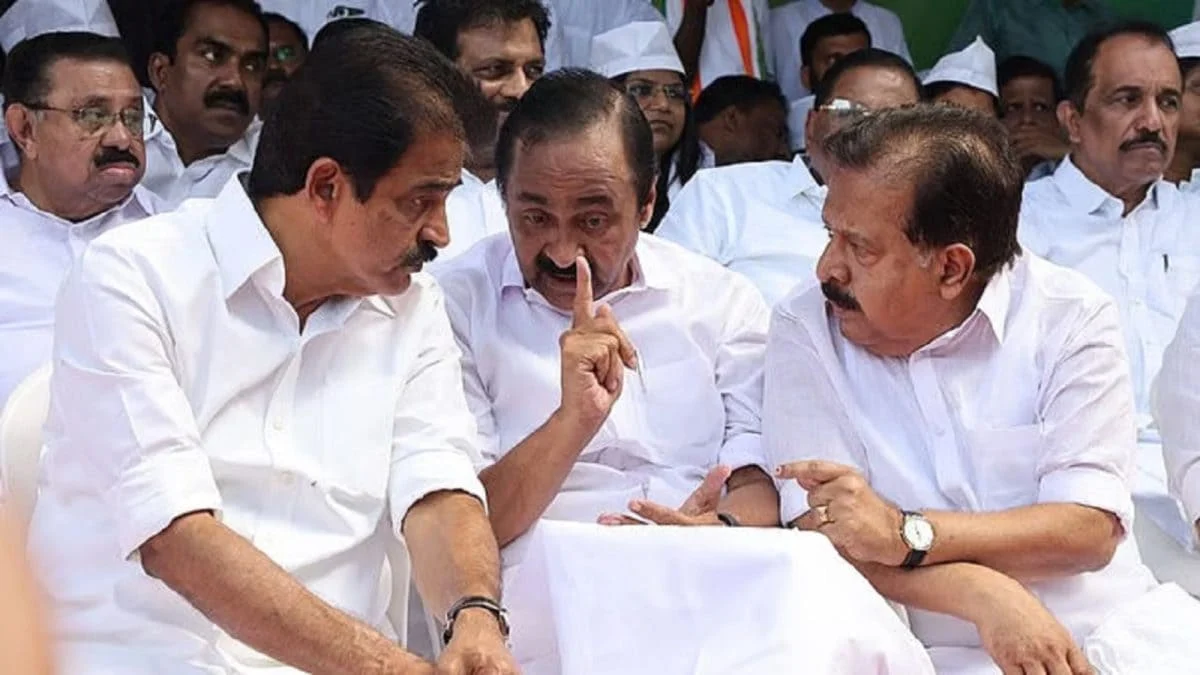
Thiruvananthapuram, Kerala – May 14, 2026 – After an agonizing ten-day deadlock following a resounding victory in the Kerala Assembly elections, the Congress party is poised to announce the state’s next Chief Minister today. The suspense, which has gripped the political landscape since the United Democratic Front (UDF) secured a historic mandate on May 4, is expected to culminate with a crucial Congress Legislature Party (CLP) meeting this afternoon, followed by an official press conference.
The Congress-led UDF’s triumph, winning an impressive 102 out of 140 seats and wresting power from the Left Democratic Front (LDF) after a decade, was hailed as a significant revival for the grand old party. However, the celebrations have been overshadowed by an intense internal power struggle among senior leaders vying for the top post. All eyes are on AICC General Secretary K.C. Venugopal, Leader of Opposition V.D. Satheesan, and veteran leader Ramesh Chennithala, as the high command seeks a "unity formula" to ensure a smooth transition and a swearing-in ceremony before the weekend.
The Weight of Expectation: A Decade’s Return
The UDF’s decisive victory in the 2026 Kerala Assembly elections marked a pivotal moment for the Congress, not just in the state but nationally. After two consecutive terms in opposition, the alliance’s return to power was seen as a testament to its rejuvenated strategies and the public’s desire for change. This mandate, however, immediately brought with it the formidable challenge of leadership selection, a task that has proven arduous for the Congress high command. The new Chief Minister will be the 13th to lead Kerala since its formation in 1956, inheriting a state eager for stable governance and the fulfilment of electoral promises. The prolonged deliberation has not only tested the patience of party cadres and the public but has also put immense pressure on the central leadership to make a choice that unites, rather than divides, the victorious alliance.
The Contenders: A Battle of Influence and Ideology
The race for the Chief Minister’s chair has narrowed down to three prominent figures, each bringing a unique set of strengths and support bases to the table. The high command’s task has been to balance popular appeal, legislative support, organizational prowess, and the delicate equations with alliance partners.
K.C. Venugopal: The High Command’s Confidante
K.C. Venugopal, a former Union Minister and currently an AICC General Secretary (Organisation), has emerged as a strong frontrunner. Known for his close proximity to Rahul Gandhi and the central leadership, Venugopal commands significant organizational influence. Sources indicate he enjoys the support of a majority of the newly elected Congress MLAs, with reports suggesting backing from at least 47 out of the party’s 63 legislators. His experience at the national level and his role as a troubleshooter for the party have made him a preferred choice for many within the high command. However, his selection could necessitate by-elections, a factor that some within the party view as a political risk.
V.D. Satheesan: The Cadre’s Choice and Ally’s Preference
V.D. Satheesan, the incumbent Leader of Opposition, is widely regarded as the "cadre-favourite" and is credited by many for spearheading the party’s revival in the state. His articulate leadership and perceived integrity have resonated with party workers and the general public. Crucially, Satheesan has received vocal support from the Indian Union Muslim League (IUML), a powerful and indispensable ally of the UDF. His camp has reportedly taken a firm stance, with sources indicating Satheesan is unwilling to accept any role other than that of Chief Minister. This strong position, while showcasing his determination, has added another layer of complexity to the high command’s decision-making process. Public sentiment, as gauged by various reports, is also said to lean in his favour.
Ramesh Chennithala: The Veteran’s Lingering Hope
Ramesh Chennithala, a seasoned Congress leader and former Leader of Opposition, remains a key contender. With a long career in state politics and significant experience, Chennithala represents a faction that has traditionally held sway within the Kerala Congress. While his support base might be less pronounced than Venugopal’s or Satheesan’s in the current scenario, his experience and seniority cannot be overlooked. His continued presence in the discussions underscores the need for the high command to address the aspirations of all veteran leaders and maintain party unity.
A Chronology of Deliberations: Ten Days of Tense Talks
The period since the May 4 election results has been a whirlwind of meetings, consultations, and behind-the-scenes negotiations, primarily centered in New Delhi.
Initial Consultations in Delhi
Immediately after the results, senior Kerala leaders, including the three main contenders, were summoned to Delhi by the Congress high command. These initial discussions aimed to gauge the mood within the state unit, understand the dynamics of legislative support, and explore potential consensus candidates. AICC observers Ajay Maken and Deepa Dasmunshi were dispatched to Kerala to gather feedback from MLAs and other stakeholders, submitting their report to Congress President Mallikarjun Kharge.
Rahul Gandhi’s Direct Intervention
As the deadlock persisted, Rahul Gandhi took a more direct role in the selection process. He held extensive meetings with party chief Mallikarjun Kharge and engaged in individual phone calls with party MPs from Kerala, including Kodikunnil Suresh, who confirmed receiving a brief call. Priyanka Gandhi Vadra was also reported to have advised Rahul Gandhi to carefully consider the prevailing political atmosphere before making a final decision, emphasizing the need for a choice that would strengthen the party for upcoming by-elections and the 2029 Lok Sabha polls. These high-level interventions underscored the gravity of the situation and the national implications of the Kerala leadership choice.
Pressure from Allies and Public Sentiment
The delay in naming the Chief Minister led to increasing pressure from within the UDF alliance and the public. The Indian Union Muslim League (IUML)’s open backing of V.D. Satheesan created a delicate situation for the Congress, which was keen to avoid appearing to succumb to ally pressure. Simultaneously, senior Congress leaders like A.K. Antony, V.M. Sudheeran, and K. Muraleedharan reportedly advised the leadership to prioritize public sentiment, which was largely perceived to favor Satheesan. The appearance of posters in Wayanad warning Rahul Gandhi against choosing K.C. Venugopal further highlighted the grassroots sentiment and the potential for internal dissent if the choice was unpopular.
The High Command’s Quandary: Avoiding a ‘Karnataka Repeat’
A significant factor guiding the Congress high command’s deliberations is the explicit desire to avoid a repeat of the power-sharing struggles witnessed in Karnataka. Rahul Gandhi is reportedly firm on this point, having communicated his reservations about replicating the Karnataka model in Kerala.
Lessons from the South
In Karnataka, the Congress faced a similar predicament after its victory, ultimately choosing Siddaramaiah as Chief Minister while D.K. Shivakumar, a popular cadre leader, was made his deputy. This arrangement, while seemingly balancing factions, has led to persistent reports of infighting and power struggles, undermining the government’s stability and the party’s image. Shivakumar was seen as the cadre-favourite and a key architect of the victory, much like Satheesan in Kerala, while Siddaramaiah commanded the support of a majority of MLAs, akin to Venugopal’s position. The high command’s reluctance to see a similar dynamic play out in Kerala stems from the understanding that such internal strife can severely hamper governance and erode public trust, especially after a hard-won victory.
Balancing Factions: The Core Challenge
The challenge for Mallikarjun Kharge and Rahul Gandhi is to strike a delicate balance between different factions and considerations. Choosing Venugopal, despite his strong MLA support and high command trust, risks alienating Satheesan’s loyalists and the IUML, potentially triggering internal resentment and by-elections. Opting for Satheesan, while satisfying the cadre and a key ally, might displease a significant number of MLAs who back Venugopal, potentially leading to a lack of cohesion within the legislative party. The high command must weigh the long-term implications for party unity, electoral prospects, and effective governance against the immediate political expediency of any single choice. The goal is to find a leader who can not only lead the government but also command respect and cooperation from all sections of the party and the alliance.
Supporting Data and Stakeholder Voices
The narrative of the Kerala CM selection is bolstered by concrete electoral figures and the stated demands of various political actors.
Election Mandate and Seat Distribution
The 2026 Kerala Assembly election results underscore the UDF’s overwhelming mandate:
- United Democratic Front (UDF): 102 seats
- Left Democratic Front (LDF): 35 seats
- Total Seats: 140
This clear majority provides a strong platform for the incoming government but also places the onus on the Congress to deliver stable and united leadership.
Allies Stake Their Claim
The Kerala Congress (J), a key constituent of the UDF, has wasted no time in articulating its demands. Party chairman P.J. Joseph stated that with seven MLAs, his party would formally seek two ministerial berths in the new UDF government. Joseph also emphasized the importance of consulting alliance partners in the Chief Minister selection process, highlighting the need for a collective decision that reflects the broader coalition’s interests. Such demands are standard in coalition politics but add another layer of negotiation for the Congress leadership.
Grassroots Dissent: Posters and Protests
The public display of dissent, such as the posters near the Wayanad District Congress Committee office warning against Venugopal’s nomination, serves as a stark reminder of the strong sentiments at the grassroots level. These posters, which claimed that Venugopal’s appointment could lead to further electoral defeats, reflect a segment of party workers’ preference for Satheesan and their concern about the high command’s potential choice. Such incidents underscore the potential for internal rifts if the final decision is perceived as disregarding party workers’ wishes.
The Crucial CLP Meeting: A Day of Reckoning
Today, May 14, 2026, marks the climax of this political saga. The Congress Legislature Party (CLP) meeting, scheduled for 1:00 PM at the KPCC headquarters in Thiruvananthapuram, is the formal mechanism for electing the legislative leader.
The "Unity Formula" Imperative
The primary objective of today’s meeting and the subsequent announcement is to present a "unity formula" that satisfies all factions within the Congress and its allies. Whether this involves a clear single leader or a structured power-sharing arrangement (though the latter is what the high command aims to avoid), the emphasis is on demonstrating a united front. The observers, Ajay Maken and Deepa Dasmunshi, along with the central leadership, will play a crucial role in steering this process to a conclusive and amicable end. A pre-CLP press conference is also scheduled for 12:00 PM, where Maken and Dasmunshi are expected to address the media.
The Road to Swearing-In
With the weekend fast approaching, the urgency to finalize the Chief Minister and facilitate the swearing-in ceremony is paramount. A swift and unified decision is essential to project stability and allow the new government to begin its work without further delay. The Congress leadership is acutely aware that any continued delay or overt signs of disunity could dampen the enthusiasm of its cadres and the electorate.
Implications: What Lies Beyond the Announcement
The choice of Kerala’s next Chief Minister will have far-reaching implications, not just for the state but for the Congress party’s national narrative.
Internal Cohesion and Governance Challenges
The immediate challenge for the chosen Chief Minister will be to unite the various factions within the Congress and ensure harmonious functioning with alliance partners. Effective governance will depend heavily on the ability of the new leader to command respect across the party spectrum, manage dissent, and focus on policy implementation. Kerala faces diverse challenges, from economic recovery post-pandemic to environmental concerns and social development, all of which require a stable and cohesive government.
Future Electoral Landscape
The success or failure of the new UDF government, particularly in its initial years, will significantly influence the upcoming by-elections and the crucial 2029 Lok Sabha elections. A strong, united, and performing government in Kerala could provide a much-needed morale boost for the Congress nationally. Conversely, internal strife or perceived instability could undermine the party’s resurgence and diminish its credibility. The high command’s decision today is therefore not just about who leads Kerala but about setting a precedent for party management and projecting an image of strength and unity for future electoral battles.
Conclusion
As the clock ticks towards the crucial CLP meeting and the anticipated press conference, Kerala holds its breath. The ten-day political drama underscores the complexities of coalition politics and intra-party dynamics within the Congress. The choice of the 13th Chief Minister of Kerala will not only shape the state’s future but also reflect the Congress high command’s ability to navigate deep-seated factionalism and forge a path towards unity and effective governance. The nation watches as the grand old party seeks to turn its significant electoral victory into a foundation for stable and progressive leadership.
