

Main Facts: The Industrial Paradox
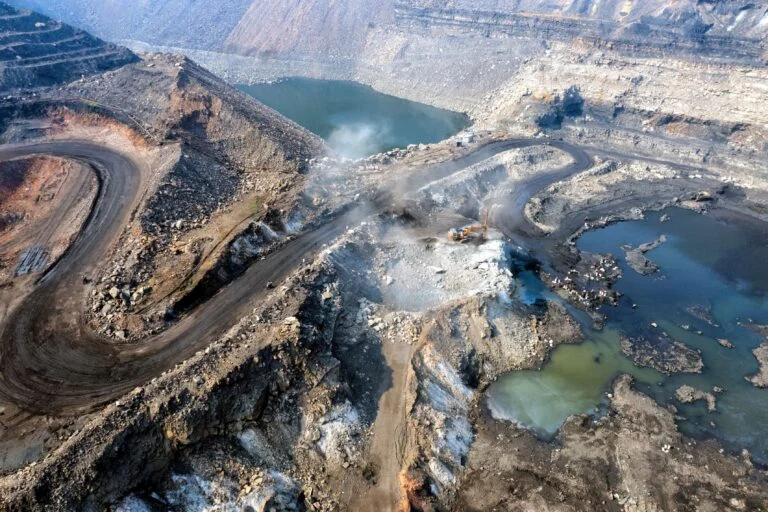
As India positions itself to become a global steel superpower, a significant environmental challenge is emerging from the depths of its coal seams. To fuel its burgeoning infrastructure and manufacturing sectors, the Indian government has launched a massive expansion of domestic coking coal production. However, this industrial surge carries a heavy "invisible" price: a projected spike in methane emissions.
Methane is a greenhouse gas with a warming potential over 80 times that of carbon dioxide over a 20-year period. While carbon emissions from burning coal are a well-documented concern, the methane released during the mining process itself—often referred to as Coal Mine Methane (CMM)—is increasingly becoming a focal point for climate scientists and policy analysts.
According to recent data, India is preparing to double its coking coal output by 2030. This push is driven by "Mission Coking Coal," a strategic initiative designed to reduce the nation’s heavy reliance on expensive imports. Currently, India imports approximately 90% of its metallurgical (coking) coal, primarily because domestic supplies have historically been of lower quality, characterized by high ash and sulfur content.
The challenge lies in the nature of the resource. Coking coal mining is roughly 50% more methane-intensive than the mining of thermal coal used for power generation. As India exhausts its shallow, surface-level reserves and moves toward deeper, underground deposits to find higher-quality coal, the methane intensity of its mining operations is expected to rise exponentially. Without immediate intervention, experts warn that India could "lock in" high-emission infrastructure that will undermine its 2070 Net Zero target.
Chronology: The Roadmap to 2030 and Beyond
The trajectory of India’s coking coal strategy has evolved rapidly over the last five years, shifting from a focus on energy security to a dual-track approach of production and (increasingly) decarbonization.
![India’s coking coal push needs a methane plan [Commentary]](https://imgs.mongabay.com/wp-content/uploads/sites/30/2026/09/29115811/pexels-vikashkr50-17971796-1200x800.jpg)
- The Baseline (2023-2024): In the financial year 2023-24, India mined approximately 66.8 million tonnes (MT) of raw coking coal. However, due to technological limitations and the inherent quality of the ore, only 5.4 million tonnes were washed and processed to the standards required for high-end steelmaking.
- The Launch of Mission Coking Coal: Recognizing the vulnerability of the steel sector to global supply chain disruptions, the Ministry of Coal formalized "Mission Coking Coal." The mandate is clear: increase domestic production to 140 MT by 2030. This represents a doubling of the FY 2025 target of 66 MT.
- Steel Capacity Expansion: This mining surge mirrors the National Steel Policy’s goal to increase India’s steelmaking capacity from the current 200 million tonnes per annum (MTPA) to 300 MTPA by 2030.
- The Geological Shift (2025-2030): Currently, 97% of India’s coking coal is extracted via surface mining. However, as these reserves dwindle, the industry must pivot. Approximately 41% of India’s remaining coking coal reserves lie deeper than 300 meters. The transition to underground mining, slated to accelerate toward 2030, is the primary driver of the projected methane spike, as underground mines globally account for 85% of all CMM emissions.
Supporting Data: The Magnitude of the Methane Challenge
The Institute for Energy Economics and Financial Analysis (IEEFA) has provided a granular look at the potential environmental fallout of this expansion. Their analysis of 30 operating and proposed mines reveals a concentrated risk profile.
Concentration of Emissions
Data shows that methane emissions are not evenly distributed. In Jharkhand, the heart of India’s coking coal belt, just seven mines are responsible for a staggering 81% of the sector’s methane emissions. If the proposed expansion continues without abatement technology, these seven sites alone could increase national methane emissions by 10% almost overnight.
The Intensity Factor
Coking coal is uniquely problematic because of the "coalification" process. As organic matter is compressed over millions of years into high-rank coal, methane remains trapped under intense pressure. When a mine disturbs these seams, the gas is released during extraction, drainage, and even post-mining transport.
- Surface Mining: Lower intensity, but still significant due to the sheer volume of earth moved.
- Underground Mining: High intensity. As mines go deeper, the gas-to-coal ratio increases, making methane management a safety necessity as well as an environmental one.
The Economic Case for Abatement
One of the most compelling arguments for methane management is its cost-effectiveness. IEEFA research indicates that 87% of abatable coking coal methane emissions in India can be mitigated for less than $20 per tonne of CO2 equivalent (tCO2e).
- CMM Utilization: This involves capturing high-concentration methane for power or heat. It actually has a negative average abatement cost of -$11.9/tCO2e because the captured gas can be sold or used as fuel, generating revenue.
- Ventilation Air Methane (VAM): VAM oxidation, which destroys methane in the highly diluted air exhausted from mines, represents 52% of the total abatement potential. While more expensive than CMM recovery, it still falls under the $20/tCO2e threshold, making it one of the cheapest ways to achieve large-scale greenhouse gas reductions globally.
Official Responses and Industry Initiatives
The Indian government and major industrial players have begun to acknowledge the methane problem, though formal policy integration into mining leases is still in the early stages.
![India’s coking coal push needs a methane plan [Commentary]](https://imgs.mongabay.com/wp-content/uploads/sites/30/2026/09/29114008/2.jpg)
Government Strategy
The Ministry of Coal has highlighted the importance of Coal Bed Methane (CBM) and CMM as part of its diversification strategy. While "Mission Coking Coal" primarily focuses on volume, there is a growing push to mandate pre-feasibility studies for methane drainage in all new underground projects. This "planning stage" intervention is seen as the only way to prevent long-term emissions lock-in.
Corporate Leadership: Tata Steel and Coal India
Industrial giants are already testing the waters. Tata Steel conducted a world-first trial at its Jamshedpur plant, injecting CBM into a blast furnace. The goal was to use the methane as a reducing agent, thereby reducing the amount of solid coking coal required for steel production.
Similarly, Coal India Limited (CIL) has initiated a demonstration project at the Moonidih mine in Jharkhand. This project uses recovered methane to generate on-site electricity, proving that CMM can be transformed from a hazardous waste product into a productive resource.
The Scrap Steel Goal
In a significant demand-side policy shift, the Ministry of Steel has set a target for 50% of India’s steel production to be fed by scrap by 2047. Currently, scrap accounts for only 23%. By shifting toward Electric Arc Furnaces (EAF) that use scrap, the industry can bypass the coking coal-heavy Blast Furnace route, which requires 770kg of coal per tonne of steel, compared to just 12kg for scrap-based methods.
Implications: The Global and Domestic Stakes
The expansion of India’s coking coal sector has implications that reach far beyond its borders, affecting both global climate targets and international trade dynamics.
![India’s coking coal push needs a methane plan [Commentary]](https://imgs.mongabay.com/wp-content/uploads/sites/30/2026/09/29123411/Primary_coking_coal_20180405_154027_1-768x512.jpg)
1. The Net Zero Pathway
India’s commitment to reaching Net Zero by 2070 hinges on decarbonizing its heavy industries. Steel is responsible for a significant portion of India’s industrial CO2 emissions. If the methane footprint of the input coal is not managed, the "green steel" transition will be fundamentally flawed. Methane abatement offers a "low-hanging fruit" opportunity to achieve massive emissions cuts while the country develops more expensive technologies like green hydrogen.
2. Trade and the Carbon Border Adjustment Mechanism (CBAM)
The European Union’s CBAM and similar upcoming regulations in other jurisdictions mean that Indian steel exports will soon be scrutinized for their carbon intensity. If Indian steel is produced using high-methane coking coal without abatement, it may face heavy tariffs in international markets. Implementing methane capture technology is therefore not just an environmental imperative but a requirement for maintaining global competitiveness.
3. Energy Security vs. Environmental Stewardship
"Mission Coking Coal" is essentially an energy security play. By doubling production, India protects itself from the price volatility of the Australian and Russian coal markets. However, this security is precarious if it leads to environmental degradation that triggers domestic health crises or international sanctions. The implication is clear: India must decouple its industrial growth from methane growth.
4. Technological Leapfrogging
India has the opportunity to bypass the "dirty" growth phase experienced by Western nations. By embedding VAM oxidation and CMM recovery into the design of new mines in Jharkhand and West Bengal, India can set a global standard for responsible mining in emerging economies.
Conclusion: A Window of Opportunity
The next five years are critical. As India moves from planning to the active construction of new coking coal infrastructure, the window to incorporate methane abatement is narrow. Retrofitting old mines is expensive and technically difficult; building abatement into new projects is significantly more affordable.
![India’s coking coal push needs a methane plan [Commentary]](https://imgs.mongabay.com/wp-content/uploads/sites/30/2026/09/29112718/Furnace_of_IISCO_Steel_Plant-2.jpg)
By targeting the high-emitting mines in Jharkhand, scaling up CBM-to-steel trials, and incentivizing the scrap-steel economy, India can meet its 300 MTPA steel goal without sacrificing its climate integrity. The path to a "Viksit Bharat" (Developed India) must be paved with steel, but it cannot afford to be clouded by methane.
