

From a bird’s-eye view, North Sentinel Island appears as a dense, emerald fortress. This unbroken canopy of primary rainforest is set against the stark, crystalline turquoise of the Bay of Bengal. Within this buffer zone, the Sentinelese people—one of the world’s last truly uncontacted tribes—live in a state of voluntary isolation, a status protected by a stringent "no-contact" policy enforced by the Indian government. On these shores, the rhythm of life remains dictated by the tides; the Sentinelese spear fish in the shallows, hunt turtles, and forage for mollusks among the mangroves.
However, this ancient equilibrium is increasingly under siege. The tribal reserves of the Andaman and Nicobar archipelago, which Manish Chandi, a social ecology expert with over 25 years of experience in the region, describes as the most significant biodiversity hotspots in the Indian Ocean, are facing unprecedented pressures. From illegal poaching and industrial fishing to massive, state-sponsored infrastructure projects, the sovereignty of these indigenous lands is being challenged by a modern vision of "progress" that often fails to account for the people it displaces.
![Isolated island tribes should choose their own destinies, says Manish Chandi [Interview]](https://imgs.mongabay.com/wp-content/uploads/sites/30/2026/09/26224219/q.-Shompen-2-of-the-27th-Km-EW-road-1997.jpg)
Main Facts: The Last Bastions of Autonomy
The Andaman and Nicobar Islands are home to six recognized tribes: the Sentinelese, the Shompen, the Ang (Jarawa), the Onge, the Great Andamanese, and the Nicobarese. While the Nicobarese are largely integrated into mainstream society and the Great Andamanese were nearly decimated by colonial-era diseases, the others exist in varying degrees of isolation.
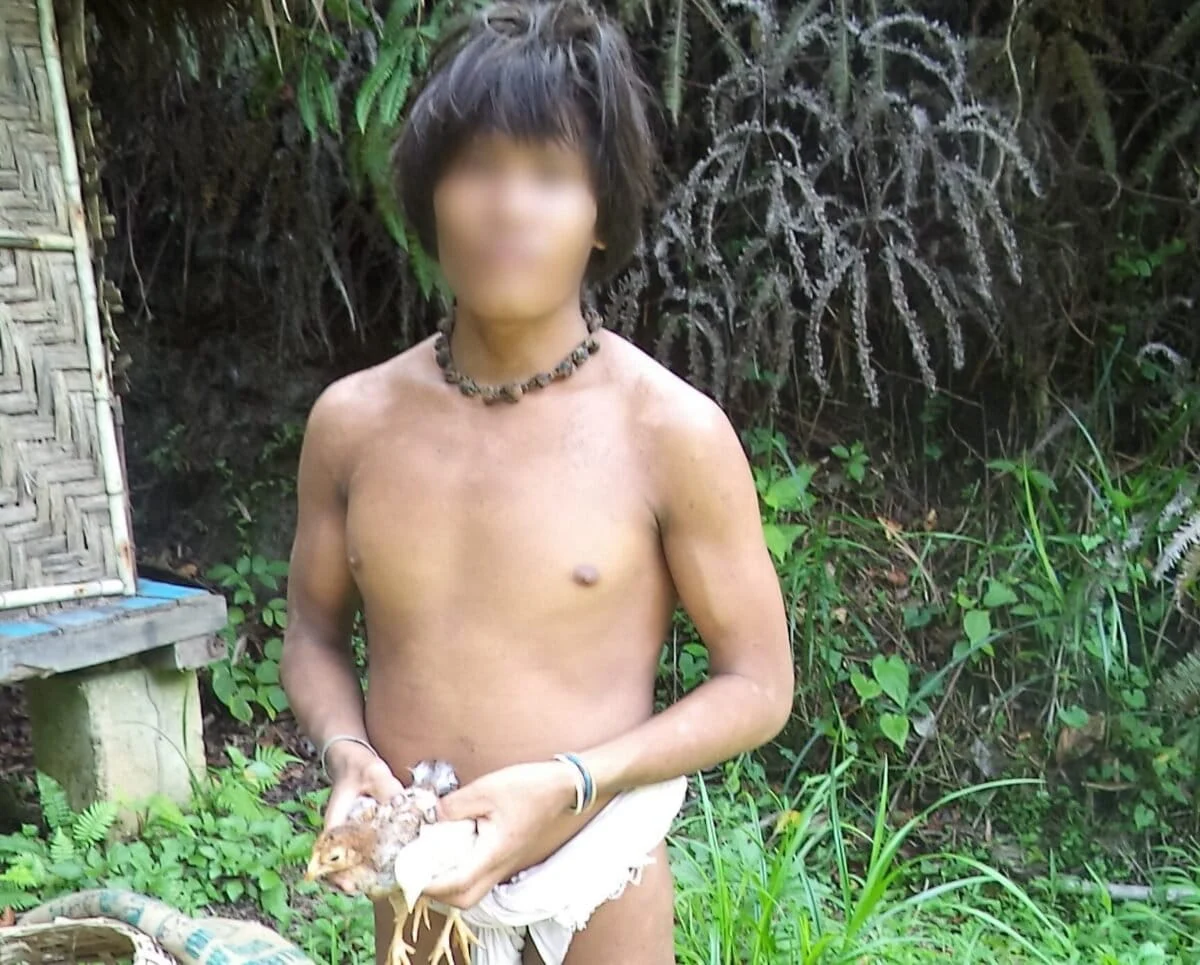
The Sentinelese and the Shompen, in particular, have chosen to remain largely separate from the outside world. The Shompen, inhabiting the Great Nicobar tribal reserve, maintain only minimal contact with officials, primarily to signal their desire for non-interference.
According to Chandi, these tribal reserves are ecologically superior to the islands’ 100-odd official wildlife sanctuaries and national parks. Because these lands were historically protected by the "hostility" of their inhabitants and later by legal status as reserves, they were spared the timber extraction and large-scale settlement that ravaged other parts of the archipelago. Today, they serve as the ultimate repositories for endemic flora and fauna, including the crab-eating macaque, the megapode, and various species of sea turtles.
![Isolated island tribes should choose their own destinies, says Manish Chandi [Interview]](https://imgs.mongabay.com/wp-content/uploads/sites/30/2026/09/27134419/North-Sentinel-Island-coastal-forest-2048x1358-1-768x512.jpg)
However, the "protection" offered by the state is fraying. Chandi points to a growing trend of "denotification"—the removal of legal protections—to make way for tourism enclaves, business hubs, and transshipment ports.
Chronology: From Protection to Pressure
The history of the islands is a timeline of shifting policies toward indigenous autonomy:
- 1950s: Following India’s independence, several areas were declared tribal reserves under the Andaman and Nicobar Islands (Protection of Aboriginal Tribes) Regulation. This period focused on total isolation for tribes like the Onge and Jarawa.
- Late 20th Century: Contact missions were frequent, particularly with the Jarawa. This led to "acculturation" and, tragically, the introduction of diseases and dependency on external resources.
- 2004: The Indian Ocean Tsunami devastated the archipelago. The Shompen and Nicobarese were displaced from their ancestral coastal lands. Many were moved to temporary shelters near Campbell Bay.
- 2010–2019: The government established more permanent "settlements" for displaced tribes. While intended as humanitarian aid, Chandi argues this began a cycle of "forced dependency" on government rations.
- 2022–2026: The emergence of the Great Nicobar Mega-Project. This ₹72,000-crore (approx. $9 billion) plan includes an international container transshipment terminal, a greenfield airport, and a township.
- August 2026: Legal battles reach a fever pitch. While the National Green Tribunal (NGT) ruled in favor of the project, citing "adequate safeguards," tribal councils and environmentalists continue to challenge the de-notification of 84 square kilometers of tribal reserve land.
Supporting Data: The Ecological and Social Cost
The ecological richness of these reserves is not merely a matter of aesthetic beauty; it is the foundation of tribal self-sufficiency.
![Isolated island tribes should choose their own destinies, says Manish Chandi [Interview]](https://imgs.mongabay.com/wp-content/uploads/sites/30/2026/09/27135015/o.-Shompen-2-in-2013-with-van-raja-chicks-from-Vet-Dept-e1789411480912-1200x965-1.jpeg)
The Marine Nursery
The coastal reefs of North Sentinel Island are intact ecosystems. Biologists note that the mangroves and littoral species surrounding the island serve as critical nurseries for marine life. The Sentinelese utilize "punting canoes," using long poles to navigate shallow reefs where they hunt green sea turtles (Chelonia mydas) and hawksbill turtles (Eretmochelys imbricata).
The Encroachment Factor
Data suggests that illegal fishing is no longer a localized issue. Trawlers from mainland India and poachers from as far as Middle Andaman are encroaching on the Sentinelese buffer zone. These outsiders exploit high-value resources like sharks, lobsters, and sea cucumbers—resources the Sentinelese rely on for survival. Chandi notes that lax patrolling has "emboldened" these exploiters, who bring their catch to export markets in Wandoor and Guptapara.
The Myth of Consent
A critical point of contention in the Great Nicobar project is the concept of "Free, Prior, and Informed Consent" (FPIC). Chandi reveals a startling linguistic barrier: not a single person in the current administrative machinery speaks the Shompen language fluently. Despite this, official reports have claimed that tribal members "expressed agreement" to the de-notification of their food forests. Chandi characterizes these narratives as "untrue and not representative" of the communities’ actual desires.
![Isolated island tribes should choose their own destinies, says Manish Chandi [Interview]](https://imgs.mongabay.com/wp-content/uploads/sites/30/2026/09/27134557/Jarawa-tribal-reserve-by-Pankaj-Sekhsaria-ATR-board-jirkatang-768x512.jpg)
Official Responses and the Legal Battleground
The Indian government and various judicial bodies have maintained that development and tribal protection can coexist.
In early 2026, the National Green Tribunal (NGT) ruled that the Great Nicobar project could proceed, stating that the environmental and social impacts were being mitigated by "adequate safeguards." The National Centre for Sustainable Coastal Management (NCSCM) also supported the project, moving it out of "prohibited zones" to facilitate the construction of the port.
Government bureaucrats often argue that providing "free rations"—such as rice, salt, and sugar—is a sign of progress and welfare. However, Chandi offers a different perspective. He recounts finding discarded salt packets in the forest; the Shompen, who have lived for millennia without processed salt, have no use for it.
![Isolated island tribes should choose their own destinies, says Manish Chandi [Interview]](https://imgs.mongabay.com/wp-content/uploads/sites/30/2026/09/27140426/green-turtle-and-green-grass-1200x663-1-768x512.jpg)
"Some officials do not see [self-sufficiency] as a priority," Chandi says. "They consider supplies of external food resources as a means to well-being. This has actually caused increased dependence on supplies that the communities cannot grow or gather themselves, making them immensely dependent on governmental mechanisms."
The official stance of the Andaman Nicobar Administration has also been that "no tribal communities will be displaced" by the Great Nicobar project. Critics point out that this is a semantic sleight of hand: the tribes were already displaced by the 2004 tsunami and are currently living in government-built "shanties." By using their ancestral lands for casinos and malls instead of allowing them to return, the government is effectively making their displacement permanent.
Implications: The Future of Indigenous Destiny
The current trajectory of the Andaman and Nicobar Islands poses a fundamental question: Does an indigenous community have the right to choose a path that does not involve industrial "modernity"?
![Isolated island tribes should choose their own destinies, says Manish Chandi [Interview]](https://imgs.mongabay.com/wp-content/uploads/sites/30/2026/09/27134757/t.-Crab-eating-macaque-Great-Nicobar-e1789410473864-768x512.jpg)
The Loss of Autonomy
The transition from independent foraging to sedentary living within reservations has profound psychological and social impacts. When a community is "ensconced within accommodation built for them," Chandi argues, the larger landscape is stripped of their presence. This "emptying" of the land makes it easier for the state to justify de-notification for commercial use.
The Threat of "Mainstreaming"
There is a persistent "curiosity and ignorance" regarding these tribes among outsiders and influencers. This often manifests as a desire to "civilize" or "mainstream" the isolated groups. However, historical evidence from the Great Andamanese and the Onge suggests that mainstreaming often leads to population decline, alcoholism, and the loss of traditional knowledge.
A Call for Participatory Conservation
Chandi suggests a radical shift in approach. Instead of imposition, the government should prioritize:
![Isolated island tribes should choose their own destinies, says Manish Chandi [Interview]](https://imgs.mongabay.com/wp-content/uploads/sites/30/2026/09/27135431/m.-2-Gillnetting-fishers-off-North-Sentinel-wreck-coast-1200x796-1.jpeg)
- Linguistic Engagement: Developing actual communication channels with the Shompen and other tribes to understand their needs.
- Enforcement of Existing Laws: Strengthening the Wildlife (Protection) Act and the Protection of Aboriginal Tribes Regulation to deter poachers and trawlers.
- Respect for Ancestral Lands: Recognizing the rights of the Nicobarese and Shompen to return to their original territories rather than repurposing those lands for tourism.
"Participation, respect, consensus, and appreciation over time are what can make a huge difference," Chandi concludes. The science and technology available today should be used not just to build ports, but to better monitor and protect the livelihood resources of these communities.
The fate of the Sentinelese and the Shompen is a litmus test for India’s commitment to human rights and environmental stewardship. If the "thick, unbroken patch of dark green" that defines North Sentinel Island is allowed to be punctured by commercial interests, it will mark the end of a unique human story that has survived for tens of thousands of years. The choice remains: to view these islands as "vacant" land for profit, or as sacred spaces of cultural and biological sovereignty.
