

BENGALURU – The urban topography of Bengaluru, often referred to as the Silicon Valley of India, has long been defined by its ability to reinvent its peripheral landscapes. In the last decade, the city has witnessed a seismic shift in residential preferences, moving away from the congested central business districts toward high-growth corridors. Among these, the transformation of Panathur stands out as a definitive case study in how infrastructural investment and proximity to employment hubs can reshape a micro-market.
Once considered a mere logistical extension of the Outer Ring Road (ORR), Panathur has successfully shed its "suburban" tag to emerge as one of the most sought-after real estate hotspots in East Bengaluru. As of 2024 and looking toward 2026, the area is no longer just a fallback option for those priced out of Whitefield or Bellandur; it is a primary destination for premium, lifestyle-led living.
Main Facts: The Pillars of Panathur’s Growth
The meteoric rise of Panathur is anchored by its strategic positioning within the Golden Quadrilateral of Bangalore’s IT industry. The micro-market serves as a critical bridge between three massive employment engines: Marathahalli, Bellandur, and Whitefield.
1. The "Walk-to-Work" Paradigm
The primary driver of demand in Panathur is the "walk-to-work" convenience. In a city where traffic congestion is a significant deterrent to quality of life, Panathur’s proximity to major tech parks—including Embassy TechVillage, RMZ Ecospace, RMZ Ecoworld, and Prestige Tech Park—offers a value proposition that few other areas can match. For the thousands of professionals employed in these hubs, Panathur represents a drastic reduction in daily commute times, translating directly into better work-life balance.
2. Micro-Market Differentiation
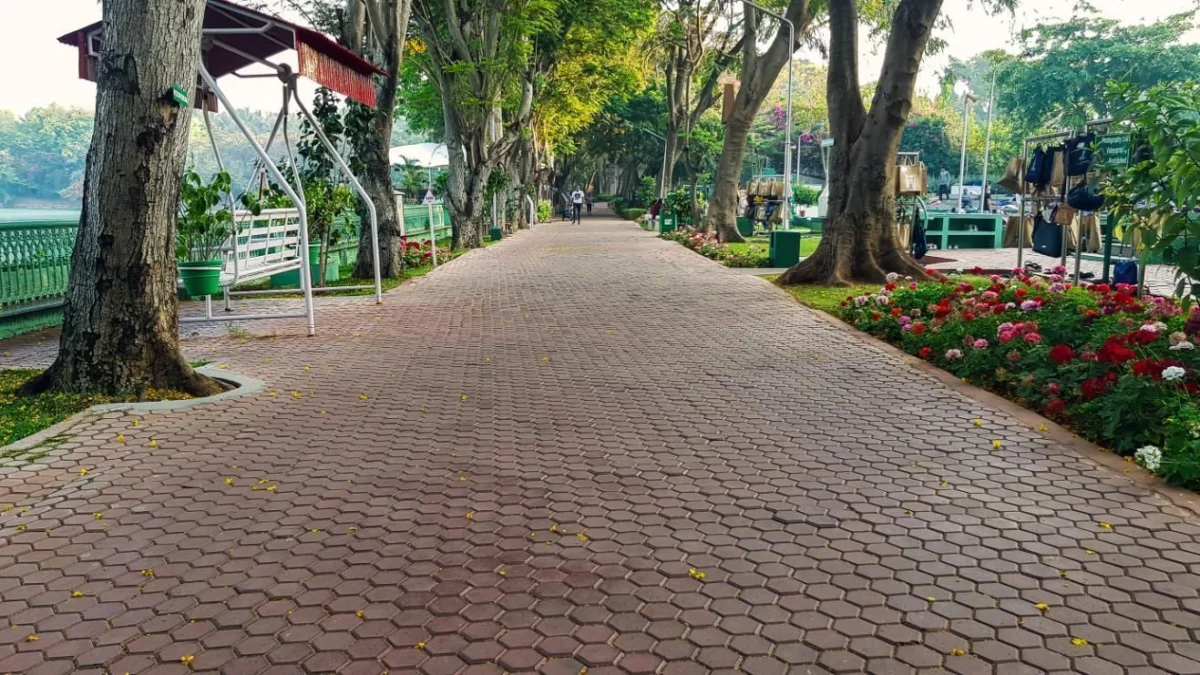
Unlike the high-density, often claustrophobic developments found in parts of Bellandur or Sarjapur Road, Panathur has managed to maintain a relatively quieter residential profile. The presence of the Panathur Lake and surrounding green pockets provides a natural "lung" for the locality, attracting a demographic that prioritizes environmental wellness alongside urban connectivity.
3. The Shift to Premiumization
Current market trends indicate a transition from mid-range housing to premium segments. Developers are increasingly launching projects that feature "resort-style" amenities, community-integrated spaces, and wellness-driven architecture. This shift reflects a change in buyer psychology: the post-pandemic homeowner is looking for more than just four walls; they are seeking a self-contained ecosystem.
Chronology: The Evolution of a Micro-Market
To understand Panathur’s current status, one must look at its developmental trajectory over the past fifteen years.
-
2010–2015: The Nascent Phase
During this period, Panathur was largely a rural-urban fringe characterized by independent houses and small-scale apartment complexes. It served primarily as a residential pocket for support staff and early-career professionals working in the newly established ITPL and ORR office spaces. Infrastructure was minimal, and the area was often overlooked in favor of established pockets like Marathahalli. -
2016–2020: The Infrastructure Catalyst
As the Outer Ring Road became the epicenter of Bangalore’s commercial real estate boom, the spillover effect reached Panathur. Large-scale developers began acquiring land parcels. The expansion of the ORR and the announcement of the Bengaluru Metro Blue Line (Central Silk Board to KR Puram) signaled to investors that Panathur was the next logical step for residential expansion. -
2021–2024: The High-Growth Era
Post-pandemic, Panathur witnessed an explosion in demand. Property prices, which had been growing steadily, saw a sharp uptick. This era was marked by the completion of several high-profile residential projects and a significant improvement in social infrastructure, including the arrival of international schools and multi-specialty hospitals in the immediate vicinity. -
2025 and Beyond: The Maturity Phase
Looking toward 2026, Panathur is entering a phase of maturity. The focus has shifted from "growth at any cost" to "sustainable livability." The current emphasis is on completing the "missing links" in infrastructure, such as road widening and better drainage systems, to support the high-density population the area now hosts.
Supporting Data: Analyzing the Numbers
The financial health of Panathur’s real estate market is backed by robust data that outpaces many other suburban clusters in Bengaluru.
Capital Appreciation
Over the last five years, Panathur has recorded a staggering 83% increase in property prices. This capital appreciation is among the highest in East Bengaluru. For instance, a property valued at ₹5,000 per sq. ft. in 2019 is now commanding upwards of ₹9,000 to ₹10,500 per sq. ft. in premium gated communities.
Rental Yields and Income
The rental market in Panathur is equally buoyant. Rental income in the region has effectively doubled in the last five years. Currently, rental yields hover between 3% and 5%, which is significantly higher than the national average for residential properties (usually 2-3%).
- A standard 2BHK that rented for ₹25,000 in 2018 now easily fetches ₹45,000 to ₹55,000, depending on the amenities and proximity to tech parks.
Inventory and Demand
The buyer base remains dominated by end-users—primarily IT professionals and corporate executives. However, the high rental demand has attracted a secondary wave of investors who view Panathur as a "safe haven" for recurring income. Data suggests that properties within a 2-km radius of the major tech parks see the fastest absorption rates in the city.
Infrastructure and Official Responses: The Path Forward
While the private sector has driven housing development, the long-term viability of Panathur depends on civic and social infrastructure. Several ongoing and proposed initiatives are set to redefine regional accessibility.
Key Infrastructure Projects:
- The S-Cross Flyover and Road Widening: One of the historic pain points for Panathur has been the narrow railway underpass (S-Cross). Local civic bodies, including the BBMP (Bruhat Bengaluru Mahanagara Palike), have been under pressure to fast-track road widening projects and the construction of additional vents to ease traffic flow toward the ORR.
- The Metro Connectivity: The upcoming Blue Line of the Namma Metro will have stations in close proximity (such as Kadubeesanahalli), which will provide Panathur residents with a traffic-free connection to the airport and other parts of the city.
- Peripheral Ring Road (PRR): The proposed PRR is expected to further de-congest the internal roads of Panathur by providing an alternative route for heavy vehicles and long-distance commuters.
Official Perspectives
Government officials and urban planners have noted that Panathur’s growth has been "organic but rapid." Speaking on the condition of anonymity, a senior official from the Bangalore Development Authority (BDA) stated, "The challenge in Panathur is retrofitting infrastructure to meet the density. Our focus for 2025-2027 is on improving the ‘last-mile’ connectivity and ensuring that the Panathur Lake rejuvenation project is completed to maintain the ecological balance of the micro-market."
Builders, too, are aligning with this vision. Industry bodies like CREDAI have highlighted Panathur as a model for "transit-oriented development," where residential clusters are strategically placed to feed into the city’s major transit and employment nodes.
Implications: The Future of Urban Living in East Bengaluru
The evolution of Panathur carries significant implications for the future of Bengaluru’s urban planning and the lifestyle of its residents.
1. From "Affordable Alternative" to "Primary Choice"
For years, Panathur was the "affordable alternative" to Bellandur. That era has ended. As prices stabilize at a premium level, Panathur is now competing directly with established posh localities. This suggests a permanent shift in the city’s geography where the "East" is no longer just a workspace but a lifestyle destination.
2. The Wellness Priority
Panathur’s success highlights a growing trend in Indian real estate: the "Wellness Quotient." The demand for homes near Panathur Lake and the preference for low-density layouts indicate that modern buyers are willing to pay a premium for air quality, silence, and proximity to nature. This will likely force developers in other parts of Bengaluru to incorporate more green spaces into their projects.
3. Economic Resilience
The fact that rental yields have remained high despite the massive influx of new inventory suggests that Panathur has a high level of economic resilience. Even during market fluctuations, the constant demand from the IT sector provides a safety net for property values.
4. The Execution Challenge
The final hurdle for Panathur is the timely delivery of promised civic infrastructure. If the BBMP and BMRCL (Bangalore Metro Rail Corporation Limited) can deliver the Metro and road expansions by 2026, Panathur will likely cement its identity as a premium hub. However, any significant delays could lead to "growth fatigue," where traffic woes begin to outweigh the benefits of proximity.
Conclusion
Panathur’s journey from a transit-oriented extension to a promising residential powerhouse is a milestone in Bengaluru’s suburban transformation. It represents a new chapter in urban living—one where the convenience of the "walk-to-work" culture meets the tranquility of a lake-side environment. For home buyers, it offers a high quality of life; for investors, it offers a high-yield asset. As the city moves toward a more decentralized future, Panathur stands as a beacon of what well-planned, employment-linked residential growth can achieve.
The next two years will be critical. If infrastructure keeps pace with the soaring skyline, Panathur will not just be a part of Bengaluru’s growth story—it will be its protagonist.
