

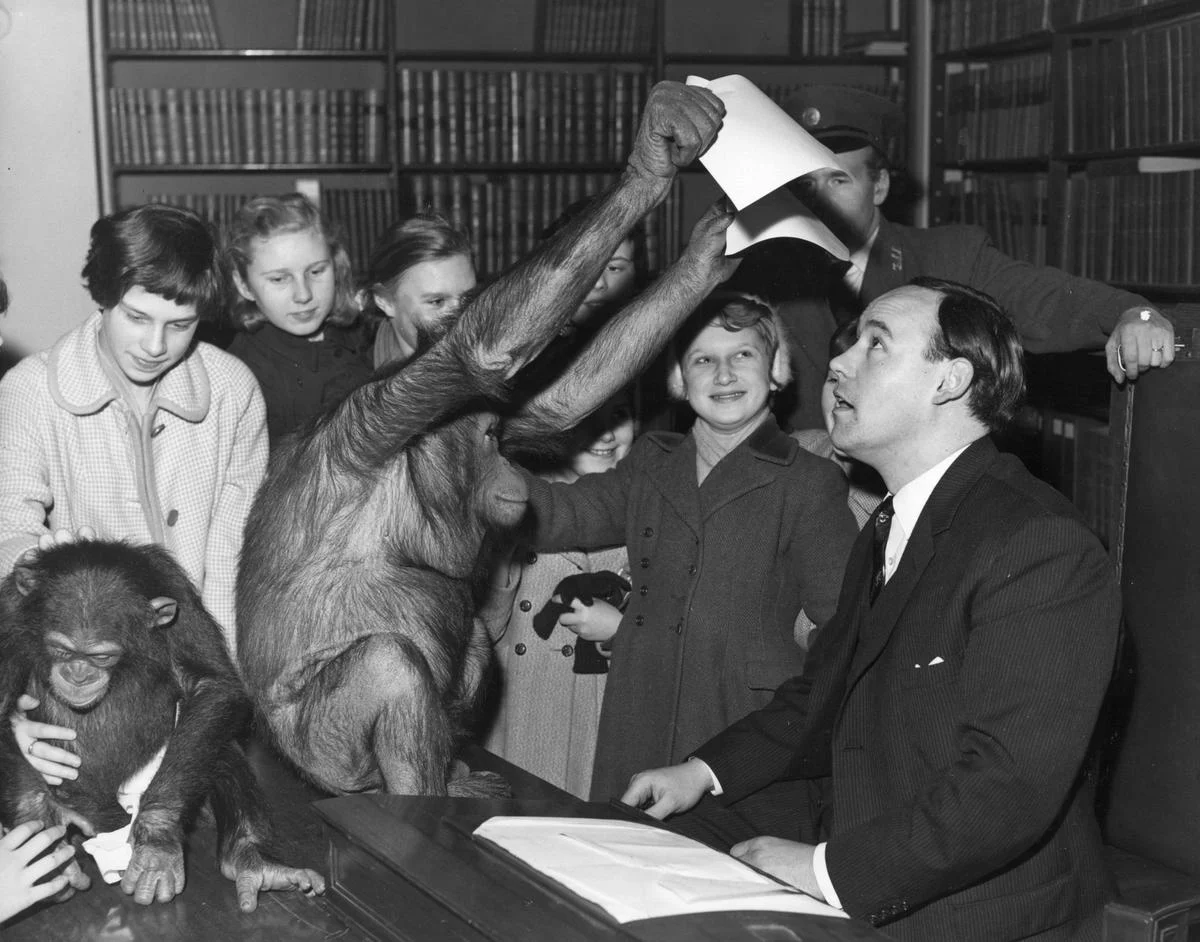
Desmond Morris was a man of profound dualities: a rigorous scientist who embraced the avant-garde, a populist communicator who invited academic scorn, and a clinical observer of humanity who was often accused of reducing our species to its most basic, animalistic impulses. Whether hailed as a visionary thinker or dismissed as a maverick provocateur, Morris’s impact on the 20th century’s understanding of the human condition remains undeniable. Through his seminal work, The Naked Ape: A Zoologist’s Study of the Human Animal (1967), Morris stripped away the veneer of civilization to reveal the primate beneath, a feat that both revolutionized popular science and ignited a firestorm of controversy that persists to this day.
Main Facts: The Biological Portrait of Homo Sapiens
The core of Desmond Morris’s philosophy was as simple as it was radical: human beings are animals, and our behavior—no matter how sophisticated—is rooted in our evolutionary past. In an era when sociology and psychology were increasingly focused on cultural conditioning, Morris pivoted back to biology. He treated Homo sapiens not as a divine creation or a purely cultural construct, but as a "naked ape"—a primate that had lost its fur but retained its forest-dwelling instincts.
Morris’s primary contribution was the application of ethology—the study of animal behavior under natural conditions—to the human species. He argued that our most complex social structures, from religious rituals to urban planning, are merely scaled-up versions of the grooming, territorial, and mating behaviors seen in other primates.
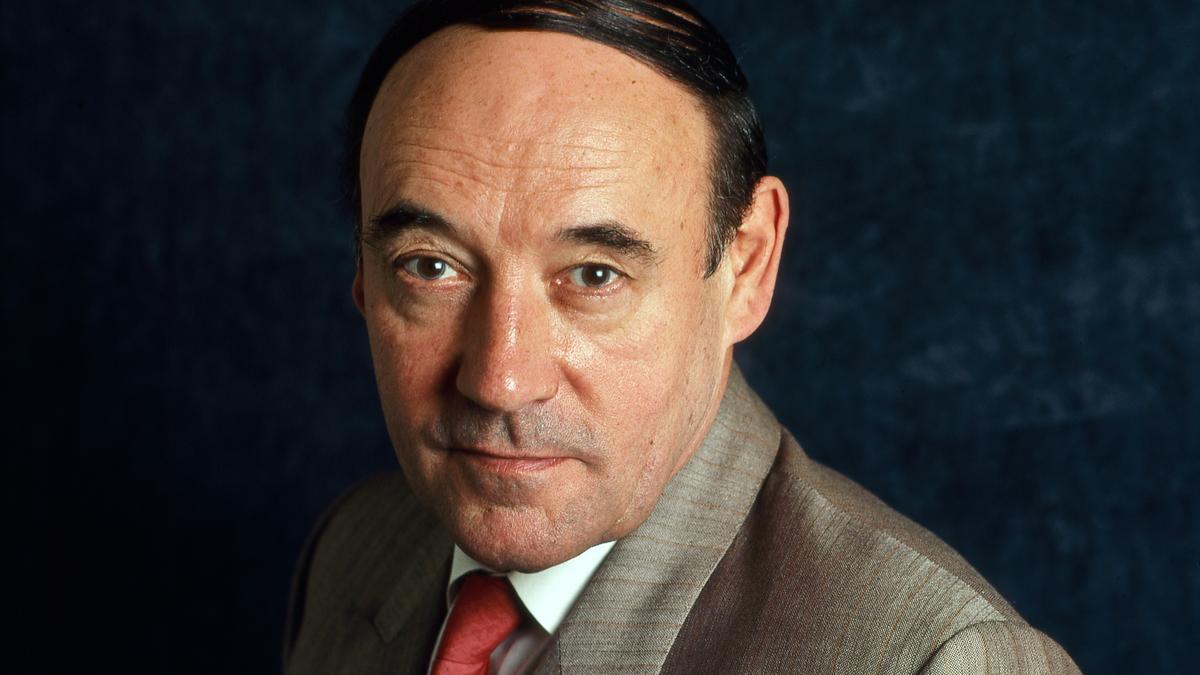
His perspective was unblinkingly clinical. He viewed human sexual behavior, parental care, and aggressive tendencies through the same lens a zoologist might use to study a chimpanzee or a baboon. This approach led to his most famous, and frequently criticized, assertion: that despite our "lofty new motives," we have lost none of our "earthy old ones." For Morris, the "naked ape" was an animal struggling to reconcile a million years of genetic programming with a few thousand years of rapid cultural evolution.
Chronology: From the London Zoo to Global Iconoclasm
The trajectory of Desmond Morris’s career reflects a unique intersection of academic rigor and media savvy. His journey from a young researcher to a household name followed a path of increasing public engagement and intellectual defiance.
- 1928–1950s: The Foundations of Ethology: Born in Purton, Wiltshire, Morris showed an early aptitude for both biology and art. He pursued his doctorate at the University of Oxford under the tutelage of the Nobel Prize-winning ethologist Niko Tinbergen. This period was crucial; Tinbergen’s focus on the "four questions" of animal behavior (function, causation, development, and evolution) became the framework Morris would later apply to humans.
- 1956–1966: The Media Scientist: Morris’s transition into the public eye began at the Zoological Society of London. As the curator of mammals, he became a popular host on Granada TV’s Zootime, where he introduced a generation of British viewers to the intricacies of animal behavior. During this time, he also worked closely with the film department at the London Zoo, honing his ability to communicate complex biological concepts through visual storytelling.
- 1967: The Publication of The Naked Ape: This was the turning point. Morris took the daring step of treating humans as "fair game" for his zoological pen. The book was an immediate sensation, selling millions of copies and becoming one of the most successful science books of all time. It also marked the beginning of his friction with the academic establishment.
- The Daily Mirror Era: Seeking a broader platform, Morris became a columnist for The Daily Mirror. This was a significant shift; the paper, originally launched in 1903 as a publication for women and later associated with right-wing interests, had transformed into a left-leaning, working-class staple. Morris’s "pathologically non-political" stance allowed him to bypass the partisan bickering of the era, focusing instead on the shared biological traits of the paper’s diverse readership.
- Legacy and the Attenborough Influence: Throughout his later career, Morris remained a prolific author, with over 60 books to his credit. He often cited his peer, David Attenborough, as a pivotal influence. Attenborough, who recently reached the centenarian milestone, shared Morris’s belief that the wonders of the natural world—including human nature—could and should be communicated to a general audience without losing their scientific essence.
Supporting Data: A Media Phenomenon by the Numbers
The scale of Desmond Morris’s influence can be quantified through both his literary success and his media reach.

- Global Readership: The Naked Ape has been translated into over 23 languages and has sold an estimated 20 million copies worldwide. It remains one of the best-selling non-fiction books in history.
- Prolific Output: Morris did not stop at one success. He authored more than 60 books, including The Human Zoo (1969) and Intimate Behaviour (1971), which further explored the pressures of urban living and the biology of physical contact.
- Artistic Contribution: Beyond science, Morris was a dedicated surrealist painter. He held his first exhibition in 1948 alongside Joan Miró and continued to produce art throughout his life, viewing surrealism as an extension of his interest in the human subconscious and biological drives.
- Academic Friction: Despite his popular success, Morris was often at odds with the "stiff upper-lip gentry" of British academia. His work was frequently excluded from university curricula in the 1970s and 80s, categorized as "pop science" rather than "serious ethology," despite his doctoral pedigree.
Official Responses: Controversy, Clergy, and Critique
The reception of Morris’s work was polarized, characterized by a sharp divide between the public’s fascination and the establishment’s discomfort.
The Religious Response:
The clergy was among the most vocal critics of The Naked Ape. By placing humans firmly in the animal kingdom and suggesting that our "Eden" was merely a prehistoric forest, Morris challenged the traditional theological view of human exceptionalism. His descriptions of humans as "territorial apes" with "sexual patterns" driven by evolution were seen by some religious leaders as an affront to human dignity and divine origin.
The Academic and Feminist Critique:
Within the scientific community, Morris was often accused of biological determinism. Critics argued that he overemphasized the "hunting ape" hypothesis—the idea that human evolution was driven primarily by male hunting behavior. This led to accusations of misogyny, as his theories often relegated female roles to the periphery of evolutionary progress. Modern social scientists have pointed out that Morris’s views on gender roles were a product of the 1960s and failed to account for the significant role of female gatherers and social cooperators in early human history.

The Socio-Political Backlash:
Britain’s elite, described by Morris as a "self-absorbed constituency," found his "in-your-face articulations" particularly distasteful. His clinical descriptions of grooming, mating, and fighting were viewed as a "public exposé" of private habits. For a society still emerging from Victorian-era taboos regarding sex and the body, Morris’s work was both a liberation and a scandal.
Implications: The Future of the Human Animal
In the modern era, the work of Desmond Morris takes on a new layer of significance. As we grapple with the climate crisis and the rapid advancement of artificial intelligence, his warnings about the "space-craft making ape" forgetting its primate roots seem more prescient than ever.
Morris’s central thesis—that we are "too clever by half"—suggests a dangerous mismatch between our technological capabilities and our biological instincts. He warned that by separating ourselves from nature, we are undermining our own future. We have moved from making fire to making spacecraft in a mere half-million years, a "dramatic progression" that dazzles us into forgetting our "accumulated genetic legacy."

The implications of Morris’s work today can be summarized in three key areas:
- The Urban Struggle: In The Human Zoo, Morris argued that modern cities are not "jungles" but "zoos"—artificial environments that lead to stress, aggression, and abnormal behavior because they do not satisfy our biological needs for community and territory. This remains a cornerstone of modern urban psychology.
- Environmental Ethics: By framing humans as part of the animal kingdom, Morris provided a biological argument for environmentalism. If we are apes, then the destruction of the natural world is the destruction of our own habitat.
- Self-Awareness: Morris’s work encourages a form of radical self-honesty. He believed that the human animal would be "far less worried and more fulfilled" if it faced up to its evolutionary past. By understanding our "earthy old impulses," we might better manage the "lofty new motives" that drive our complex global society.
Desmond Morris may have been a maverick, but his "zoological study of the human animal" forced the world to look into a mirror and see, perhaps for the first time, the primate looking back. Whether clad in "silk or scarlet," the naked ape remains, in Morris’s view, an animal of deep-seated instincts—a truth that remains as challenging today as it was in 1967.
