

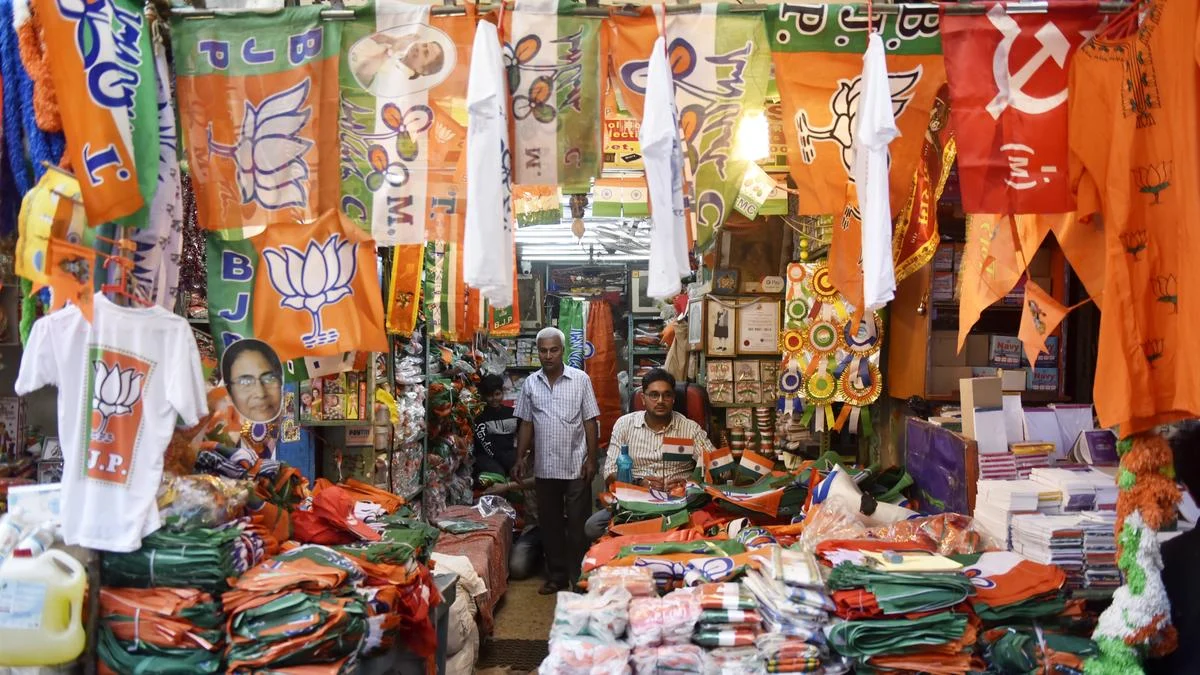
The political landscape of West Bengal has long been a subject of fascination for sociologists and political scientists alike. Often characterized by its fierce intellectualism, revolutionary history, and deeply entrenched grassroots mobilization, the state remains one of the most complex battlegrounds in the Indian democratic experiment. In his latest work, Battleground Bengal: The Political Future of a Fiercely Contested State, author Sayantan Ghosh attempts to peel back the layers of rhetoric that define modern elections to reveal the "micro-details"—the local calculations, the weight of historical alliances, and the simmering resentments that truly dictate the ballot.
As the state navigates a post-election reality where the Bharatiya Janata Party (BJP) has cemented its role as the primary challenger to the Trinamool Congress (TMC), Ghosh’s narrative provides a timely roadmap for understanding how a state once dominated by the Left Front for 34 years became the epicenter of a high-stakes saffron-versus-green ideological war.
Main Facts: Beyond the Headlines
The central thesis of Battleground Bengal is that while national media often views Bengal through a macro-lens of "high rhetoric and low nuance," the actual political movement in the state is dictated by "granularity." Ghosh argues that the current state of play is not merely a sudden surge of a specific ideology but the result of decades of shifting tectonic plates.
A critical revelation in the book is the historical irony of the TMC-BJP relationship. While the two parties are currently engaged in what can only be described as political warfare, they were once bedfellows in the National Democratic Alliance (NDA). In 1998, it was Mamata Banerjee’s TMC that provided the BJP with its first significant entry point into the Bengal psyche, winning seven Lok Sabha seats in alliance. This partnership gave the BJP a veneer of local legitimacy that it had previously lacked.
Furthermore, Ghosh identifies a pivotal shift in the BJP’s internal structure between 2014 and 2016. During this period, the party transitioned from a leadership that was largely independent of the Rashtriya Swayamsevak Sangh (RSS) to one that was fundamentally aligned with the Sangh Parivar’s organizational machinery. This shift allowed for a rapid expansion of the party’s footprint but also introduced a standardized "Hindutva template" that occasionally clashes with Bengal’s distinct regional identity.
Chronology: The Evolution of a Contest
To understand the current state of West Bengal’s politics, one must look at the chronological milestones that transformed a marginal player into a formidable opposition.
1998–2011: The Era of Accommodation
During the late 1990s and early 2000s, the BJP was a junior partner to the TMC. Both parties shared a common enemy: the Left Front. This period was marked by tactical alliances where the BJP’s national stature complemented the TMC’s localized "street-fighter" energy. However, after the TMC’s historic victory in 2011, which ended decades of Marxist rule, the alliance fractured as the TMC sought to consolidate total power.
2014–2019: The Saffron Surge
The 2014 General Elections served as a wake-up call. While the TMC remained dominant, the BJP began to see a surge in vote share. This period saw the RSS significantly increase its number of shakhas (branches) across the state, focusing on the border districts and tribal belts. By 2019, the BJP’s strategy bore fruit, as they captured 18 Lok Sabha seats, signaling that the "slow tide" of political change was accelerating.
2021–Present: The Clash of Identities
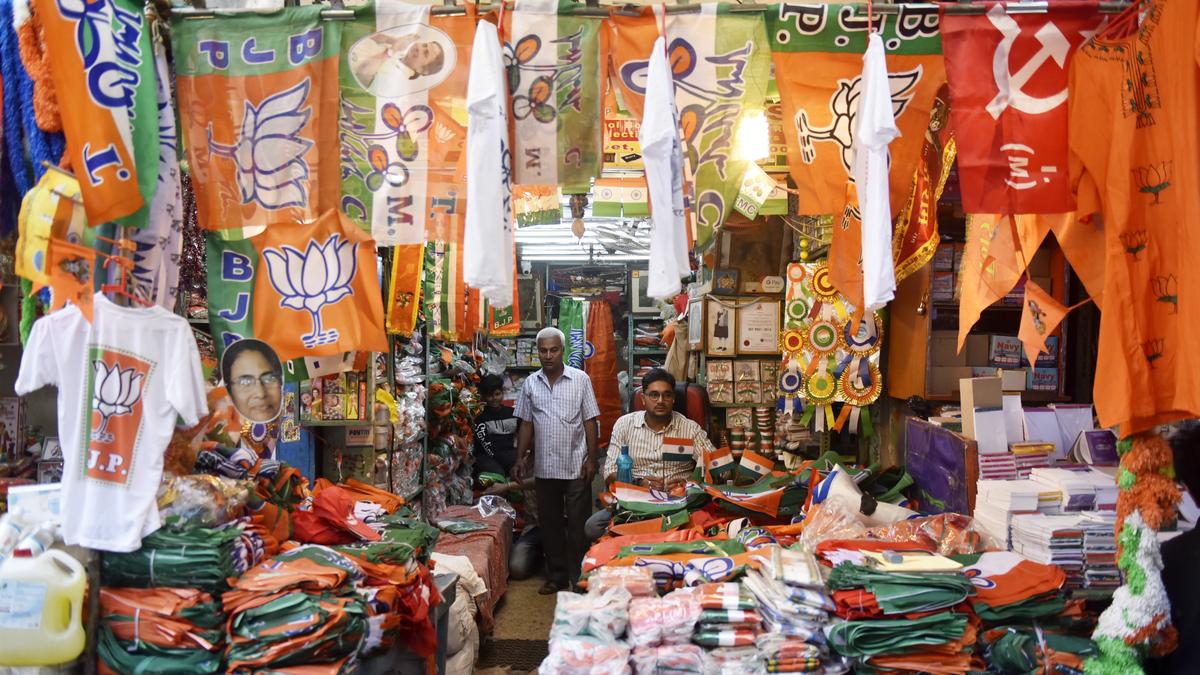
The 2021 Assembly elections and subsequent local polls have been defined by a clash of idioms. The BJP attempted to transplant its successful North Indian campaign model, centered on "Jai Shri Ram." However, the TMC countered with a narrative of "Bengali Pride" (Banglar Nijer Meyay—Bengal’s own daughter), forcing the BJP to pivot mid-campaign to more localized deities, such as Ma Kali and Durga.
Supporting Data: Organizational Growth and Internal Friction
The rise of the BJP in Bengal is backed by significant organizational data. According to Ghosh, the party’s growth was fueled by a dual strategy: the grassroots expansion of the RSS and the mass induction of defectors from other parties, primarily the TMC.
However, this rapid growth has come at a cost. The book highlights a growing divide within the Bengal BJP:
- The Veterans: Long-time workers who stood by the party when its vote share was in the single digits. They often feel sidelined by the new influx of leaders.
- The Defectors: High-profile leaders who crossed over from the TMC. While they brought organizational muscle and "win-ability," they also brought baggage and an ideological fluidity that sits uneasily with the RSS-trained cadre.
This internal hierarchy remains a point of friction. The lack of a singular "mass leader" to rival the charismatic appeal of Mamata Banerjee has forced the BJP into a cycle of leadership experiments, none of which have yet managed to bridge the gap between the party’s national ambitions and the state’s regional sensibilities.
Official Responses and Expert Context
Political analysts and observers of the Bengal "battleground" suggest that the BJP’s struggle is rooted in the "standardization" of its message. As Ghosh notes, Prime Minister Narendra Modi’s shift from "Jai Shri Ram" to "Jai Ma Kali" was a calculated response to feedback that the former was perceived as an "outsider" slogan in many parts of rural Bengal.
Expert commentary on the book suggests that the TMC’s resilience lies in its ability to occupy the "regionalist" space that the Left once held. By framing the BJP as a party of "Bohiragoto" (outsiders), the TMC has managed to tap into a deep-seated Bengali sub-nationalism.
On the other hand, BJP strategists argue that the party’s rise is inevitable because it provides the only viable alternative to what they characterize as the "misrule and corruption" of the TMC. They point to the "slow tide" of shifting votes—where the Left Front’s erstwhile voters have moved en masse to the BJP—as evidence that the state’s political chemistry has fundamentally changed.
Implications: The Future of a Fiercely Contested State
The implications of Ghosh’s findings are profound for the future of Indian democracy. West Bengal serves as a laboratory for whether a centralized national narrative can overcome a deeply rooted regional identity.

The Leadership Vacuum
The most immediate challenge for the opposition in Bengal is the "Mamata Factor." Banerjee remains a unique political entity—a leader who has maintained a populist, "common person" image despite over a decade in power. Until the BJP or a resurgent Left-Congress secular front can produce a leader with similar grassroots resonance, the "familiar" will likely continue to win out in high-stakes elections.
The "Slow Tide" of Change
Ghosh posits that political change in Bengal does not arrive in sudden waves but moves like a slow tide. This suggests that while the BJP has made significant inroads, the "complete poriborton" (change) they seek may take much longer than a single election cycle. The state’s voters are known for their "accretions of habit"—they are slow to leave a party, but once they do, as seen with the Congress in the 70s and the Left in 2011, they rarely return.
Cultural Synthesis vs. Ideological Purity
The BJP’s future in the state may depend on its ability to synthesize Hindutva with "Bengali-ness." This means moving beyond slogans and engaging with the state’s intellectual and cultural history on a deeper level. Conversely, the TMC’s challenge will be to manage the anti-incumbency that naturally follows long periods of rule, especially in the face of an opposition that is now permanently "on the ground."
Conclusion: A State in Flux
Battleground Bengal arrives at a moment when the state is at a crossroads. Sayantan Ghosh’s work is praised for its accessibility, taking the reader from "smoky tea stalls in south Kolkata to the narrow lanes of Murshidabad." It captures the sensory experience of Bengal politics—the smell of simmering fish curry mixed with the heat of a political debate.
The book serves as a reminder that while elections are won on television screens and social media feeds, they are decided in the "granularity" of everyday life. In West Bengal, where the political is personal and the personal is invariably political, the battle for the future is far from over. As the "slow tide" continues to move, both the incumbent and the challenger must realize that in this state, the voters may protest and despair, but their final decision is always rooted in a complex, often paradoxical, sense of belonging.
Book Details:
- Battleground Bengal: The Political Future of a Fiercely Contested State
- Author: Sayantan Ghosh
- Publisher: Penguin
- Price: ₹699
- Reviewer: Sobhana K. Nair (The Hindu)
