

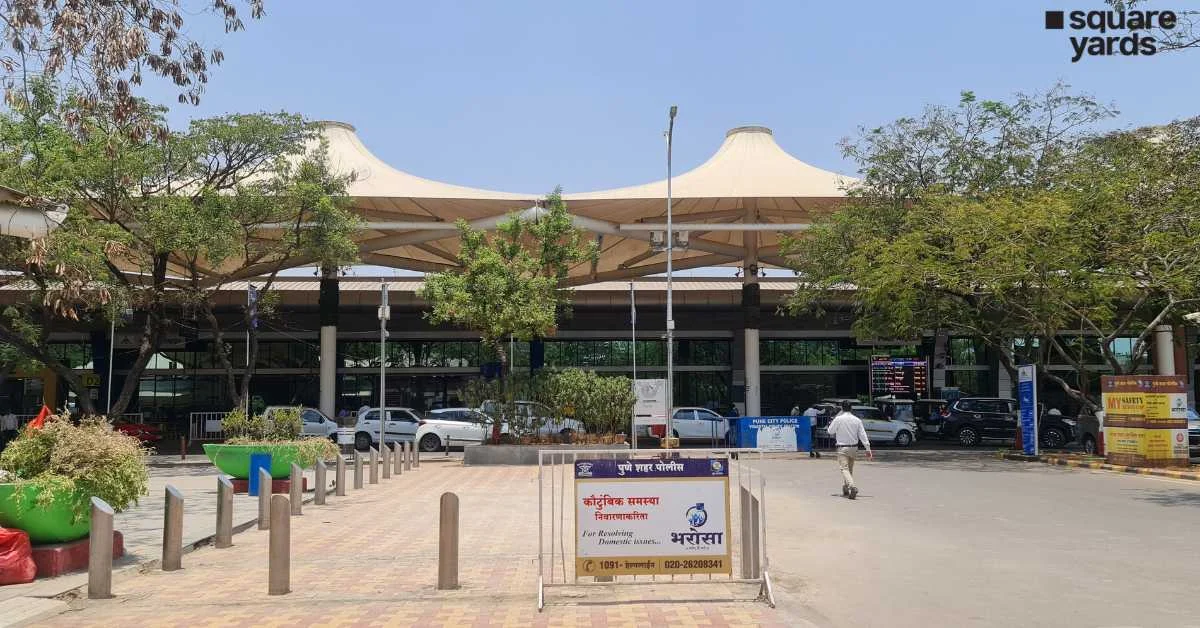
Introduction
For over a decade, the city of Pune—India’s premier automobile and IT hub—has grappled with a growing crisis: an aging, dual-use airport at Lohegaon that struggles to meet the demands of a globalizing economy. However, the long-anticipated Purandar International Airport has recently crossed a decisive threshold. With land acquisition efforts accelerating and the first tranches of compensation reaching the bank accounts of local landowners, the project has transitioned from a conceptual blueprint to an active infrastructure site.
This development is more than just a logistical upgrade; it represents a fundamental shift in the regional geography of Pune. As the project gains momentum, it is poised to unlock the "Southeast Corridor," creating a new economic engine that mirrors the success of international aviation hubs.
Main Facts: The 38 Percent Milestone
The Purandar International Airport project, spearheaded by the Maharashtra Airport Development Company (MADC), has reached its most significant operational milestone since its inception. District officials have confirmed that consent affidavits have been secured for over 1,150 acres of land. This represents approximately 38 percent of the total land required for the ambitious greenfield project.
The acquisition process, which is being managed by the Maharashtra Industrial Development Corporation (MIDC), has moved into an "execution mode." Unlike previous years, where the project was stalled by administrative hurdles and local resistance, the current phase is characterized by active compensation disbursement. This financial commitment from the state government serves as a tangible signal to investors and stakeholders that the project is now a priority for the regional administration.
The airport is slated to be a world-class facility, designed to handle an ultimate capacity of 75 million passengers annually. With plans for two parallel runways and parking bays for over 100 aircraft, the facility aims to provide Pune with the independent, unrestricted international connectivity it has lacked due to the Lohegaon Airport’s status as a restricted Indian Air Force (IAF) base.
Chronology: A Decade of Ambition and Delays
The journey of the Purandar Airport has been a complex narrative of political will, technical feasibility studies, and local negotiations.
- 2015-2016: The Inception: The Maharashtra government officially proposed a new international airport for Pune. After evaluating several sites, Purandar was identified as the most viable location due to its vast expanse of relatively flat terrain and proximity to the city.
- 2017-2019: Technical Clearances and Site Shifts: The project initially faced hurdles regarding the exact site orientation. The Ministry of Defence (MoD) and the Airports Authority of India (AAI) conducted multiple surveys. While a site was initially cleared, technical requirements led to a slight relocation to ensure the runways did not interfere with existing military flight paths.
- 2020-2022: Pandemic and Policy Review: The COVID-19 pandemic slowed administrative progress. During this period, the project underwent a rigorous review process, focusing on environmental impact assessments and the integration of the proposed Pune Ring Road into the airport’s master plan.
- 2023-Early 2024: Re-validation and Consensus Building: The state government renewed its push for the project, engaging in intensive dialogue with local village councils (Gram Panchayats). The "Consent Model" of land acquisition was refined to ensure fair market compensation for the agrarian community.
- Late 2024-Present: The Breakthrough: The securing of affidavits for 38 percent of the land and the commencement of compensation payments mark the beginning of the project’s physical realization.
Supporting Data: The Infrastructure Blueprint
To understand the scale of the Purandar project, one must look at the technical specifications and the geographical footprint.
The Land Requirements
The government plans to acquire approximately 1,285 hectares of land. This acquisition spans seven key villages in the Purandar taluk:
- Munjawadi
- Khanvadi
- Ekhatpur
- Kumbharvalan
- Pargaon
- Udachiwadi
- Vanpuri
Aviation Capacity
- Passenger Handling: Designed for a phased growth reaching 75 million passengers per annum (MPPA).
- Runways: Two parallel runways capable of handling "Code F" aircraft (such as the Airbus A380 and Boeing 747-8).
- Logistics: A dedicated cargo terminal designed to serve the manufacturing clusters of Chakan, Talegaon, and Hadapsar.
Proximity and Connectivity
The site is located roughly 50 kilometers from the current Lohegaon Airport. Crucially, it is positioned to intercept traffic from the upcoming 173-km Pune Ring Road, which will connect all major highways (Mumbai-Pune, Pune-Nashik, Pune-Ahmednagar, and Pune-Solapur) directly to the airport gates.
Official Responses: A Multi-Agency Effort
The progress at Purandar is the result of a coordinated effort between three primary entities: the District Administration, the MADC, and the MIDC.
The District Collectorate’s Stance:
District officials have emphasized that the current momentum is due to a "transparent and farmer-friendly" compensation model. By securing consent affidavits before taking possession, the administration has minimized the risk of legal disputes that often plague large-scale infrastructure projects in India. "The disbursement of funds is the ultimate proof of the state’s commitment," a senior district official noted.
The MADC’s Vision:
The Maharashtra Airport Development Company views Purandar not merely as a landing strip but as an "Aerocity." Their official stance focuses on the long-term economic multiplier effect. The MADC’s master plan includes provisions for hospitality zones, convention centers, and high-tech parks within the airport’s immediate periphery.
The MIDC’s Role:
As the nodal agency for land acquisition, the MIDC is leveraging its experience in developing industrial corridors. Their involvement ensures that the land surrounding the airport is zoned for "mixed-use" development, preventing haphazard growth and ensuring that logistics and warehousing hubs have the necessary infrastructure from day one.
Implications: Reshaping the Real Estate and Economic Map
The acceleration of the Purandar Airport has sent ripples through the real estate and industrial sectors, signaling a shift in Pune’s growth trajectory from the West to the Southeast.
1. The Southeast Shift: Beyond IT Hubs
For two decades, Pune’s growth was synonymous with the West (Hinjawadi, Baner, Wakad). However, the West is now reaching a saturation point in terms of land availability and traffic density. The Purandar project is turning the spotlight toward Saswad, Fursungi, and Uruli Kanchan. These areas, previously considered "peripheral," are now being re-evaluated as prime residential and commercial catchments.
2. Early Mover Advantage: The Developer Response
Institutional investors are already placing their bets. In late 2025, Shapoorji Pallonji Real Estate made headlines by acquiring 105 acres near the airport site for a plotted development project. This move is seen as a bellwether for the industry. Experts predict that while large-scale high-rise residential projects may take a few years to materialize, the demand for plotted developments, integrated townships, and "workforce housing" will spike immediately.
3. The Logistics and Warehousing Boom
Unlike the IT-centric development of Western Pune, the Purandar corridor is expected to become a hub for logistics and manufacturing. The airport’s cargo capabilities will serve the "Auto Hub" of Pune, allowing for faster export of components. This will likely lead to the development of Grade-A warehousing facilities along the Saswad-Jejuri belt.
4. The "Jewar Precedent"
Industry analysts frequently draw parallels with the Noida International Airport at Jewar. In the Jewar case, land values in the Yamuna Expressway region appreciated by 100-200% within a few years of the project’s announcement. Investors are looking at Purandar with a similar lens, anticipating that the "infrastructure-first" approach will lead to sustained capital appreciation over the next decade.
5. The Aerocity Ecosystem
The proposed Aerocity is perhaps the most significant implication for the commercial sector. Modern airports are "engines of urbanity." The Purandar Aerocity is expected to attract:
- Hospitality: International hotel chains catering to transit passengers and business travelers.
- MICE Tourism: Convention centers for global trade fairs, taking the load off Mumbai’s saturated venues.
- Retail and Entertainment: High-end retail districts that serve both the airport and the growing residential population of Southeast Pune.
Outlook: A New Chapter for Pune
With 38 percent of land consent secured and the machinery of the state moving toward execution, the Purandar International Airport has moved past the "if" and into the "when."
The project represents a maturation of Pune’s urban planning. By creating a second economic pole in the Southeast, the city can alleviate the pressure on its western corridors while creating thousands of jobs in the aviation, logistics, and hospitality sectors. For homebuyers and investors, the message is clear: the next decade of Pune’s growth will not be written in the glass towers of Hinjawadi, but on the runways of Purandar.
As the first flights eventually take off, they will carry with them the aspirations of a city ready to claim its place as a truly global metropolis. The journey from a quiet agrarian taluk to an international aviation hub has begun, and the real estate landscape of Pune will never be the same.
