

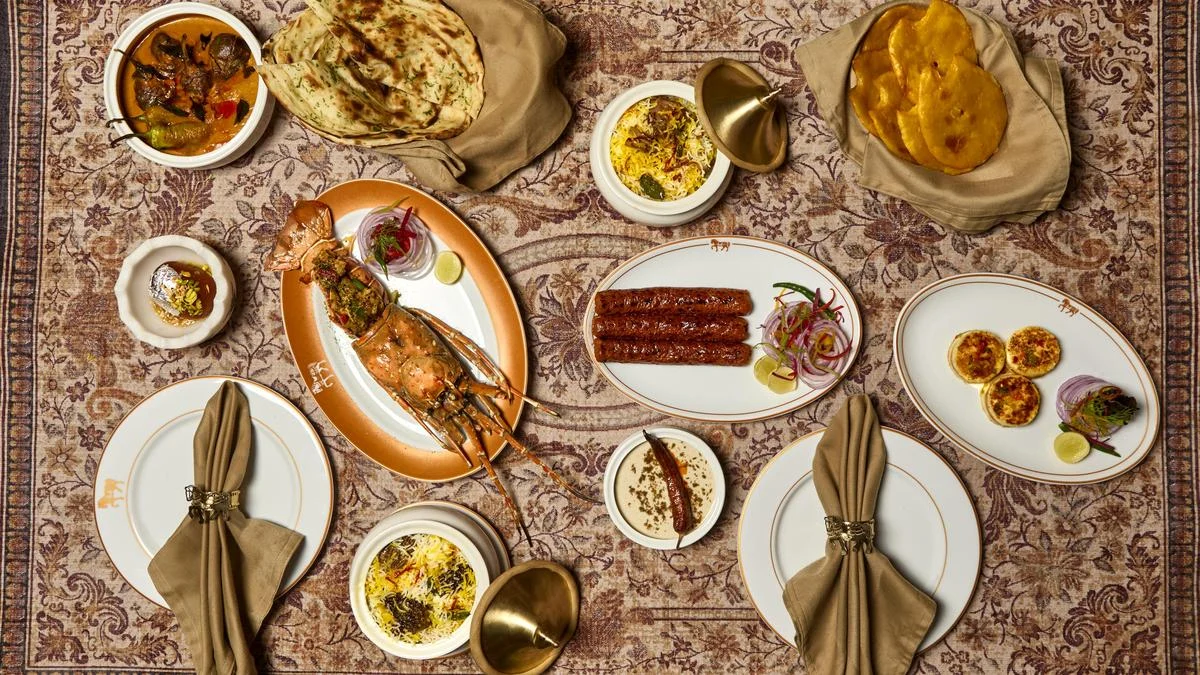
GOA — In the heart of Assagao, a village increasingly synonymous with Goa’s high-end culinary evolution, a new gastronomic landmark has emerged that seeks to bridge the geographical and cultural gap between the coastal sunshine of the South and the regal, slow-cooked traditions of the North. Kesar Bagh, the latest venture from Chef Azaan Qureshi and restaurateur Priyank Sukhija, is more than just a restaurant; it is a repository of a centuries-old culinary lineage, housed within the whitewashed walls of a 180-year-old Portuguese bungalow.
As the Goan food and beverage (F&B) scene continues to diversify beyond its traditional seafood and vindaloo roots, Kesar Bagh introduces a level of technical precision and historical reverence rarely seen in the state. By bringing the "Dum" and "Galawat" techniques of Lucknow to the palm-fringed lanes of Assagao, the establishment is setting a new benchmark for heritage dining in India.
Main Facts: The Intersection of Pedigree and Location
Kesar Bagh represents the flagship solo venture of Chef Azaan Qureshi, a name that carries significant weight in the Indian culinary landscape. Azaan is the grandson of the legendary Padma Shri awardee Chef Imtiaz Qureshi—the man credited with bringing the Dum Pukht style of cooking to the forefront of global fine dining and establishing iconic institutions like Bukhara and Dum Pukht at ITC Maurya, Delhi.
A Partnership of Visionaries
The project is a collaboration between Azaan and Priyank Sukhija, the CEO and Managing Director of First Fiddle F&B. Sukhija, known for his prolific success with brands like Lord of the Drinks and Dragonfly Experience, provided the business acumen and scale necessary to transform a heritage property into a 120-seat dining destination.

The Property
Located at 5, Saunto Waddo, the restaurant is spread across half an acre. The architectural choice is deliberate: a renovated Portuguese bungalow that maintains its 19th-century charm while incorporating a palette of salmon pink and teal. The space is divided into several distinct areas, including:
- Kesar: An outdoor bar serving botanical and fruit-forward cocktails.
- The Courtyard: Featuring a marble fountain and traditional floral motifs.
- The Indoor Dining Rooms: Each room offers a unique aesthetic, adorned with high-tiled roofs, crystal chandeliers, and contemporary Indian art, including works by the renowned Thota Vaikuntam.
Chronology: From the Kitchens of ITC to the Shores of Anjuna
The journey of Kesar Bagh is a narrative of professional evolution and opportunistic pivoting.
1970s–1980s: The Foundation
The story begins with Chef Imtiaz Qureshi, who redefined Awadhi cuisine in a commercial fine-dining context. His sons, including Azaan’s father, Chef Ghulam Qureshi, continued this tradition, maintaining the exacting standards of the "Kebabchi" (master of kebabs) and the "Bawarchi" (master of the pot).
2009–2024: Azaan’s Apprenticeship
Azaan Qureshi spent 15 years within the ITC Hotels ecosystem, learning the finer nuances of the family craft. His training was not merely academic but a form of traditional apprenticeship under his father and grandfather, focusing on the patience required for Dum cooking—a technique where food is cooked in its own juices in a sealed heavy-bottomed pot.

The Pivot to Goa
Originally, Kesar Bagh was slated to open in Gurugram, the corporate hub of Northern India. However, during a scouting trip to Goa, Azaan and Sukhija encountered the 180-year-old bungalow in Assagao. The character of the property—its high ceilings, interconnected rooms, and historical weight—convinced the duo to change their strategy. The Goa flagship opened its doors in April 2024, aiming to capture the sophisticated domestic and international tourists who frequent the North Goa circuit.
Supporting Data: Technical Precision and the Awadhi Menu
The hallmark of Kesar Bagh is its adherence to traditional techniques that are often bypassed in modern, high-speed kitchens. The menu is a curated list of Awadhi classics, each requiring specific chemical and physical preparation.
The Science of Galawat
One of the restaurant’s standout offerings is the Kakori Kebab. Unlike traditional seekh kebabs, the Kakori is famous for its "melt-in-the-mouth" texture. This is achieved through galawat, a technique using raw papaya. The enzyme papain in the fruit acts as a natural meat tenderizer, breaking down connective tissues over several hours. At Kesar Bagh, this technique is complemented by a secret blend of over 50 spices, resulting in a kebab that requires no chewing.
Innovation within Tradition
While the restaurant is rooted in history, Azaan introduces subtle innovations:

- Gucchi-Subz-e-Zar: This dish features jumbo Himalayan morels (gucchi) stuffed with clotted cream and potato. The use of morels was an adaptation introduced by Azaan’s grandfather, who was inspired by French culinary uses of the fungi and sought to integrate them into Indian gravies.
- Takka Paisa Kebab: A display of architectural plating, this dish involves mashed potatoes wedged between cottage cheese roundels. The name refers to an old technique where the kebab is shaped and grilled to maintain three distinct structural layers.
- Unique Breads: The bread program includes the Hazari Naan, a layered, ajwain-flavored flatbread, and the Doodh Garlic Naan, which is kneaded with milk, curd, and cheese to provide a richer, softer crumb than standard tandoori breads.
The Bar Program
The beverage menu at Kesar (the outdoor bar) is designed to complement the heavy, spice-rich food. The Mango Kesar Spritzer and the Picante with Curry Leaves and Elderflower provide acidic and floral counterpoints to the richness of the Dal Ma Qureshi and the Dum Biryani.
Official Responses: The Chef’s Vision
In discussions regarding the restaurant’s philosophy, Chef Azaan Qureshi emphasizes the responsibility of his lineage. For him, Kesar Bagh is not merely a business but a mission of cultural preservation.
"In Awadhi cuisine, it’s not just the masalas but the dum technique that is special," Azaan explained during the restaurant’s launch. "It makes even fewer spices seem more complex through the longer process of slow cooking. We are not just serving food; we are serving time."
Regarding the decision to move the flagship to Goa, Azaan noted that the state’s evolving palate was a primary driver. "Goa has become a melting pot of global cuisines. However, authentic, high-end North Indian heritage food was a niche that hadn’t been fully explored in this specific heritage setting. When we found this bungalow, we knew it had to be here."

When asked about the future of the Qureshi brand and the global spread of Awadhi food—which has reached cities like New York and Tokyo—Azaan remained focused on the domestic market. "If I don’t do it [preserve and promote the authentic craft], who will? My goal is to ensure that the term ‘Kebabchi’ and the history of Lucknow’s Qaiser Bagh are known to the next generation of diners."
Implications: The Transformation of the Goan Dining Landscape
The opening of Kesar Bagh has several broader implications for the regional and national F&B industry.
1. The "Assagao Effect" and Culinary Gentrification
Assagao has transitioned from a quiet residential village to India’s premier "restaurant row." The entry of a Qureshi-led establishment signifies that the village is no longer just for experimental fusion or European bistros; it is now a destination for serious, traditional Indian haute cuisine. This shift suggests a maturation of the Goan market, where diners are willing to pay ₹4,000+ for a meal that celebrates indigenous heritage rather than imported concepts.
2. Preservation of Slow-Food Traditions
In an era of "fast-casual" dining and cloud kitchens, Kesar Bagh’s commitment to labor-intensive processes—like the 30-50 year perfected galawat recipes—acts as a bulwark against the homogenization of Indian food. By training a new cohort of chefs in these traditional methods, Azaan is ensuring the survival of the Dum Pukht school of cooking.

3. Heritage Property Adaptive Reuse
The successful conversion of a 180-year-old Portuguese bungalow into a functional, high-capacity restaurant provides a blueprint for heritage conservation in Goa. It demonstrates that historical structures can be economically viable through adaptive reuse, provided the concept (in this case, Awadhi royalty) matches the grandeur of the architecture.
4. Diversification of Tourism
Establishments like Kesar Bagh contribute to "culinary tourism," where the destination is the restaurant itself. This helps diversify Goa’s tourism appeal beyond its beaches and nightlife, positioning it as a center for luxury lifestyle and historical exploration.
Conclusion
Kesar Bagh stands as a testament to the enduring power of legacy. By marrying the aristocratic flavors of the Nawabs with the colonial elegance of Goan architecture, Chef Azaan Qureshi has created a space where "time stands still." For the discerning diner, it offers a rare opportunity to experience a storied past in a very contemporary present.
Fact Box: Kesar Bagh at a Glance
- Location: 5, Saunto Waddo, Assagao, Goa.
- Cuisine: Authentic Awadhi (Lucknowi).
- Key Figures: Chef Azaan Qureshi, Priyank Sukhija.
- Average Cost: ₹4,000 for two (approx.).
- Signature Dishes: Kakori Kebab, Gucchi-Subz-e-Zar, Lab-e-mashooq.
- Operating Hours: Lunch and Dinner; reservations recommended.
