

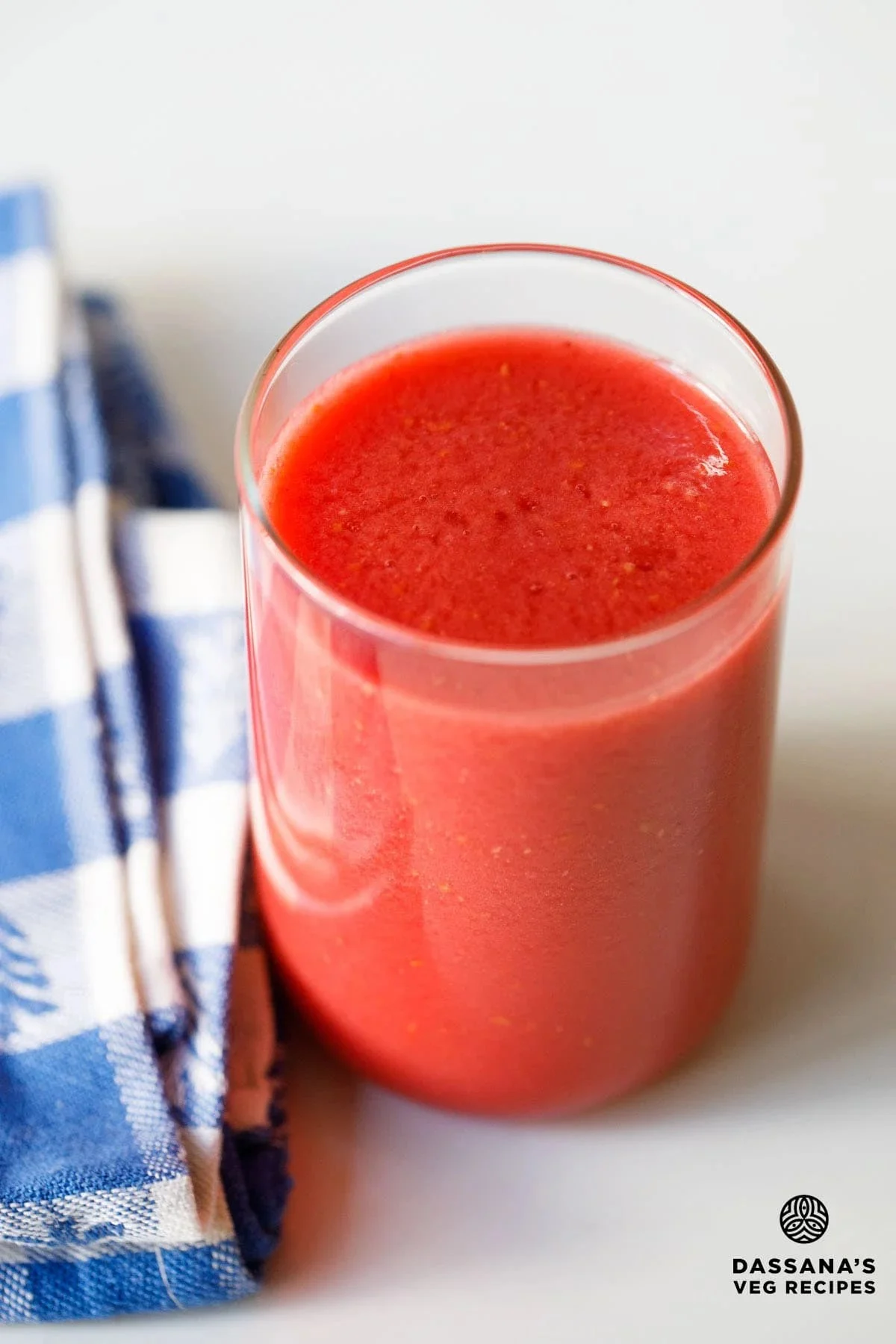
In an era increasingly dominated by processed beverages and synthetic flavorings, the culinary world is witnessing a significant pivot back to fundamental, whole-food preparation. Leading this movement is the resurgence of simple, nutrient-dense fruit juices. Among these, homemade raspberry juice has emerged as a premier choice for health-conscious consumers and culinary enthusiasts alike. Characterized by its striking crimson hue and its sophisticated sweet-tart equilibrium, this beverage represents more than just a refreshing drink; it is a testament to the efficacy of minimal ingredient intervention.
The following report details the methodology, nutritional architecture, and culinary implications of raspberry juice preparation, based on the expert formulations of renowned vegetarian chef and Le Cordon Bleu-trained patissier, Dassana Amit.
I. Main Facts: The Anatomy of a Pure Raspberry Extract
Raspberry juice, in its most authentic form, is a three-ingredient composite consisting of fresh or frozen raspberries (Rubus idaeus), filtered water, and a calibrated amount of sweetener. Unlike commercial variants that often rely on high-fructose corn syrup and artificial dyes, the homemade version relies on the natural anthocyanins of the berry to provide its vibrant aesthetic.

The Core Components
The fundamental profile of the juice is determined by the quality of the raw material. While raspberries are globally cultivated, the variety available in specific regions—such as the slightly more acidic berries found in the Indian subcontinent—requires a nuanced approach to sweetening. The standard preparation involves 250 grams of fruit to approximately 1.5 cups of water, a ratio designed to maintain a "medium-thick" consistency that preserves the fruit’s structural integrity without becoming overly diluted.
Versatility in Preparation
A critical aspect of this beverage is its adaptability. While fresh berries are preferred for their aromatic top notes, frozen berries serve as an excellent alternative, often resulting in a thicker, "slushy" texture that is highly desirable in peak summer months. Furthermore, the inclusion of lemon juice acts as a flavor catalyst, brightening the profile of berries that may lack natural acidity.
II. Chronology: The Systematic Extraction Process
The production of high-quality raspberry juice follows a rigorous chronological sequence to ensure both safety and flavor optimization. The process, as outlined by culinary professionals, transitions from raw harvest to a refined liquid state through the following stages:

Phase 1: Sanitation and Preparation
The process begins with the thorough rinsing of 250 grams of fresh raspberries. Given the delicate, porous structure of the drupelets, this must be done with care to remove environmental debris without bruising the fruit. The berries are then drained using a colander to ensure that excess external water does not interfere with the calculated water-to-fruit ratio.
Phase 2: Emulsification and Sweetening
The cleaned berries are transferred to a high-speed blender. At this stage, 4 to 5 tablespoons of sugar (or a preferred alternative sweetener) are added. The addition of 1.5 cups of water—chilled for immediate consumption—initiates the blending process. The goal is a homogenous mixture where the fruit solids are fully integrated with the liquid base.
Phase 3: Refinement and Customization
Once the initial blend is achieved, a sensory evaluation is conducted. If the berries exhibit a lack of tartness, 0.5 teaspoons of lemon juice are introduced. If the consistency is too dense, an additional 0.25 cups of water may be integrated.

Phase 4: Textural Modification (Straining)
A pivotal decision point in the chronology is the treatment of seeds. For a rustic, high-fiber experience, the juice is left as-is. However, for a professional "smooth" finish—recommended for children or the elderly—the mixture is passed through a fine-mesh strainer. This removes the gritty seeds, resulting in a silkier mouthfeel.
Phase 5: Service and Storage
The final product is poured into chilled glassware. While immediate consumption is optimal for preserving volatile antioxidants, the juice can be stabilized in refrigeration for up to five hours. Because it is a natural suspension, a final stir is required before service to counteract natural separation.
III. Supporting Data: A Quantitative Nutritional Profile
The nutritional value of raspberry juice is substantial, offering a high density of vitamins and minerals relative to its caloric load. According to standardized recipe data, a single serving (based on a two-glass yield) provides a complex array of micronutrients.

Nutritional Breakdown (Per Serving)
- Energy: 157 kcal
- Carbohydrates: 39g (with 29g coming from sugars)
- Dietary Fiber: 8g (predominantly in the pulp and seeds)
- Protein: 2g
- Lipid Profile: 1g (minimal saturated fats)
Micronutrient Density
Raspberries are an exceptional source of Vitamin C, with this recipe providing approximately 33mg per serving. This represents a significant portion of the Recommended Dietary Allowance (RDA), supporting immune function and collagen synthesis.
Other notable data points include:
- Potassium: 189mg (essential for electrolyte balance)
- Vitamin K: 10µg (critical for bone health and blood coagulation)
- Folate (B9): 26µg (vital for DNA synthesis and repair)
- Antioxidant Load: The juice contains 41 IU of Vitamin A and 1mg of Vitamin E, alongside significant concentrations of phosphorus, magnesium, and calcium.
IV. Official Responses: Expert Insights from the Culinary Community
To understand the broader context of this recipe, one must look to the expertise of Dassana Amit, a vegetarian chef with decades of experience and specialized training from Le Cordon Bleu. Amit’s approach to raspberry juice emphasizes the "honest, soulful" aspect of vegetarian cooking.

The "Clean Label" Philosophy
Chef Amit’s advocacy for this specific preparation method aligns with the "clean label" movement. By utilizing only three main ingredients, the recipe avoids the stabilizers and preservatives found in industrial juices. Amit notes that for those in regions like India, where raspberries may be more tart, the use of sugar is not merely for sweetness but to "balance the flavor and enhance the natural fruitiness."
Professional Guidance on Texture
Culinary experts emphasize that the "grittiness" of raspberry seeds is a polarizing factor. The "official" recommendation from the professional kitchen is that while seeds provide fiber, the aesthetic and palatability of a strained juice often align better with formal brunch service or light snacks. Amit’s instructions specifically highlight the importance of the straining process as a tool for inclusivity, ensuring the drink is accessible to all age groups.
V. Implications: Health, Culinary Trends, and Future Outlook
The implications of adopting homemade raspberry juice as a dietary staple extend beyond mere hydration. This beverage sits at the intersection of preventive health and gourmet home cooking.

Health and Wellness Implications
The high fiber content (8g) of unstrained raspberry juice is a rarity in the beverage world. Most juices are stripped of fiber, leading to rapid glucose spikes. The retention of pulp helps modulate the absorption of natural sugars, making it a more balanced option than clear, processed juices. Furthermore, the high antioxidant capacity—driven by ellagitannins and anthocyanins—positions raspberry juice as a functional food capable of combating oxidative stress.
The Shift in Beverage Consumption
As consumers become more wary of "ultra-processed foods" (UPFs), the "do-it-yourself" (DIY) juice movement is expected to grow. The ease of this recipe—requiring no specialized equipment beyond a standard blender—lowers the barrier to entry for healthy living. It represents a democratization of gourmet health food.
Culinary Integration
In the professional sphere, this raspberry extract serves as a "mother base" for more complex culinary applications. It can be reduced into a coulis, used as a base for sophisticated non-alcoholic mocktails, or integrated into plant-based patisserie—an area where Chef Amit holds specific expertise.

Conclusion
Raspberry juice, while simple in its composition, is a sophisticated beverage that offers a wealth of nutritional benefits and sensory pleasure. By following a structured preparation method and understanding the underlying data of the ingredients, home cooks can replicate a professional-grade drink that rivals commercial premium offerings. As the trend toward whole-food hydration continues to accelerate, the humble raspberry is poised to remain a centerpiece of the modern, health-conscious kitchen.
