

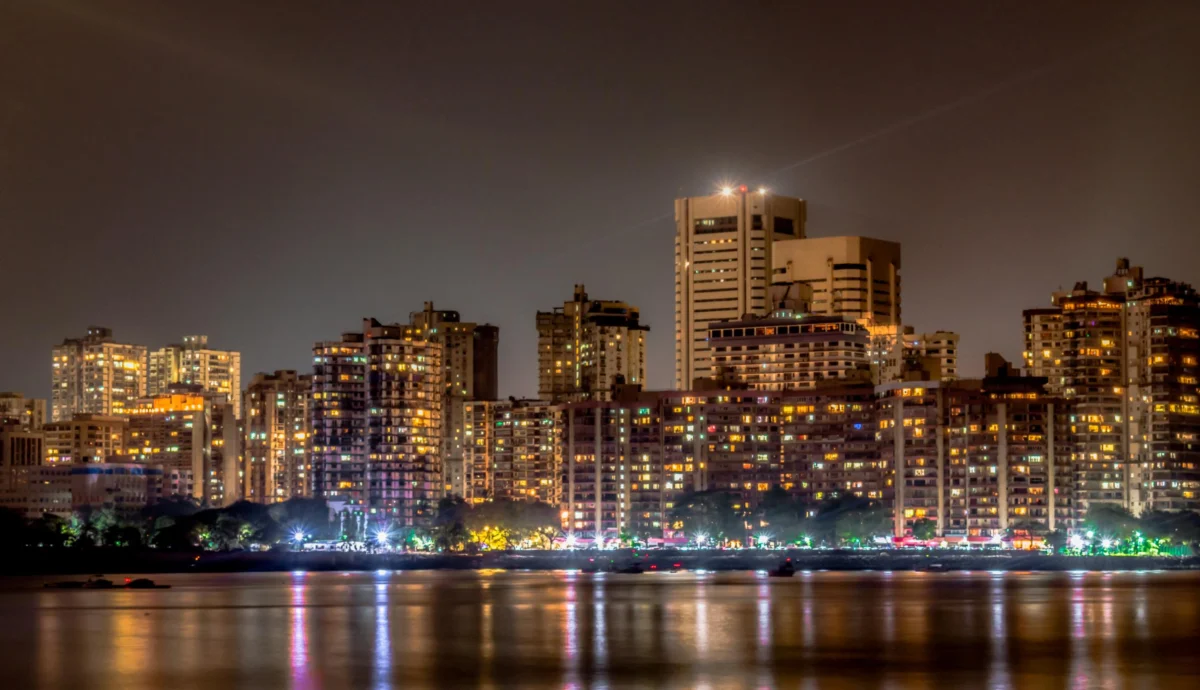
The landscape of Indian real estate has undergone a profound metamorphosis. As we navigate the first half of 2026, a striking divergence has emerged within the property sector. While the broader mid-market and affordable housing segments have faced headwinds due to global economic fluctuations and shifting interest rate cycles, the luxury segment—defined by "trophy assets" and ultra-premium postcodes—has not only remained insulated but has thrived.
From the high-rises of Mumbai’s Worli to the sprawling villa communities of Goa and the elite floors of South Delhi, the appetite for high-value real estate is reaching unprecedented levels. This report explores the factors driving this boom, the shifting demographics of the Indian buyer, and the economic implications of a market that seems to defy the gravity of traditional property cycles.
1. Main Facts: A Market Decoupled
The defining characteristic of the 2026 real estate market is its fragmentation. According to recent industry data, overall housing sales across India’s top eight cities witnessed a marginal dip in the first quarter of the year. However, the premium and luxury tiers—properties priced above ₹15 crore—showed no signs of slowing down.
The South Delhi Phenomenon
The most startling evidence of this resilience is found in South Delhi. The luxury floor segment in localities like Jor Bagh and Vasant Vihar posted price increases of up to 32% in Q1 2026 alone. This surge occurred despite global market uncertainty, suggesting that for the ultra-wealthy, Indian real estate has transitioned from a mere utility to a preferred "safe haven" asset class.
Geographic Diversification
The "luxury" label is no longer exclusive to South Mumbai or Lutyens’ Delhi. The conversation has expanded to include:
- Gurugram: Specifically the Golf Course Road and peripheral luxury corridors.
- Bengaluru: Premium gated communities catering to the tech-elite.
- Goa: A shift from "vacation homes" to "primary luxury residences" for the digital-nomad HNI (High Net-Worth Individual).
- Hyderabad: Emerging as a dark horse in the ultra-luxury segment with massive floor-plate apartments.
2. Chronology: The Road to the 2026 Boom
To understand the current surge, one must look at the trajectory of the last five years:
- 2021–2022 (The Post-Pandemic Pivot): The pandemic acted as a catalyst. The "flight to quality" began as buyers sought larger spaces, better amenities, and integrated wellness features. This period saw the liquidation of long-standing luxury inventory.
- 2023–2024 (The Supply Crunch): As demand exhausted existing stock, developers pivoted toward ultra-luxury projects. However, the gestation period for these high-end developments created a "supply-demand mismatch" in prime micro-markets.
- 2025 (The Infrastructure Maturity): Major infrastructure projects—such as the Mumbai Trans Harbour Link (MTHL) and the expansion of the Dwarka Expressway—began to redefine "prime" locations, pulling capital into previously peripheral luxury pockets.
- 2026 (The Current Peak): We are now seeing the result of limited supply meeting a new class of global Indian buyers. The market is characterized by "tight supply in locations that genuinely cannot be replicated," leading to the current price spikes.
3. Supporting Data: Market Valuations and Rental Yields
The following data highlights the current pricing and rental landscape across India’s most coveted luxury micro-markets as of early 2026.
Table: Average Sale and Rentals Across Key Luxury Markets (Q1 2026)
| Locality | Avg. Sale Price (per sq. ft.) | Avg. Monthly Rent (2–3 BHK) |
|---|---|---|
| Malabar Hill, Mumbai | ₹80,000 – ₹1,20,000 | ₹4.0L – ₹7.0L |
| Worli, Mumbai | ₹65,000 – ₹80,000 | ₹2.5L – ₹5.5L |
| Bandra West, Mumbai | ₹55,000 – ₹75,000 | ₹2.0L – ₹4.5L |
| Jor Bagh, Delhi | ₹40,000 – ₹55,000 | ₹3.0L – ₹6.0L |
| Vasant Vihar, Delhi | ₹30,000 – ₹45,000 | ₹1.8L – ₹3.5L |
| Golf Course Road, Gurugram | ₹25,000 – ₹40,000 | ₹1.5L – ₹3.0L |
Analysis of the Data
The data reveals a significant "rental premium" in Delhi’s Jor Bagh compared to its sale price per square foot, reflecting the extreme scarcity of available bungalows and floors in the Lutyens-adjacent zone. Conversely, Mumbai’s Malabar Hill remains the most expensive real estate in the country, with prices touching the ₹1.2 lakh per sq. ft. mark for premium sea-facing penthouses.
4. The New Buyer Profile: HNIs, NRIs, and the Global Indian
The driver of this 2026 boom is a fundamental shift in buyer psychology. Luxury property is no longer viewed purely as a financial instrument; it is now a "lifestyle asset" and a "family legacy."
The NRI Influence
Non-Resident Indians (NRIs) are playing a more significant role than ever before. Approximately 24% of luxury buyers in Mumbai now originate from outside the city, with a significant portion of capital flowing from Dubai, London, and Singapore. These buyers are looking for a hedge against currency volatility and see the Indian luxury market as undervalued compared to global hubs like New York or Hong Kong.
The Rise of the "Legacy" Buyer
Domestic HNIs are increasingly moving away from equity markets during periods of volatility, redirecting capital into "hard assets." In 2026, a luxury home is seen as a multi-generational asset. This has led to a preference for "Branded Residences"—properties managed by international hospitality chains that offer a level of service and security that traditional apartments cannot match.
5. Official Responses and Industry Perspectives
Leading voices in the industry suggest that the current trend is structural rather than speculative.
The Developer Perspective:
“We are seeing a demand for ‘unreplicable’ assets,” says a CEO of a leading Mumbai-based real estate firm. “Buyers are no longer just asking about the square footage; they are asking about the carbon footprint, the concierge services, and the exclusivity of the neighborhood. In 2026, luxury is defined by privacy and time-saving amenities.”
The Analytical View:
Market analysts suggest that the government’s focus on RERA (Real Estate Regulatory Authority) has finally instilled the confidence needed for high-ticket transactions. “The transparency in the system has allowed institutional investors and ultra-high-net-worth individuals to deploy large sums of capital without the fears that plagued the market a decade ago,” notes a senior analyst at a global property consultancy.
The Regulatory Stance:
While the government remains focused on "Housing for All," there is a tacit acknowledgment that the luxury segment is a significant contributor to the exchequer through stamp duty and property taxes. However, officials in several states have hinted at a periodic review of property tax brackets for high-value assets to ensure equitable urban development.
6. Risks and Investment Realities
Despite the bullish sentiment, the luxury market in 2026 is not without its complexities. Investors are cautioned that the "math" of luxury is different from that of the mid-market.
Liquidity Concerns
Resale remains the primary challenge. Finding a qualified buyer for an ₹18 crore to ₹50 crore apartment is a time-consuming process. Unlike the mid-segment, where properties can be liquidated in weeks, luxury assets may remain on the market for six to eighteen months.
The Cost of Ownership
Maintenance charges in premium gated communities or branded towers have escalated. In 2026, it is not uncommon for annual maintenance and "clubhouse fees" to run into several lakhs, impacting the net rental yield. Furthermore, rising property taxes in cities like Mumbai and Delhi mean that the "carry cost" of a luxury asset is higher than it has ever been.
7. Implications: What Lies Ahead?
The continued strength of the luxury real estate market in 2026 has several long-term implications for the Indian economy:
1. The "Gentrification" of Peripheral Zones
As core markets like South Delhi and South Mumbai reach a saturation point, wealth is spilling over into "New Luxury" zones. This is driving rapid infrastructure development in places like Sohna Road in Gurugram and North Bengaluru, creating new economic hubs.
2. Real Estate as a Hedge
With global equity markets facing tech-sector corrections and geopolitical instability, luxury real estate has solidified its position as a preferred hedge. This "financialization" of property means that prices are increasingly influenced by global capital flows rather than just local demand.
3. The Future: Bengaluru and Hyderabad
While Mumbai and Delhi currently lead, the "next wave" of luxury is expected to build in Bengaluru and Hyderabad. These cities offer larger land parcels, allowing for the kind of sprawling, tech-integrated villa projects that are becoming popular with the younger generation of "New Money" entrepreneurs.
Conclusion
Luxury real estate investment in India in 2026 requires a sophisticated approach. It is a market where "scarcity" is the primary currency. For those with a long-term horizon, the combination of limited supply in iconic locations and a growing class of global Indian buyers creates a compelling narrative. As the broader market stabilizes, the luxury segment remains the crown jewel of the Indian property sector—a testament to the country’s growing economic stature on the world stage.
Disclaimer: This report is based on a synthesis of industry data, market trends, and expert projections as of early 2026. Real estate investments carry inherent risks, and stakeholders are advised to conduct independent due diligence before committing capital to high-value assets.
