

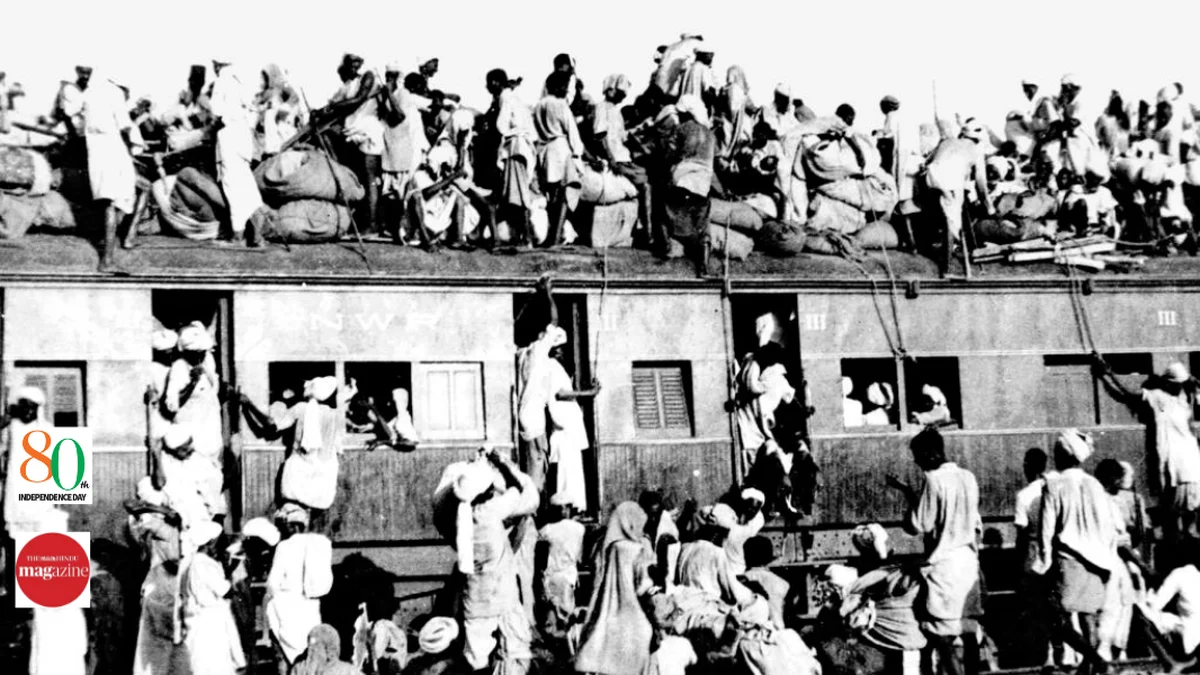
The history of the Indian subcontinent is often told through the grand lens of geopolitics, the drawing of borders, and the speeches of statesmen. However, the true weight of 1947 lies in the lived experience of those who traversed those borders—the "shattering within" that redefined millions of lives. In the recently released English translation of a crucial segment of Qurratulain Hyder’s autobiographical masterpiece, Kar-e Jahan Daraz Hai, titled A Tilt in Time: Partition & Pakistan — a mid-century memoir, the English-speaking world is given a profound window into the decade following the Great Divide.
Translated by the scholar Fatima Rizvi and published by Women Unlimited Ink, this work captures a world in flux, where the "unmaking and remaking" of community became a daily necessity for the displaced intellectual elite.
Main Facts: A Literary Landmark Translated
Qurratulain Hyder (1927–2007), affectionately known as "Ainee Apa," stands as a titan of 20th-century Urdu literature. Her magnum opus, Aag Ka Darya (River of Fire), is frequently cited as the most important novel of the subcontinent, tracing 2,500 years of history. A Tilt in Time focuses on a more compressed but equally volatile period: the ten years immediately following the 1947 Partition.
The book is an English rendering of Parts 12 to 15 of the second volume of Hyder’s semi-autobiographical Kar-e Jahan Daraz Hai (The Work of the World is Never-Ending). This particular volume serves as a "mid-century memoir," tracking the migration of Hyder’s family and her own intellectual journey across the newly carved borders of India and Pakistan, and eventually to the imperial center of London.

Fatima Rizvi’s translation is more than a linguistic transfer; it is a cultural negotiation. As Rizvi notes in her introduction, translating Hyder requires navigating a dense thicket of cultural references, Urdu idioms, and the specific intellectual vernacular of the mid-20th-century Muslim elite. The result is a text that preserves Hyder’s signature wit, her sharp eye for social hypocrisy, and her deep empathy for a generation "shattered within."
Chronology: A Decade of Displacement and Discovery (1947–1957)
The memoir follows a non-linear but historically grounded path, reflecting the "tilt in time" that the title suggests.
1. The Great Migration (Late 1947)
The narrative begins with the exodus from Nehtaur, Uttar Pradesh. Hyder describes her relatives’ migration to Pakistan not merely as a flight from danger, but as a symbolic journey akin to the "pilgrim fathers of the Mayflower." This comparison highlights the idealism and the sense of "pioneer spirit" that some migrants carried, even as they left behind centuries of ancestral roots. Unlike many accounts that focus solely on the visceral violence of 1947, Hyder archives the "everydayness" of displacement—the packing of trunks, the loss of family heirlooms, and the strange novelty of living in a "new" country.
2. The Formative Years in Pakistan (1948–1952)
As the dust of Partition settled, the narrative shifts to the urban centers of Lahore, Karachi, and Dhaka. Hyder records the frantic efforts of young men and women trying to "equip themselves in novel ways of living." This was a period of intense cultural debate: what did it mean to be "Pakistani"? How could a new national identity be forged that was distinct from the shared "Indian" heritage? Hyder’s observations during this time are those of an insider-outsider, witnessing the birth of a nation while mourning the loss of a composite culture.

3. The London Years and Global Activism (Mid-1950s)
The memoir extends its reach to London, where Hyder continued her quest for belonging. Her time in the UK was marked by participation in global political movements, including protests against the Rosenberg convictions during the height of the McCarthy-era "witch hunts." This period illustrates Hyder’s evolution from a regional writer to a global intellectual, concerned with human rights and the universal struggle against oppression.
4. Return and Reflection
The decade concludes with a sense of the permanent "unhomely." By the mid-1950s, the "revolution" of Partition had solidified into the bureaucracies of two separate nation-states. Hyder captures the realization among her peers that the bourgeois politics of the era had fundamentally altered the landscape, making the concept of "home" a fluid and often painful construct.
Supporting Data: The "Community of the Unhomely"
Hyder’s work is celebrated for its ability to weave the personal with the political. Several key thematic "data points" emerge from the memoir that provide a sociological map of the era:
- The Ritual of Storytelling: One of the most poignant scenes described is a gathering of friends and relatives where a betel nut box (pandan) is placed in the center "like a lamp in a mushaira." Each person takes a turn to recount their encounter with tragedy. This ritual serves as a communal acknowledgment of shared helplessness, transforming individual trauma into a collective narrative of survival.
- The Intellectual Salon: Hyder provides a "who’s who" of the mid-century intellectual landscape. The memoir features appearances by the legendary poet Faiz Ahmad Faiz and the novelist Dr. Mulk Raj Anand. These gatherings, described as mirroring French salons, were the crucibles where the socialist humanism of the era was debated and refined.
- The Gendered Workforce: The memoir offers early feminist critiques of the workplace. Hyder narrates her confrontations with patriarchal structures in professional environments, questioning why women remained discriminated against despite their massive contributions to both the domestic and formal economies.
- The Question of Property: In a telling anecdote, Hyder recounts meeting the great-granddaughter of Bahadur Shah Zafar, the last Mughal emperor. When asked why she didn’t file a claim for the Red Fort—given that many were filing "false claims" for properties left in India—the descendant’s silence speaks volumes about the dignity and the despair of the former aristocracy in a post-monarchical world.
Critical and Official Responses: Translating a Legacy
While A Tilt in Time is a memoir, its reception in the literary world serves as the "official response" to Hyder’s enduring influence. Critics have noted that Fatima Rizvi’s translation successfully bridges the gap between Hyder’s "high Urdu" and a modern English readership.

Literary theorists have applied Homi Bhabha’s concept of the "community of the unhomely" to this text. They argue that Hyder’s writing represents a "fissure" in postcolonial literature—a space where the private grief of losing a home meets the public demand to build a new nation.
Scholars from Women Unlimited Ink emphasize that publishing this memoir now is a political act. It reminds readers that the "Pakistani culture" Hyder witnessed being constructed was never a monolith, but a contested space of ideas, poetry, and diverse regional identities.
Implications: Why Hyder Matters in the 21st Century
The publication of A Tilt in Time is not merely an exercise in nostalgia; it carries heavy implications for the contemporary world.
The Fragility of Democracy
Hyder’s questions about the democratic nation-state remain unresolved. She asks: How does one reconcile a political structure (the nation-state) with a geographical polity as diverse as the Indian subcontinent? In an era of rising nationalism across the globe, Hyder’s skepticism about the "imagined community" of the nation provides a necessary caution.

The Universality of the Refugee Experience
By documenting the "shattering within," Hyder gives a voice to the universal experience of displacement. The "tilt in time" she describes—where the past and present collide in the mind of the migrant—is a phenomenon shared by millions of refugees today, from the Middle East to Sub-Saharan Africa.
The Preservation of Composite Culture
Hyder’s work is a testament to Ganga-Jamuni Tehzeeb (the composite culture of North India). By writing in Urdu—a language that became a political casualty of Partition—and translating it into English, this memoir preserves a cultural synthesis that modern politics often seeks to erase.
A Challenge to Linear History
The title itself, A Tilt in Time, suggests that history is not a straight line of "progress." Instead, it is a series of shifts, slides, and repetitions. Hyder invites the 21st-century reader to look at the past not as a closed chapter, but as a mirror. The questions she raised in the 1950s regarding human rights, gender equality, and national belonging are the same questions that dominate the headlines of 2024.
In conclusion, A Tilt in Time is more than a memoir of a decade; it is a map of the modern soul. Through Qurratulain Hyder’s sharp, witty, and often heartbreaking prose, we are reminded that while borders may be drawn on maps, the lines they leave on the human heart are far more complex and enduring. As the reviewer notes, the text offers "a way of looking at the past, while also inviting a renewed understanding of the present." For anyone seeking to understand the psychological foundations of modern South Asia, this work is an essential, if unsettling, guide.
