

The recent, harrowing images of police intervention against students during non-violent protests led by the Cockroach Janata Party have sent shockwaves through a national psyche often accused of apathy. These scenes of state-sanctioned force do more than just provoke immediate outrage; they raise a fundamental, existential question about the nature of the Indian republic: How did a nation conceived in the pursuit of liberty come to view its own people as subjects to be managed rather than citizens to be served? To address why modern freedoms remain so contested and why the state’s reflex often leans toward coercion, one must look back at the chaotic, high-stakes crucible in which the nation was forged.
In his seminal work, Birth of a Nation: The Twenty-One Days That Made India, investigative journalist Josy Joseph strips away the hagiographic layers of standard history to reveal a period of intense, often desperate maneuvering. This is not the story of a "slow march of ants" building a mound, but rather a frenetic, 21-day race against time between July 25 and August 14, 1947. It is a narrative of how a handful of bureaucrats, spies, and ministers fought to prevent the "Balkanization" of the subcontinent and achieve the near-impossible: the creation of a unified, independent state from a fragmented colonial inheritance.
Main Facts: A Thriller Disguised as History
The central thesis of Joseph’s excavation is that the India we know today was far from an inevitability. Based on a decade of research into declassified State Department records, private royal papers, and MI5 files, the book presents a meticulously reconstructed timeline of a nation being born in a state of emergency.
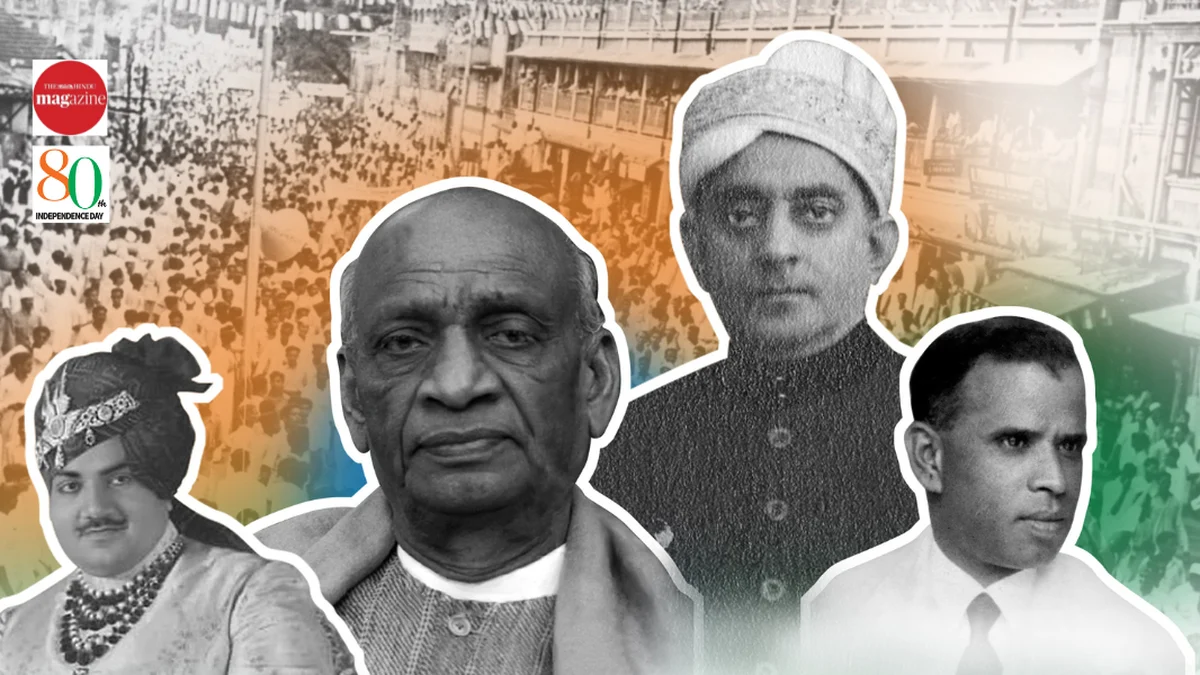
While textbook history often focuses on the grand ideological struggles and the non-violent movements led by "titans" like Mahatma Gandhi and Jawaharlal Nehru, Joseph pivots the spotlight toward the "shadow players." These were the men in the backrooms—bureaucrats like V.P. Menon and political heavyweights like Sardar Vallabhbhai Patel—who engaged in a gritty, high-stakes game of diplomatic chess.
The primary challenge of 1947 was not merely the departure of the British, but the resolution of three competing and often contradictory visions of freedom:
- The Indian National Congress, which was determined to establish a centralized, secular republic.
- The Muslim League, which was "hell-bent" on the creation of an independent Pakistan.
- The Princely States, a "third front" consisting of over 560 semi-autonomous rulers, many of whom were determined to maintain their sovereignty, effectively threatening to turn the map of India into a "Swiss cheese" of independent monarchies.
Chronology: The Three-Week Countdown to Sovereignty
The period between July 25 and August 15, 1947, was characterized by a series of flashpoints that dictated the future borders and political character of the nation.
- July 25, 1947: The Travancore Turning Point. The project of princely independence initially seemed unstoppable. In Travancore, Dewan C.P. Ramaswami Aiyar was adamant about maintaining a separate state. It was only after a violent assassination attempt on his life that the momentum for a "Third Front" began to crumble, forcing a rethink among other wavering royals.
- Late July – Early August: The Battle for the Heartland. During this window, the newly formed States Department, led by Patel and Menon, worked around the clock. Their strategy was one of "coaxing, cajoling, and threatening." They understood that the British, represented by figures like Sir Conrad Corfield (the Viceroy’s private secretary), were actively working to protect princely interests, even going as far as destroying confidential files to prevent the incoming Indian government from having leverage over the royals.
- The Jodhpur Standoff: In a scene straight from a spy novel, the Maharaja of Jodhpur, caught between the lures of Muhammad Ali Jinnah and the demands of Delhi, reportedly pulled a "pen-pistol" on V.P. Menon before finally relenting and signing the Instrument of Accession.
- August 14, 1947: The Junagadh Deception. Even as the clock ticked toward midnight, the Dewan of Junagadh was publicly courting Delhi while secretly finalizing accession to Pakistan—a betrayal that would only be discovered on the morning of Independence.
- Midnight, August 15, 1947: The Empty Envelope. As Nehru delivered his "Tryst with Destiny" speech, the reality on the ground was one of profound incompleteness. Minutes after the speech, Lord Mountbatten opened an envelope intended to contain the names of the new cabinet. Instead, he found a blank sheet of paper—a stark metaphor for a republic that was still a work in progress, a "nation waiting to take shape."
Supporting Data: The Scale of Integration
To understand the magnitude of the task handled by Patel and Menon, one must look at the sheer scale of the territories involved.
- The Princely States: These territories covered nearly 40% of the Indian subcontinent’s landmass and contained a third of its population.
- Hyderabad: This state alone was "larger than England and Scotland combined." Its Nizam sought total independence, a move that would have created a massive, sovereign enclave in the heart of southern India.
- The Bureaucratic Siege: The States Department was a skeleton crew compared to the task at hand. V.P. Menon, a former mine worker who rose to become the Constitutional Adviser to the Viceroy, used a brilliant tactical compromise: he asked the princes to cede only three powers—Defence, External Affairs, and Communications—while allowing them to keep their internal rule and wealth. This "minimum requirements" approach was the thin end of the wedge that eventually led to total integration.
- Archival Excavation: Joseph’s narrative is bolstered by previously unseen MI5 records that show the extent of British "rearguard actions." The organized destruction of "scandal files" by Corfield was a deliberate attempt to leave the new Indian state blind to the internal workings and weaknesses of the princely states they were meant to govern.
Official Responses and Ideological Ironies
The transition to independence revealed deep-seated ironies in political alignment. When power was at stake, the rigid ideologies of the era often became surprisingly fluid.
Joseph highlights a startling historical irony: both the Hindu Mahasabha and the Muslim League, though bitter rivals on almost every front, found common ground in endorsing the right of princely states to remain independent. For the League, princely independence weakened the Congress’s vision of a unified India; for the Mahasabha, it was a way to preserve traditional Hindu monarchies.

The response from the British establishment was equally divided. While Mountbatten eventually realized that a fragmented India would be a geopolitical disaster, his subordinates like Corfield were more interested in protecting the "old clients" of the Empire. This internal British conflict created a vacuum of authority that Menon and Patel exploited through sheer administrative grit.
In the Northeast, the response to the new republic was even more fractured. A Naga accord was signed, only to be broken almost immediately. Tripura was forced to absorb a massive influx of refugees while its own status remained in limbo. These regions carried an "unfinishedness" into the new republic that continues to manifest in modern political unrest.
Implications: From Subjects to Citizens
The most profound takeaway from Joseph’s analysis is the lingering "reflex of the throne." Nearly eighty years after the last Maharaja signed away his powers, the instinct of the Indian state remains strikingly centralized.
The book argues that the methods used to build the nation—the "coaxing, cajoling, and threatening"—created a template for governance that prioritizes state control over individual agency. The "unfinished arguments" of 1947—the bargaining for privilege, the bleeding of provinces, and the silencing of peripheral voices—were never fully resolved; they were merely managed.
The Modern Resonance
The police brutality witnessed during the Cockroach Janata Party protests is, in many ways, a symptom of this historical hangover. When the state views its population as "subjects" to be integrated and controlled (much like the princes of 1947) rather than "citizens" with inherent rights, violence becomes a tool of administrative convenience.
The Unfinished Task
Joseph’s work serves as a reminder that a republic is not a static achievement but a "hard-won" and fragile entity. The "blank sheet of paper" in Mountbatten’s envelope remains a haunting image. It suggests that the task of defining India is still ongoing.
To move from being a nation of subjects to a nation of citizens, the modern Indian state must confront its roots. It must recognize that the "stability" achieved in those 21 days was a temporary scaffolding, not a permanent foundation. Understanding the "shadow players" and the "unfinished arguments" of our birth is the only way to ensure that the "tryst with destiny" does not devolve into a cycle of state-sponsored coercion.
In conclusion, Birth of a Nation is more than a history book; it is a diagnostic tool for the present. It reminds us that while the thrones have vanished, the desire to rule from them has not. The preservation of the republic depends entirely on our ability to transform the state’s reflex from one of "stamping boots" to one of "serving citizens."
