

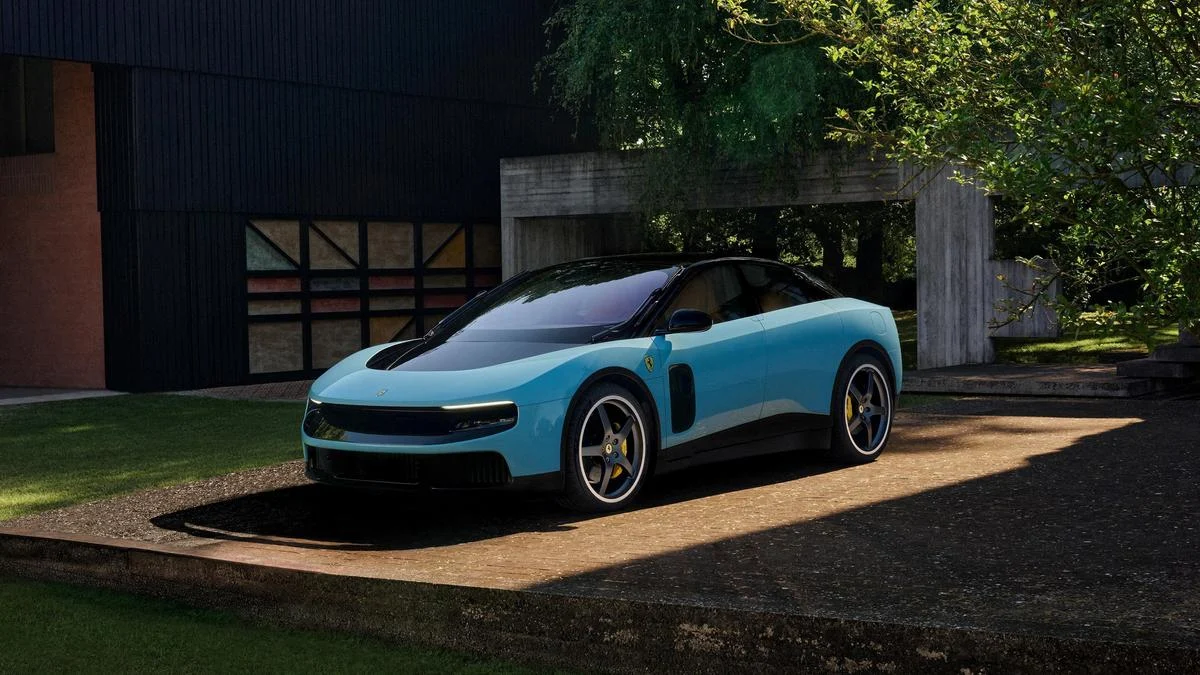
MARANELLO, ITALY — In a move that marks the most significant pivot in its 79-year history, Ferrari has officially entered the age of electrification. On Monday, the iconic Italian marque unveiled the Luce—its first-ever fully electric vehicle (EV). Italian for "Light," the Luce represents a radical departure from the high-octane internal combustion engines (ICE) that have defined the "Prancing Horse" since Enzo Ferrari founded the company in 1947.
The unveiling, held at the company’s headquarters in Maranello, signals Ferrari’s late but calculated entry into a segment already inhabited by rivals such as Porsche and Rimac, and soon to be joined by Lamborghini. The Luce is not merely a battery-powered alternative to its stablemates; it is a high-performance statement of intent, blending record-breaking specifications with a controversial new form factor for the brand.
I. Main Facts: Redefining the Prancing Horse
The Ferrari Luce arrives with a set of technical specifications designed to silence critics who feared that the transition to electric power would dilute the brand’s performance pedigree.
Performance and Powertrain
The Luce is built upon a bespoke electric architecture. It features a tri-motor setup—one on the front axle and two on the rear—enabling sophisticated torque vectoring that mimics the handling characteristics of Ferrari’s mid-engine masterpieces.
- Acceleration: The Luce can sprint from 0 to 100 km/h (62 mph) in a blistering 2.5 seconds, placing it in the same elite bracket as the SF90 Stradale.
- Top Speed: It boasts a top speed exceeding 310 km/h (192 mph), a feat achieved through advanced aerodynamics and a multi-speed transmission system designed to maintain high-end pull.
- Battery and Range: At the heart of the vehicle is a massive 122 kWh battery pack. This allows for a range of over 530 kilometers (330 miles) on a single charge, addressing the "range anxiety" often associated with high-performance EVs.
Physical Presence and Utility
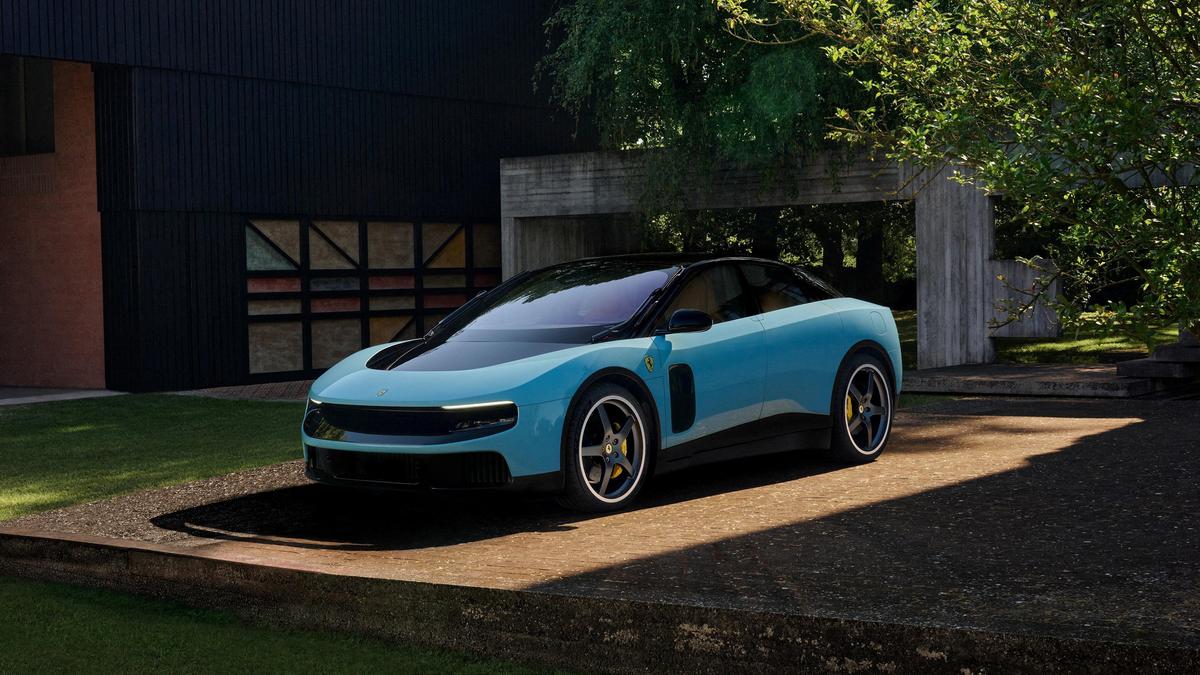
Perhaps the most shocking aspect of the Luce is its silhouette. It is only the second four-door model in Ferrari’s history (following the Purosangue) and the first-ever five-seater.
- Weight: The transition to electric comes with a physical toll. The Luce weighs in at 2.26 tonnes, making it the heaviest vehicle Ferrari has ever produced. Engineers have compensated for this mass by placing the battery low in the chassis to maintain a center of gravity that is actually lower than that of the F8 Tributo.
- Design Philosophy: The Luce features "active aero" components, including a "S-Duct" hood and an adaptive rear diffuser, ensuring that while it carries five passengers, it remains aerodynamically efficient at high speeds.
II. Chronology: The Road to Maranello’s Electric Dawn
The journey to the Luce has been one of internal debate and strategic patience. For decades, Ferrari leadership maintained that the "soul" of a Ferrari was inextricably linked to the sound and vibration of a V12 or V8 engine.
- 2013: The Hybrid Experiment. Ferrari launched the LaFerrari, its first hybrid. While it used an electric motor, it was primarily a tool to boost the performance of the V12 engine, not a move toward sustainability.
- 2019: The SF90 Stradale. This marked the brand’s first Plug-in Hybrid Electric Vehicle (PHEV). It proved that Ferrari customers were willing to accept a car that could drive silently for short distances if it offered 1,000 horsepower in return.
- 2021: The Commitment. Under the leadership of CEO Benedetto Vigna—a tech industry veteran—Ferrari officially committed to producing a fully electric car by 2025 (later adjusted to 2026).
- 2023-2024: The "e-building." Ferrari invested heavily in its "e-building," a dedicated facility in Maranello for the production of electric motors, battery packs, and power inverters. This ensured that the "core" of the Luce would be designed and manufactured in-house, rather than outsourced to third-party suppliers.
- May 25, 2026: The Launch. The Luce is officially revealed to the world, marking the end of the development cycle and the beginning of a new commercial era.
III. Supporting Data: Market Dynamics and Technical Hurdles
The Luce enters a luxury automotive market that is currently experiencing a period of intense volatility. While the initial "EV gold rush" saw manufacturers racing to abandon gas engines, 2025 and 2026 have seen a cooling of global demand.
The Shift in Targets
Ferrari’s own strategic outlook has shifted in response to market feedback. In 2022, the company projected that electric models would account for 40% of its total sales by 2030. However, in a revised statement issued alongside the Luce launch, Ferrari adjusted this target downward to 20%.
This 50% reduction in the EV sales target reflects a broader industry trend where high-net-worth individuals (HNWIs) continue to show a preference for the visceral experience of internal combustion engines. Porsche, for instance, has seen a stabilization in Taycan sales, while Lamborghini’s hybrid Revuelto remains backordered for years, suggesting that the "hybrid bridge" remains the preferred path for many enthusiasts.
Technical Comparison
To understand the Luce’s positioning, one must look at the "Hyper-EV" landscape:
- Weight Comparison: At 2,260 kg, the Luce is heavier than the Porsche Taycan Turbo S (approx. 2,295 kg) but lighter than many luxury electric SUVs.
- Energy Density: The 122 kWh battery is one of the largest in the passenger car sector, significantly larger than the 95 kWh units found in many competitors. This indicates Ferrari is prioritizing "Grand Touring" capability alongside raw track performance.
IV. Official Responses: The Vision for the Future
The leadership at Ferrari is framing the Luce not as a compromise necessitated by regulation, but as a "new chapter" in automotive artistry.
John Elkann, President of Ferrari, emphasized the continuity of the brand’s mission during the launch event:
"We are inaugurating a chapter that turns our vision into reality, strengthening Ferrari’s tradition of anticipating and shaping the future. The Luce is not just a car; it is the manifestation of our belief that the thrill of driving is not tied to a specific fuel, but to the emotion of motion. We have taken the silence of electricity and filled it with the spirit of Maranello."
Benedetto Vigna, CEO, addressed the technical challenges of the project in a follow-up press conference:
"Our clients do not buy a Ferrari just to go from point A to point B. They buy a dream. The challenge with the Luce was to ensure that the ‘human-machine interface’ remained as tactile and emotional as our ICE models. We have developed a unique acoustic signature for this car—not a fake engine sound, but a resonance that reflects the power of the electric motors."
Industry analysts, however, remain cautiously optimistic. Martina Rossi, a Senior Automotive Analyst at Milan Global Markets, noted:
"Ferrari is playing a delicate game. By launching a five-seater four-door as their first EV, they are targeting the ‘lifestyle’ segment of their customer base—those who might use a Ferrari for a weekend trip with family—rather than the hardcore track enthusiast. This minimizes the risk of alienating the purists while capturing the growing market for luxury sustainable mobility."
V. Implications: The "Green" Prancing Horse and the Path Ahead
The launch of the Luce carries profound implications for the automotive industry, the environment, and the future of luxury branding.
1. Regulatory Compliance vs. Brand Identity
With the European Union moving toward a 2035 ban on new internal combustion engines (with some exceptions for e-fuels), Ferrari had no choice but to electrify. The Luce allows Ferrari to lower its fleet-wide emissions, effectively "buying time" for its limited-edition V12 models to continue existing for collectors. The Luce is the sacrificial—and profitable—lamb that ensures the survival of the Prancing Horse in a carbon-neutral world.
2. The Battle for "Sound"
One of the biggest hurdles for the Luce will be the lack of the "Ferrari Scream." The company has reportedly patented several "sound reproduction systems" that use the vibrations of the electric powertrain to create an auditory experience within the cabin. If Ferrari can successfully redefine what a supercar sounds like, it could set the standard for the entire industry.
3. The New Customer Demographic
The Luce’s five-seat configuration suggests that Ferrari is looking to expand its "share of garage." Historically, a Ferrari was a third or fourth car, used sparingly. With the Luce’s 530km range and four-door practicality, Ferrari is positioning itself to be a "daily driver" for the ultra-wealthy, directly competing with the Tesla Model S Plaid, the Lucid Air Sapphire, and the Porsche Taycan.
4. The Weight Challenge
The 2.26-tonne weight of the Luce highlights the ongoing struggle of the EV transition: the "Weight Spiral." As batteries get larger to provide more range, cars get heavier, requiring larger brakes, stronger suspensions, and more power to move. Ferrari’s ability to hide this weight through software and chassis tuning will be the true test of their engineering prowess.
Conclusion
The Ferrari Luce is a gamble of historic proportions. It challenges every preconceived notion of what a Ferrari should be: it is heavy, it is silent, it has four doors, and it seats five. Yet, it remains undeniably a Ferrari in its performance and its price tag. As the first units begin delivery in late 2026, the world will watch to see if the "Light" of the Luce illuminates a bright future for Maranello, or if the brand’s soul remains tied to the roar of the flame-spitting engines of the past.
