

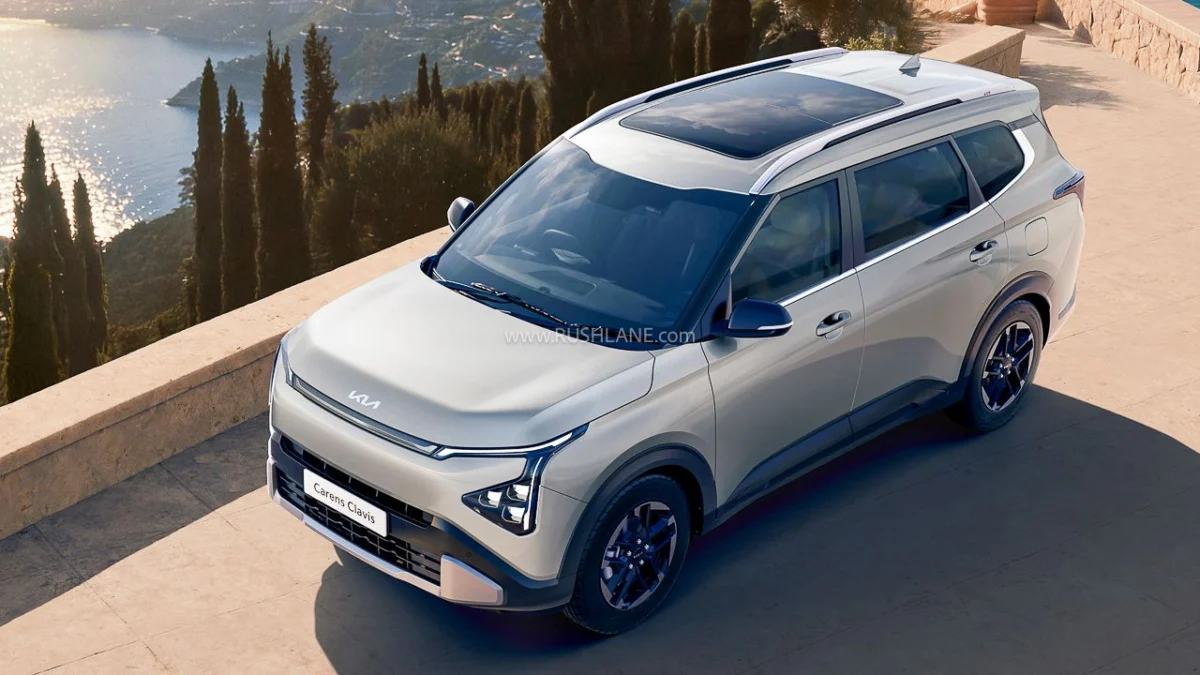
The Indian automotive landscape has undergone a seismic shift over the last half-decade, transitioning from a market obsessed with entry-level hatchbacks to one that prioritizes space, safety, and sophisticated technology. At the heart of this transformation is Kia India, which has recently announced a significant achievement: the Kia Carens family has officially crossed the 300,000-unit cumulative sales milestone.
This feat, achieved in just over four years since its initial debut, underscores the brand’s rapid ascent and the Carens’ specific resonance with the modern Indian family. From its inception as a singular "Recreational Vehicle" (RV) to its current status as a diversified family of products including the premium Clavis and the cutting-edge Clavis EV, the Carens has redefined what a multi-purpose vehicle (MPV) can be in a competitive emerging market.
Main Facts: Breaking Down the 300,000 Milestone
The journey to 3 lakh sales is not merely a number; it represents a strategic victory for Kia’s "Product-Led Strategy." Launched originally in early 2022, the Carens was positioned to bridge the gap between affordable MPVs and premium SUVs. The milestone is particularly impressive given the volatility of the global supply chain and the shifting regulatory environment in India regarding emissions and safety standards during this period.
Key highlights of this milestone include:
- Rapid Adoption: Reaching 300,000 units in approximately 50 months of sales.
- Diversified Portfolio: The "Carens Family" now encompasses the standard Carens, the premium-oriented Carens Clavis, and the newly integrated Carens Clavis EV.
- Powertrain Versatility: It remains one of the few vehicles in its segment to offer a comprehensive "Power of Choice," spanning Petrol, Diesel, and Electric drivetrains.
- Market Share: The Carens has consistently maintained a podium position in the MPV segment, often challenging established veterans with its feature-rich packaging.
Chronology: From "Recreational Vehicle" to Electric Frontier
To understand how Kia reached this milestone, one must look at the chronological evolution of the nameplate.
2022: The Disruptive Debut
When Kia India introduced the Carens in February 2022, they avoided the "MPV" tag, which often carried a utilitarian or commercial connotation in India. Instead, they marketed it as an "RV." It launched with a bold design language—"Opposites United"—and a class-leading wheelbase that promised more interior room than many of its larger competitors. Crucially, Kia made six airbags standard across all trims, a move that forced the rest of the industry to rethink safety packaging.
2023–2024: Iteration and Feature Dominance
During its second and third years, Kia focused on "feature-loading." This period saw the introduction of the iMT (intelligent Manual Transmission) and the refinement of the 1.5-litre turbo-petrol engine. The brand also integrated Advanced Driver Assistance Systems (ADAS) and enhanced its Kia Connect suite, making the Carens one of the most technologically advanced vehicles in its price bracket.
2025–2026: The "Clavis" Expansion
As the market matured, Kia identified a demand for even more luxury and a sustainable alternative. This led to the birth of the Carens Clavis, a more premium iteration featuring upscale materials and enhanced sound insulation. Following this, the Carens Clavis EV was launched, marking Kia’s first localized electric family mover. This expansion transformed the Carens from a single model into a comprehensive "family" of vehicles, catering to different economic and lifestyle strata.
Supporting Data: Analyzing Consumer Preferences and Sales Mix
The success of the Carens is rooted in its ability to appeal to a wide demographic. Kia’s internal data reveals fascinating insights into what the Indian consumer values in 2026.
Fuel Type Distribution
The sales mix highlights a resilient demand for traditional internal combustion engines (ICE) alongside a growing appetite for electrification:
- Petrol Variants (60%): The majority of buyers still opt for petrol, driven by the smooth performance of the 1.5L Turbo GDi engine and the increasing scrutiny on diesel in urban centers like Delhi-NCR.
- Diesel Variants (30%): Despite the industry-wide shift away from diesel, the Carens maintains a strong 30% share. This is largely attributed to long-distance highway travelers and large families who prioritize the high torque and superior fuel efficiency of the 1.5L CRDi engine.
- Electric Variants (10%): The recently launched Carens Clavis EV has made an immediate impact, capturing 10% of the sales mix. This suggests that the Indian family is ready for electric mobility, provided it comes in a practical, multi-seat format.
The Rise of Premiumization
Perhaps the most telling statistic is that 18% of total sales come from top-spec trims. In the Indian market, where "value-for-money" often meant "cheapest," this 18% figure indicates a "Premiumization" trend. Customers are willing to pay a premium for:

- Ventilated seats and air purifiers.
- Bose premium sound systems.
- Level 2 ADAS suites.
- The 6-seater luxury captain seat configuration.
Seating Configuration
The split between the 6-seat (2+2+2) and 7-seat (2+3+2) configurations remains competitive. While the 7-seater is the volume driver for traditional families, the 6-seater has become a favorite for the "chauffeur-driven" executive class, further expanding the Carens’ reach.
Official Responses: Leadership Perspectives
The milestone has been met with optimism at Kia India’s headquarters. Mr. Sunhack Park, Chief Sales Officer of Kia India, emphasized that the Carens’ success is a validation of the company’s deep-dive research into the Indian psyche.
"The 300,000-unit milestone for the Carens underscores its position as a segment leader and a true gamechanger in the MPV space," Mr. Park stated. "This achievement is a direct result of our product-led strategy, our sharp understanding of customer needs, and our unwavering focus on quality. It strengthens our conviction that the Carens is the benchmark for its class, and we are energized to build on this momentum as we accelerate our growth journey."
Industry analysts suggest that Kia’s ability to pivot—adding the Clavis and Clavis EV sub-brands—was a masterstroke in lifecycle management, preventing the product from becoming stagnant in a market that demands constant novelty.
Implications: What This Means for Kia and the Indian Market
The 3-lakh sales milestone has far-reaching implications for Kia India and the broader automotive industry.
1. Strengthening Kia’s "Top 5" Status
Kia India has recently recorded its best-ever first-half sales performance. The Carens, alongside the Seltos and Sonet, forms the "Holy Trinity" of Kia’s Indian portfolio. By securing high volumes in the MPV segment, Kia has insulated itself against the volatility of the hatchback market and established a "premium-mass" brand identity.
2. The EV Transition as a Reality
The 10% sales contribution from the Clavis EV in such a short period is a bellwether for the industry. It proves that EVs are no longer restricted to luxury sedans or compact hatchbacks. By offering an electric family mover, Kia is tapping into a "Blue Ocean" market with very few direct competitors.
3. Future Roadmap: Syros and Sorento
The momentum generated by the Carens is being funneled into Kia’s next phase of expansion. The company has confirmed the upcoming rollout of the Syros EV, a new electric model designed to sit in a different price bracket, and the Sorento Hybrid SUV. The introduction of the Sorento Hybrid is particularly significant, as it suggests Kia is diversifying into "Strong Hybrid" technology to compete with brands like Toyota, providing a bridge for those not yet ready to go fully electric.
4. Competitive Pressure on Rivals
The success of the Carens family puts immense pressure on rivals like Maruti Suzuki and Toyota. While the Ertiga and XL6 dominate the budget end, and the Innova Hycross dominates the premium end, the Carens has successfully carved out the middle ground. Its ability to offer Petrol, Diesel, and EV options simultaneously is a logistical and engineering feat that rivals will struggle to match in the near term.
Conclusion
The Kia Carens hitting the 300,000 sales mark is more than just a corporate victory; it is a reflection of the evolving aspirations of the Indian middle class. By offering a vehicle that is as much a tech gadget as it is a mode of transport, Kia has managed to capture the imagination of a generation that refuses to compromise on safety, style, or sustainability.
As the Carens family continues to grow with the Clavis EV and future updates, it stands as a testament to the fact that in the modern Indian market, versatility is the ultimate currency. With the Syros EV and Sorento Hybrid on the horizon, Kia India appears well-positioned to not just participate in the market, but to continue defining its trajectory.
