

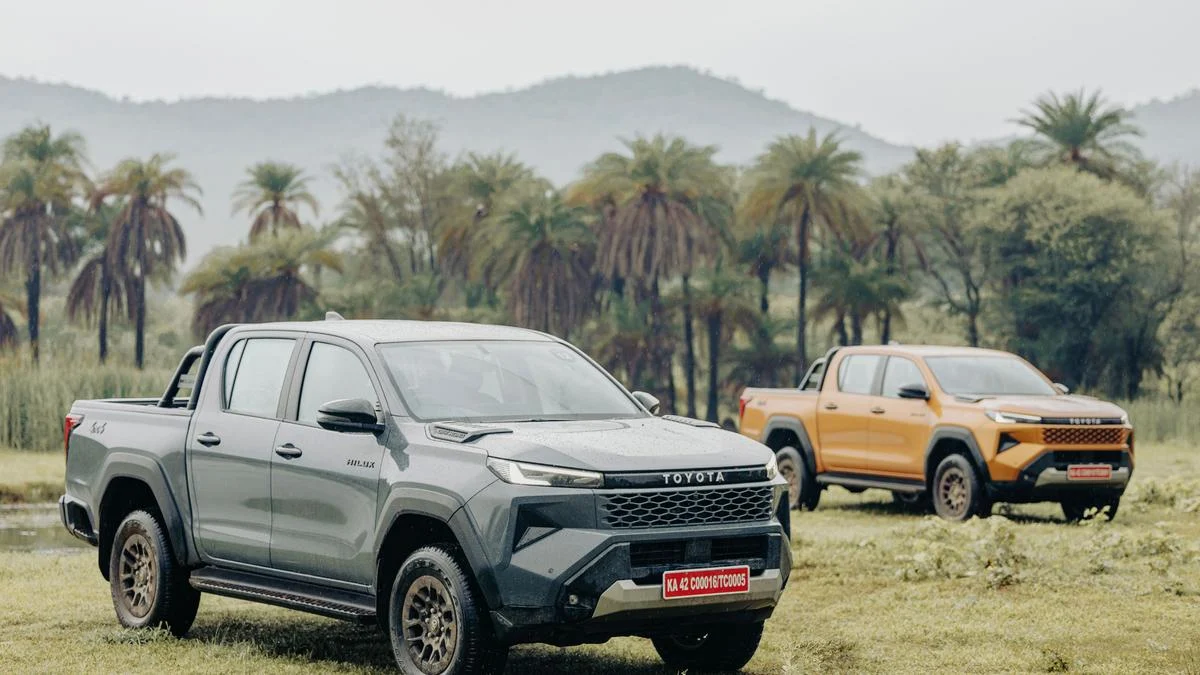
The Toyota Hilux occupies a space in the Indian automotive landscape that few other vehicles can claim to inhabit. While it is officially categorized as a "lifestyle pickup," such a label fails to capture the gravity of what the nameplate represents globally. For over half a century, the Hilux has been more than just a utility vehicle; it has become a symbol of mechanical resilience, a veteran of geopolitical conflicts, and a conqueror of the world’s most inhospitable terrains.
In India, where the lifestyle pickup segment is still in its nascent stages, the latest update to the Toyota Hilux signals a strategic refinement. Toyota has not sought to reinvent a formula that has worked for decades. Instead, the manufacturer has doubled down on the truck’s rugged identity while modernizing its aesthetic and technological interface. This update arrives at a time when Indian consumers are increasingly looking beyond traditional SUVs toward vehicles that offer genuine utility and an adventurous spirit.
Main Facts: A Modernized Legend with a Rugged Soul
The updated Toyota Hilux enters the Indian market with a price range of INR 31.99 lakh to INR 36.69 lakh (ex-showroom). The most striking change is the departure from its previously conservative styling in favor of the "Cyber Sumo" design philosophy. This new look is characterized by a flatter bonnet, a more aggressive grille, and sharper body lines that emphasize the vehicle’s massive proportions.

Mechanically, the vehicle remains anchored by the venerable 2.8-litre four-cylinder turbo-diesel engine, a powerhouse that delivers 201 PS and a staggering 500 Nm of torque. In a move to simplify the lineup, Toyota has transitioned to an all-automatic transmission range, even for the 4×2 variants. While the exterior and tech have been upgraded—including a larger touchscreen with wireless smartphone integration—the interior has seen a curious "de-contenting." Premium leather upholstery and electric seat adjustments have been replaced with high-durability fabric and manual controls, reflecting a pivot toward utilitarian longevity over suburban luxury.
Chronology: The Road to an Indian Icon
To understand the significance of the current Hilux, one must look at the chronology of its development and its relatively recent entry into the Indian market.
- 1968 – The Birth: The Hilux (a portmanteau of "High" and "Luxury") was launched as a compact pickup. It quickly earned a reputation for reliability in Southeast Asia and Africa.
- The 1980s and 90s – Building the Legend: The Hilux became the "indestructible" truck, famously surviving a series of extreme tests on the BBC’s Top Gear, including being placed on top of a building scheduled for demolition. It survived with only basic tools and no spare parts.
- 2022 – The Indian Debut: After years of anticipation, Toyota finally brought the eighth-generation Hilux to India, sharing the IMV (Innovative International Multi-purpose Vehicle) platform with the Fortuner and Innova Crysta.
- 2024/2025 – The Cyber Sumo Update: Recognizing a shift in consumer taste toward bolder, more "lifestyle-oriented" designs, Toyota introduced the current facelift. This version aims to bridge the gap between a workhorse and a premium adventure vehicle, responding to the growing community of overlanders and off-road enthusiasts in India.
Supporting Data: Engineering and Performance Metrics
The Hilux is built on a heavy-duty ladder-frame chassis, a construction method that is becoming increasingly rare as SUVs move toward unibody (monocoque) designs. This architectural choice is the foundation of its 500kg payload capacity and its legendary durability.

Powertrain and Acceleration
The heart of the Hilux remains its 2.8-litre diesel engine. During performance testing, the truck demonstrated surprising agility for its size, completing the 0-100 km/h sprint in approximately 12 seconds. This performance is facilitated by the 500 Nm of torque available from as low as 1,600 RPM, allowing for effortless overtaking and towing.
Fuel Efficiency and Refinement
Despite its aerodynamic profile resembling a brick, the Hilux maintains a respectable real-world fuel economy of approximately 10 km/l. Toyota has also invested in Noise, Vibration, and Harshness (NVH) improvements. New insulation materials in the engine bay and cabin floor have reduced the characteristic diesel "clatter," making the vehicle a more viable long-distance cruiser.
Dimensions and Off-Road Geometry
- Length: Over 5.3 meters, making it one of the longest vehicles on Indian roads.
- Wading Depth: 700mm, allowing for confident water crossings.
- Drive Modes: Eco, Normal, and Sport, which recalibrate the throttle mapping and transmission shift points.
- Steering: The Indian spec retains a hydraulic power steering system. While heavier at parking speeds than electric systems, it provides the tactile feedback necessary for navigating technical off-road trails.
Official Responses and Design Philosophy
Toyota’s design team describes the new aesthetic as "Cyber Sumo." This philosophy is intended to evoke a sense of futuristic strength. According to Toyota, the goal was to create a "commanding presence" that distinguishes the Hilux from both commercial pickups and soft-roader SUVs.

Industry analysts suggest that the removal of certain luxury features—such as automatic climate control and leather seats—is a calculated move. By opting for manual air conditioning and fabric seats, Toyota is catering to a demographic that views the Hilux as a "forever vehicle." These components are less prone to electronic failure and are easier to maintain or replace after years of exposure to dust, mud, and extreme temperatures. While some critics argue that a vehicle costing nearly INR 40 lakh should have every "creature comfort," Toyota’s implicit response is that the value of a Hilux lies in its mechanical integrity, not its ambient lighting.
The inclusion of a 360-degree camera system is a direct response to customer feedback regarding the vehicle’s size. In the congested urban environments of India, the camera acts as an essential "digital spotter," allowing drivers to navigate tight spaces that would otherwise be blind spots.
Implications: The Future of the Lifestyle Pickup in India
The update to the Toyota Hilux has significant implications for the Indian automotive market, specifically the "lifestyle" segment.

1. Defining a Niche
The Hilux does not compete with mid-size SUVs like the Hyundai Creta or even its sibling, the Toyota Fortuner, in the traditional sense. Instead, it targets a niche of buyers—farm owners, adventure tourers, and "image-conscious" professionals—who require a vehicle that can transition from a construction site to a high-end hotel without looking out of place. Its only direct rival is the Isuzu D-Max V-Cross, but Toyota’s massive service network and the Hilux’s global prestige give it a distinct advantage.
2. The Shift Toward "Overlanding"
India is seeing a surge in "overlanding"—long-distance self-reliant travel to remote destinations. The Hilux is the quintessential platform for this. The open cargo bed allows for the installation of roof-top tents, slide-out kitchens, and extra fuel tanks. By refining the Hilux’s highway manners and NVH levels, Toyota is positioning the truck as the ultimate "mile-muncher" for those who want to explore the Himalayas or the deserts of Rajasthan.
3. Practicality vs. Prestige
The decision to simplify the interior features suggests that Toyota is confident in the Hilux’s brand equity. It implies that the Hilux buyer is someone who prioritizes the locking rear differential and the 4×4 low-range transfer case over ventilated seats. This "substance over style" approach may influence how other manufacturers package their rugged offerings in the future.

4. Urban Limitations
However, the Hilux’s size remains its greatest hurdle for mass-market adoption. In cities like Mumbai or Delhi, the vehicle’s 5.3-meter length makes it a liability in standard parking garages and narrow lanes. The implication is clear: the Hilux is a vehicle for the "wide-open spaces." It is a tool for those whose lives or hobbies take them beyond the city limits.
Conclusion: The Emotional Logic of the Hilux
Ultimately, the Toyota Hilux defies conventional automotive logic. On paper, it is a large, expensive diesel truck with fewer interior features than a premium hatchback. Yet, its appeal is undeniable. It is a vehicle purchased with the heart as much as the head.
The "Cyber Sumo" update ensures that the Hilux remains visually relevant in a world of increasingly flamboyant SUVs, while its mechanical underpinnings remain as stubborn and reliable as ever. For the Indian buyer who wants a vehicle that can survive a decade of abuse and still look imposing at a trailhead, the Hilux stands alone. It is not just a mode of transport; it is an insurance policy against the unpredictable nature of the road—and the lack thereof. As the saying goes among Hilux enthusiasts: "You don’t buy a Hilux because you need a truck; you buy a Hilux because you need a Hilux."
