

COLOMBO — For decades, the rhythmic clatter of train tracks served as a background score to Saman Athaudahetti’s professional life. As a high-ranking retired government officer in Sri Lanka, his career was defined by the corridors of power—serving as an adviser to former President Ranil Wickremesinghe and as an additional secretary during Wickremesinghe’s tenure as Prime Minister. Yet, beyond the diplomatic cables and policy frameworks, Athaudahetti harbored a "dream" that spanned the vast, sprawling geography of India’s railway network.
Now, in his post-retirement life, the 68-year-old polymath—who is equally celebrated as a television presenter, author, and lyricist—has traded the boardroom for the railcar. His latest project is a comprehensive travelogue aimed at capturing the soul of the Indian Railways, a journey that has seen him traverse 17 states and nine railway zones, documenting a system that is as much a cultural artery as it is a transport network.
Main Facts: A Journey of Literary and Cultural Proportions
Saman Athaudahetti is no stranger to India. By his own estimate, he has crossed the Palk Strait between 30 and 40 times, though the majority of those visits were tethered to official duties and state business. While these trips allowed for fleeting glimpses of the Indian landscape, they rarely permitted the deep immersion required to understand the subcontinent’s complexity.
"I did manage to do a few holiday trips, and I had the chance to travel by train… I found it simply amazing," Athaudahetti remarked during a recent interview in Colombo. This fascination culminated in a decision to write a book dedicated entirely to the Indian Railways. Supported by the India-Sri Lanka Foundation—a trust fund established by the governments of both nations to foster bilateral relations—the project represents a significant bridge of cultural diplomacy.
The book, which will initially be published in Sinhala with a later translation into English, seeks to do more than just list destinations. It aims to archive the "expanse" of the network, covering diverse geographies, bustling metropolises, and the remote outposts that define the Indian experience. Accompanied by his brother, Asoka Athaudahetti, who served as the journey’s visual documentarian, Saman’s odyssey is a testament to the enduring fascination Sri Lankans hold for their northern neighbor’s infrastructure and heritage.
Chronology: From Colonial Roots to Modern Rails
The history of the railways in both India and Sri Lanka is inextricably linked to British colonial rule. In Sri Lanka, the network was largely constructed to transport coffee and tea from the hill country to the ports of Colombo. This construction was made possible through the labor of South Indians—the ancestors of the Malaiyaha Tamils—who were brought to the island under the British Raj.
Athaudahetti’s journey, however, focuses on the evolution of this shared heritage into the modern era. His expedition was meticulously planned over several months, involving a sophisticated itinerary that touched the four corners of the Indian subcontinent:
- The Eastern Frontier: The journey took him to Ledo in Assam, the easternmost point of the Indian Railways. Here, the tracks end amidst the lush greenery of the Northeast, representing the literal edge of the network.
- The Himalayan Heights: He visited Ghoom in Darjeeling, which sits at an altitude of 2,258 meters (7,407 ft), making it the highest railway station in India and a gateway to the majestic Kanchenjunga.
- The Border Anomalies: One of the most unique stops was Navapur, a station famously split between two states. The platform is divided by the border of Gujarat and Maharashtra, a geographical quirk that Athaudahetti found particularly symbolic of India’s interconnectedness.
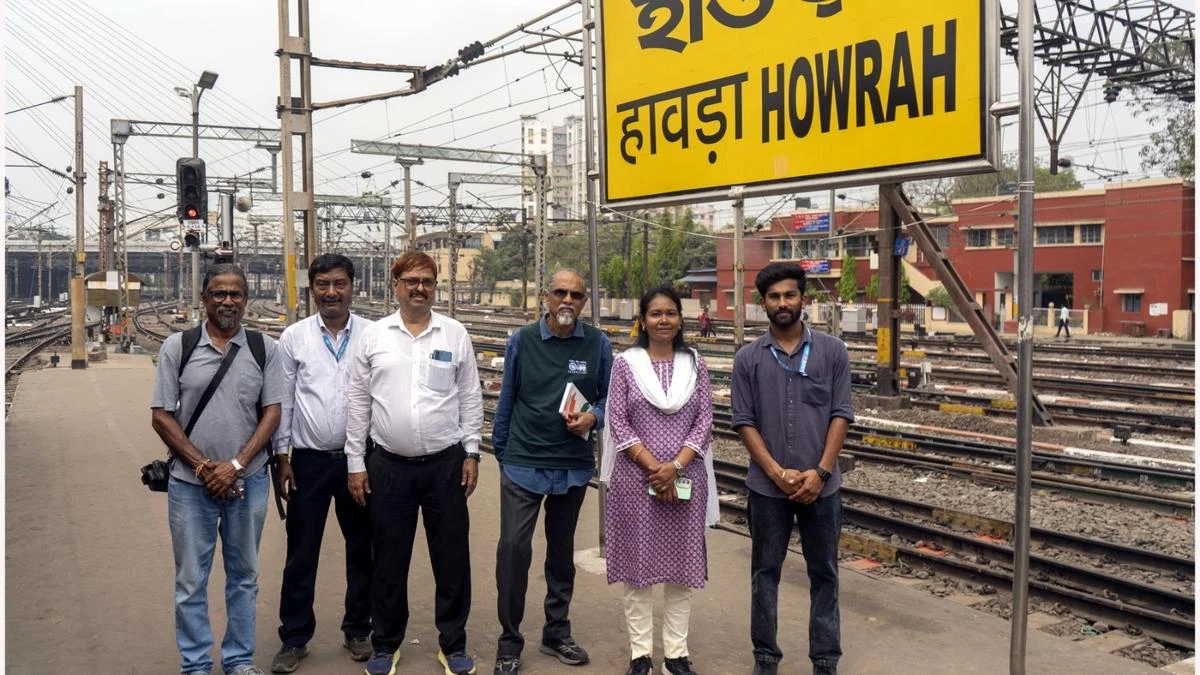
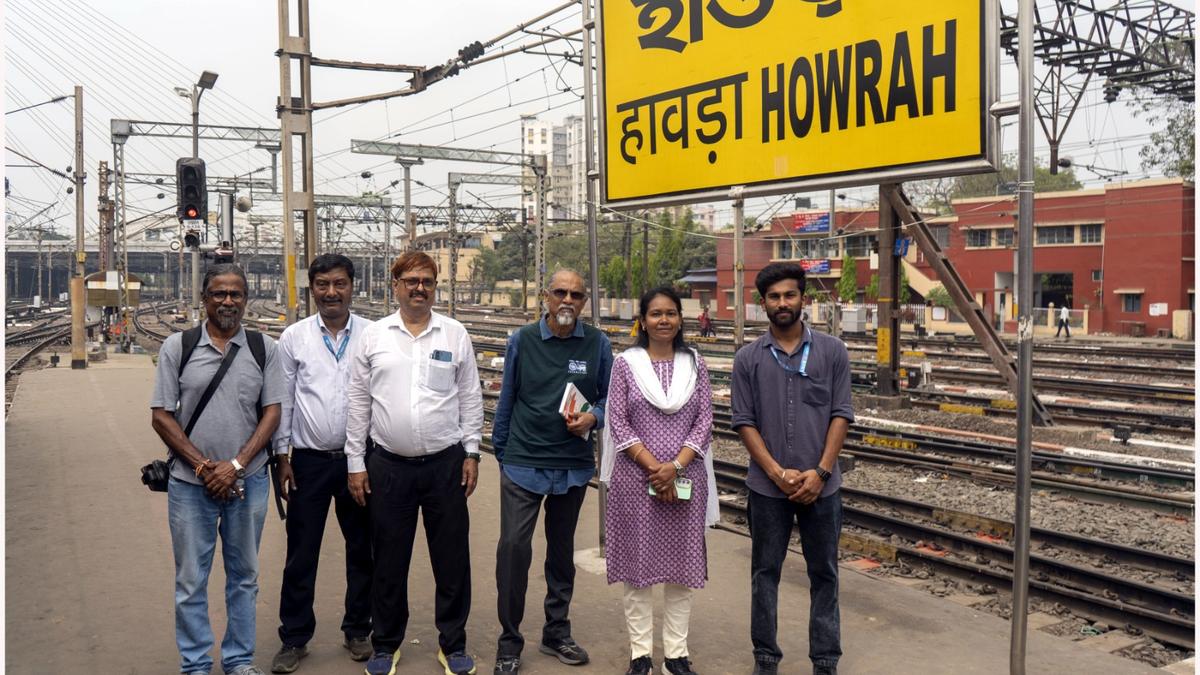
- Engineering Marvels: He explored Gorakhpur Junction, home to the second-longest railway platform in the world, and Howrah Station in Kolkata, one of the world’s busiest transport hubs, where the sheer volume of humanity mirrors the scale of the nation itself.
- The Southern Tip: The journey naturally extended to Kanyakumari, where the three seas meet, marking the southern terminus of the Indian mainland’s rail system.
Supporting Data: Observations on Modernization and Digitization
One of the core themes of Athaudahetti’s upcoming book is the rapid transformation of the Indian Railways over the last decade. Having observed the system intermittently over 30 years, he notes a "marked improvement" in facilities, rolling stock, and cleanliness.
The Technological Leap
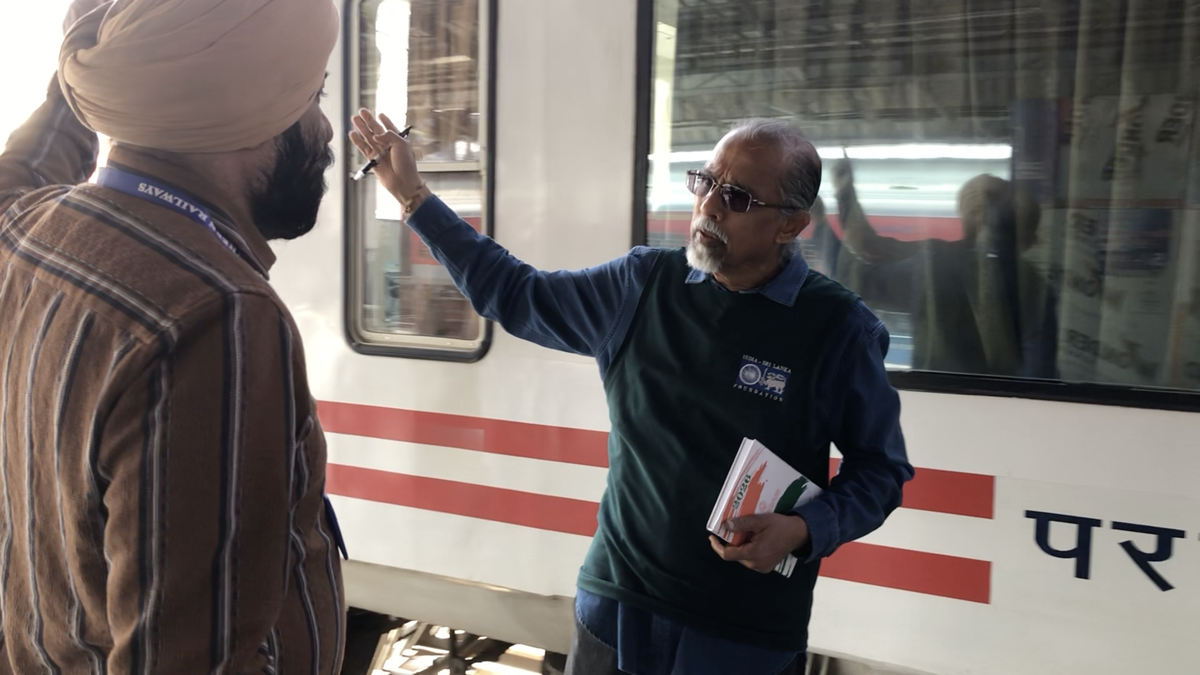
Athaudahetti expressed profound admiration for the integration of technology into the passenger experience. "Digitization is another aspect that stood out," he noted. He highlighted several key advancements:
- Paperless Operations: Ticket checkers (TTEs), who once lugged around heavy ledgers and charts, now operate primarily via tablets (Handheld Terminals), allowing for real-time seat management and transparency.
- Passenger Empowerment: The ubiquity of apps for tracking PNR status, checking real-time train schedules, and even ordering gourmet meals to be delivered directly to a passenger’s seat has revolutionized the "common man’s" travel.
- The Vande Bharat Era: He described the new Vande Bharat Express trains as "impressive," citing them as a symbol of India’s move toward high-speed, world-class rail travel.
- Future Prospects: Looking ahead, Athaudahetti noted the 2027 scheduled launch of the bullet train connecting Mumbai and Ahmedabad as a potential "game-changer" that will place India in an elite bracket of global rail infrastructure.
The Cleanliness Paradigm
While acknowledging that some exceptions remain, Athaudahetti observed a significant shift in the maintenance of coaches and stations. However, he offered a nuanced perspective on the "Swachh Bharat" (Clean India) initiatives within the rail sector. "Cleanliness depends on the passengers; it’s not only up to the railway authorities," he remarked, emphasizing the civic responsibility required to maintain a network that serves millions daily.
Official Responses and Collaborative Diplomacy
The success of Athaudahetti’s 17-state tour was not merely a feat of individual endurance but a result of high-level bilateral cooperation. The India-Sri Lanka Foundation played a pivotal role, providing the financial backing necessary for a project of this magnitude.
Furthermore, Indian railway authorities went beyond bureaucratic requirements to assist the retired diplomat. Athaudahetti singled out Dinesh Sood, Senior Principal Private Secretary to the Member (Infrastructure) of the Railway Board, for his instrumental help in coordinating logistics and interviews with senior officials.
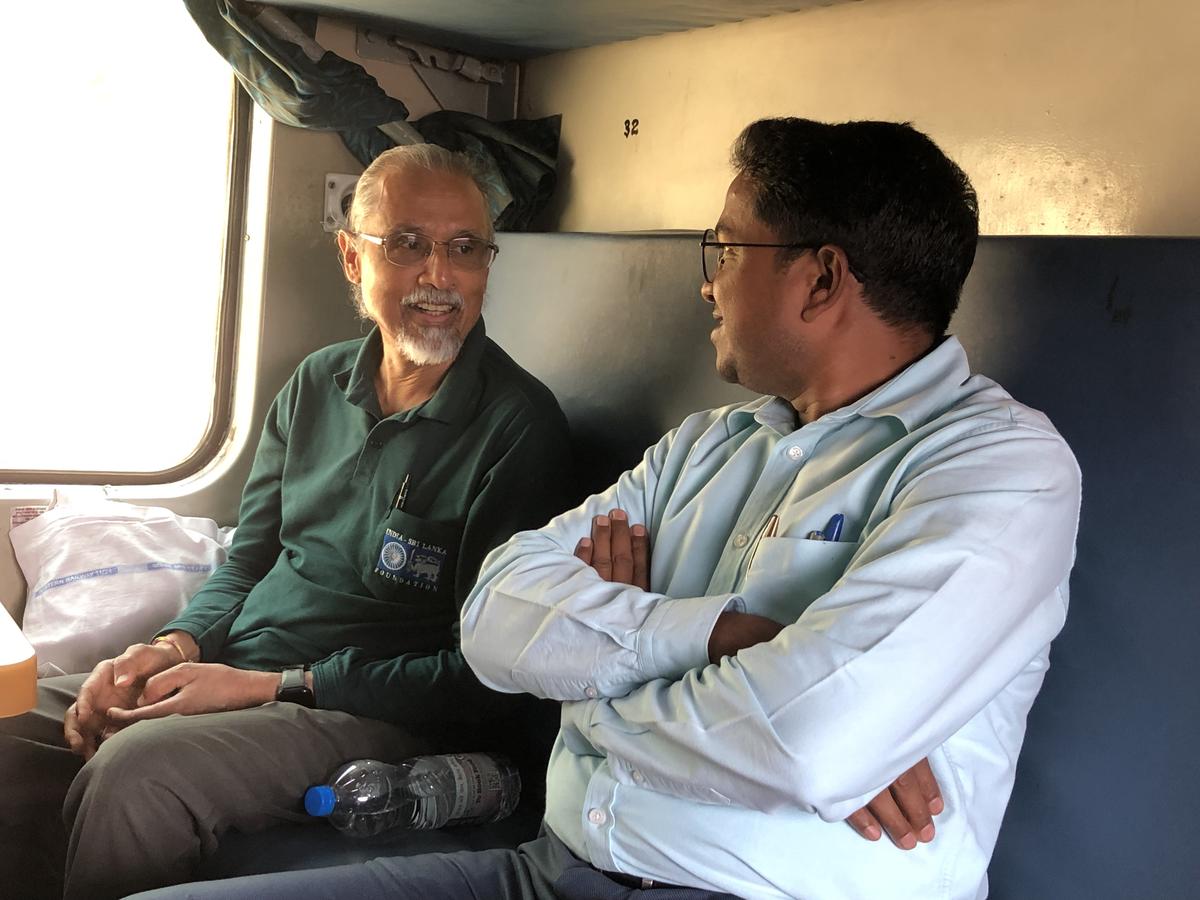
The warmth of the reception he received from the rank-and-file staff was equally notable. "The railway staff I met are like family now," he said, revealing that he remains in touch with many of them through daily WhatsApp messages and "Good Morning" greetings—a quintessentially Indian social habit that he has embraced with fondness.
Implications: The Beauty of Diversity and Human Connectivity
Beyond the technicalities of zones and gauges, Athaudahetti’s travelogue is an exploration of India’s "beauty of diversity." This diversity was most apparent in the culinary landscape he encountered. From the spicy Chettinad curries of Tamil Nadu and the seafood of Kanyakumari to the malaiyo of Varanasi and the rajma of Jammu, his journey was a gastronomic map of the country.
He noted the cultural nuances of language and terrain, but emphasized that the most lasting impact came from the people. He recalled a poignant moment at Ledo station in Assam. When a massive traffic jam threatened to make him miss his connection and left him without lunch, a local pointsman named Raja Das invited him into his modest home.
"His mother and wife quickly cooked a meal just for us… rotis, rice, fish, and vegetables. It was truly delicious. I will never forget the family’s warmth and hospitality," Athaudahetti shared. It is these "micro-stories" of human kindness that he believes truly define the Indian Railways experience.

Conclusion: A Continuing Journey
As Athaudahetti prepares to compile his notes and photographs into his Sinhala travelogue, he is already looking toward the future. At 68, he insists that his exploration of the Indian subcontinent is far from over.
"This is only the first leg," he concluded. "I have so much more to cover in the Indian Railways that I will need to go back!"
For Sri Lanka, Athaudahetti’s work serves as a vital cultural document, translating the scale and spirit of its neighbor for a local audience. For India, it provides the perspective of a seasoned diplomat who sees the railways not just as a mode of transport, but as a living, breathing organism that connects a billion lives. Through his eyes, the Indian Railways is reimagined as a grand stage for the "dream" of connectivity—both physical and emotional.
