

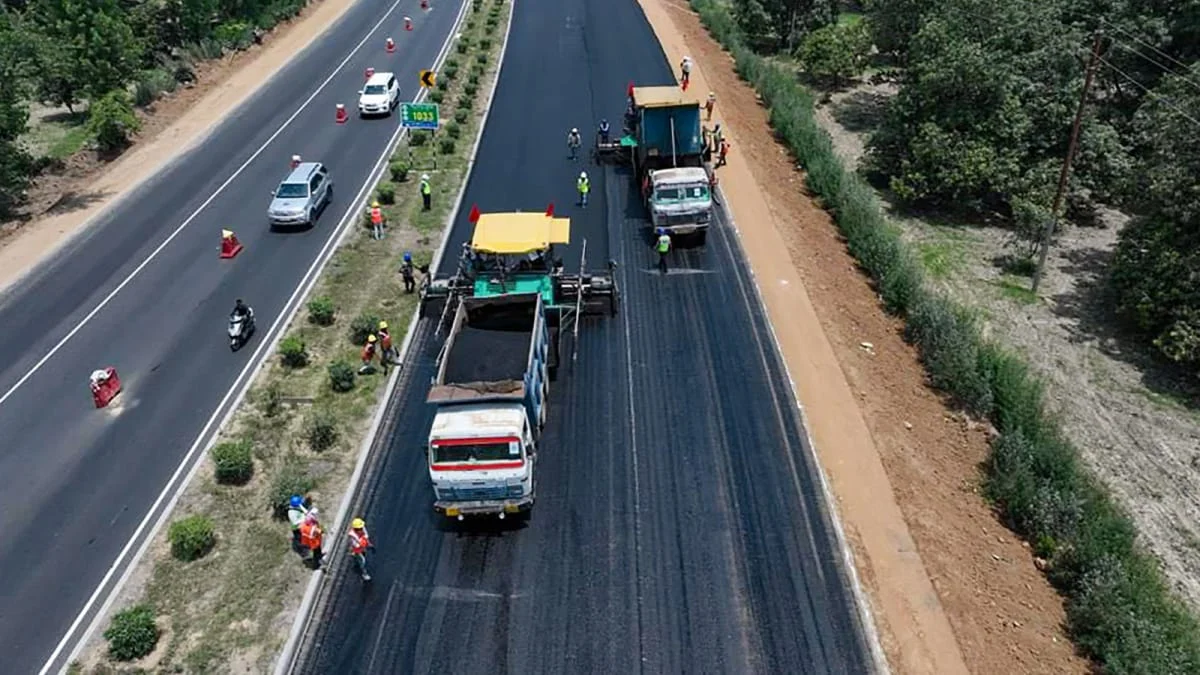
New Delhi, India — The National Capital Region (NCR), a sprawling megalopolis characterized by its relentless pace and equally relentless traffic congestion, is on the precipice of a mobility revolution. The Union Government, under the aegis of the Ministry of Road Transport and Highways (MoRTH), has unveiled an ambitious roadmap featuring six massive infrastructure projects. These projects, ranging from multi-kilometer elevated corridors to expansive "Third Ring Roads," are designed not merely to patch the existing holes in the city’s transport network but to fundamentally reshape how millions of commuters move between Delhi, Gurugram, Faridabad, and Noida.
As the region prepares for the operationalization of the Noida International Airport and the full integration of the Delhi-Mumbai Expressway, these six projects represent the "missing links" in a grander vision of a signal-free, high-speed urban corridor.
I. Main Facts: The Vision for a Decongested NCR
The primary objective behind this multi-billion rupee infrastructure push is the systematic decongestion of Delhi’s saturated arterial roads. For decades, the Ring Road and Outer Ring Road have borne the brunt of both local commuter traffic and heavy interstate freight movement. The new plan shifts the strategy toward "access-controlled" and "elevated" solutions that bypass traditional bottlenecks.
Union Road Transport and Highways Minister Nitin Gadkari has emphasized that these projects are part of a holistic strategy to reduce the logistics cost in India and improve the "ease of living" for the average commuter. The projects focus on three critical pillars:
- Inter-City Fluidity: Reducing the travel time between Delhi and its satellite cities (Gurugram and Faridabad).
- Airport Connectivity: Creating high-speed conduits to both Indira Gandhi International (IGI) Airport and the upcoming Jewar Airport.
- Freight Diversion: Ensuring that heavy vehicles heading toward the Delhi-Mumbai or Delhi-Katra Expressways do not enter the heart of the city.
The six projects identified as the catalysts for this change include the AIIMS-Gurugram Elevated Corridor, the Ashram-Badarpur Connector, the Punjabi Bagh-Tikri Border Corridor, the Vasant Kunj-Faridabad Route, the UER-II Service Roads, and the Delhi-Mumbai Expressway Connector.
II. Chronology: From Blueprint to Bitumen
The timeline for these projects suggests an aggressive implementation phase, with the government aiming to break ground on several fronts within the next fiscal year.
- October 2024 – December 2024: This period is slated for the commencement of work on the Ashram-Badarpur Connector and the Punjabi Bagh-Tikri Border Corridor. These projects are currently in the final stages of tender evaluation and administrative clearance.
- January 2025 – April 2025: Work is expected to begin on the secondary phases of the Urban Extension Road II (UER-II) service roads. This period will also see the formal integration of the Maharani Bagh connector to the Delhi-Mumbai Expressway.
- 2025 – 2026: Mid-term focus will shift toward the Vasant Kunj-Faridabad signal-free connector, involving complex land acquisition and environmental clearances in the eco-sensitive zones near the Aravalis.
- April 2027: This is the projected start date for the AIIMS-Mahipalpur-Gurugram Elevated Corridor. Given the density of the area (Dhaula Kuan and Rao Tula Ram Marg), this project requires the most sophisticated engineering and traffic diversion planning, leading to a later start date.
III. Supporting Data: A Deep Dive into the Six Projects
To understand the scale of the transformation, one must look at the specific data and geographic impact of each project.
1. The AIIMS-Mahipalpur-Gurugram Elevated Corridor (20 km)
This is perhaps the most anticipated project for South Delhi and Gurugram residents. Currently, the stretch between AIIMS and the IGI Airport via Dhaula Kuan is one of the most congested in the country.
- The Solution: A 20-km elevated road that will allow commuters to bypass the traffic signals of Rao Tula Ram (RTR) Marg and the heavy merging traffic at Mahipalpur.
- Impact: It is expected to slash travel time from Central Delhi to Gurugram by nearly 40 minutes during peak hours.
2. The Ashram-Badarpur Connector (7.5 km)
Mathura Road serves as the primary artery for those traveling between Delhi and Faridabad. However, the bottleneck at Ashram and the subsequent signals at Sarita Vihar create daily gridlock.
- The Solution: A 7.5-km connector designed to streamline flow toward the Delhi-Mumbai Expressway and Faridabad.
- Impact: This will decouple local South Delhi traffic from long-distance travelers heading toward Agra and beyond.
3. Punjabi Bagh to Tikri Border Corridor (18.5 km)
West Delhi has long struggled with "mixed traffic"—where rickshaws and local cars share the road with massive interstate trucks.
- The Solution: An 18.5-km corridor passing through Mundka, Nangloi, and Madipur.
- Impact: By providing a dedicated lane for highway-bound traffic, the project will breathe life back into the residential and commercial hubs of West Delhi, which are currently choked by transit vehicles.
4. Vasant Kunj to Faridabad Route
Currently, travelers between South Delhi and Faridabad must rely on the Mehrauli-Badarpur (MB) Road, which is perennially congested.
- The Solution: A signal-free connector providing a more direct, high-speed link.
- Impact: This will create a "southern bypass" for the city, further reducing the load on the Outer Ring Road.
5. Urban Extension Road II (UER-II) Service Roads
UER-II is being hailed as Delhi’s "Third Ring Road." This 75.7-km project starts from Alipur in North Delhi and terminates near Mahipalpur.
- Supporting Data: The government has proposed an additional investment of Rs 6,400 crore specifically for service roads along this corridor.
- Impact: While the main expressway handles high-speed transit, the service roads will ensure that residents in Rohini, Dwarka, and Najafgarh have seamless local access without disrupting the flow of the main highway.
6. Delhi-Mumbai Expressway Connector
As the Delhi-Mumbai Expressway (DME) nears full operational status, the focus is on the "last-mile" connectivity from Delhi’s core.
- The Status: The Maharani Bagh connector is near completion.
- Impact: This project provides the crucial link for Delhi residents to access the Jewar Airport (Noida International Airport) via the expressway, effectively linking the two major aviation hubs of the region.
IV. Official Responses: The Government’s Stance
Union Minister Nitin Gadkari has been vocal about the "de-bottlenecking" of Delhi. In recent review meetings, Gadkari noted that the success of the Delhi-Mumbai Expressway depends heavily on how easily commuters can reach it from within the city.
"Our goal is to ensure that a commuter can travel from Delhi to the airport or the outlying expressways without encountering a single red light," Gadkari stated during a recent infrastructure summit. "These six projects are not isolated roads; they are a synchronized network designed to move Delhi’s traffic into the 22nd century."
Officials from the National Highways Authority of India (NHAI) have also noted that these projects utilize "New Age" construction technologies, including pre-cast segments and ultra-high-performance concrete, to minimize construction time and reduce the dust pollution typically associated with large-scale urban infrastructure.
V. Implications: Economic, Real Estate, and Environmental
The completion of these projects will have a "multiplier effect" on the NCR’s economy.
1. Real Estate Boom
Property analysts and real estate experts are already seeing a shift in buyer interest.
- Dwarka & Rohini: The UER-II is turning these into premier residential hubs with expressway-grade connectivity to the airport.
- Faridabad: Long considered the "underdog" of the NCR, Faridabad is seeing a surge in commercial interest due to the Ashram-Badarpur and Vasant Kunj connectors.
- Dwarka Expressway: The sectors along this stretch are expected to see a significant appreciation in value as the AIIMS-Gurugram elevated corridor becomes a reality.
2. Economic Productivity
The "hidden cost" of traffic is lost man-hours and fuel wastage. By reducing a 90-minute commute to 30 minutes, these projects are expected to inject billions of rupees back into the regional economy through increased productivity and reduced logistics costs for businesses operating in the IMT Manesar and Okhla industrial areas.
3. Environmental Considerations
While construction causes temporary spikes in dust, the long-term environmental goal is a reduction in vehicular emissions. Idle engines in traffic jams are a major contributor to Delhi’s winter smog. Smooth-flowing, signal-free traffic significantly reduces the carbon footprint per kilometer traveled. Furthermore, the inclusion of service roads and green belts along the UER-II demonstrates a shift toward more sustainable urban planning.
4. Challenges Ahead
Despite the optimism, officials caution that hurdles remain. Land acquisition in densely populated West Delhi and the environmental sensitivities of the Aravalli range near Faridabad could lead to tactical delays. Additionally, the coordination between the Delhi Government and the Central Government is crucial for utility shifting (water lines, electricity cables) that often stalls such mega-projects.
Conclusion: A Region in Motion
The proposed overhaul of the Delhi-NCR road network represents one of the most significant infrastructure undertakings in the history of the capital. By the time the AIIMS-Gurugram elevated corridor is completed in 2027, the very geography of the region will have changed. The distinction between "Delhi" and its "satellite cities" will continue to blur as high-speed corridors turn once-grueling commutes into brief transits.
For the millions of residents who navigate these routes daily, these projects offer more than just tarmac and concrete—they offer the promise of time returned and a city that finally moves as fast as its ambitions. As the first sets of tenders move toward completion this December, the transformation of the NCR is no longer a distant plan; it is an imminent reality.
