

Starbase, Texas / Cape Canaveral, Florida – August 5, 2026 – A four-tonne upper stage of a SpaceX Falcon 9 rocket, launched nearly two years prior, is believed to have made an unintentional and unguided impact with the Moon on Wednesday, August 5, 2026. While posing no danger to Earth, the collision, anticipated around 0635 GMT (2:35 AM EDT), is expected to have left a new crater on the lunar surface, creating a unique scientific opportunity for astronomers and planetary scientists worldwide.
The derelict rocket booster, which had been tumbling through space since January 2025, concluded its unexpected journey by slamming into the Moon’s northern hemisphere, near the vicinity of the Einstein Crater, at an astonishing velocity of approximately 8,690 kilometers per hour (over 5,400 mph). This event marks the first known instance of a piece of modern "space junk" unintentionally striking a celestial body beyond Earth orbit, prompting both scientific excitement and renewed discussion about the burgeoning issue of space debris.
Leading space agencies, including NASA with its Lunar Reconnaissance Orbiter (LRO) probe and South Korea’s Pathfinder Lunar Orbiter, had positioned their spacecraft to observe the aftermath. They aim to capture images of the impact site and analyze the ejecta plume, though official confirmation of the strike and detailed imagery of the resulting crater may take several days to downlink and process.
The incident, initially tracked by independent astronomers and later confirmed by official channels, has transformed an orbital anomaly into an impromptu, large-scale scientific experiment. Researchers are eager to study the physics of the high-velocity impact, the composition of the subsurface material ejected, and the dynamics of crater formation on the lunar regolith.
An Unprecedented Lunar Collision
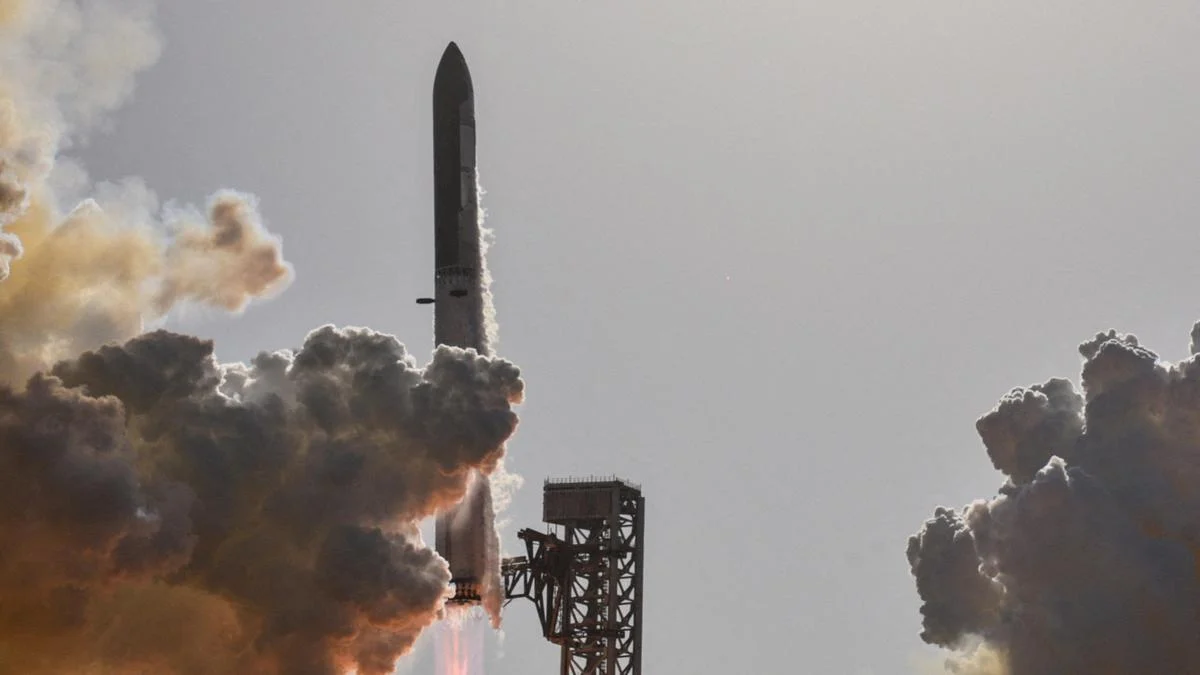
The projectile in question was the second stage of a Falcon 9 rocket, a workhorse booster designed by Elon Musk’s SpaceX, which launched in January 2025. Unlike the Starship and Super Heavy v3 Booster shown in the accompanying image – a next-generation vehicle currently undergoing extensive test flights – the Falcon 9 is a smaller, two-stage orbital rocket widely used for satellite deployments and resupply missions to the International Space Station. After deploying its primary payload, typically the Falcon 9’s upper stage either performs a controlled deorbit to burn up in Earth’s atmosphere or is placed into a "graveyard" orbit around the Sun. In this particular "high-energy mission," as described by SpaceX officials, the stage was sent on a trajectory that eventually led to its lunar encounter.
Weighing approximately 4,000 kilograms (about four metric tonnes) once its propellant was spent, the empty rocket body became a significant piece of uncontrolled space debris. Its considerable mass and extreme velocity meant the impact was not a gentle tap, but a violent collision capable of excavating a substantial crater, potentially tens of meters in diameter. The energy released upon impact would be equivalent to several tonnes of TNT, momentarily illuminating a flash on the otherwise desolate lunar surface and sending a cloud of pulverized rock and dust hundreds of kilometers into space.
Scientists and amateur stargazers had been looking forward to observing the sunlit plume of rubble and debris created by the smash. "It might be possible for folks with a telescope to observe the plume of ejecta created by the impact," noted Benjamin Fernando of Los Alamos National Laboratory in New Mexico, a lead author on a recent paper detailing the anticipated impact. "It is unclear how bright it will be, which is one of the reasons why we are looking to study this event," Fernando told AFP prior to impact, underscoring the unpredictable yet valuable nature of this accidental experiment.
The Journey to Impact: A Chronology of Events
The trajectory of this particular Falcon 9 upper stage from its initial mission to its lunar rendezvous is a testament to the complex interplay of celestial mechanics and the unpredictable nature of orbital dynamics.
January 2025: The Initial Launch
The story of the lunar impact began in January 2025, when a SpaceX Falcon 9 rocket lifted off, carrying two lunar landers as part of a commercial lunar payload services (CLPS) mission or similar high-energy deployment. The first stage of the Falcon 9 successfully returned to Earth for reuse, a routine maneuver for SpaceX. However, the mission profile for the second stage, which was responsible for giving the lunar landers the final push towards the Moon, was different. After completing its primary task, the upper stage was left in a highly elliptical orbit, far beyond the immediate gravitational influence of Earth, but not quite on a definitive escape trajectory.
Derelict in Space
Typically, for "high-energy missions" where an upper stage reaches beyond Earth’s immediate orbit, SpaceX, like other launch providers, performs maneuvers to ensure the stage is safely disposed of according to international guidelines. This often involves either nudging it into a stable heliocentric orbit (around the Sun) or ensuring it will eventually re-enter Earth’s atmosphere for a controlled burn-up. Julianna Scheiman, director of NASA Science and Dragon Programs at SpaceX, confirmed in a Monday (August 3, 2026) news conference that "We did that," referring to their standard safety protocols. However, the subsequent events took an unexpected turn.
The Gravitational Dance
For over a year, the spent rocket stage continued its journey through the Earth-Moon system, subject to the subtle but persistent gravitational tugs of both bodies, as well as the more distant Sun. It was the careful tracking by independent astronomers, notably Bill Gray of Project Pluto, that first identified the object’s unusual trajectory in early 2026. Gray’s orbital mechanics software, used to track asteroids and other near-Earth objects, revealed that the object, initially misidentified by some as a Chinese lunar mission component, was indeed the Falcon 9 upper stage.
Over months, as more data was collected and refined, the calculations became undeniable: the derelict stage was on a collision course with the Moon. This deviation from its intended post-mission path was attributed by experts like Scheiman to "essentially a mixture of solar activity and gravity forces" that subtly altered its trajectory, nudging it towards a lunar impact rather than a stable solar orbit.
Anticipation and Observation
As the impact date drew nearer, the scientific community and amateur astronomy enthusiasts alike geared up for the event. What began as a mere orbital anomaly transformed into a compelling, if unplanned, scientific opportunity. Telescopes, both professional and amateur, were pointed towards the predicted impact zone, hoping to catch a glimpse of the moment of collision or the subsequent debris plume. The precise timing and location of impact, near the northern hemisphere’s Einstein Crater, allowed for focused observational efforts, preparing the stage for a flurry of data collection in the days and weeks following the crash.
Scientific Opportunity: Peering into the Aftermath
The accidental lunar impact, far from being a mere footnote in space exploration, has presented an invaluable, albeit uncontrolled, scientific opportunity. It allows researchers to study lunar geology and impact mechanics in a way that is rarely possible without costly dedicated missions.
Observational Efforts
The primary eyes on the impact site belong to orbiting lunar probes. NASA’s Lunar Reconnaissance Orbiter (LRO), a veteran spacecraft that has been meticulously mapping the Moon since 2009, was poised to sweep over the impact zone. Equipped with high-resolution cameras (LROC) and other instruments, LRO will attempt to image the fresh crater and analyze the immediate surroundings for changes in surface reflectivity and composition. Similarly, South Korea’s Pathfinder Lunar Orbiter (Danuri), launched in 2022, was also tasked with observing the region, providing a crucial second perspective and potentially different data sets.
The challenge, however, lies in timing and orbital mechanics. Both orbiters must be in the right place at the right time, with optimal lighting conditions, to capture clear images of a relatively small, fresh crater and any lingering ejecta. It may take days, or even weeks, for the data to be downlinked, processed, and analyzed before definitive images and scientific findings can be released.
The Value of a New Crater
The creation of a new, well-documented crater offers several unique scientific insights:
- Subsurface Composition: The force of the impact would have excavated material from beneath the lunar surface, potentially exposing layers not visible from orbit. Analyzing the ejected material, either through remote sensing by orbiters or in future missions, could provide clues about the Moon’s geological structure and composition at depth.
- Impact Mechanics: By knowing the precise mass and velocity of the impacting object, scientists can correlate these parameters with the observed size and morphology of the new crater. This provides valuable ground truth for refining models of impact processes, which are fundamental to understanding the evolution of planetary surfaces throughout the solar system.
- Lunar Regolith Dynamics: The impact would have disturbed a significant volume of lunar regolith – the layer of loose, fragmented rock and dust covering the Moon. Studying the plume dynamics and how the ejected material settles back onto the surface can enhance our understanding of how lunar dust behaves, which is crucial for future human and robotic missions.
- Seismic Calibration: As highlighted by the research team involved in tracking the object, "This event provides an opportunity to test a pipeline for localizing impacts on the lunar surface for future seismic experiments." By observing the impact, scientists can better calibrate future lunar seismometers, helping them distinguish between natural moonquakes, meteoroid impacts, and potentially other artificial disturbances.
Amateur Contributions
Beyond professional observatories, the incident also galvanized the amateur astronomy community. Benjamin Fernando’s encouragement for both professional and amateur astronomers to attempt viewing or recording the collision underscored the potential for citizen science. While direct observation of the impact flash from Earth might have been difficult due to the Moon’s distance and lighting conditions, dedicated enthusiasts with powerful telescopes could potentially contribute valuable data, especially regarding the transient ejecta plume or subsequent observations of the impact site. Such collaborative efforts highlight the growing synergy between professional research and public engagement in space exploration.

Official Reactions and Perspectives
The unintentional lunar impact elicited carefully worded responses from both NASA and SpaceX, balancing the scientific interest with the broader implications of uncontrolled space debris.
NASA’s Stance
NASA spokesperson Jimi Russell issued a statement emphasizing that "There is no danger to Earth." This was a crucial clarification to alleviate any public concern, as the concept of a "rocket crashing into the Moon" might sound alarming to some. Russell further stated that "NASA will continue to track the booster for training purposes, as well as later observe the impact site for scientific purposes." This pragmatic approach highlights NASA’s dual role: maintaining space situational awareness and leveraging unexpected events for scientific gain.
The agency’s interest extends beyond this single event. With its ambitious Artemis program aiming to establish a "sustained human presence on the Moon," understanding all aspects of the lunar environment, including the dynamics of impacts and the presence of human-made debris, becomes increasingly critical. The data gathered from this unintentional impact will feed into models and strategies for future lunar exploration, enhancing safety and operational planning.
SpaceX’s Commentary
Julianna Scheiman, director of NASA Science and Dragon Programs at SpaceX, addressed the event during a news conference, providing context on SpaceX’s operational procedures. She reiterated that for "high-energy missions," SpaceX performs maneuvers to ensure the second stage "is safe per the appropriate rules and regulations." Her admission that "what has happened is essentially a mixture of solar activity and gravity forces have put it on a path towards the Moon" indicates that while standard protocols were followed, unforeseen celestial mechanics ultimately dictated the booster’s fate.
Scheiman also expressed her personal excitement, mirroring the scientific community’s sentiment. Like many scientists, she added she was "very excited" to see the impact, underscoring a pragmatic acceptance of the event as an unplanned but valuable learning opportunity. This perspective aligns with SpaceX’s innovative and iterative approach to spaceflight, where even unexpected outcomes are viewed through a lens of data collection and improvement.
It is important to reiterate that the accompanying image depicts the launch of a SpaceX Starship and Super Heavy v3 Booster, which is SpaceX’s next-generation, fully reusable launch system designed for deep-space missions. The news article, however, specifically concerns a Falcon 9 upper stage from an earlier mission. While both are SpaceX vehicles, they represent different generations and mission profiles, a distinction crucial for accurate reporting.
The Growing Shadow of Space Debris
The unintentional lunar impact of the Falcon 9 upper stage serves as a stark reminder of a larger, escalating problem: the proliferation of space debris, or "space junk." While this incident occurred far from Earth, it draws attention to the increasingly crowded and potentially hazardous environment in Earth’s orbit and beyond.
Defining Space Junk
Space debris encompasses a vast array of human-made objects orbiting Earth that no longer serve a useful function. This includes defunct satellites, discarded rocket stages (like the one that hit the Moon), fragments from collisions, and even flecks of paint. The European Space Agency (ESA) reported in late July that there are currently more than 46,000 pieces of trackable space debris, weighing a total of 17,000 tonnes, in orbit around Earth. This figure only accounts for objects large enough to be consistently tracked; countless smaller, untrackable pieces also pose a significant threat.
The Kessler Syndrome
The primary concern regarding space junk revolves around the concept of the "Kessler Syndrome," first proposed by NASA scientist Donald J. Kessler in 1978. This theory describes a scenario where the density of objects in low Earth orbit (LEO) becomes so high that collisions between objects could trigger a cascade, with each collision generating more debris, exponentially increasing the likelihood of further collisions. This chain reaction could eventually render certain orbital altitudes unusable for satellite operations for decades, or even centuries.
The implications of such a scenario are profound. Modern society relies heavily on satellites for communication, navigation (GPS), weather forecasting, Earth observation, and national security. A widespread loss of these capabilities due to space junk would have catastrophic global consequences. Efforts to mitigate the Kessler Syndrome include designing satellites for deorbiting at the end of their lifespan, active debris removal research, and implementing stricter guidelines for launch providers to minimize new junk.
Lunar Debris: A New Frontier
While Earth orbit remains the most critical zone for space debris management, the Falcon 9 incident highlights that even the Moon is not immune. The Moon routinely weathers impacts from natural space debris, such as meteoroids, which have sculpted its heavily cratered surface over billions of years. However, artificial collisions are far less common.
The history of human-made objects on the Moon dates back to the early days of space exploration, with numerous probes, landers, flags, and even scientific instruments left behind. In the 1970s, the US space agency carried out deliberate crashes of Apollo S-IVB rocket stages during its Apollo program to generate seismic data, providing invaluable insights into the Moon’s interior. Other controlled impacts, like the European Space Agency’s SMART-1 probe in 2006 and NASA’s LCROSS (Lunar Crater Observation and Sensing Satellite) mission in 2009, were specifically designed to search for water ice at the lunar poles.
However, the Falcon 9 impact is distinct because it was unintended and uncontrolled. With renewed international interest in lunar exploration, including NASA’s Artemis program and various commercial ventures, the issue of "lunar orbital highways" and potential congestion around the Moon’s poles and equatorial regions is becoming a more pertinent concern. Understanding how human-made objects interact with the lunar environment, even accidentally, will be crucial for establishing safe and sustainable operations.
Looking Ahead: The Future of Lunar Exploration and Debris Management
The accidental lunar impact of the SpaceX Falcon 9 upper stage, while an unanticipated event, underscores several critical aspects of humanity’s ongoing venture into space. It simultaneously showcases the unpredictable nature of orbital mechanics, the invaluable scientific insights that can arise from unexpected occurrences, and the growing imperative for responsible stewardship of the space environment.
NASA’s ambitious goal to establish a sustained human presence on the Moon, coupled with the increasing number of private and international missions targeting lunar orbit and surface, makes a comprehensive understanding of space debris beyond Earth orbit more vital than ever. The data gleaned from this Falcon 9 impact will undoubtedly contribute to a richer understanding of lunar geology and impact dynamics, informing future mission planning and safety protocols.
More broadly, this incident serves as a global reminder of the need for robust, internationally agreed-upon protocols for disposing of mission-related debris not just in Earth orbit, but throughout the solar system. As humanity ventures further into the cosmos, the ethical and practical considerations of leaving behind "space junk" on celestial bodies will only grow in importance. The scientific community, governments, and private space companies must collaborate to develop sustainable practices that ensure the long-term viability and accessibility of space for future generations, preventing our cosmic backyard from becoming an increasingly perilous junkyard.
The analysis of the impact site by lunar orbiters will continue in the coming days and weeks, gradually unveiling the full scientific story of this unprecedented collision. The Falcon 9 upper stage’s final, unplanned act has inadvertently contributed to humanity’s knowledge of its closest celestial neighbor, adding a new, human-made scar to the ancient face of the Moon.
