

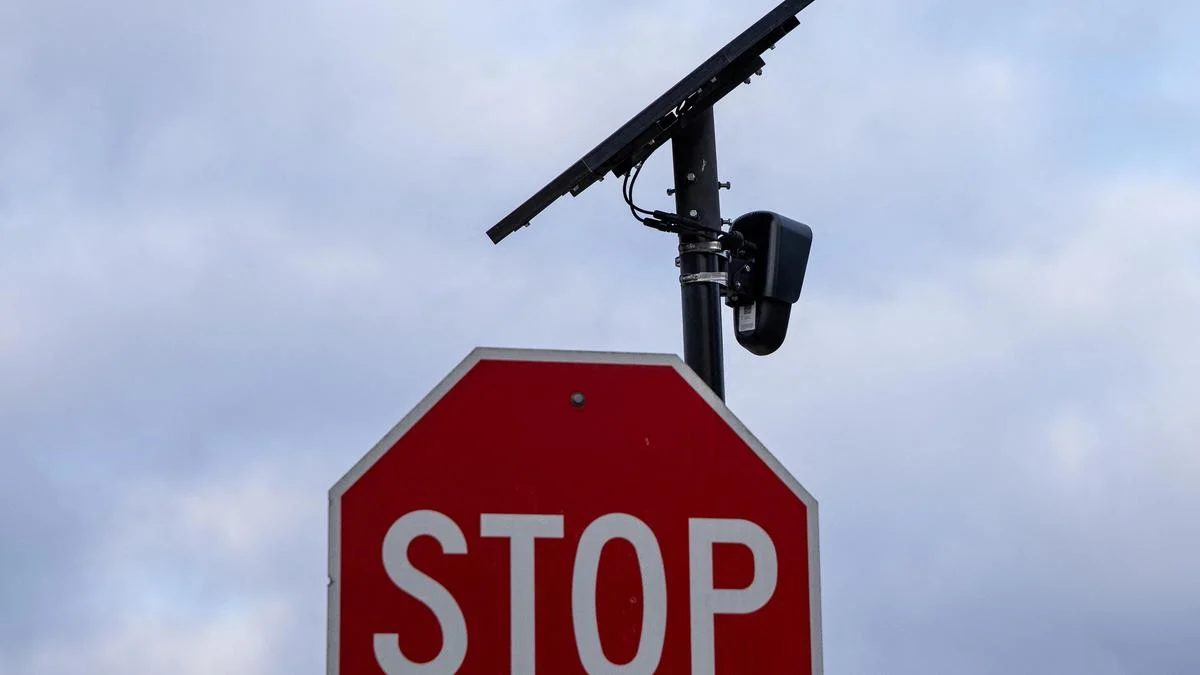
In a startling development that has ignited a national debate on privacy, civil liberties, and the unchecked expansion of surveillance technology, Flock Safety, a prominent U.S. manufacturer and operator of surveillance cameras, finds itself at the epicenter of a raging controversy. The company, which partners with thousands of law enforcement agencies and communities, issued a rare apology this month following a damning report by the Washington Post. The report exposed multiple instances of law enforcement officers abusing Flock’s extensive product network, including at least one egregious case where an officer allegedly misused the system to stalk an ex-partner through her vehicle’s license plates.
Across the United States, public anger against Flock Safety is not merely simmering; it is boiling over. Critics, driven by profound concerns over mass surveillance and the potential for abuse, are actively organizing to disrupt, and in some cases, physically destroy Flock cameras installed in their communities. The unfolding crisis highlights the perilous tightrope walked by technology companies operating in the sensitive realm of public safety and individual privacy, and the profound societal implications when that balance is perceived to be irrevocably broken.
Main Facts: A Crisis of Trust in Digital Policing
Flock Safety, founded in 2017, rapidly ascended to become a significant player in the public safety technology sector. Its business model is two-pronged: the sale of advanced surveillance hardware and a "surveillance-as-a-service" subscription offering. The company’s product suite is comprehensive, encompassing license plate reader (LPR) cameras, high-definition video cameras, mobile security trailers, audio detection devices, and drones, all integrated with sophisticated software platforms. This integrated approach allows clients, including neighborhood associations and law enforcement agencies, to join a vast network and, crucially, enable optional access for police.
This networked strategy has proven highly effective in enabling law enforcement to collect data across wider geographical areas, utilizing a greater density of cameras to detect and investigate incidents ranging from stolen vehicles to gun violence. Flock Safety proudly touts impressive statistics, claiming that, according to its 2026 factsheet, its technology contributes to solving over 2,800 crimes weekly and has aided in locating over 2,000 missing persons. The company further reports partnerships with more than 6,000 "communities" across 49 U.S. states, alongside thousands of law enforcement agencies, painting a picture of widespread adoption and impactful crime reduction.
However, these claims of efficacy are increasingly overshadowed by a cascade of ethical challenges and allegations of profound misuse. The core issues fueling the backlash are multifaceted:
- Police Misconduct: The Washington Post‘s revelations of law enforcement officers misusing the network for personal reasons, such as stalking.
- Abortion Tracking Allegations: A highly contentious report alleging the use of Flock cameras by Texas officials to track a woman seeking an abortion.
- Mass Surveillance Fears: A broader public anxiety regarding the pervasive nature of automated surveillance technologies and their potential to erode civil liberties.
- Company Reputation: Controversial statements from the company’s CEO and perceived lack of transparency.
- Public Resistance: An unprecedented surge in organized and individual acts of protest, including the physical disabling of cameras.
- Institutional Rejection: The significant decision by the Los Angeles Police Department (LAPD) to terminate its contract with Flock due to "serious concerns" over privacy.
This confluence of factors has plunged Flock Safety into a deep crisis of public trust, forcing a re-evaluation of the role and oversight of advanced surveillance tools in a democratic society.
Chronology of Controversy: A Timeline of Scrutiny and Public Outcry
The current maelstrom surrounding Flock Safety is not an isolated incident but the culmination of several contentious events that have unfolded over recent years, progressively eroding public confidence.
-
2017: Founding and Expansion: Flock Safety is established, quickly developing its dual business model of hardware sales and "surveillance-as-a-service" subscriptions. The company rapidly expands its footprint across the U.S., positioning its technology as a vital tool for community safety and crime reduction.

-
Last Year (Exact Date Undisclosed): CEO’s "Terroristic" Comment: Garrett Langley, Flock’s founder and CEO, sparks significant controversy when he publicly labels "DeFlock," an advocacy organization critical of his company’s technology, as "terroristic." This inflammatory remark immediately draws widespread condemnation, raising questions about Flock’s corporate ethics and its approach to public criticism.
-
July (Current Year): Langley’s Apology and LAPD Contract Termination: In an attempt to mitigate the damage from his previous remarks, Langley issues a public apology for the "terroristic" comment, pledging to improve the company’s responsiveness to public concerns. Coincidentally, or perhaps presciently, in the same month, the Los Angeles Police Department (LAPD) announces its decision not to renew its contract with Flock Safety. The LAPD cites "serious concerns" regarding civil liberties, privacy, and the vast amounts of data being collected by the cameras, signaling a significant institutional rejection of the technology even before other major scandals break.
-
August (Current Year): Washington Post Exposes Police Misuse: The crisis deepens with the publication of a bombshell report by the Washington Post. The investigation reveals that multiple law enforcement officers have exploited Flock’s product network, with at least one documented case involving an officer who misused the system to stalk an ex-partner by tracking her car’s license plates. This report provides concrete evidence of the privacy abuses that critics had long warned about, directly linking the technology to personal misconduct and breaches of public trust.
-
Soon After Washington Post Report: Flock Implements Safeguards: In the immediate aftermath of the Washington Post exposé, Flock Safety announces updates to its internal safeguards and a critical policy change: the default Automated License Plate Reader (ALPR) data retention period is reduced from 30 days to a mere seven days, unless a longer retention is legally mandated. This move is presented as an effort to address privacy concerns, though many critics view it as a reactive measure, insufficient to restore faith.
-
May 2025 (Report Publication Date): Texas Abortion Tracking Allegations: A highly sensitive report emerges, alleging that Texas officials utilized thousands of cameras within the Flock network to track down a woman who had sought an abortion, as part of an ongoing investigation. Flock Safety swiftly dismisses these reports "last year" (in relation to the original article’s publication), stating it was a missing persons case. However, subsequent findings by the Electronic Frontier Foundation (EFF), a prominent digital rights advocacy group, surface, lending credence to the original report and contradicting Flock’s narrative. This particular allegation resonates deeply in the post-Roe v. Wade era, fueling intense public outrage and solidifying the perception of Flock’s technology as a potential tool for state surveillance on highly personal matters.
-
Recent Weeks: Escalation of Public Fury and Direct Action: The cumulative effect of these revelations and allegations ignites widespread public fury. Protesters begin actively expressing their anger, ranging from blocking cameras and reporting their locations to the anti-Flock group "DeFlock" for mapping, to pressuring clients to terminate their contracts. A striking example of this direct action is a trending Instagram Reel, garnering over 2 million views and 269,000 likes, which provides step-by-step instructions on how to dismantle a Flock camera without detection. This demonstrates a growing, organized, and technologically savvy resistance movement.
This chronological unfolding of events illustrates a pattern of escalating concern, from initial corporate missteps to serious allegations of misuse, culminating in a significant erosion of public and institutional trust in Flock Safety’s technology and its ethical governance.
Supporting Data: The Scope and Impact of Flock’s Network
The controversy surrounding Flock Safety is amplified by the sheer scale and ambitious claims of its network. The company’s own data, while intended to showcase its positive impact, inadvertently highlights the vast reach and potential for pervasive surveillance that worries civil liberties advocates.

According to Flock’s 2026 factsheet, the company boasts partnerships with over 6,000 "communities" across 49 U.S. states and collaborates with "thousands" of law enforcement agencies. This extensive footprint means that Flock cameras, including LPRs, video cameras, and other sensor devices, are increasingly integrated into the fabric of daily life, from residential neighborhoods to commercial districts and major thoroughfares. The company asserts that this wide-reaching network is directly responsible for impressive public safety outcomes, claiming that over 2,800 crimes are solved weekly and more than 2,000 missing persons have been located with the aid of their technology. These statistics, while compelling from a law enforcement perspective, also underscore the significant power and data collection capabilities of the system.
However, the efficacy of the network is now being weighed against the profound concerns raised by specific incidents of misuse and the inherent risks of such widespread surveillance.
-
The Washington Post Report on Police Misuse: The August report detailed not just one, but "multiple law enforcement officers" who had abused Flock’s system. The specific case of an officer using the network to stalk an ex-partner through her license plates is particularly chilling. It illustrates how a tool designed for public safety can be weaponized for personal vendettas, transforming a security measure into an instrument of intimate violation. Such incidents shatter public trust, making communities question who truly benefits from these systems and at what cost to individual privacy and safety from those sworn to protect.
-
The Texas Abortion Tracking Allegations: The May 2025 report alleging that Texas officials utilized "thousands of cameras" in the Flock network to track a woman seeking an abortion represents a critical flashpoint. In the wake of the overturning of Roe v. Wade, the ability of state authorities to use surveillance technology to monitor highly personal and legally contested healthcare decisions has become a deeply polarizing issue. While Flock dismissed these reports as a "missing persons case," the subsequent corroboration by the Electronic Frontier Foundation (EFF) — a respected digital rights advocacy group — significantly undermined Flock’s credibility. This narrative, particularly amplified on social media, simplified into a powerful public perception that Flock had actively aided in enforcing a controversial abortion ban, further intensifying the backlash.
-
Legislative Scrutiny and AI Concerns: Beyond direct misuse, the technology’s capabilities themselves draw fire. While Flock explicitly denies carrying out facial recognition, predictive policing, or demographic profiling on its "Myths vs. Facts" page, and states it does not contract with U.S. Immigration and Customs Enforcement (ICE) or the tech firm Palantir (both associated with mass surveillance), media outlets have consistently identified Flock cameras as "AI-powered." This distinction is crucial; even without direct facial recognition, the AI capabilities of LPRs and other sensors can aggregate vast amounts of data, creating detailed movement patterns and potentially enabling de-anonymization. U.S. lawmakers have also voiced concerns, raising questions about the possibility of ICE indirectly accessing Flock data, highlighting a broader unease about the potential for government agencies to bypass direct contracts and leverage such networks for broader surveillance objectives.
-
Public Resistance and Viral Mobilization: The tangible manifestation of public anger is evident in the burgeoning resistance movement. The "DeFlock" organization actively maps the locations of Flock cameras, empowering communities to identify and potentially challenge their presence. The viral Instagram Reel demonstrating how to dismantle a Flock camera, with over 2 million views and 269,000 likes, signifies a new level of direct action and digital mobilization against surveillance infrastructure. This demonstrates how social media can rapidly disseminate methods of resistance, transforming abstract privacy concerns into concrete, actionable steps for a broad audience.
These supporting data points collectively paint a picture of a technology that, despite its stated benefits, has become embroiled in profound ethical dilemmas, demonstrating the formidable challenge of balancing security with privacy in an increasingly surveilled world.
Official Responses: Navigating a PR Nightmare
In the face of mounting public pressure and damaging reports, Flock Safety and its CEO, Garrett Langley, have undertaken a series of actions aimed at damage control and restoring trust. However, the efficacy of these responses remains a subject of intense debate among critics and privacy advocates.

CEO Garrett Langley’s Apologies:
A key element of Flock’s official response has been Langley’s public apologies. He first apologized in July for his earlier, widely condemned remarks where he referred to the anti-Flock advocacy group DeFlock as "terroristic." This apology was accompanied by a promise to improve the company’s engagement with public concerns, signaling an acknowledgment of the reputational harm caused by his confrontational stance. Following the Washington Post report in August, Langley again issued an apology, specifically addressing the incidents of police misuse of the network. These apologies, while necessary for a company facing such scrutiny, were seen by many as reactive rather than proactive, coming only after significant public and media pressure.
Policy Changes and Safeguards:
Soon after the Washington Post‘s exposé, Flock announced significant updates to its internal safeguards. The most tangible change was the reduction of its default Automated License Plate Reader (ALPR) data retention period. Previously, data was held for 30 days; this was cut to seven days, "unless legally required to keep the images for longer." This policy adjustment was presented as a direct response to privacy concerns, aiming to limit the duration of potential tracking and reduce the risk of long-term data abuse. However, critics argue that a seven-day retention period still allows for significant tracking and that the "legally required" clause provides a loophole for extended data storage under certain circumstances.
"Myths vs. Facts" Page:
Flock Safety has actively utilized its "Myths vs. Facts" page to directly address and refute common accusations and fears surrounding its technology. On this page, the company explicitly states that it does not carry out facial recognition, predictive policing, or demographic profiling. Furthermore, Flock asserts that it does not contract with the U.S. agency ICE (Immigration and Customs Enforcement) or the controversial tech firm Palantir, both of which are associated with mass surveillance and data aggregation. The intent behind these denials is clear: to distance Flock from the most contentious and privacy-invasive aspects of modern surveillance technology and to allay fears about its potential use in controversial governmental operations. However, the fact that media outlets continue to describe Flock cameras as "AI-powered" and that U.S. lawmakers have raised questions about potential ICE access to Flock data, suggests that these denials have not fully convinced a skeptical public or legislative body.
Denial of Texas Abortion Tracking:
One of the most politically charged allegations against Flock involved a May 2025 report suggesting that Texas officials used the company’s network to track a woman who had an abortion. Flock dismissed these reports "last year," categorizing the incident as a "missing persons case." This denial was firm, but later findings by the Electronic Frontier Foundation (EFF) advocacy group appeared to support the original report, directly contradicting Flock’s narrative. This discrepancy further complicated Flock’s public relations efforts, particularly as a simplified version of events — that Flock collaborated with police to enforce Texas’s abortion ban — quickly entered the public consciousness via social media. The company’s inability to definitively counter these allegations, especially when faced with contradictory evidence from respected advocacy groups, significantly eroded its credibility.
LAPD’s Non-Renewal:
Perhaps one of the most significant official responses came not from Flock, but from a major client: the Los Angeles Police Department. In July, U.S. media outlets reported that the LAPD would not renew its original contract with Flock. The reason provided by the department — "serious concerns" regarding civil liberties, privacy, and the data being collected from the cameras — carries substantial weight. This was not a public protest or an advocacy group’s report, but a major metropolitan law enforcement agency making a calculated decision to sever ties, explicitly citing the very concerns that privacy advocates have been vocal about. The LAPD’s decision serves as an institutional validation of the risks associated with Flock’s technology and sets a precedent that other law enforcement agencies might consider.
Collectively, Flock’s official responses represent a concerted effort to manage a rapidly escalating crisis. While some measures, like reducing data retention, address specific concerns, the broader context of repeated apologies, denials, and institutional rejections suggests that the company is struggling to regain public trust and effectively navigate the complex ethical landscape of modern surveillance.
Implications: The Future of Surveillance, Privacy, and Public Trust
The ongoing saga of Flock Safety carries far-reaching implications, not only for the company itself but for the broader landscape of public safety technology, civil liberties, and the delicate balance between security and privacy in a democratic society.
For Flock Safety:
The immediate implication for Flock Safety is a severe reputational crisis. The allegations of misuse and the subsequent public backlash threaten to significantly damage its brand, potentially leading to a loss of existing contracts and making it challenging to secure new ones. The LAPD’s non-renewal is a particularly ominous sign, suggesting that other law enforcement agencies may reconsider their partnerships. Increased public scrutiny will likely translate into greater pressure for regulatory oversight, potentially impacting Flock’s business model and operational flexibility. The company will need to invest heavily in rebuilding trust through enhanced transparency, robust accountability mechanisms, and perhaps a fundamental re-evaluation of its privacy policies, going beyond mere reactive adjustments.

For Law Enforcement Agencies:
The Flock controversy has profound implications for law enforcement agencies that utilize or are considering implementing similar surveillance technologies. The documented instances of misuse, particularly the stalking case, severely erode public trust in police. When tools meant for public safety are repurposed for personal vendettas or perceived as instruments of state control over citizens’ personal lives (as in the abortion tracking allegations), it fosters deep skepticism and resistance within communities. This creates an ethical dilemma for police departments, forcing them to weigh the perceived crime-solving benefits against the significant risks to civil liberties and the potential for public alienation. There will be increased calls for stricter internal policies, independent audits, and transparent governance frameworks for the use of any surveillance technology, ensuring accountability and preventing abuse.
For Privacy and Civil Liberties:
This controversy intensifies the already heated national debate on mass surveillance and digital privacy. It underscores the inherent risks of ubiquitous data collection and the potential for a "chilling effect" on fundamental rights such as free speech and assembly, as citizens may self-censor if they feel constantly monitored. The focus on ALPR data highlights how seemingly innocuous data points can be aggregated to create detailed profiles of individuals’ movements and habits. The implications extend to the urgent need for comprehensive data governance frameworks and stronger legal protections for individual privacy in the digital age. The current patchwork of state and local regulations is proving insufficient to manage the rapid advancements in surveillance technology, prompting renewed calls for federal legislation that establishes clear boundaries and accountability.
The Broader Landscape of AI and Policing:
Flock Safety’s experience serves as a potent case study for the promises and perils of Artificial Intelligence (AI) in law enforcement. While AI offers efficiency and enhanced capabilities, it also introduces complexities related to algorithmic bias, data security, and the potential for automated systems to operate without sufficient human oversight or ethical consideration. Even if Flock denies certain AI functionalities like facial recognition, the very term "AI-powered cameras" evokes concerns about unchecked technological power. The controversy emphasizes that technological advancement must be accompanied by robust ethical guidelines, clear legislative frameworks, and strong public engagement to ensure that these tools enhance safety without undermining fundamental freedoms.
Public Response and Activism:
The public’s vigorous response, ranging from organized advocacy by groups like DeFlock to direct action demonstrated by viral social media tutorials on camera dismantling, signals a growing and empowered anti-surveillance movement. This level of public engagement, particularly among tech-savvy younger generations, indicates
