


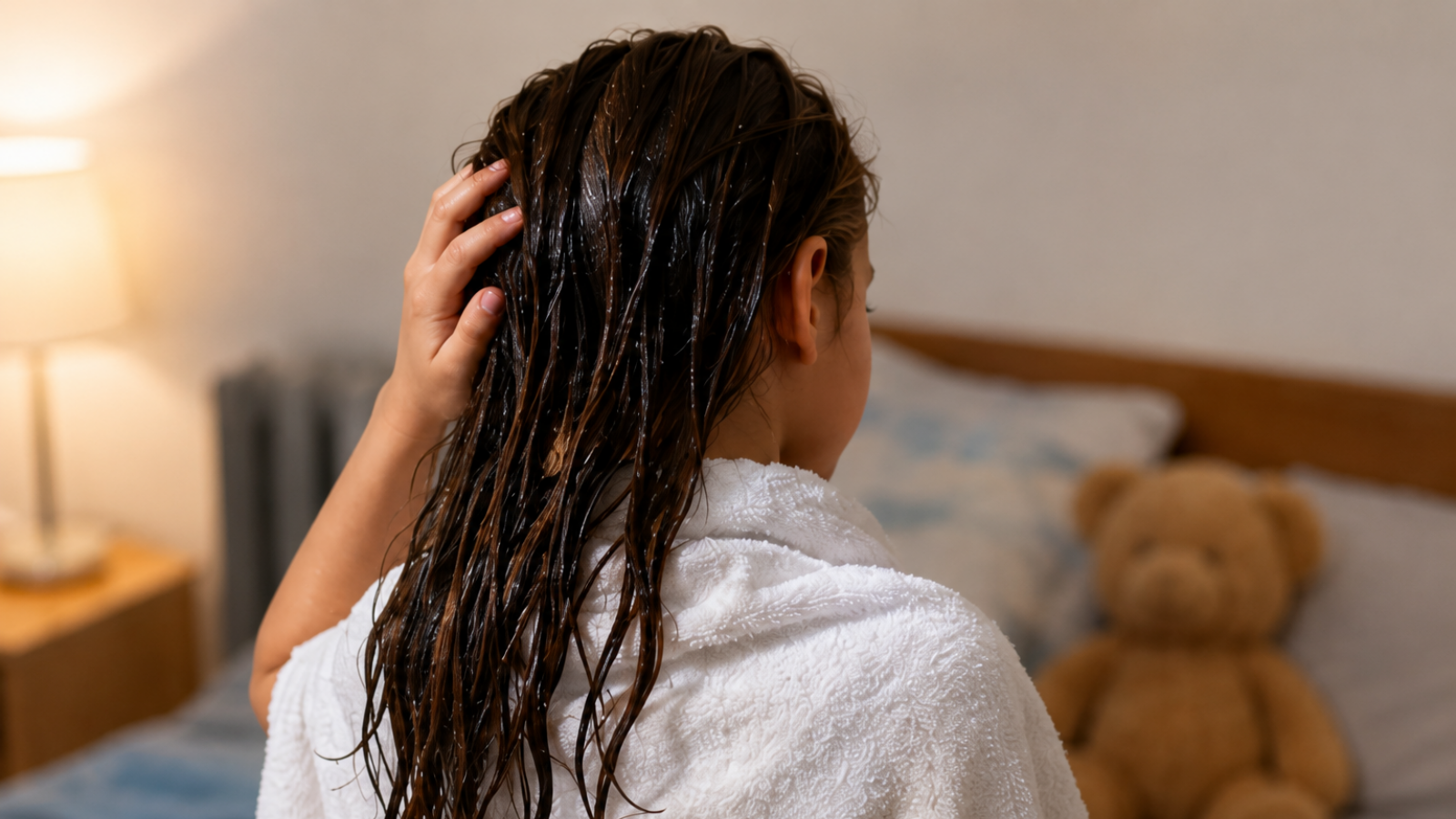
A recent viral Instagram post has ignited a wave of parental anxiety, linking a distressing case of sudden facial paralysis in a 10-year-old girl to the seemingly innocuous act of sleeping with wet hair. The post, shared by mindfulness coach Seva Gorobets, identified the condition as Bell’s palsy and suggested a direct causal relationship between the wet hair and the onset of symptoms. While the narrative is undeniably alarming and has resonated deeply with parents, medical experts are urging caution, emphasizing the lack of scientific evidence to support such a connection and highlighting the importance of accurate information in managing health concerns.
Bell’s palsy, characterized by the sudden weakness or paralysis of facial muscles on one side of the face, stems from dysfunction of the seventh cranial nerve, also known as the facial nerve. This nerve controls a complex array of functions, including facial expressions, taste, and tear and saliva production. When this nerve becomes inflamed or swollen, it can disrupt the neural signals to the facial muscles, leading to the characteristic drooping and immobility.
The rapid and often dramatic onset of Bell’s palsy can be frightening, particularly when it affects children. This makes any proposed cause, however unsubstantiated, a source of significant worry for caregivers. However, the medical community is clear: the belief that sleeping with wet hair can trigger Bell’s palsy is a persistent myth, not a scientifically validated medical fact.
Unraveling the Myth: Wet Hair and Bell’s Palsy
Dr. Rajeev Goel, Director of Neurosurgery at Paras Health in Panchkula, unequivocally states that there is no robust scientific evidence to establish a link between sleeping with wet hair and the development of Bell’s palsy. "Waking up with sudden facial weakness is indeed a classic presentation of Bell’s palsy," Dr. Goel explains, "but sleeping with wet hair is not a medically recognized cause."
The association between cold exposure, wet hair, and facial paralysis is a long-standing folk belief. However, Dr. Goel emphasizes that the timing of symptom onset is often coincidental. "While many people associate exposure to cold air or wet hair with facial paralysis, there is no strong scientific evidence supporting this belief," he asserts. "The timing is most likely coincidental. In many cases, the inflammation affecting the facial nerve has already begun before symptoms become noticeable." This means that by the time a person wakes up with the tell-tale signs of Bell’s palsy, the underlying inflammatory process may have been underway for some time, independent of external factors like wet hair.
The viral post’s claim, therefore, likely misattributes the cause of a serious medical condition to a harmless everyday occurrence. This underscores the critical need for reliable health information, especially in the age of rapidly spreading social media content.
The True Nature of Bell’s Palsy: Causes and Mechanisms
Understanding what actually causes Bell’s palsy is crucial to dispelling misinformation. While the exact etiology remains somewhat elusive, the prevailing scientific understanding points to inflammation and swelling of the facial nerve. This inflammation typically occurs as the nerve passes through a narrow bony canal in the skull.
One of the leading suspected triggers for this inflammation is the reactivation of the herpes simplex virus (HSV). HSV, the virus responsible for cold sores, can lie dormant in the body for years and can be reactivated by various factors, including stress, illness, or hormonal changes. Other viruses, such as the varicella-zoster virus (which causes chickenpox and shingles), are also implicated as potential triggers for Bell’s palsy.
"The swollen nerve becomes compressed within the canal, disrupting the signals that control facial muscles, leading to sudden weakness or paralysis," Dr. Goel elaborates. This mechanical compression within the confined space of the bony canal is believed to be the direct cause of the nerve dysfunction.
Bell’s Palsy in Children: A Misconception Addressed
The viral post also suggested that Bell’s palsy is more common in children. Dr. Goel clarifies this point, stating that Bell’s palsy can affect individuals of any age. While it is a common cause of sudden facial paralysis in children, it is actually "less common" in children compared to adults. However, the impact on a child can be particularly distressing for families.
Despite its occurrence in younger populations, the prognosis for children diagnosed with Bell’s palsy is generally very positive. With appropriate medical evaluation and management, most children experience a full recovery without any long-term complications. This is a vital piece of information for parents who may be experiencing heightened anxiety due to the viral post.
Recognizing the Warning Signs: What Parents Should Watch For
Prompt recognition of symptoms is paramount for effective management of Bell’s palsy. Dr. Goel advises parents to seek immediate medical attention if a child suddenly develops any of the following:
- Sudden weakness or paralysis on one side of the face: This is the hallmark symptom, making it difficult to smile, blink, or move the affected side of the face.
- Difficulty closing the eyelid on the affected side: This can lead to eye dryness and irritation.
- Drooping of the mouth on the affected side: This can affect eating and drinking.
- Changes in taste on the front of the tongue.
- Increased sensitivity to sound in the ear on the affected side.
- Pain around the jaw or behind the ear on the affected side.
It is crucial to distinguish Bell’s palsy from other potentially more serious conditions. If facial weakness is accompanied by other neurological symptoms, such as weakness in the arms or legs, difficulty speaking, severe headache, dizziness, fever, rash, or altered consciousness, this constitutes a medical emergency. These symptoms may indicate conditions like stroke or meningitis, which require urgent and specialized treatment.
Treatment and Recovery: A Path to Healing
Fortunately, Bell’s palsy is treatable, and early medical intervention is key to optimizing recovery. "Corticosteroids may be recommended in selected cases, especially when started within the first 72 hours of symptom onset," Dr. Goel states. These anti-inflammatory medications can help reduce swelling of the facial nerve, potentially alleviating pressure and promoting nerve healing.
For children who are unable to fully close their affected eye, protective measures are essential. Lubricating eye drops or ointments are often prescribed to prevent dryness, irritation, and potential corneal damage.
The recovery timeline for Bell’s palsy can vary. "Most children begin to improve within a few weeks, and the majority recover completely within three to six months, although recovery may occasionally take longer," Dr. Goel notes. Permanent facial weakness is uncommon in children, which offers a significant degree of reassurance.
Prevention: Focusing on Holistic Health
Given that the exact cause of Bell’s palsy is not fully understood, there are no definitive preventative measures. Dr. Goel emphasizes that focusing on myths like avoiding wet hair is counterproductive. Instead, parents should prioritize their child’s overall health and well-being. This includes:
- Maintaining a balanced diet: Essential for a strong immune system.
- Practicing good hygiene: To reduce the risk of viral infections.
- Ensuring timely vaccinations: Protecting against various preventable diseases.
- Prompt treatment of infections: Addressing any illnesses quickly to prevent complications.
Beyond these general health practices, the most important preventative measure regarding Bell’s palsy is accurate information and swift medical action. "If a child suddenly develops facial weakness, don’t assume it will go away on its own," Dr. Goel urges. "Seek immediate medical attention so doctors can confirm whether it’s Bell’s palsy, rule out more serious conditions, and begin treatment as early as possible."
The viral Instagram post, while likely stemming from a place of concern, has inadvertently spread misinformation that can cause unnecessary fear and anxiety. It highlights the critical responsibility of both content creators and consumers to verify health-related information before sharing it. By relying on qualified medical professionals and evidence-based information, parents can navigate health concerns with clarity and confidence, ensuring their children receive the best possible care. The focus should always remain on sound medical advice, not on unsubstantiated claims circulating on social media.
