

Introduction: Navigating the Contrasts of the Pink City
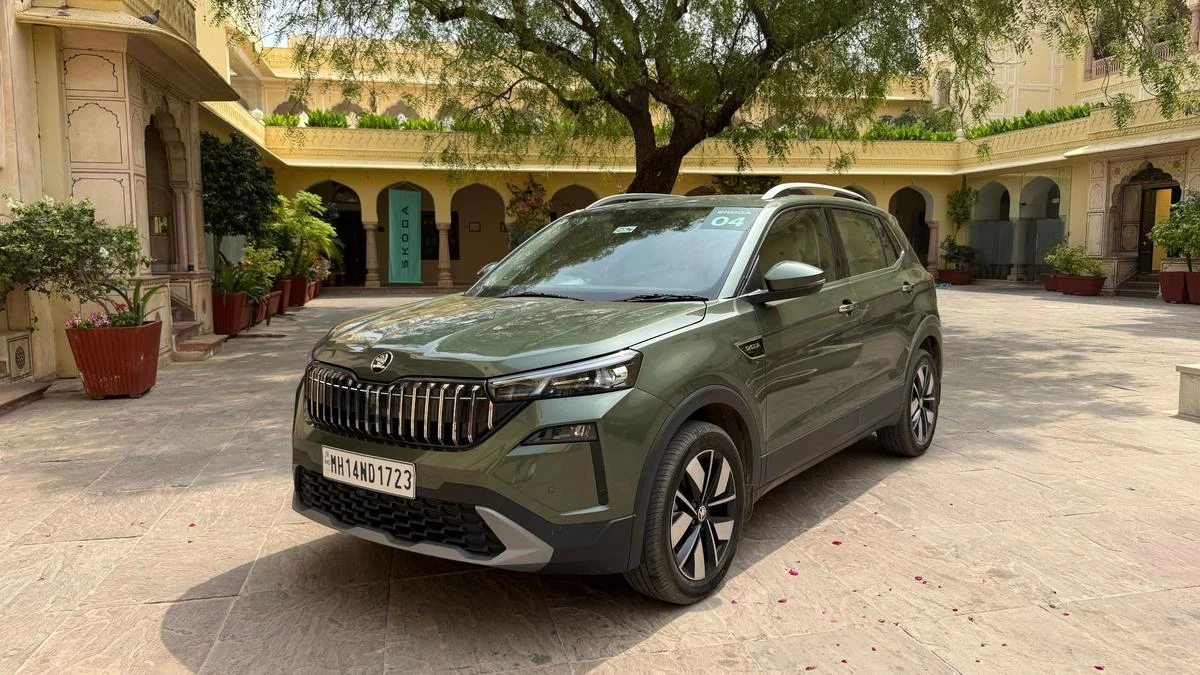
Jaipur, the historic "Pink City" of Rajasthan, serves as a poignant metaphor for the modern Indian driving experience. It is a landscape defined by sharp contrasts: wide, smooth arterial roads that promise speed and liberation, which abruptly transition into the narrow, labyrinthine arteries of the old city where chaos reigns supreme. In these congested inner streets, a driver’s patience is tested as much as a vehicle’s precision. It is within this demanding environment that the updated Skoda Kushaq 1.0 TSI Automatic has been positioned not merely as a mode of transport, but as a sophisticated solution to the complexities of urban and suburban mobility.
Skoda’s latest iteration of the Kushaq does not rely on the loud, headline-grabbing histrionics typical of mid-cycle refreshes. Instead, the Czech automaker has opted for a path of intelligent evolution. By identifying the subtle friction points of the previous model and addressing them with surgical precision, Skoda has enhanced a fundamentally robust product. This update is a masterclass in "living with the car"—addressing the nuances that only become apparent after months of ownership rather than the superficialities that dazzle in a showroom.
Main Facts: The Core Specifications and Value Proposition
The updated Skoda Kushaq remains a cornerstone of the company’s "India 2.0" strategy, built upon the localized MQB-A0-IN platform. While the core mechanical architecture remains familiar, the refinements are significant enough to redefine the driving character of the 1.0-liter variant.
Key Technical Specifications:
- Engine: 1.0-litre, three-cylinder TSI Turbo-Petrol.
- Power Output: 115 HP @ 5,000–5,500 rpm.
- Torque: 178 Nm @ 1,750–4,500 rpm.
- Transmission: New 8-speed Torque Converter Automatic.
- Safety Rating: 5-Star Global NCAP (Adult and Child occupancy).
- Price Range: INR 10.69 Lakh to INR 18.99 Lakh (Ex-showroom).
The most striking "Main Fact" of this update is the democratization of premium features. Skoda has made alloy wheels standard across the entire range, ensuring that even entry-level buyers do not feel they have compromised on the vehicle’s visual prestige. Furthermore, the introduction of an 8-speed automatic transmission in the 1.0 TSI segment sets a new benchmark for mechanical sophistication in the mid-size SUV category.
Chronology: The Evolution of the Kushaq in India
To understand the significance of this update, one must look at the timeline of the Kushaq’s journey in the Indian market.
- The Launch (2021): The Kushaq debuted as the first vehicle under the "India 2.0" project. It was hailed for its driving dynamics and safety but faced early criticism regarding cabin material "creaks" and a ride quality that some found overly firm for Indian city roads.
- The Feature Revisions (2022-2023): Responding to market pressure, Skoda introduced smaller updates, including the addition of a sunroof to more trims and the introduction of special editions like the ‘Monte Carlo’ and ‘Matte Edition’ to maintain visual freshness.
- The Current Update (2024): This marks the most significant mechanical and qualitative shift since the car’s inception. By moving to an 8-speed automatic and re-tuning the suspension, Skoda has addressed the two most common requests from their customer base: smoother low-speed drivability and a more compliant ride.
This chronology demonstrates a brand that is listening. The Kushaq has moved from being a "driver-centric" niche choice to a "family-centric" all-rounder without losing its European soul.
Supporting Data: Aesthetics, Interior, and the 8-Speed Revolution
Visual Refinement and "European Restraint"
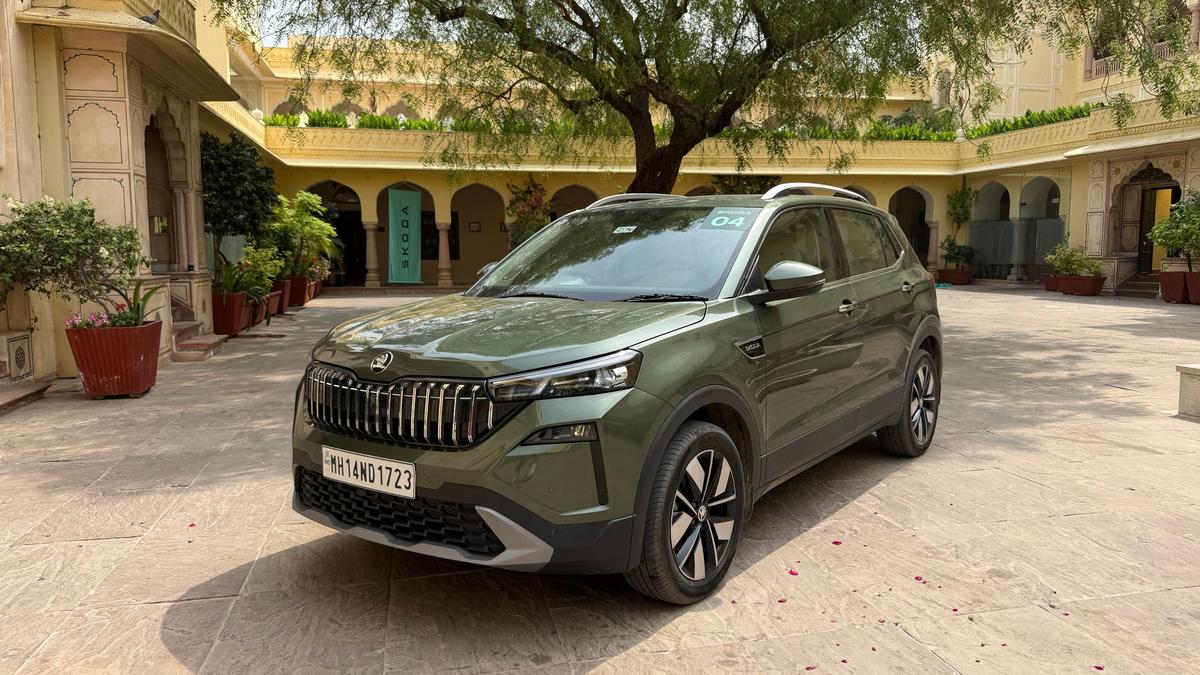
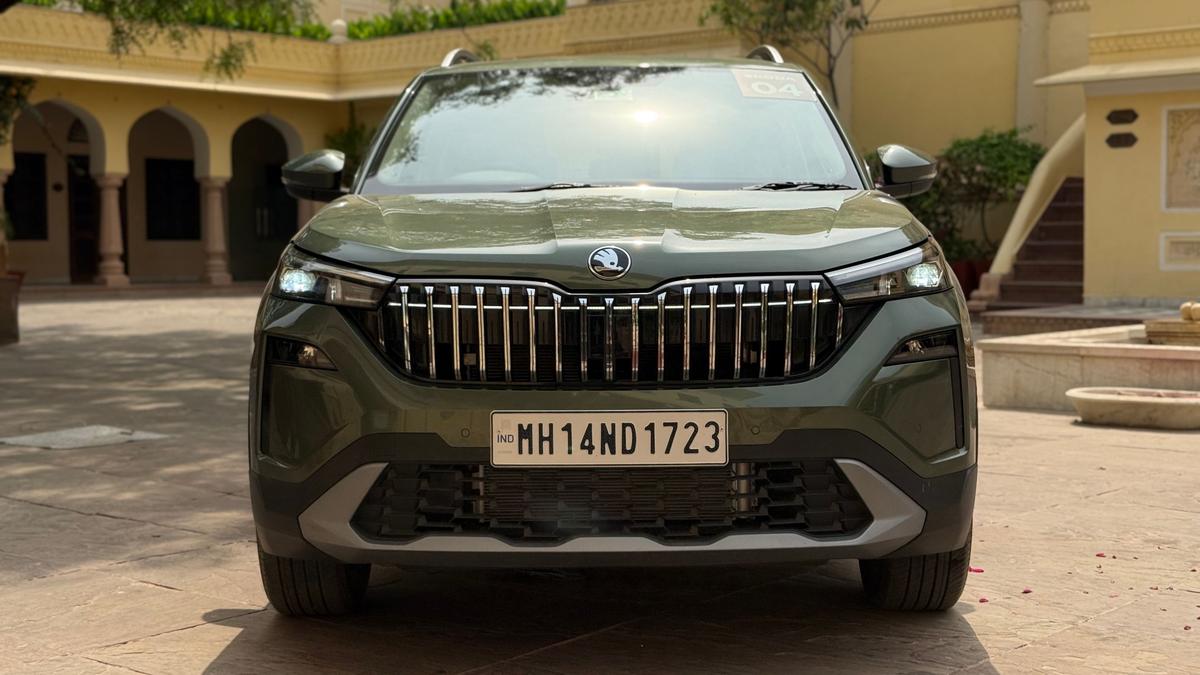
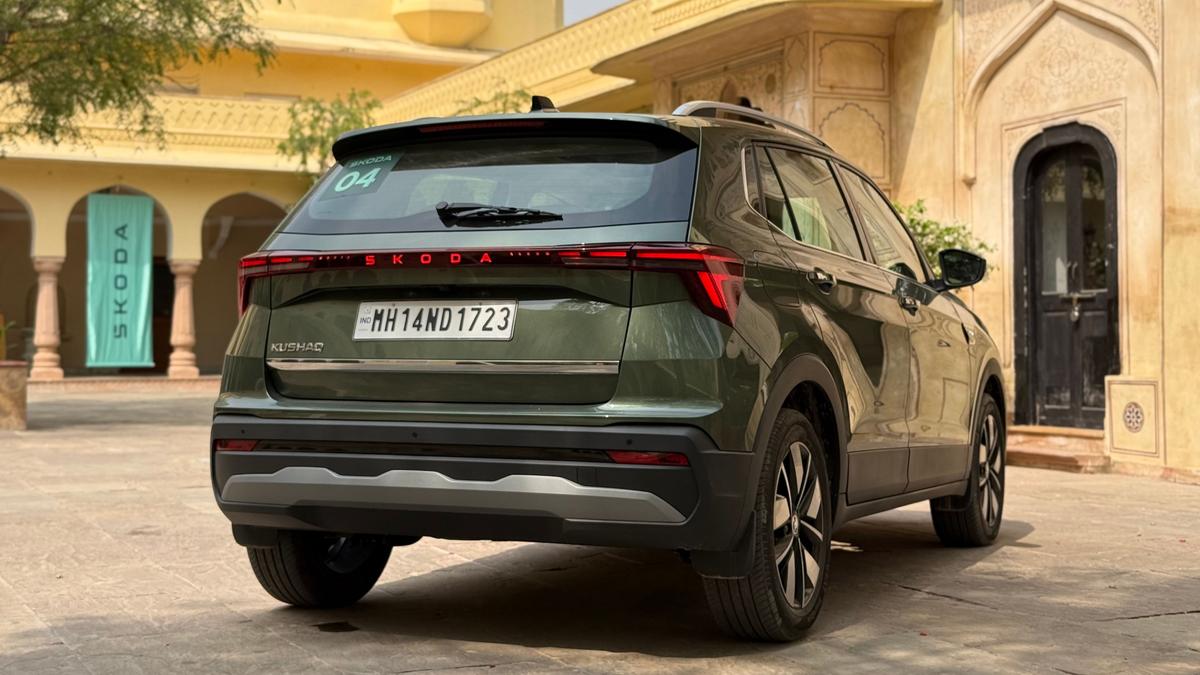
Visually, the Kushaq maintains its clean, understated European aesthetic. However, the detailing has been sharpened. The front fascia appears wider, thanks to subtle modifications to the bumper and grille surrounds, providing a more assertive road presence. At the rear, the lighting signatures have been modernized, lending a contemporary feel that aligns the Kushaq with Skoda’s global SUV lineup, such as the Karoq and Kodiaq.
The "democratization" of the alloy wheels is supported by sales data suggesting that Indian consumers prioritize the "side profile" of an SUV. By offering different alloy designs for different trims but making the material standard, Skoda has effectively increased the perceived value of the base and mid-spec variants.
Interior Ergonomics and the "Massage" Factor
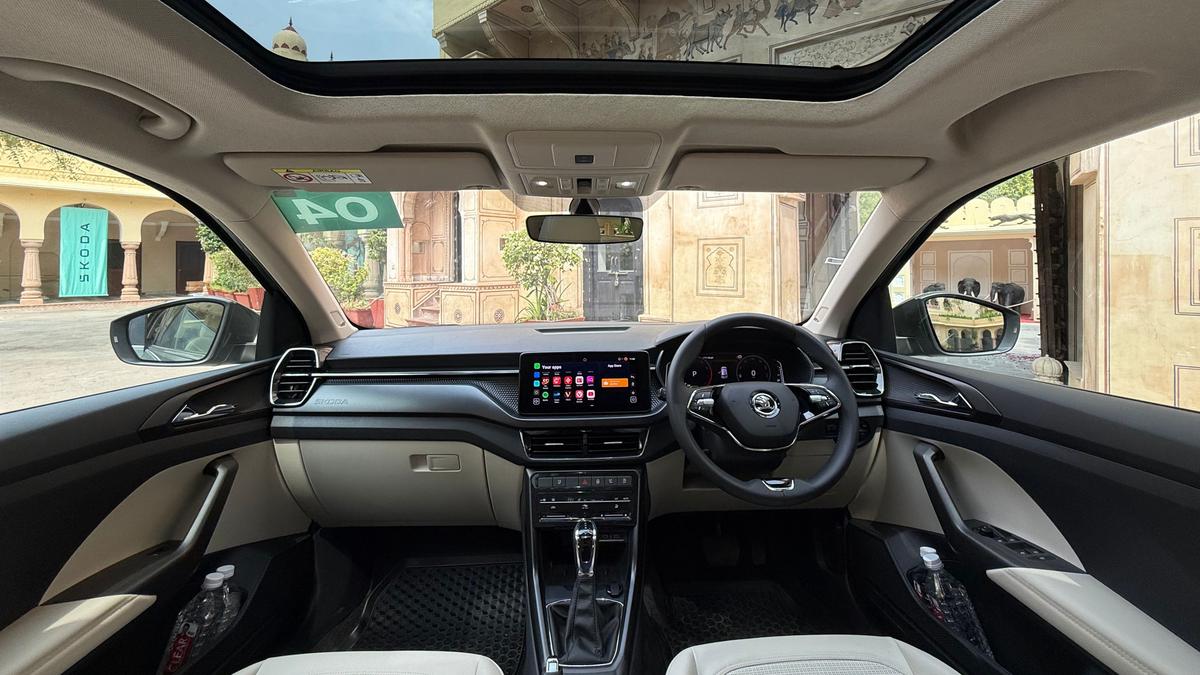
Inside, the cabin remains a masterclass in ergonomics. The driving position is widely considered the best in its class, offering a "commanding" view without feeling like one is sitting "on" rather than "in" the car.
The Material Lift: Skoda has improved the tactile quality of the plastics and upholstery. The consistency of the graining on the dashboard and the dampening of the switchgear feel more premium.
The Feature List: The standout addition is the rear-seat massage function. While some might dismiss this as a gimmick, data from long-distance commuters suggests that such features significantly reduce fatigue. In a segment where rear-seat comfort is often secondary to front-seat tech, this is a calculated move to appeal to chauffeur-driven owners and families alike.
The Mechanical Heart: 1.0 TSI Meets the 8-Speed AT
The 1.0-litre TSI engine is a marvel of downsizing. Despite its small displacement, it produces 115 HP and 178 Nm of torque. However, the real story is the new 8-speed torque converter automatic.
In previous iterations, the 6-speed unit was competent but could occasionally feel "busy" in stop-and-go traffic. The 8-speed unit offers:
- Smoother Ratios: More gears mean the engine stays in its "power band" longer and more efficiently.
- Reduced Fatigue: The gear shifts are nearly imperceptible, making the "Jaipur crawl" much less taxing.
- Highway Efficiency: At 100 km/h, the engine now sits at lower RPMs compared to the 6-speed, improving fuel economy and reducing "NVH" (Noise, Vibration, and Harshness) levels.
Official Responses and Engineering Philosophy
While specific quotes from Skoda’s engineering team are often kept behind corporate veils, the brand’s "Simply Clever" philosophy is evident in the execution of this update. Skoda’s official stance has always been that they do not build cars to a "feature-list price point" but rather to a "structural and safety standard."
The retention of the 5-star Global NCAP rating is a testament to this. In official communications, Skoda emphasizes that the Kushaq’s chassis uses high-strength steel in critical areas, ensuring that the vehicle’s "heft" is felt in its safety rather than just its weight.
Furthermore, the decision to soften the suspension is a direct "official response" to Indian road conditions. Engineers have recalibrated the dampers to absorb the "sharp edges" of potholes. This change was implemented without sacrificing the high-speed stability for which European cars are famous—a delicate balancing act that requires extensive local testing.
Implications: What This Means for the Indian SUV Market
The update to the Skoda Kushaq 1.0 TSI Automatic has several far-reaching implications for the mid-size SUV segment:
1. The End of the "Compromise" Entry-Level
Previously, the 1.0-litre engine was seen as the "budget" choice for those who couldn’t afford the 1.5-litre TSI. With the new 8-speed transmission and improved interior quality, the 1.0 TSI now stands as a "considered" choice. It offers enough performance for 90% of Indian driving conditions while providing a smoother, more urban-friendly experience than its larger-displacement sibling.
2. Shifting the Value Narrative
For too long, "value" in the Indian market was defined by the number of screens or the size of the panoramic sunroof. Skoda is attempting to shift this narrative back toward "mechanical integrity" and "ride sophistication." By pricing the Kushaq between INR 10.69 and 18.99 lakh, they are competing directly with the Hyundai Creta and Kia Seltos, but with a vastly different proposition: European engineering versus Korean feature-density.
3. Long-term Ownership Confidence
The focus on structural solidity and safety is likely to bolster the Kushaq’s resale value—a traditional pain point for European brands in India. As safety becomes a primary concern for the Indian buyer (as evidenced by the success of 5-star rated vehicles), the Kushaq’s consistent performance in crash tests gives it a "future-proof" status.
Conclusion: A Cohesive Everyday Companion
The updated Skoda Kushaq 1.0 TSI Automatic is a car that reveals its brilliance over time. It does not shout; it whispers of quality, safety, and mechanical harmony. By refining the transmission and softening the ride, Skoda has smoothed over the few remaining rough edges of what was already a stellar package.
In the chaotic streets of Jaipur, or the high-speed expressways connecting India’s metros, the Kushaq feels "honest." It provides a sense of control and comfort that makes the act of driving a pleasure rather than a chore. For the buyer who looks beyond the spec sheet and values the tactile feel of a well-engineered machine, the updated Kushaq is no longer just a contender—it is perhaps the benchmark for what a modern, urban-centric SUV should be.
Skoda has proved that you don’t need to reinvent the wheel to stay relevant; you just need to make the wheel turn a little more smoothly.
Price: INR 10.69 – 18.99 lakh (depending on the variant)
In association with Motorscribes and The Hindu. Follow @motorscribes for more automotive insights.
