


New Delhi, [Date of Publication] – The competitive landscape of premium smartphones has recently welcomed two new contenders from Vivo’s esteemed X300 series: the Vivo X300 FE and the Vivo X300 Ultra. While the Ultra variant typically garners attention for its bleeding-edge specifications, it is the X300 FE that presents a compelling case for a different kind of user, sparking considerable debate and interest within the tech community. This in-depth analysis delves into the nuances of the Vivo X300 FE, exploring its design philosophy, performance metrics, and, most notably, its ambitious photographic capabilities, to ascertain its true value proposition in a crowded market.
Priced at ₹79,999, the X300 FE positions itself approximately ₹4,000 higher than its acclaimed sibling, the Vivo X300. This pricing strategy immediately raises questions for prospective buyers, prompting a critical evaluation of whether the "Fan Edition" justifies its premium over the main lineup, especially with other formidable competitors vying for attention in the same bracket. This article aims to dissect these considerations, providing a comprehensive overview to guide consumer decisions.
Main Facts: The Vivo X300 FE Enters a Crowded Arena
The Vivo X300 FE emerges as a significant addition to Vivo’s celebrated X-series, a lineage known for pushing boundaries in mobile photography and design. Launched alongside the top-tier X300 Ultra, the FE variant aims to carve its own niche by offering a refined user experience, distinct aesthetic, and an innovative approach to smartphone photography. Its introduction at ₹79,999, slightly above the previously launched Vivo X300, immediately highlights a strategic intent: to offer a differentiated experience rather than a mere downgrade or iterative update.
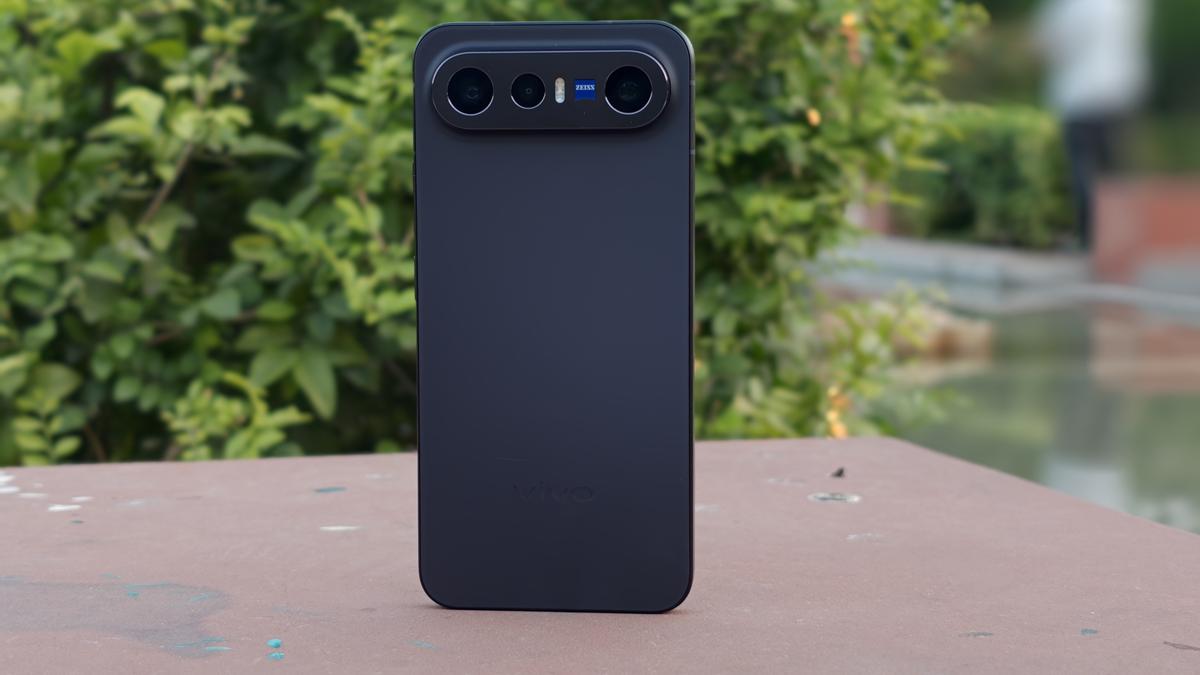
At its core, the Vivo X300 FE introduces a fresh design language, breaking away from the established X300 family aesthetic with a redesigned camera island reminiscent of the Google Pixel series. Beyond mere aesthetics, it prioritizes a compact form factor and an enhanced in-hand feel. A key differentiator lies in its optional, yet transformative, telephoto extender accessory, designed to elevate the mobile photography experience into something akin to using a dedicated camera setup.
Under the hood, the FE makes a notable shift by opting for Qualcomm’s Snapdragon 8 Gen 5 processor, diverging from the MediaTek Dimensity 9500 found in the standard X300. While benchmark numbers suggest the X300 might hold an edge in raw processing power, the FE promises robust real-world performance. Furthermore, Vivo has committed to an impressive four years of OS updates and seven years of security patches, signaling a strong focus on long-term user satisfaction and device longevity—a commitment that surpasses even its X300 sibling.
The primary dilemma for potential buyers revolves around choice: invest in the proven performance and camera hardware of the Vivo X300, embrace the distinct design and accessory-enhanced photography of the X300 FE, or explore other high-performing devices from rival brands within this competitive price segment. The X300 FE’s narrative is one of balanced refinement, unique photographic potential, and extended software support, aiming to appeal to a discerning audience that values experience over sheer specifications.
Chronology: Vivo’s Evolving X-Series and the Rise of the "Fan Edition"
Vivo’s journey in the premium smartphone segment has been marked by a relentless pursuit of innovation, particularly in mobile imaging. The X-series, in particular, has become synonymous with cutting-edge camera technology, often co-engineered with ZEISS to deliver professional-grade photography tools in a pocketable format.
A Legacy of Innovation: The X-Series Journey
The X-series has consistently aimed to challenge established flagships by offering unique features and a premium user experience. Earlier iterations like the X200 FE, which our previous review praised for "nailing the compact experience without trade-offs," laid the groundwork for a distinct "Fan Edition" philosophy. These models often served as a bridge, incorporating flagship-tier features into a slightly more accessible or specialized package.
The launch of the Vivo X300 was a significant milestone, lauded for its "industry-leading photography in a compact form factor." It set a high bar, demonstrating Vivo’s capability to integrate powerful imaging hardware with sophisticated software in a sleek design. The X300 quickly established itself as a benchmark for mobile photographers, emphasizing optical quality and computational photography prowess. Its success undoubtedly informed the subsequent development of the X300 FE, indicating a desire to broaden the appeal of the X300 series to different user segments.
The X300 FE’s Strategic Launch
The simultaneous unveiling of the Vivo X300 FE and the Vivo X300 Ultra marks a strategic move by Vivo to solidify its presence across different tiers of the premium market. While the Ultra variant caters to users demanding the absolute pinnacle of technology, the FE is designed for a more specific audience, one that might appreciate a nuanced approach to flagship features. The "Fan Edition" moniker itself suggests a product crafted with specific community feedback or preferences in mind, often implying a focus on beloved features or a slightly different balance of specifications.
The pricing of the X300 FE at ₹79,999, placing it marginally above the standard X300, is a deliberate statement. It signals that the FE is not a budget alternative but rather a different premium offering. This pricing strategy forces consumers to weigh the distinct advantages of the FE—such as its unique design, the optional telephoto extender, a larger battery, and extended software support—against the raw performance and perhaps more traditional flagship camera setup of the X300. This differentiation is crucial for Vivo, allowing them to capture a broader spectrum of premium buyers by offering tailored experiences within the same product generation. The X300 FE, therefore, represents an evolution in Vivo’s strategy, moving beyond mere specification bumps to offer a more diverse and personalized flagship experience.
Supporting Data: A Deep Dive into the Vivo X300 FE’s Capabilities
To understand the Vivo X300 FE’s position, a detailed examination of its individual components and user experience is imperative.

Design: A Bold Departure with Premium Execution
The Vivo X300 FE breaks from its lineage with a fresh aesthetic, most notably the redesigned camera island on its rear. Unlike the more integrated, seamless look of its X300 sibling, the FE adopts a distinctive, square-ish camera module reminiscent of Google’s Pixel series. This bold choice lends the phone a unique character, making it instantly recognizable and offering a visual statement that appeals to users seeking a more avant-garde design.
Despite its distinct camera housing, the X300 FE maintains a commitment to ergonomics. The phone feels remarkably compact and balanced in hand, a welcome attribute in an era of increasingly unwieldy devices. While it may not be the lightest at 190 grams, its weight is distributed thoughtfully, contributing to a solid and reassuring in-hand feel. The slim profile, measuring just 7.99mm, further enhances its pocketability and comfort during extended use.
Material choices reinforce its premium standing. The rear panel is crafted from glass with a matte finish, which not only looks elegant but also effectively resists fingerprints and smudges, maintaining a pristine appearance. Complementing this is an aluminum alloy frame that provides structural integrity and a cool-to-the-touch sensation, adding to the device’s luxurious feel. This combination of materials ensures a robust build quality that inspires confidence.
Perhaps the most innovative aspect of the X300 FE’s design is its integration with an optional camera extender. This accessory, though purchased separately, transforms the device into a formidable photographic tool. When attached, its metallic cover and frame seamlessly blend with the phone’s design, making the device resemble a mini camera setup rather than a typical smartphone. This modular approach to photography is a clear differentiator, catering to serious enthusiasts who demand enhanced optical capabilities without carrying a dedicated camera.
In terms of functionality, the X300 FE adheres to conventional, user-friendly placements for its ports and buttons. A USB Type-C port, SIM tray, and speaker grille are neatly arranged at the bottom. The volume rocker and power button reside on the right edge, offering a satisfyingly clicky and responsive tactile feedback. The front of the device is dominated by a display with remarkably thin and symmetrical bezels, creating an expansive, open look that maximizes screen real estate and contributes to a premium flagship appearance.
Durability is another area where the X300 FE excels, boasting IP68 and IP69 certification. This means the device is highly resistant to dust and water ingress, offering peace of mind for users in various environments. A significant upgrade over its predecessor is the inclusion of an ultrasonic in-display fingerprint scanner, replacing the optical solution. This advanced biometric technology provides faster, more accurate, and more secure authentication, unlocking the device quickly and intuitively from a natural thumb rest position.

Display: Visual Brilliance and Eye Comfort
The Vivo X300 FE features a stunning 6.31-inch LTPO AMOLED display, a panel engineered for both visual fidelity and efficiency. With a 1.5K resolution, it delivers sharp, detailed imagery, while the 120 Hz refresh rate ensures exceptionally smooth scrolling, fluid animations, and a highly responsive user interface. Support for 10-bit colors means the display can render over a billion shades, resulting in richer, more accurate color reproduction and subtle gradients.
Brightness is a standout feature, with the display capable of reaching an astonishing peak brightness of 5,000 nits. Even in High Brightness Mode (HBM), it hits an impressive 1,800 nits. These figures translate to outstanding outdoor visibility, allowing content to remain clear and vibrant even under direct sunlight. HDR10+ support further enhances the viewing experience, with content from platforms like Netflix and YouTube exhibiting deep blacks, vivid colors, and remarkable contrast, creating an immersive cinematic feel. The slim and symmetrical bezels surrounding the display further contribute to this immersion, maintaining a premium flagship aesthetic.
Compared to the Vivo X300, the FE’s display doesn’t represent a massive hardware leap, but Vivo has meticulously fine-tuned the experience. The LTPO panel dynamically adjusts its refresh rate from a power-saving 1 Hz up to 120 Hz, optimizing battery life without compromising on smoothness. For eye comfort, especially during prolonged usage, the display incorporates 2,160 Hz PWM dimming. This high-frequency dimming significantly reduces screen flicker, a common cause of eye strain, making the display comfortable even during long reading sessions or intense gaming. In essence, the X300 FE’s display offers a comprehensive package: bright outdoor visibility, silky-smooth interactions, immersive viewing, and a design considerate of user comfort.
Operating System and AI: A Mature and Future-Proof Experience
The Vivo X300 FE runs on OriginOS 6, built upon the latest iteration of Android (likely Android 14 or 15, given typical release cycles, despite the original text’s mention of Android 16). The software experience feels remarkably polished and refined, signaling Vivo’s continued commitment to improving its proprietary Android skin. The UI introduces greater depth, more fluid animations, and a cleaner visual identity compared to earlier Vivo software iterations. This maturity results in a user interface that is not only aesthetically pleasing but also intuitive and highly functional.
Vivo has integrated a suite of AI-powered features designed to enhance productivity and user convenience. "Origin Island" likely refers to dynamic widget-like interactions, while "Office Kit" and "One-Tap Transfer" streamline common tasks and data migration. Cross-device connectivity is robust, offering smooth integration with Windows PCs, Macs, and iPads, facilitating a seamless workflow across ecosystems. Furthermore, the software intelligently leverages AI for camera functionalities, automatically recognizing subjects and scenes to optimize photographic output, ensuring users capture the best possible images with minimal effort.
Perhaps the most compelling aspect of the X300 FE’s software offering is Vivo’s unprecedented commitment to longevity. The company promises four years of major OS updates and an impressive seven years of security patches. This commitment surpasses that of the Vivo X300 and places the FE among the industry leaders in software support, ensuring the device remains current, secure, and functional for a significantly extended period. This long-term support is a major selling point, offering immense value and peace of mind to consumers who prioritize device longevity and future-proofing their investment.

Performance: Real-World Smoothness Despite Benchmark Nuances
In a surprising departure from its X300 sibling, which utilized MediaTek’s Dimensity 9500, the Vivo X300 FE is powered by Qualcomm’s Snapdragon 8 Gen 5 processor. This move aligns the FE with a chipset widely regarded for its robust performance and excellent software optimization within the Android ecosystem. The review unit, equipped with a generous 12 GB of RAM and 512 GB of storage, ensures ample capacity for multitasking and storing a vast media library. In day-to-day usage, the phone delivers an exceptionally smooth experience, characterized by quick app switching, fluid animations, and effortless navigation through the UI.
For enthusiasts who scrutinize benchmark scores, a comparison reveals interesting nuances. The Vivo X300, with its Dimensity 9500, scored 3379 in Geekbench single-core and 10127 in multi-core tests. The X300 FE, powered by the Snapdragon 8 Gen 5, achieved 2787 and 8926 respectively. Similarly, GPU scores saw the X300 reaching 23745, while the X300 FE scored 17091. On AnTuTu, the Vivo X300 registered 3,252,362, surpassing the X300 FE’s score of 2,891,439. These figures clearly indicate that, on paper, the Vivo X300 boasts superior raw processing and graphical power.
When juxtaposed with other competitors in the premium segment, the picture becomes even clearer. Devices like the OnePlus 15 scored 3579 single-core and 10575 multi-core in Geekbench, with an AnTuTu score touching 3,615,565. Performance-first devices such as the Realme GT 8 Pro and the iQOO 15 continue to lead the benchmark charts.
However, as the adage goes, benchmark charts rarely tell the complete story. In practical usage, the Vivo X300 FE delivers an undeniably strong performance. Gaming, a demanding test for any smartphone, runs exceptionally well. Titles like BGMI and Call of Duty Mobile operate smoothly with stable frame rates, providing an immersive and lag-free experience. Vivo’s efficient VC cooling system plays a crucial role here, effectively managing thermals and preventing the phone from becoming uncomfortably hot even after extended gaming sessions. Therefore, while the X300 FE may not outscore its sibling or certain rivals in synthetic benchmarks, its real-world performance is more than sufficient for even the most demanding users, rarely giving cause for complaint. The choice of the Snapdragon 8 Gen 5, while slightly behind in raw numbers compared to the X300’s Dimensity 9500, offers a different kind of reliability and optimization that many users might prefer.
Camera System: A Photography Experience Enhanced by Innovation
Undoubtedly, the Vivo X300 FE excels in its camera capabilities, offering a photography experience that stands out in its segment. Images captured are remarkably clear, exhibiting minimal detail breakdown even when zoomed in significantly. The phone consistently delivers on its photographic promises, thanks in part to intelligent AI refinement working subtly in the background. This AI processing enhances details, improves dynamic range, and adeptly manages challenging lighting conditions without making photos appear artificial—a testament to Vivo’s sophisticated computational photography.
Core Camera Hardware and Vivo’s Philosophy
Vivo has taken a distinctive approach with the FE variant, opting out of the conventional megapixel race to focus on creating a cohesive and versatile photography experience. The X300 FE features a robust triple-camera setup: a 50 MP Sony IMX921 primary camera with Optical Image Stabilization (OIS), an 8 MP ultrawide sensor, and a 50 MP Sony IMX882 telephoto lens offering 3x optical zoom. For selfies and video calls, a high-resolution 50 MP ZEISS-tuned front camera is included.

While the X300 might appear to have a more aggressive camera hardware lineup on paper, the FE introduces a critical differentiating factor: support for the second-generation telephoto extender. This accessory is where the X300 FE truly begins to forge its unique identity, transforming it from a mere smartphone camera into a powerful, accessory-enhanced photographic instrument.
The Game-Changing Telephoto Extender
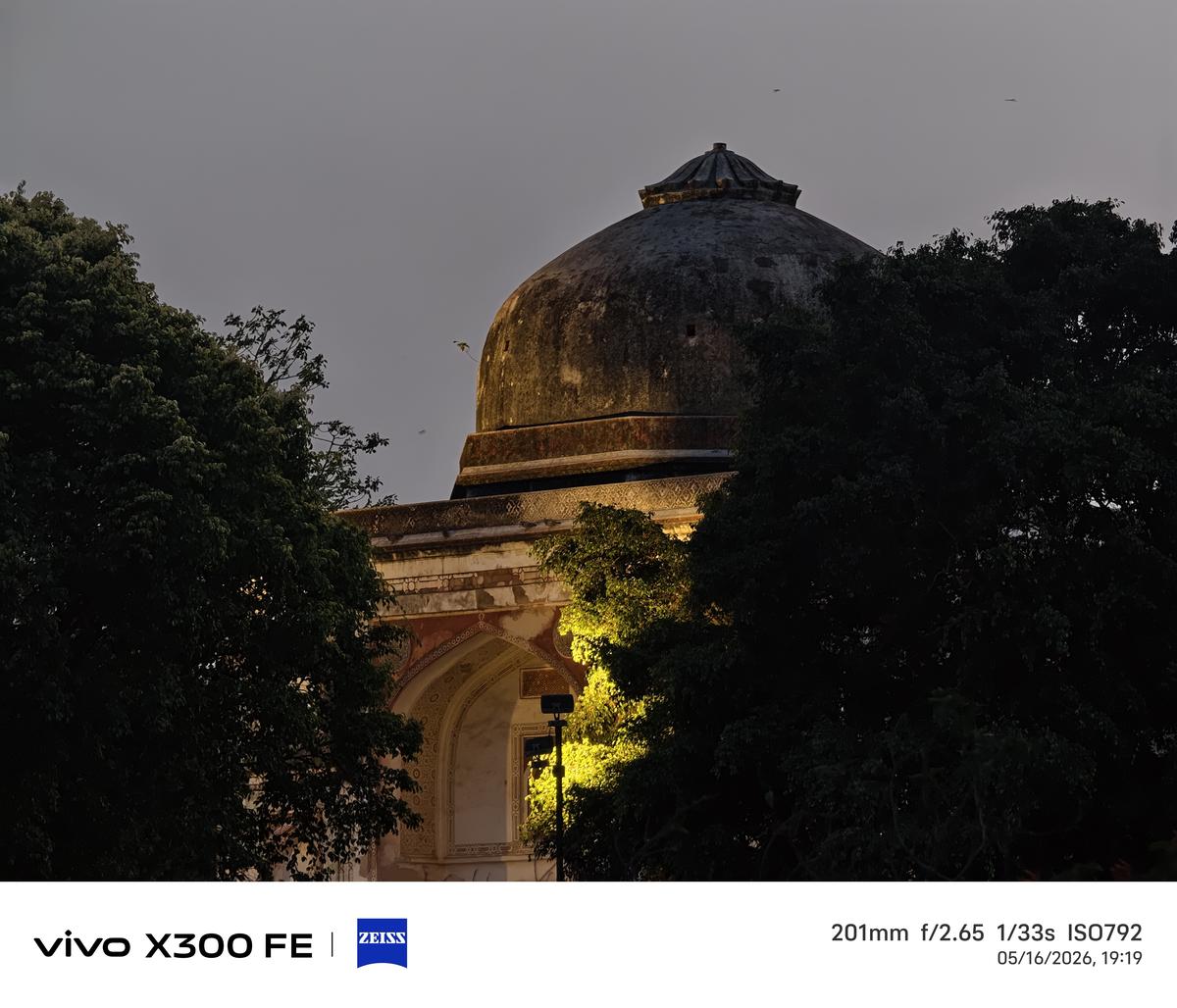
The telephoto extender profoundly alters the camera’s utility, enhancing the device’s optical reach significantly. This setup adds an additional 2.35x optical zoom on top of the native telephoto sensor, effectively pushing the focal length to nearly 200mm. During testing, the ability to clearly capture an Indigo aircraft in mid-flight from a considerable distance was a remarkable feat. Typically, distant subjects at such ranges begin to lose structural integrity and clarity, appearing as blurred patches of pixels. However, with the X300 FE and its extender, the aircraft retained its shape, and intricate details remained surprisingly visible, without succumbing to excessive AI-generated interpolation. Capturing moving subjects from afar also yielded surprisingly good results, with objects like birds, distant buildings, and even people in motion maintaining respectable sharpness and detail.
What truly impressed was not just the increased zoom numbers, but the retention of image quality throughout the extended range. Photos taken within the optical zoom range exhibited strong details and vibrant, lifelike colors. Textures on buildings, intricate patterns, and distant objects remained discernible. The fast shutter handling of the camera system also played a crucial role, ensuring that shots rarely ended up blurry, even when capturing dynamic scenes.
However, there are practical limits. Once the focal length is pushed aggressively beyond approximately 300mm, image quality begins to show signs of degradation. At around 600mm, AI processing visibly steps in, attempting to recover details. While the images remain usable for general purposes, a keen eye can discern smoothing and software intervention working hard to enhance clarity. Nevertheless, for the vast majority of users employing the device for photography, travel, and capturing distant subjects, the extender absolutely delivers a level of versatility and quality rarely seen in a smartphone.
Versatile Photography Across Scenarios
Beyond the extender, the X300 FE’s core camera performance is equally commendable. Daylight photography is genuinely impressive, producing images with a premium flagship character. Details are abundant, and dynamic range remains robust, handling challenging contrasts with ease. The camera’s approach to shadows is particularly noteworthy; it avoids aggressively brightening everything, instead preserving enough contrast and depth to lend realism to the scene. While colors do lean slightly towards Vivo’s signature punchier style, they generally stay relatively close to natural tones, striking a fine balance between vibrancy and accuracy. Unlike some competitors that oversharpen photos for social media appeal, the FE finds a safer, more refined middle ground.
The ultrawide camera also performs better than anticipated. Edge distortion, a common issue with wide-angle lenses, remains well-controlled, and color consistency with the primary sensor is largely maintained. This consistency is vital, as many phones struggle to achieve uniform color science across different lenses. Vivo manages this transition quite effectively, ensuring a cohesive photographic output.
Portrait photography is an area where Vivo consistently shines, and the X300 FE is no exception. Portraits captured using the telephoto sensor are excellent, featuring clean edge detection that accurately separates the subject from the background. Facial details, including individual hair strands, skin texture, and subtle nuances, are beautifully preserved. The bokeh effect appears natural and aesthetically pleasing, avoiding the artificial "cut-out" look sometimes seen in computational portraits. Crucially, skin tones look realistic rather than aggressively beautified, resulting in polished and authentic-looking portraits.
Night photography also deserves significant praise. The phone handles low-light scenes with remarkable confidence. Lens flare is well-controlled, and noise reduction works effectively without excessively softening details. Streetlights, reflections, and darker areas retain a good balance, ensuring scenes stay true to what the eye perceives, rather than becoming unrealistically bright. While AI enhancement is present, the processing does not destroy image texture, maintaining a natural feel.
Selfies from the 50 MP front camera are detailed and vibrant, with balanced exposure handling that avoids excessive sharpening. Skin tones appear pleasant, and facial details remain intact, making for high-quality self-portraits and video calls. Video recording is flexible,
