

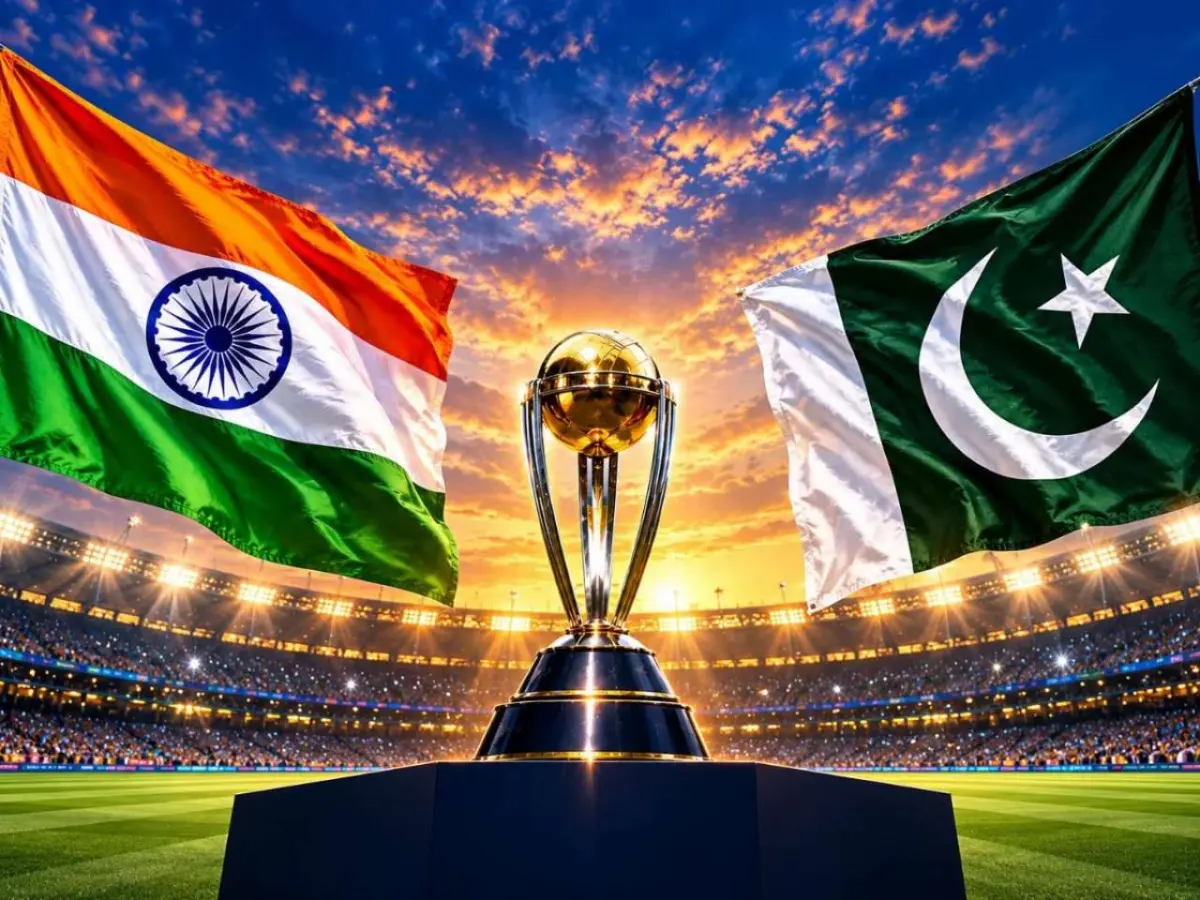
Johannesburg, South Africa – October 1, 2026 – The cricketing world is buzzing with anticipation following the International Cricket Council’s (ICC) official release of the 2027 ODI World Cup schedule. Among a myriad of captivating fixtures, one stands out with unparalleled intensity: India is slated to face arch-rivals Pakistan on October 10 in Johannesburg, promising an electrifying encounter that transcends the boundaries of sport. This highly anticipated clash is set to be a cornerstone of a tournament that kicks off on October 2, bringing the global showpiece back to African soil after a 24-year hiatus.
The Men in Blue, two-time champions and runners-up in the 2023 edition, will launch their campaign against formidable opponents Australia on October 7 in Cape Town. This opening fixture is a poignant rematch of the 2023 final, offering India an immediate opportunity to settle scores against the six-time champions. The tournament, co-hosted by South Africa, Namibia, and Zimbabwe, is poised to be a grand spectacle, featuring 14 teams battling it out across 57 matches over 12 venues.
Main Facts: A Glimpse into the 2027 World Cup Marquee Events
The ICC’s announcement on Thursday, October 1, 2026, laid out the roadmap for what promises to be an unforgettable tournament. Here are the core facts that have captivated cricket enthusiasts globally:
- Tournament Dates: The 2027 ODI World Cup is scheduled to commence on October 2, 2027, and will run through to a yet-to-be-announced final date, typically spanning several weeks.
- Host Nations: The prestigious event will be jointly hosted by three African nations: South Africa, Namibia, and Zimbabwe. This marks a significant return for the tournament to the continent, last hosted by South Africa and Zimbabwe in 2003.
- India’s Opening Fixture: India will begin their quest for a third World Cup title against defending champions Australia on October 7 in Cape Town. This high-stakes encounter will immediately test India’s mettle.
- The Marquee Match-up: The most awaited fixture, India vs. Pakistan, is scheduled for October 10 in Johannesburg. This group stage clash is historically significant, given India’s unbeaten record against Pakistan in ODI World Cup encounters.
- Tournament Scale: A total of 14 teams will participate, competing in 57 matches spread across 12 venues. Eight venues will be in South Africa, three in Zimbabwe, and one in Namibia, marking Namibia’s debut as a senior men’s World Cup host.
- Group Stage Configuration: India and Pakistan find themselves in Group A, alongside defending champions Australia, Afghanistan, Zimbabwe, and one qualifying team. Group B comprises Bangladesh, England, Sri Lanka, South Africa, New Zealand, and the other qualifier.
- Automatic Qualification: As hosts, South Africa automatically qualify. Other direct entries are determined by the ICC ODI rankings, which currently include India, New Zealand, Pakistan, Australia, England, Sri Lanka, Afghanistan, and Bangladesh. Notably, co-host Namibia must navigate the qualification rounds.
This comprehensive schedule sets the stage for a tournament rich in rivalries, historical narratives, and the potential for new cricketing legends to emerge. The return to Africa adds another layer of excitement, promising vibrant atmospheres and unique cultural experiences for players and fans alike.
)
Chronology: The Journey from Schedule Release to Tournament Kick-off
The release of the 2027 ODI World Cup schedule on October 1, 2026, by the ICC, marks a pivotal moment in the lead-up to the quadrennial event. This announcement is the culmination of extensive planning, logistical coordination, and strategic decisions aimed at delivering a world-class cricketing spectacle.
The tournament proper will officially begin on October 2, 2027, a day before Gandhi Jayanti, symbolically launching a month-long celebration of cricket. The initial matches will immediately set the tone, with teams vying for crucial early points in their respective groups. India’s campaign will commence on October 7 against Australia in Cape Town, a fixture laden with history and recent memories of the 2023 final. This match is strategically placed early in the schedule to maximize viewership and generate immediate buzz.

Just three days later, on October 10, the cricketing world will hold its breath as India and Pakistan lock horns in Johannesburg. This match is always a global event, transcending cricket, and its early placement ensures maximum impact during the group stage. The decision to host this high-voltage game at a major venue like Wanderers in Johannesburg underscores its significance.
Throughout October and potentially into November, the 57 matches will unfold across the three host nations. The group stage will see teams battling for supremacy within their groups, with the top teams advancing to the knockout rounds. While the precise dates for the semi-finals and final are yet to be detailed, a typical World Cup structure suggests these critical stages will occur in late October or early November, culminating in the crowning of a new, or repeat, champion.
)
The choice of October as the start month is strategic, aligning with favorable weather conditions in Southern Africa, ensuring optimal playing conditions for a tournament of this magnitude. The staggered commencement, starting on October 2, allows for a gradual build-up of excitement, leading into the major clashes and providing ample time for teams to acclimatize. The entire chronological rollout, from the schedule announcement to the final delivery, is a testament to the intricate planning required for such a global event.
Supporting Data: Unpacking the Numbers, History, and Qualification Pathways
The 2027 ODI World Cup is a tournament defined by its scale, historical context, and the intricate pathways teams must navigate to reach the pinnacle of cricketing success.
)
The Tournament Structure and Teams
This edition of the World Cup will feature an expanded format with 14 teams, an increase from the 10 teams that participated in the 2019 and 2023 editions. This expansion is part of the ICC’s broader vision to grow the game globally, offering more nations the opportunity to compete on the biggest stage. The 57 matches will be played across two distinct groups, followed by a knockout stage.
Group A:
)
- India
- Pakistan
- Australia (Defending Champions)
- Afghanistan
- Zimbabwe (Co-host)
- Qualifier 1
Group B:
- Bangladesh
- England
- Sri Lanka
- South Africa (Co-host)
- New Zealand
- Qualifier 2
This group configuration immediately throws up intriguing dynamics. Group A, featuring India, Pakistan, and Australia, could easily be dubbed the "Group of Death," guaranteeing intense competition and high-stakes matches from the outset. Zimbabwe, as a co-host, will have the home crowd advantage, potentially acting as a spoiler. Group B also promises fierce contests, with strong contenders like England, New Zealand, and South Africa vying for supremacy.
)
Host Nations and Venues
The selection of South Africa, Namibia, and Zimbabwe as co-hosts is significant. South Africa has a rich history of hosting major sporting events, including the 2003 Cricket World Cup and the 2010 FIFA World Cup. Their eight venues will include iconic stadiums like:
- Wanderers Stadium, Johannesburg: Known for its lively atmosphere and hosting the 2003 World Cup final, it will stage the India vs. Pakistan clash.
- Newlands, Cape Town: Picturesque and often providing assistance to swing bowlers, it will host India’s opener against Australia.
- Kingsmead, Durban: A coastal venue known for its vibrant crowds.
- Other probable venues include Centurion, Gqeberha (Port Elizabeth), Bloemfontein, and Paarl.
Zimbabwe will contribute three venues, likely including:
)
- Harare Sports Club, Harare: The country’s premier cricket ground.
- Queens Sports Club, Bulawayo: Another established venue with a history of international matches.
Perhaps the most historic aspect of the hosting arrangement is Namibia’s inclusion. They will host senior men’s World Cup matches for the first time at their primary cricketing facility, the Wanderers Cricket Ground in Windhoek. This is a monumental step for Namibian cricket, providing a platform to showcase their talent and inspire a new generation of players in a nation where cricket is growing.
The Qualification Conundrum: Namibia’s Unique Challenge
The qualification process for the 2027 World Cup is a blend of automatic berths and rigorous qualifiers. As hosts, South Africa automatically secure a spot. The highest-ranked non-host countries in the ICC ODI rankings also gain direct entry. Currently, this list includes India, New Zealand, Pakistan, Australia, England, Sri Lanka, Afghanistan, and Bangladesh, who are all expected to qualify directly based on their standings.
)
However, Namibia’s situation is unique. Despite being a co-host, they do not receive an automatic entry. This is due to the ICC’s qualification criteria, which typically grant automatic berths only to full member nations (South Africa and Zimbabwe are full members, Namibia is an associate member) or to a certain number of top-ranked teams. This means Namibia must go through the qualification rounds, presenting an unprecedented scenario where a host nation could potentially miss out on playing in a World Cup on home soil. This adds a layer of drama and immense pressure on the Namibian national team.
The qualification rounds themselves are a complex ladder:
)
- A total of 10 teams will compete in the World Cup Qualifiers. These teams typically include the likes of West Indies and Ireland (who might miss direct qualification based on rankings), four teams from the Cricket World Cup League 2, and four teams from the Qualifier Play-off.
- From these 10 teams, only the top four will secure the remaining spots in the main event, filling the "Qualifier 1" and "Qualifier 2" slots in the groups. This intricate process ensures that only the most deserving teams make it to the grand stage, making the qualifiers a fiercely contested mini-tournament in themselves.
India’s World Cup Legacy and Historical Rivalries
India enters the 2027 World Cup as a cricketing powerhouse, currently sitting atop the ICC ODI rankings. Their history in the tournament is rich with triumph and heartbreak:
- 1983 Champions: Led by Kapil Dev, India famously defied all odds to win their first World Cup title in England, a victory that transformed the cricketing landscape in the nation.
- 2011 Champions: Under MS Dhoni’s captaincy, India clinched their second title on home soil, a moment etched forever in the memories of millions, particularly the iconic winning six by Dhoni.
- 2023 Runners-up: Hosting the tournament, India had a dominant run but fell short in the final against Australia in Ahmedabad, despite Virat Kohli’s record-breaking 765 runs, earning him Player of the Series.
Australia, with a staggering six ODI World Cup titles, remains the benchmark for consistency and success in the format. Their rivalry with India is one of the most compelling in cricket, and the opening match in Cape Town will be a fresh chapter in this storied contest.
)
The India-Pakistan rivalry, however, stands unparalleled. In the history of ODI World Cups, India has maintained an impeccable record against Pakistan, never having lost a match. This statistic adds immense pressure on both sides: India seeks to maintain its dominance, while Pakistan desperately aims to break the jinx. The October 10 clash in Johannesburg will not just be a cricket match; it will be a cultural phenomenon, a battle of nerves, and a testament to the enduring power of this sporting rivalry.
Other past champions include the West Indies (two titles, predominantly in the early years), Sri Lanka, Pakistan, and England (one title each), all of whom will be looking to add to their tally. The 2027 tournament, therefore, is not just about the present; it’s deeply rooted in the rich tapestry of World Cup history.
)
Official Responses: ICC’s Vision and Host Nations’ Aspirations
While specific direct quotes from officials regarding the 2027 schedule release are yet to fully emerge beyond the ICC’s official social media pronouncements, the broader sentiment and objectives behind such a tournament are well-established.
The International Cricket Council (ICC) views the World Cup as its flagship event, a crucial vehicle for the global growth and development of cricket. The expansion to 14 teams and the inclusion of Namibia as a host nation align with the ICC’s strategic vision to make cricket a more inclusive and global sport. Officials are expected to emphasize the following:
)
- Global Reach and Growth: The ICC aims to leverage the tournament’s immense viewership to attract new fans and participants, particularly in non-traditional cricketing markets. The return to Africa, and especially the inclusion of Namibia, is a direct manifestation of this goal.
- Showcasing Talent: The World Cup provides a platform for cricketers from diverse backgrounds to showcase their skills on the biggest stage, inspiring future generations.
- Economic Impact: The ICC will highlight the significant economic benefits for the host nations through tourism, infrastructure development, and local job creation.
- Sporting Excellence: The tournament is designed to deliver high-quality, competitive cricket, ensuring that the best teams and players vie for the ultimate prize.
From the perspective of the host cricket boards – Cricket South Africa (CSA), Zimbabwe Cricket (ZC), and Cricket Namibia (CN) – the opportunity to co-host the World Cup is monumental.
- Cricket South Africa (CSA) will undoubtedly emphasize their capability to host large-scale events, showcasing their world-class infrastructure and experience. They will likely speak about the pride of bringing the World Cup back to their shores and the legacy it will leave for South African cricket.
- Zimbabwe Cricket (ZC) will see this as a vital opportunity to revitalize cricket in their nation, attracting investment, engaging local communities, and boosting the morale of their national team and fanbase. The 2003 co-hosting experience will provide valuable lessons.
- Cricket Namibia (CN) will articulate their immense pride and excitement at hosting senior men’s World Cup matches for the first time. Their statements will likely focus on the transformative impact this will have on cricket development within Namibia, inspiring young cricketers and raising the sport’s profile exponentially, despite the unique challenge of having to qualify for their home tournament.
Collectively, the official narrative from the ICC and host boards will revolve around delivering an unforgettable tournament that celebrates the spirit of cricket, fosters global participation, and leaves a lasting positive legacy for the sport in Africa and beyond.
)
Implications: Beyond the Boundary Ropes
The 2027 ODI World Cup carries profound implications that extend far beyond the immediate thrill of competition, impacting cricketing development, global economics, and international relations.
Cricketing Development and Legacy
The tournament’s return to Africa after 24 years, particularly with the inclusion of Namibia as a co-host, holds immense significance for the growth of cricket on the continent. For Namibia, hosting World Cup matches is a game-changer. It provides a unique opportunity to:
)
- Inspire a new generation: Exposure to world-class cricket on home soil can ignite passion among young Namibians, potentially leading to a surge in participation at grassroots levels.
- Infrastructure development: Hosting requirements often lead to upgrades in sporting facilities, benefiting local cricket for years to come.
- Global recognition: It places Namibia firmly on the global cricketing map, attracting investment and fostering international collaborations.
Similarly, for South Africa and Zimbabwe, the tournament is a chance to rekindle enthusiasm for the sport, identify new talent, and reinforce their positions as cricketing nations. The performance of the host teams, especially Zimbabwe and potentially Namibia (if they qualify), will be closely watched for signs of cricketing resurgence in the region.
Economic Impact and Tourism
Major sporting events like the Cricket World Cup are significant economic drivers. The 2027 edition across three nations is expected to generate substantial revenue through:
)
- Tourism: Thousands of fans, particularly from India, Pakistan, Australia, and England, will travel to Southern Africa, boosting the hospitality, travel, and retail sectors. This influx of tourists will provide a much-needed economic stimulus for local businesses.
- Job Creation: Temporary and permanent jobs will be created in event management, security, transportation, catering, and media.
- Infrastructure Investment: While some infrastructure is already in place, there might be further investments in transportation links, accommodation, and stadium upgrades.
- Sponsorship and Broadcasting Rights: The tournament attracts major global sponsors and generates billions in broadcasting revenue, a portion of which will benefit the host nations and the ICC.
Fan Engagement and Global Viewership
The schedule, particularly the India vs. Pakistan clash, guarantees unprecedented fan engagement. This fixture alone consistently breaks viewership records, drawing an audience of hundreds of millions, if not billions, globally. The tournament as a whole will be a major media event, driving subscriptions, social media trends, and global conversations.
- Digital Engagement: The ICC and host boards will leverage digital platforms to engage fans, offering immersive experiences, behind-the-scenes content, and interactive features.
- Stadium Experience: The vibrant atmospheres of African stadiums, combined with the passion of visiting fans, promise an unparalleled match-day experience.
Logistical Challenges and Sustainability
Co-hosting across three nations, with distinct logistical challenges, presents a complex undertaking:
)
- Travel and Logistics: Managing the movement of 14 teams, support staff, officials, and media across 12 venues in three countries requires meticulous planning for flights, accommodation, and local transport.
- Security: Ensuring the safety and security of all participants and spectators across multiple venues is paramount.
- Broadcasting and Technology: Setting up high-quality broadcasting infrastructure across diverse locations, including Namibia for the first time, will be a significant technological feat.
- Sustainability: There will be increasing pressure to host a "green" World Cup, addressing environmental concerns related to travel footprint, waste management, and energy consumption.
Geopolitical and Social Dimensions
The India-Pakistan match, in particular, transcends sport, often carrying geopolitical undertones. While the focus remains on the cricket, the match provides a rare platform for interaction and shared passion between fans of both nations. More broadly, the World Cup can act as a unifying force, bringing people from diverse backgrounds together through a shared love for the game. It can also showcase the rich cultural diversity and hospitality of the host nations to a global audience.
In conclusion, the 2027 ODI World Cup is not merely a series of cricket matches. It is a monumental event with far-reaching implications, promising to be a celebration of cricketing excellence, a catalyst for economic growth, and a powerful symbol of global unity and sporting aspiration. The countdown has truly begun for what promises to be an unforgettable chapter in the annals of cricket history.
