

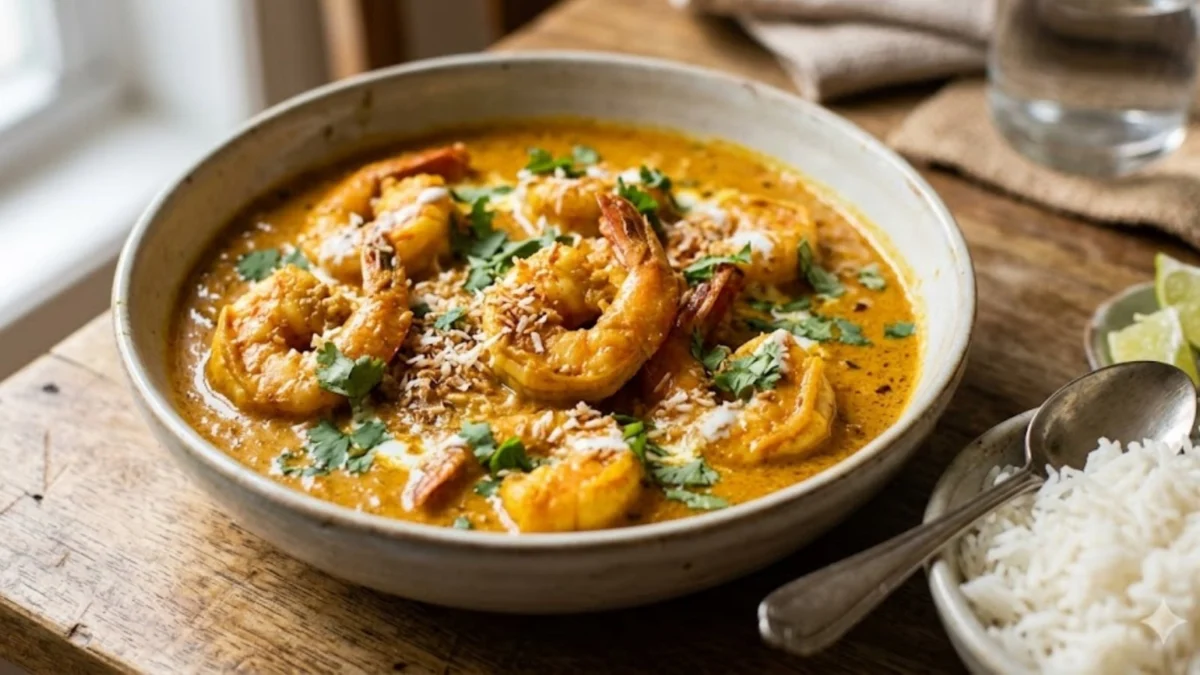
The global gastronomic stage has once again turned its spotlight toward the Indian subcontinent, specifically the verdant delta of Bengal. In its latest definitive guide to the "Best Shrimp Dishes in the World," the acclaimed food atlas TasteAtlas has ranked Chingri Malai Curry at number 11. This recognition is not merely a win for regional Indian cuisine but a testament to a dish that serves as a liquid history of trade, migration, and culinary evolution.
Prepared with succulent prawns—typically the prized Golda Chingri (giant freshwater prawn)—simmered in a velvety gravy of coconut milk and tempered with a delicate balance of garam masala, turmeric, and green chilies, the dish is a cornerstone of Bengali celebratory feasts. However, behind its creamy texture lies a centuries-old debate that bridges the Bay of Bengal: Is this dish a local innovation named after "malai" (cream), or is it a relic of the ancient maritime "Malay" connection?
Main Facts: A Global Accolade for a Bengali Icon
The TasteAtlas ranking places Chingri Malai Curry in the upper echelons of global seafood, outperforming hundreds of international contenders. While the top spots were occupied by various preparations from across the globe, the inclusion of three Indian dishes in the top 70—Chingri Malai Curry (#11), Prawn Koliwada (#57), and Achari Jhinga (#67)—highlights the diversity of India’s coastal and riverine culinary traditions.
What Defines an Authentic Chingri Malai Curry?
The essence of the dish lies in its sophisticated simplicity. Unlike the robust, onion-heavy gravies of Northern India, a traditional Malai Curry relies on the natural sweetness of coconut milk and the richness of the prawn’s head juices. Key characteristics include:
- The Prawns: Ideally, Golda Chingri (Macrobrachium rosenbergii) is used. The "head" is often left intact, as the orange fat (hepatopancreas) melts into the gravy, providing a deep umami flavor.
- The Fat: Mustard oil is the traditional medium, offering a pungent counterpoint to the sweet coconut.
- The Spice Profile: It is famously "not too spicy." The heat comes from slit green chilies rather than heavy red chili powder, allowing the aromatic spices like cardamom and cinnamon to shine.
Chronology: From Ancient Trade Routes to 19th-Century Cookbooks
To understand the origins of Chingri Malai Curry, one must look at the map of the Indian Ocean. The history of this dish is intertwined with the movement of people and ingredients across the "Monsoon Seas."
The Southeast Asian Connection (15th – 18th Century)
For centuries, the Bay of Bengal was a bustling highway for trade. Merchants from the Malay Peninsula (modern-day Malaysia and Singapore) frequently visited the ports of Bengal, bringing with them spices and, crucially, their methods of using coconut milk in savory dishes. While coconuts were indigenous to Bengal, the specific technique of poaching seafood in thick coconut milk bears a striking resemblance to the "Masak Lemak" style of cooking found in the Malay world.
The Colonial Influence and the Rise of "Malai" (19th Century)
By the 1800s, the dish had become firmly entrenched in the Bengali "Bonedi Bari" (aristocratic household) kitchens. It was during this era that the linguistic shift likely occurred. In North India and among the British colonists, the word "Malai" was synonymous with dairy cream. As the dish gained popularity in the colonial capital of Calcutta (Kolkata), it is theorized that the name "Malay Curry" (referring to its geographic origin) morphed into "Malai Curry" to satisfy the local understanding of its creamy texture.
The Literary Milestone (1904)
A pivotal moment in the dish’s recorded history is its appearance in Bipradas Mukhopadhyay’s seminal cookbook, Pakpranali, published in the early 20th century. Mukhopadhyay, a legendary figure in Bengali culinary literature, refers to the dish as "Malai," not "Malay." This suggests that by the turn of the century, the dish had been fully assimilated into the Bengali identity, shedding its "foreign" labels in favor of a name that described its physical properties.
Supporting Data: Culinary Comparisons and Ingredients
The debate over the dish’s name—Malai vs. Malay—can be analyzed through the lens of comparative gastronomy. When we place Chingri Malai Curry alongside its Southeast Asian cousins, the data suggests both a shared DNA and a distinct divergence.
| Feature | Chingri Malai Curry (Bengal) | Udang Masak Lemak (Malaysia/Singapore) |
|---|---|---|
| Primary Fat | Mustard Oil / Ghee | Coconut Oil / Palm Oil |
| Aromatics | Ginger, Cardamom, Cinnamon | Lemongrass, Galangal, Turmeric Leaf |
| Pungency | Green Chilies | Bird’s Eye Chilies / Belacan (Shrimp Paste) |
| Creaminess | Coconut Milk (Traditional) | Coconut Milk |
| Acid | Usually none (or a hint of yogurt) | Tamarind or Asam Gelugur |
The Ingredient Paradox
Skeptics of the "Malay" theory point out that if the dish were truly a direct import, it would likely contain lemongrass or galangal, which are ubiquitous in Malaysian coconut curries. The absence of these ingredients in any historical Bengali recipe suggests that while the concept of the dish may have arrived via trade routes, the execution was strictly local, utilizing the "Panch Phoron" (five-spice) or "Garam Masala" templates of the region.
Official Responses: Insights from Culinary Experts
Chef and celebrated food author Sadaf Hussain provides a nuanced perspective on this culinary mystery. Speaking on the dish’s identity, Hussain emphasizes that food is rarely a "zero-sum game" of origins.
"Chingri Malai Curry is a classic. Yes, it may carry some similarities with the Malay or Malaysian culinary world, but if you look at it as a separate dish with its own identity, the picture becomes much more nuanced," Hussain explains. He acknowledges the historical relationship between Bengal and Southeast Asia, noting that trade routes and colonial encounters created a "culinary bridge."
Hussain further clarifies the confusion surrounding the word "Malai." He notes that while modern restaurant versions often add dairy cream to achieve a thicker consistency, this is a departure from tradition. "Traditionally, the creaminess comes from coconut milk. Coconut milk naturally provides that rich, creamy texture, and historically, that is what was used."
The expert also points to the linguistic evidence found in historical texts. By citing Pakpranali, Hussain reinforces the idea that the dish was understood as a local Bengali preparation by the 1900s. The distinction in the spelling—’Malai’ rather than ‘Malay’—serves as a crucial piece of evidence in the argument for the dish’s localized evolution.
Implications: Cultural Identity and the Future of Regional Cuisine
The recognition of Chingri Malai Curry by TasteAtlas carries several significant implications for the future of Indian regional food on the global stage.
1. The Validation of Regional Specificity
For decades, "Indian Food" in the West was synonymous with North Indian staples like Tikka Masala or Naan. The rise of Chingri Malai Curry signifies a shift toward recognizing the specific coastal and riverine identities of the subcontinent. It highlights that Bengal has a sophisticated culinary language that is distinct from the "curry house" stereotypes.
2. The Preservation of Heritage Techniques
As the dish gains international fame, there is a renewed interest in traditional methods. Modern chefs are increasingly moving away from the "restaurant shortcut" of adding heavy dairy cream and returning to the labor-intensive process of extracting fresh coconut milk. This preservation of technique is vital for maintaining the dish’s integrity.
3. Food as "Soft Power"
The debate over the Malay connection serves as a reminder of India’s historical role as a global trade hub. Chingri Malai Curry is a form of "edible history," showcasing how Bengal absorbed global influences and refined them into something uniquely its own. In an era of increasing globalization, such dishes serve as important markers of cultural hybridity and resilience.
Recommendations for the Authentic Experience
For those seeking to experience the dish as it was meant to be, Hussain and other experts suggest looking for establishments that prioritize the quality of the seafood. In Delhi, renowned spots like City of Joy (Alaknanda) and Oh! Calcutta are often cited for their commitment to authentic flavor profiles. In Kolkata, the dish remains a staple at heritage restaurants like 6 Ballygunge Place and Mocambo, where the history of the city is served on a plate.
In conclusion, whether the name "Malai" refers to the lush coconut cream or the distant shores of Malaysia, the dish itself remains an undisputed masterpiece. Its ranking as the 11th best shrimp dish in the world is a well-deserved tribute to the Bengali kitchen’s ability to turn simple ingredients—prawns and coconuts—into a symphony of flavor that resonates across borders.
