

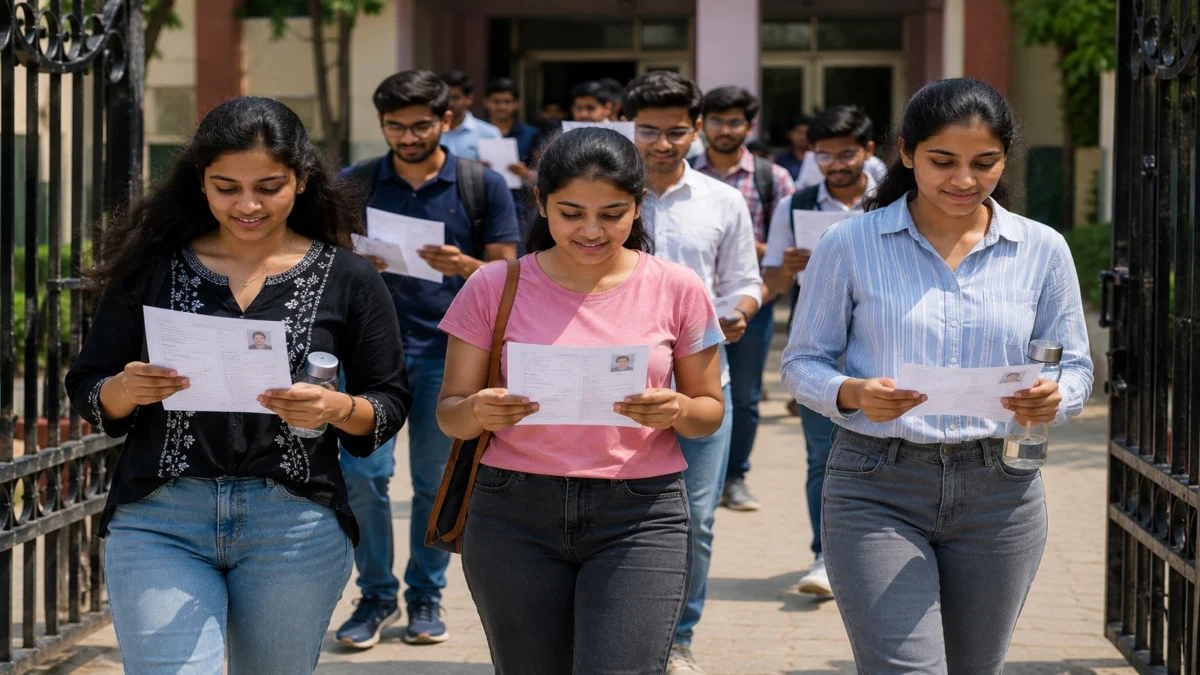
New Delhi, June 13, 2026 – In a stern declaration aimed at quelling widespread anxiety and restoring faith in the medical entrance examination system, India’s top administrative official, Cabinet Secretary T.V. Somanathan, has pledged the government’s unwavering commitment to ensuring the absolute integrity of the upcoming NEET-UG retest. Scheduled for June 21, the examination for approximately 22 lakh students is being re-conducted following significant allegations of paper leaks and irregularities that have rocked the nation. Somanathan’s forceful assertion underscores a comprehensive, multi-agency approach to prevent any attempt to "distort, disrupt, or tamper" with the examination process.
The gravity of the situation, marked by national outrage and a robust investigation by the Central Bureau of Investigation (CBI), has prompted an unprecedented level of governmental oversight. Cabinet Secretary Somanathan’s proactive engagement, including high-level review meetings with the National Testing Agency (NTA) and state administrations, signals a resolute determination to conduct a fair and transparent retest, thereby safeguarding the aspirations of lakhs of young medical aspirants.
The Unfolding Crisis: A Chronology of Disruption
The NEET-UG 2026 examination, a gateway to medical colleges across India, was marred by allegations of widespread irregularities shortly after its conduct. The initial examination, held on May 5, 2026, saw over 23 lakh students vying for a limited number of seats. However, within weeks, reports of suspected paper leaks began to surface, primarily from states like Rajasthan and Bihar, casting a dark shadow over the fairness of the entire process.
Early Whispers and Growing Concerns: Initial reports of discrepancies were often dismissed as isolated incidents. However, as more students and parents came forward with their accounts, a pattern of alleged malpractice began to emerge. Social media platforms became a hub for circulating suspected leaked papers and alleged irregularities, adding to the growing public unease.
The Rajasthan Connection: Investigations, particularly those initiated by the CBI, began to focus on certain coaching centers in Rajasthan, a known hub for competitive exam preparation. Allegations pointed towards a sophisticated syndicate involved in leaking question papers and providing ‘guess papers’ to students, often through encrypted WhatsApp groups. The Nashik-based medical student, Shubham Kharinar, whose complaint served as a catalyst for the re-examination in certain centers, highlighted the extent of the organized nature of these leak operations.
Bihar’s Crucial Role: The Bihar Police, in their preliminary investigations, uncovered evidence suggesting a larger, multi-state scam. Their findings indicated the involvement of individuals who allegedly facilitated the leak and distribution of the NEET-UG question paper, leading to the arrest of several suspects. This development significantly amplified the scale of the problem, moving it from isolated incidents to a potentially organized criminal enterprise.
The Supreme Court’s Intervention: The escalating crisis and the mounting public pressure compelled the Supreme Court of India to intervene. The apex court took suo motu cognizance of the alleged irregularities and ordered a thorough investigation by the CBI. The court also acknowledged the concerns raised by students regarding grace marks awarded to some candidates, further complicating the situation.
The Decision for Retest: Following extensive deliberations and in response to the Supreme Court’s directives and the findings of the ongoing investigations, the Ministry of Education, in consultation with the NTA, announced the decision to re-conduct the NEET-UG examination for the affected students. While initially considering a retest for all candidates, the ministry ultimately decided to conduct a re-examination only for those students who were allegedly impacted by the irregularities or faced issues related to the examination process, such as the unusual grace marks awarded. This decision, however, was later broadened to include a retest for a larger group of students as the scale of the alleged leak became more apparent. The final decision to re-conduct the examination for a substantial number of candidates was a significant step towards addressing the systemic failures.
A "Whole-of-Government" Approach: Fortifying the Retest
The government’s response to the NEET-UG crisis has been characterized by a commitment to a "whole-of-government" approach, ensuring that every possible measure is taken to secure the upcoming retest. Cabinet Secretary T.V. Somanathan’s proactive involvement underscores the highest levels of government concern and the determination to rectify past mistakes.
Cabinet Secretary’s Directives: Somanathan’s meeting with NTA Director General Abhishek Singh was a clear signal of the government’s intent. The focus was unequivocally on the "secure and smooth conduct" of the retest. This involves not just the physical security of examination centers and question papers but also the robust implementation of technological safeguards to prevent any form of digital tampering or malfeasance.
Inter-Agency Collaboration: The Cabinet Secretary’s engagement with Union Secretaries and Chief Secretaries of various states highlights a crucial element of the strategy: seamless collaboration between central and state authorities. This ensures that law enforcement agencies, intelligence bureaus, and administrative officials at the district level are all aligned and actively participating in maintaining the integrity of the examination. This multi-pronged strategy aims to create a strong deterrent against any potential attempts to disrupt the retest.
Enhanced Security Measures: While specific details of the security protocols remain confidential, it is understood that the retest will involve significantly enhanced measures. These are likely to include:
- Increased Surveillance: Deployment of additional security personnel at all examination centers, with a focus on stringent frisking procedures and real-time monitoring.
- Technological Safeguards: Utilization of advanced technologies to prevent any unauthorized access to question papers, including encrypted distribution channels and secure server infrastructure.
- Intelligence Gathering: Proactive intelligence gathering to identify and neutralize any potential threats or organized attempts to compromise the examination.
- Strict Adherence to Protocols: Reinforcement of all existing examination protocols with zero tolerance for any deviations or shortcuts.
The Role of the CBI: The Central Bureau of Investigation (CBI) continues to be at the forefront of the investigation into the alleged NEET-UG paper leak. The agency’s ongoing probe is crucial for identifying the perpetrators, dismantling the syndicate responsible for the leaks, and bringing them to justice. The findings of the CBI investigation will undoubtedly inform and strengthen the security measures for the retest.
Supporting Data and Emerging Patterns
The NEET-UG 2026 controversy has brought to light several concerning trends and statistics related to examination malpractice in India. While specific data on the extent of the NEET leak is still emerging from the ongoing investigations, broader trends provide context.
- Scale of Aspirants: The NEET-UG examination is one of the largest competitive entrance exams in India, with over 22 lakh students expected to appear for the retest. This sheer volume makes it a challenging undertaking to manage and secure.
- Growth of Coaching Industry: India’s burgeoning coaching industry, while providing valuable academic support to students, has also become a fertile ground for alleged malpractices. Reports suggest that some elements within this ecosystem may be involved in facilitating paper leaks and other forms of cheating.
- Technological Facilitation: The increasing reliance on digital platforms, particularly encrypted messaging applications like WhatsApp, has provided new avenues for the dissemination of leaked examination materials. The ease with which information can be shared anonymously makes it difficult to trace the origin of leaks.
- Multi-State Syndicates: Investigations have increasingly pointed towards the existence of organized, multi-state syndicates that operate across different examination boards and competitive tests. These groups possess the resources and networks to orchestrate large-scale leak operations.
- Financial Stakes: The high stakes involved in securing admission to prestigious medical colleges, coupled with the significant financial gains that can be made from leaking examination papers, create a powerful incentive for criminal elements. The prices allegedly charged for leaked papers can run into lakhs of rupees, highlighting the lucrative nature of this illegal trade.
Official Responses: A Unified Front
The government’s response to the NEET-UG 2026 crisis has been characterized by a series of strong statements and proactive measures, aimed at reassuring the public and demonstrating a commitment to rectifying the situation.
Cabinet Secretary T.V. Somanathan: As the highest-ranking civil servant, Somanathan’s declaration serves as a potent symbol of the government’s resolve. His statement, "THE FULL might and weight of the law will fall on any person trying in any manner to distort, disrupt or tamper with the integrity or smooth conduct of the NEET-UG retest," leaves no room for ambiguity. This is not merely a promise; it is a clear warning to those who would seek to undermine the examination system.
National Testing Agency (NTA): The NTA, as the primary conducting body, has been under immense scrutiny. Director General Abhishek Singh has been actively involved in the review meetings with the Cabinet Secretary, signaling the agency’s commitment to implementing the directives for a secure retest. The NTA is expected to work closely with state authorities and law enforcement agencies to ensure a smooth and transparent process.
Ministry of Education: The Ministry of Education has been at the forefront of decision-making regarding the retest. Its pronouncements have emphasized the government’s dedication to ensuring fairness and accountability. The ministry’s proactive engagement with the Supreme Court and its consistent communication with stakeholders have been crucial in managing the public perception of the crisis.
State Governments: The active participation of state governments, as highlighted by the Cabinet Secretary’s meetings with Chief Secretaries, is a testament to the federal approach being adopted. State police forces have been instrumental in initial investigations, and their continued cooperation in providing security and logistical support for the retest is vital.
Implications: Rebuilding Trust and Strengthening the System
The NEET-UG 2026 controversy and the subsequent retest carry profound implications for the future of competitive examinations in India.
Restoring Public Trust: The immediate and most critical implication is the need to restore public trust in the integrity of examination processes. The widespread allegations of leaks have eroded confidence among students, parents, and educators. A flawlessly conducted retest is essential for rebuilding this trust and assuring aspirants that their hard work and merit will be the sole determinants of their success.
Strengthening Examination Security: The incident serves as a stark reminder of the vulnerabilities within the existing examination system. It necessitates a comprehensive overhaul of security protocols, incorporating advanced technological solutions, robust intelligence gathering mechanisms, and stricter accountability frameworks for all stakeholders involved in the examination process.
Deterrence Against Malpractice: The government’s firm stance and the CBI’s thorough investigation are intended to serve as a strong deterrent against future attempts at examination malpractice. The message is clear: those who attempt to subvert the system will face severe consequences.
Focus on Meritocracy: Ultimately, the goal of any examination system is to identify and nurture talent based on merit. The NEET-UG 2026 retest, if conducted with utmost integrity, will reaffirm the principle of meritocracy, ensuring that only the most deserving candidates gain admission to medical colleges.
Broader Reforms: The NEET-UG crisis may also catalyze broader reforms in the management and conduct of all major competitive examinations in India. This could include a review of the NTA’s operational capacity, stricter regulations for coaching centers, and enhanced legal provisions to combat examination fraud.
As the nation awaits the NEET-UG retest on June 21, the commitment from the highest echelons of power to uphold the sanctity of the examination process offers a glimmer of hope. The success of this endeavor will not only determine the future of thousands of aspiring doctors but also set a crucial precedent for the integrity of educational assessments across India.
