

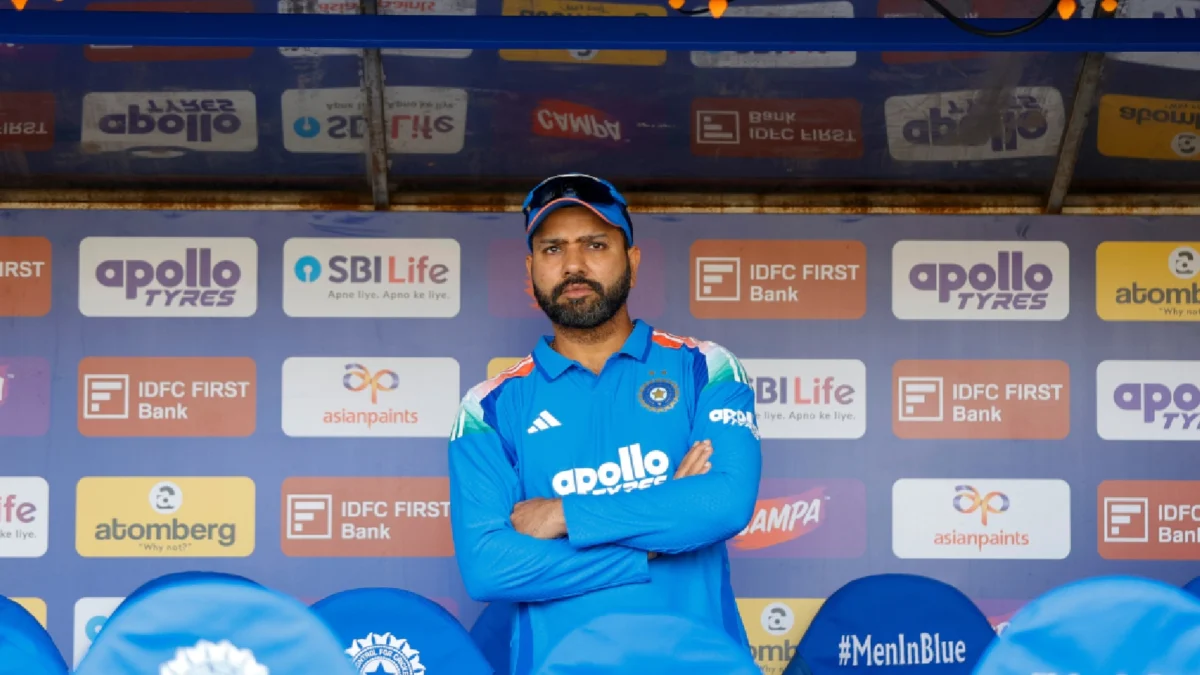
Dharamsala, India – June 13, 2026 – In a rain-affected curtain-raiser to India’s One-Day International series against Afghanistan, former India captain Rohit Sharma etched his name into the annals of Indian cricket history, becoming the oldest player to represent the nation in a 50-over match. At 39 years and 44 days, Sharma surpassed the long-standing record held by Mohinder Amarnath, who last played an ODI for India at 39 years and 36 days. The milestone, achieved amidst a backdrop of fluctuating form and a significant leadership transition under young captain Shubman Gill, has ignited fervent discussions about the veteran opener’s immediate future and his role in the team’s trajectory towards an upcoming World Cup.
The historic moment unfolded at the picturesque Himachal Pradesh Cricket Association (HPCA) Stadium in Dharamsala, where intermittent rain had severely curtailed the match to a 25-overs-a-side contest. India, led by Shubman Gill, won the toss and elected to bowl first, setting the stage for Sharma’s record-breaking appearance, even before he could take to the crease with the bat.
The Unfolding Narrative: Main Facts
Rohit Sharma’s latest achievement, while monumental in its historical significance, arrives at a pivotal juncture in his illustrious career. The "Hitman," renowned for his effortless six-hitting and ability to decimate bowling attacks, now finds himself navigating the challenging waters of elite-level cricket in his late thirties, a period where form, fitness, and the relentless rise of younger talent converge to scrutinize every performance.
His participation in the 1st ODI against Afghanistan on Saturday, June 13, 2026, officially cemented his status as the oldest Indian to feature in the format. This landmark moment saw him leapfrog the legendary Mohinder Amarnath, a stalwart of India’s 1983 World Cup-winning squad, whose record had stood for decades.
However, the narrative surrounding Sharma is not solely one of milestones. Recent performances have raised questions, providing ammunition for his critics and fuel for the ongoing debate about balancing experience with the imperative for high-octane, consistent output. In the preceding home series against New Zealand in January, Sharma managed a modest 61 runs across three innings, marked by what observers described as "three forced lofts, three soft dismissals," hinting at a batsman struggling to find his rhythm in unfamiliar territory. This modest return followed an Indian Premier League (IPL) season where he accumulated 283 runs in nine innings for Mumbai Indians, a tally that, while not disastrous, fell short of the explosive standards he has set for himself and the expectations placed upon an opener of his caliber.
The match itself, the first of the ODI series, saw significant delays due to persistent rain, pushing back the toss from the scheduled 1 PM local time. Ultimately, the contest was reduced to a truncated affair, with Gill, as the new full-time captain in white-ball cricket, opting to exploit the conditions by bowling first. This decision highlighted a strategic shift within the team, with Gill at the helm, looking to assert his leadership and continue the dominance displayed in the preceding one-off Test match, which India won emphatically by an innings and 300 runs in Mullanpur.
A Journey Through Time: Chronology of Rohit Sharma’s Career and the Record
Rohit Sharma’s journey to becoming the oldest Indian ODI player is a testament to his enduring talent, resilience, and adaptability in a sport that constantly evolves. His career, spanning nearly two decades, has been a rollercoaster of prodigious talent, unfulfilled potential, and ultimately, unparalleled success as an opener.
Early Promise and Breakthrough (2007-2012): Sharma made his ODI debut for India in June 2007 against Ireland, a young talent earmarked for greatness. Initially batting in the middle order, his early career was characterized by flashes of brilliance interspersed with frustrating inconsistency. Despite moments of genius, a consistent spot in the playing XI remained elusive.
The Transformative Shift (2013 onwards): The turning point came in 2013 when then-captain MS Dhoni, alongside team management, made the audacious decision to promote Sharma to open the innings in ODIs. This move proved to be a masterstroke. Sharma’s career trajectory soared dramatically. He transformed into one of the most destructive and consistent openers in world cricket, earning the moniker "Hitman" for his propensity to score big hundreds, including multiple double centuries. This period saw him amass records, including three ODI double hundreds – a feat unmatched by any other batsman. His boundary-hitting prowess became legendary, culminating in him becoming the world’s leading six-hitter in international cricket across formats.
Captaincy and World Cup Success (2017-2023): Sharma’s leadership qualities began to emerge, first with Mumbai Indians in the IPL, where he led them to multiple titles, and subsequently with the national team. He captained India in various series and eventually took over the full-time white-ball captaincy in late 2021, leading the team into the 2023 ODI World Cup on home soil. While India performed exceptionally well, reaching the final, the ultimate glory eluded them.
Post-World Cup Transition and Current Form (2024-2026): Following the 2023 World Cup, India embarked on a transitional phase. Sharma stepped down from white-ball captaincy, with Shubman Gill gradually taking over the reins. This period has seen Sharma focus on his batting, yet with an eye on the future, particularly the next World Cup cycle.
His recent form, as highlighted, has been a subject of intense discussion. The New Zealand series in January 2026, where he struggled to convert starts, and his IPL 2026 performances, while containing glimpses of his destructive best (21 sixes and 21 fours for Mumbai Indians), have kept the spotlight firmly on his consistency and strike rate against the rising tide of aggressive young openers.
The Mohinder Amarnath Comparison: Rohit’s surpassing of Mohinder Amarnath’s record carries a unique historical resonance. Amarnath, affectionately known as ‘Jimmy,’ was a crucial member of India’s 1983 World Cup-winning squad, famed for his gritty temperament and ability to perform under pressure. His last ODI appearance at 39 years and 36 days spoke volumes about his enduring fitness and value to the team during an era when professional cricketing careers rarely extended into the late thirties with such prominence. Sharma’s ability to maintain his place in the side at an even older age reflects the advancements in sports science, player management, and perhaps, a continued belief in his match-winning capabilities despite the recent dip in outright dominance.
The lead-up to the Dharamsala ODI against Afghanistan was also marked by logistical challenges. Persistent rain delayed the toss significantly, transforming a standard 50-over fixture into a truncated 25-over sprint. This reduction invariably alters team strategies, placing a premium on quick scoring and aggressive bowling from the outset. Shubman Gill’s decision to bowl first under these conditions was a calculated move, aiming to utilize any early moisture in the pitch and put pressure on the Afghan batting line-up, which is known for its explosive, yet sometimes fragile, nature.
Beyond the Numbers: Supporting Data and Context
A deeper dive into statistics and historical context illuminates the enormity of Rohit Sharma’s achievement and the pressures he currently faces.
Rohit Sharma’s ODI Legacy:
- Overall Career: With over 10,000 runs in ODIs, numerous centuries, and three double hundreds, Sharma stands as one of the format’s all-time greats. His strike rate, particularly in the middle overs and at the death, redefined opening batting in ODIs.
- Six-Hitting Prowess: His 21 sixes in the recent IPL season, coupled with his international tally, underscore his unparalleled ability to clear the ropes. This remains a significant weapon that few other batsmen possess with such consistency and power.
- Recent Form Breakdown: The 61 runs in three innings against New Zealand (average 20.33) and 283 runs in nine IPL innings (average 31.44, strike rate approximately 135-140) provide a snapshot of a player who, while capable of quick runs, might be experiencing a slight dip in converting starts into substantial scores or sustaining high-impact innings consistently. This is particularly concerning when compared to his peak years, where averages well over 50 and strike rates nearing 100 were commonplace.
The Age Factor in Cricket:
- Global Context: While Sharma is the oldest Indian, international cricket has seen players like Sanath Jayasuriya (Sri Lanka), Sachin Tendulkar (India), Chris Gayle (West Indies), and Imran Khan (Pakistan) play well into their late thirties and even early forties, demonstrating that age is not an absolute barrier, especially for players with exceptional skill sets. However, the demands of modern cricket – particularly the increased volume of international fixtures and franchise leagues – place immense physical and mental strain on athletes.
- Fitness Standards: Modern fitness regimes and sports science have extended careers, but the reflexes and explosive power required for top-level white-ball cricket can be the first to wane with age. Sharma’s continued presence is a testament to his dedication to fitness, but every movement, every shot, is now under magnified scrutiny.
The Rise of Young Aggression:
- The IPL, in particular, has become a "factory line of fearless young openers." Players like Prithvi Shaw, Yashasvi Jaiswal, Ruturaj Gaikwad, and even Shubman Gill himself, embody a new generation of batsmen who approach white-ball cricket with an aggressive, no-holds-barred mentality from ball one. This shift in philosophy exerts immense pressure on established players like Sharma to not only score runs but to do so at an accelerated pace, often necessitating risky shots early in their innings. The comfort zone of building an innings is shrinking, pushing the limits of aggression.
Afghanistan’s White-Ball Threat:
- The opposition, Afghanistan, is no longer a minnow in white-ball cricket. Bolstered by the return of their talismanic leg-spinner Rashid Khan, alongside other quality performers like Mohammad Nabi, Rahmanullah Gurbaz, and Fazalhaq Farooqi, they possess a potent blend of attacking batting and wily bowling. Their collective white-ball strength, particularly their spin attack, makes them a formidable challenge, capable of upsetting established teams.
- Head-to-Head Record: While India holds a dominant 3-0 lead in four ODIs against Afghanistan (with one match ending in a tie), these encounters have often been fiercely contested, demonstrating Afghanistan’s growing competitiveness. This series is far from a walkover for the home side.
The Voices from Within: Official Responses and Team Philosophy
While no direct official statements regarding Rohit Sharma’s record or his immediate future were immediately available following the match, the general sentiment within Indian cricket circles and the actions of the team management provide valuable insights.
Team Management’s Stance on Meritocracy:
"Periodic reminders from the selectors and team management about meritocracy have eroded the comfort that once surrounded a white-ball giant," the original report states. This indicates a clear philosophical shift. The Indian selection committee, under the guidance of head coach Rahul Dravid and captain Shubman Gill, is reportedly committed to a performance-based selection policy, where current form, fitness, and suitability to the team’s strategic vision take precedence over past laurels.
A source close to the selection committee, speaking anonymously due to the sensitivity of the topic, indicated, "The message has been consistent for all players, regardless of their stature. We are building a team for the future, and while experience is invaluable, it must be complemented by consistent, high-impact performances. No player’s spot is guaranteed; everyone must earn their place through their output on the field."
Shubman Gill’s Leadership and Vision:
The ascendancy of Shubman Gill to the full-time white-ball captaincy signals a clear generational shift. Gill, at a much younger age, represents the future of Indian cricket. His decision to bowl first in a rain-affected match, despite the potential for a difficult chase later, speaks to a confident and proactive leadership style.
While Gill has always expressed immense respect for Sharma, his captaincy naturally implies a focus on forging his own team and implementing his strategic vision. "Shubman is incredibly respectful of Rohit Bhai’s contributions and experience," a team insider commented. "He values his inputs, but ultimately, the decisions on the field are his. He’s keen to build a dynamic, fearless unit, and that sometimes means tough calls have to be made for the collective good."
Expert Opinions and Former Players:
The cricketing fraternity is divided on Sharma’s current situation. Many former players acknowledge his legendary status but also highlight the increasing pressure.
"Rohit is a legend, no doubt," commented a former India opener on a sports panel discussion. "But the game has moved on. Youngsters are scoring at blistering rates. For someone like Rohit, who is 39, the challenge isn’t just scoring runs, but scoring them at a pace that keeps up with the demands of modern ODI cricket. He still has the ability, those 21 sixes in IPL show that, but the consistency is key."
Another pundit added, "The team is building towards a World Cup under a young captain in Gill. This means every player, especially the senior ones, needs to demonstrate they are not just capable of playing, but are the absolute best option for their role. It’s a competitive environment."
Looking Ahead: Implications for Rohit Sharma and Indian Cricket
The implications of Rohit Sharma’s age record, coupled with his recent form and the team’s evolving dynamics, are multifaceted and far-reaching, influencing not only his individual career trajectory but also India’s strategic planning for upcoming major tournaments.
For Rohit Sharma’s Legacy and Future:
- Cementing Longevity: Becoming the oldest Indian ODI player solidifies his legacy as one of the most durable and long-serving cricketers the nation has produced. It speaks volumes about his physical and mental fortitude to compete at the highest level for so long.
- World Cup Aspirations: The most immediate implication revolves around his participation in the next ODI World Cup. While he is undoubtedly building towards it, the "periodic reminders from selectors about meritocracy" suggest his spot is not guaranteed solely on past performance or reputation. His form in this Afghanistan series and subsequent matches will be critical in demonstrating his continued value. He needs to convert starts into impactful, match-winning innings, especially with the bat, to quell the doubts.
- Role in the Team: Even if he continues to play, his role might evolve. He could transition from a primary captaincy figure to an experienced elder statesman, guiding the younger generation under Gill’s leadership. However, his primary contribution would still need to be his batting prowess.
- The ‘Hitman’ vs. The ‘Veteran’: The challenge for Sharma will be to maintain his ‘Hitman’ persona – the fearless, destructive opener – while adapting to the physical realities of age. Can he continue to push the limits of aggression as younger players emerge, or will he need to reinvent his game subtly to ensure consistency and impact?
For Indian Cricket and Team Dynamics:
- Balancing Experience and Youth: The team management faces the perennial dilemma of balancing invaluable experience with the exuberance and raw talent of youth. Sharma’s presence offers a wealth of knowledge and calm under pressure, but his retention comes at the cost of giving opportunities to promising youngsters who are knocking on the door.
- Leadership Transition under Gill: Shubman Gill’s full-time captaincy marks a new era. Managing senior players like Sharma, while asserting his own vision, is a delicate act. The success of this transition will depend on clear communication, mutual respect, and a shared understanding of team goals. Sharma’s continued presence can be a boon for Gill, offering a sounding board and on-field tactical assistance.
- Meritocracy in Action: The selectors’ emphasis on meritocracy signals a commitment to selecting players based on current form and fitness, rather than reputation. This creates a competitive environment within the squad, theoretically pushing every player to perform at their peak. It also means that even legends like Sharma are not immune to being dropped if their performance levels dip significantly.
- Bench Strength and Succession Planning: The rise of a "factory line of fearless young openers" ensures that India has a robust pipeline of talent. This healthy competition is crucial for long-term success and ensures that should Sharma’s form or fitness decline, there are capable replacements ready to step in. This series against Afghanistan, and subsequent fixtures, will be crucial testing grounds for the team’s overall strategy and the effectiveness of its new leadership.
In conclusion, Rohit Sharma’s historic milestone as the oldest Indian to play an ODI is a moment to be celebrated, a testament to a remarkable career. However, it also serves as a poignant reminder of the relentless march of time in professional sport. As India navigates a period of transition under Shubman Gill, the spotlight on Sharma intensifies. His ability to silence the detractors, maintain his boundary-hitting rhythm, and consistently deliver match-winning performances will determine not just his own immediate future, but also the crucial balance of experience and youth that defines India’s path towards future cricketing glory. The Dharamsala ODI against Afghanistan, though truncated, represents a critical chapter in this ongoing narrative.
