

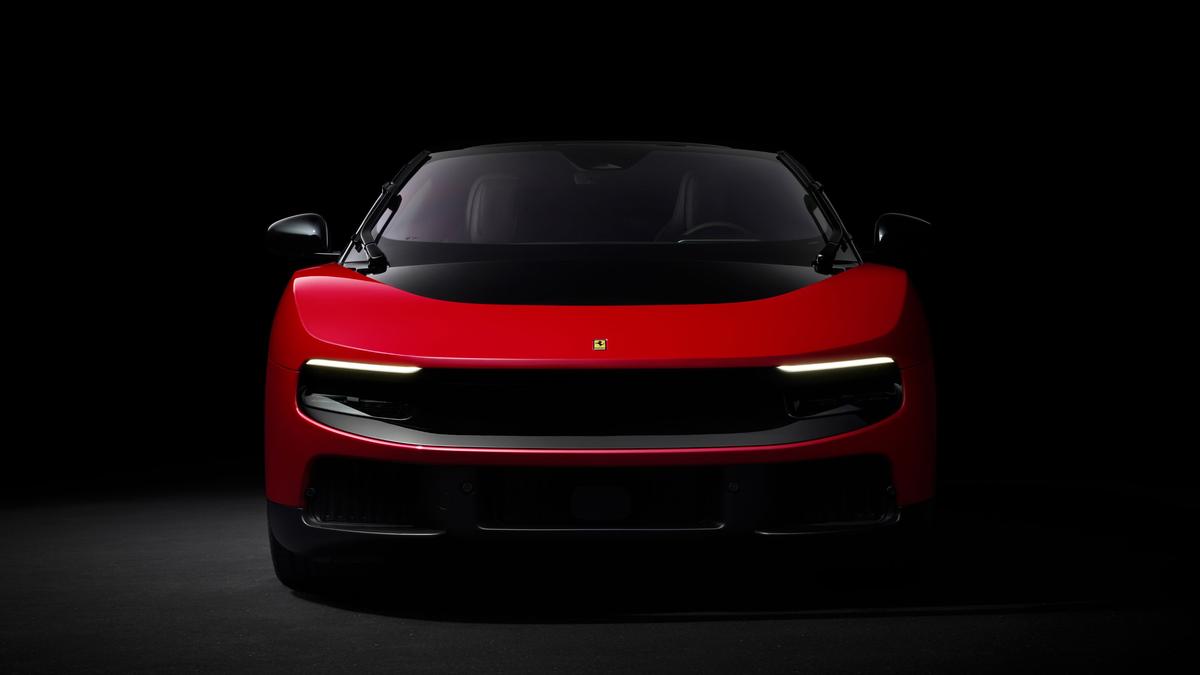
For over eight decades, the name Ferrari has been synonymous with the visceral scream of internal combustion, the scent of high-octane fuel, and a design language that captures the raw, kinetic energy of Italian motorsport. However, the unveiling of the Ferrari Luce in Rome has signaled what may be the most significant—and controversial—pivot in the company’s storied history. As Ferrari’s first fully electric vehicle (EV), the Luce is not merely a change in powertrain; it is a fundamental reimagining of the brand’s identity, trading the theatrical aggression of the past for a clinical, high-tech vision of the future.
Main Facts: A Bold Leap into the Electric Unknown
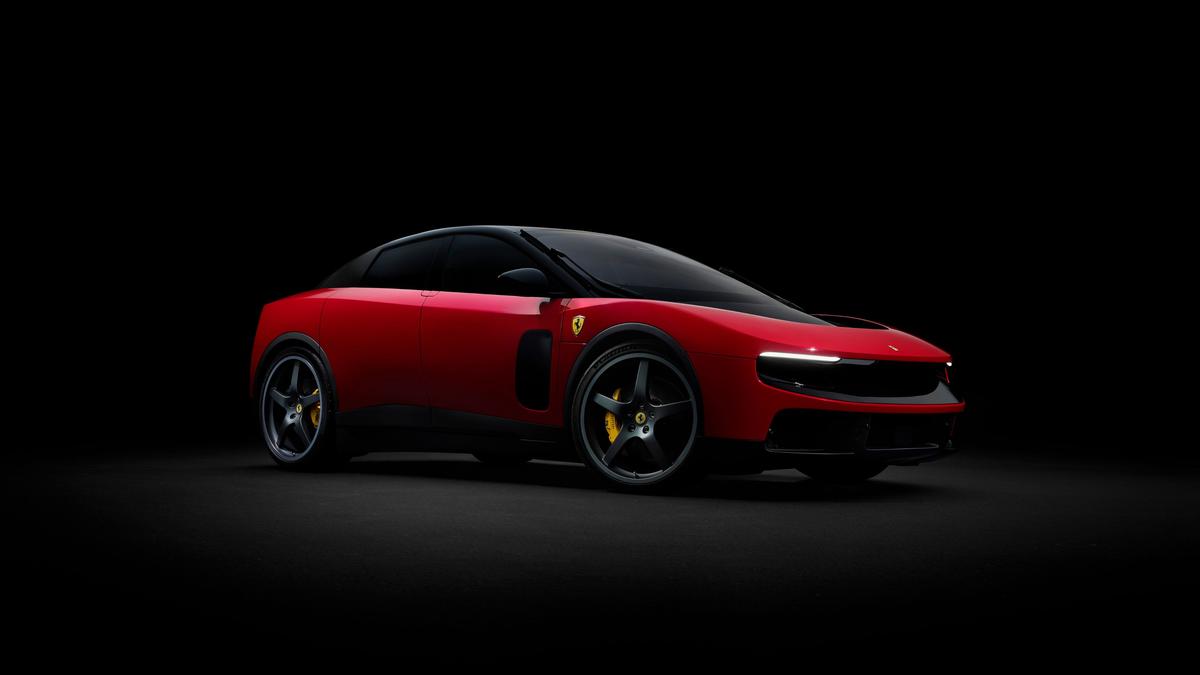
The Ferrari Luce arrives as a five-seat, four-door grand tourer, a configuration that already pushes the boundaries of traditional Ferrari silhouettes. Built upon a bespoke, in-house developed electric architecture, the Luce is a powerhouse of modern engineering, though its numbers tell only half the story.
Core Specifications at a Glance:
- Powertrain: Four independent electric motors (one per wheel).
- Output: A staggering 1,050 horsepower.
- Performance: 0-100 km/h in 2.5 seconds; 0-200 km/h in 6.8 seconds.
- Top Speed: In excess of 310 km/h.
- Battery Capacity: 122 kWh integrated vehicle-to-structure pack.
- Range: Over 530 kilometers (WLTP estimated).
- Charging: 350 kW DC fast-charging capability (70 kWh added in 20 minutes).
- Weight: 2,260 kilograms.
- Estimated Price: €500,000 (approx. ₹5 crore+ in India, excluding taxes).
The Luce is the result of a high-profile creative collaboration between Ferrari’s internal teams and LoveFrom, the design collective led by former Apple design chief Sir Jony Ive and renowned industrial designer Marc Newson. This partnership has resulted in a vehicle that looks less like a traditional supercar and more like a piece of high-end, functional sculpture.
Chronology: From Internal Combustion to the "Luce" Era
The path to the Luce was not an overnight decision but the culmination of a decade-long "multi-energy" strategy. Ferrari has carefully socialized its customer base to the idea of electrification through a series of incremental steps:
- 2013 – The LaFerrari: Ferrari introduced its first hybrid powertrain, using an electric motor to "fill the gaps" in the torque curve of a massive V12 engine.
- 2019 – The SF90 Stradale: The brand’s first plug-in hybrid (PHEV) demonstrated that Ferrari could produce a world-beating supercar that could drive silently on electric power for short distances.
- 2021 – The LoveFrom Partnership: Ferrari announced a long-term multi-year creative partnership with Jony Ive and Marc Newson, signaling a shift toward a more minimalist, tech-forward aesthetic.
- 2022-2023 – The Purosangue and 296 GTB: While the Purosangue maintained the V12 tradition, the 296 GTB proved that a V6 hybrid could outperform older V8 models, further legitimizing electrification in the eyes of enthusiasts.
- 2024 – The Rome Reveal: The Luce was officially unveiled in Rome, marking the official start of Ferrari’s "Electric Chapter."
The reveal was met with immediate volatility. While the technical specs were lauded, the radical departure in styling caused Ferrari’s stock to dip by nearly seven percent in the hours following the announcement—a clear indicator of the market’s apprehension regarding such a drastic brand evolution.
Supporting Data: Engineering the "Emotional" EV
One of the primary criticisms of electric vehicles in the performance sector is their lack of "soul"—a perceived clinical nature that lacks the engagement of a manual gearbox or a vibrating engine. Ferrari’s engineering team, led by Chief Product Development Officer Gianmaria Fulgenzi, sought to solve this through a "technical emotionality" framework.
The Quad-Motor System and Torque Vectoring
The Luce utilizes four independent motors, allowing for millisecond-accurate torque vectoring. Unlike mechanical systems, which rely on brakes or differentials to shift power, the Luce can actively "push" the car through a corner by over-speeding the outside wheels and regenerating power on the inside wheels. This is designed to mask the vehicle’s 2,260 kg curb weight—roughly 700 kg heavier than a 296 GTB.

The "Authentic Sound" Philosophy
Ferrari filed several patents leading up to the Luce’s launch regarding "authentic" sound. Rather than using speakers to play a fake engine note, the Luce uses "transmission devices" that amplify the actual resonances of the electric motors and the vibrations of the drivetrain. These vibrations are channeled through the chassis and into the cabin, providing the driver with a tactile sense of speed and load that is usually absent in EVs.
The LoveFrom Aesthetic and Interior Tech
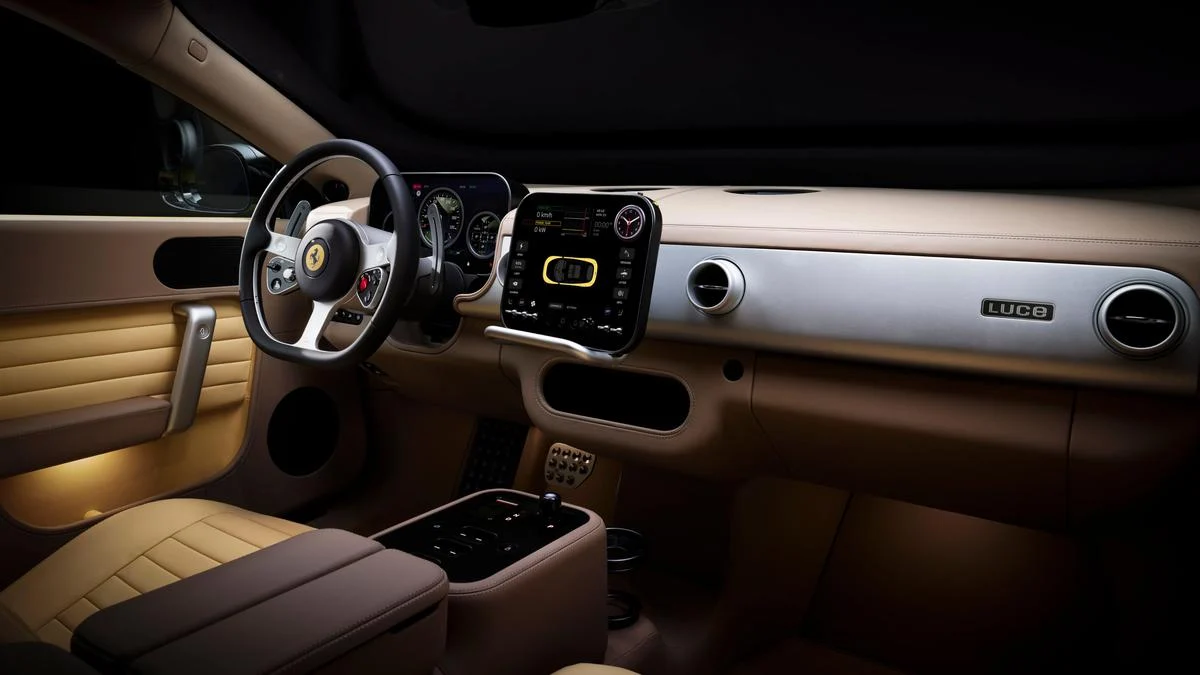
The interior represents a massive leap in material science. In collaboration with Samsung, Ferrari developed curved OLED displays that integrate seamlessly into a dashboard wrapped in sustainable, high-performance textiles.
- Gorilla Glass Integration: Extensive use of Corning’s Gorilla Glass provides durability for the massive transparent surfaces.
- E-Ink Technology: The vehicle’s key utilizes E-Ink, allowing it to display state-of-charge or personalized graphics when docked.
- Audio Experience: A 3,000-watt, 21-speaker system was tuned specifically to the acoustic properties of the Luce’s expansive glasshouse.
Official Responses: A "New Chapter," Not a Replacement
Ferrari CEO Benedetto Vigna has been vocal in defending the Luce against traditionalist backlash. In his address during the unveiling, Vigna emphasized that the Luce is an "expansion" of the Ferrari ecosystem rather than a replacement for internal combustion.
"Ferrari has always been about the thrill of the drive," Vigna stated. "With the Luce, we are not simply changing the source of energy; we are using that energy to create a new kind of emotion. Electrification allows us to do things with torque and balance that were physically impossible with a front-mounted or mid-mounted engine."
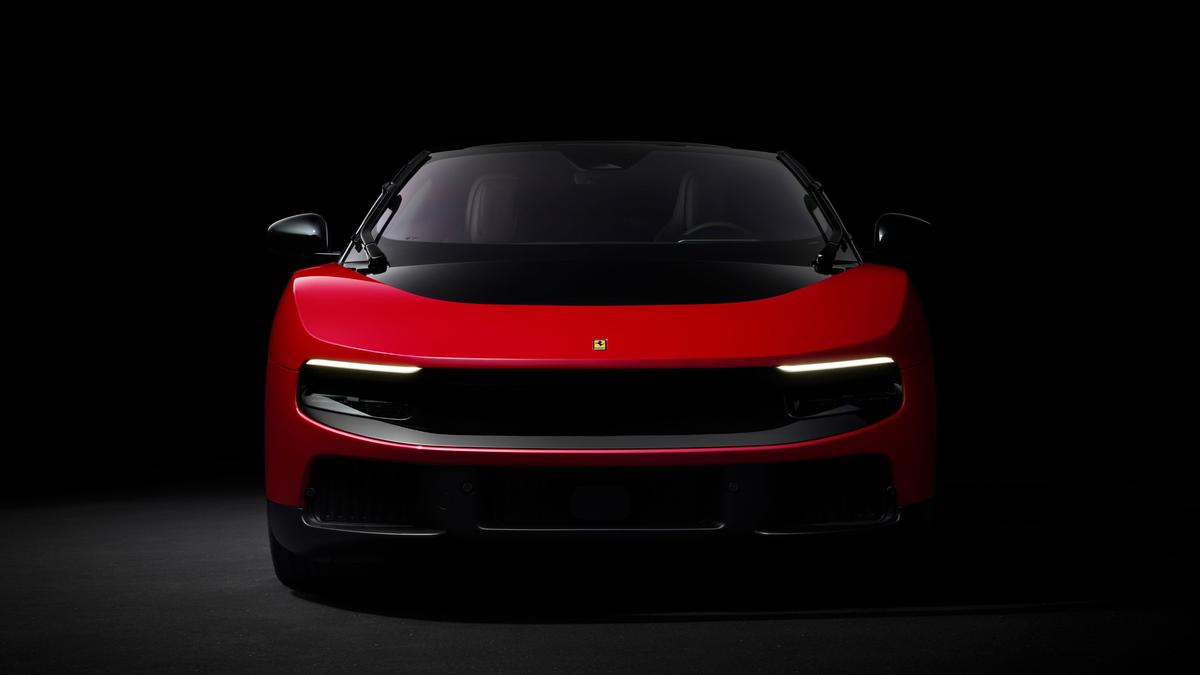
Sir Jony Ive also commented on the design philosophy, noting that the goal was to achieve "purity and a sense of the essential." The "shell-like" exterior, devoid of the aggressive vents and wings seen on the SF90 or the F8, is a deliberate attempt to move away from "visual noise" and toward a timeless, architectural elegance.
However, the company has also acknowledged the polarizing nature of the car. Internal sources suggest that Ferrari expected the Luce to be divisive, viewing it as a "filter" that will attract a new generation of younger, tech-savvy ultra-high-net-worth individuals who may find traditional supercars too "loud" or socially insensitive in an era of ESG (Environmental, Social, and Governance) consciousness.
Implications: The Risks and Rewards of a Cultural Pivot
The Luce represents a high-stakes gamble on the future of luxury. By moving away from the "passionate" and "theatrical" design language of the past, Ferrari risks several key factors:
1. Brand Dilution vs. Brand Evolution
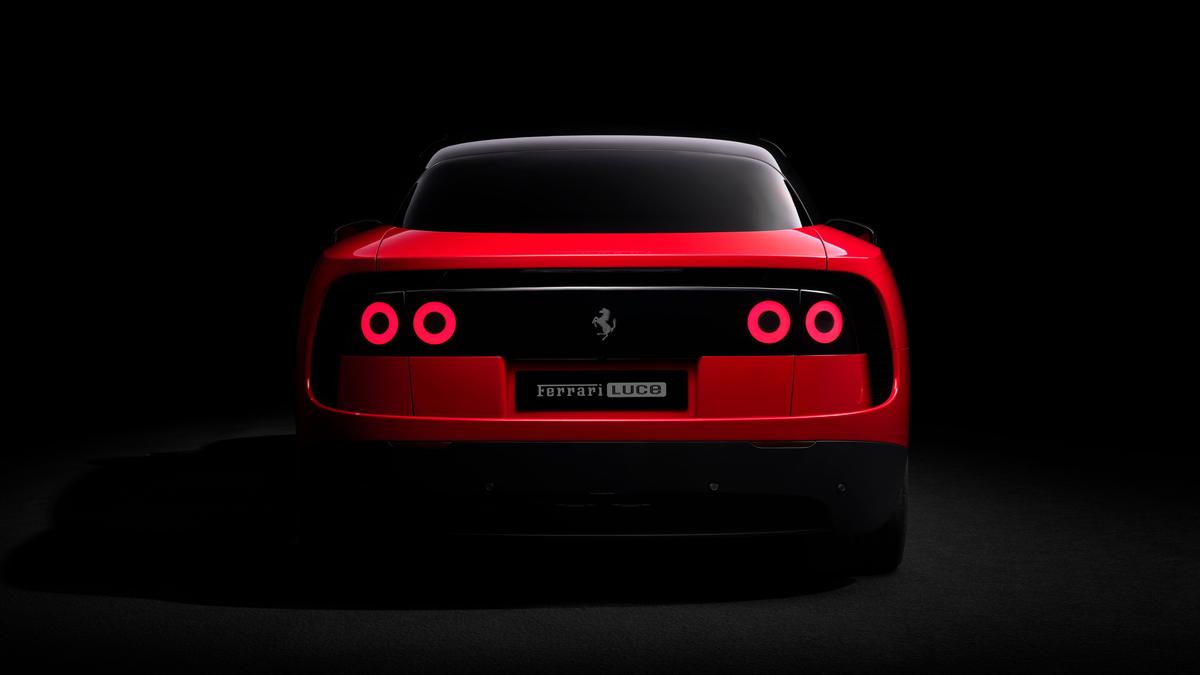
The greatest risk is that the Luce looks more like a luxury product from a company like Apple or Bang & Olufsen than a Ferrari. If the "Prancing Horse" becomes associated with minimalist consumer tech rather than racing heritage, the brand may lose the "mystique" that allows it to command such high premiums.
2. Investor Confidence
The 7% drop in stock price suggests that the financial markets are wary of Ferrari’s ability to maintain its industry-leading margins in the EV space. Batteries are a commodity in a way that hand-built V12 engines are not. Ferrari must prove that its software and "vibration-based" emotional engineering are enough to justify a €500,000 price tag when competitors like Lucid or Porsche offer similar performance for less.
3. The Indian and Emerging Markets Context
For markets like India, the Luce presents unique challenges. With a price expected to exceed ₹5 crore after import duties and taxes, the Luce will enter a market where EV infrastructure for high-speed long-distance touring is still in its infancy. However, the four-door, five-seat configuration makes it more "usable" than a traditional two-seat Ferrari, potentially appealing to a broader base of Indian luxury buyers who prefer to be chauffeured or travel with family.
4. A New Era of Competition
The Luce moves Ferrari into a new competitive set. It is no longer just fighting Lamborghini or McLaren; it is now competing for the "wallet share" of individuals who might otherwise buy a high-end yacht, a private jet membership, or a limited-edition watch. The Luce is a lifestyle statement as much as it is a car.
Conclusion: A Landmark or a Misstep?
The Ferrari Luce is a testament to the fact that no company, no matter how steeped in tradition, is immune to the global shift toward sustainability and digitalization. On a technical level, it is a masterpiece, delivering performance figures that were unthinkable a decade ago. On a design level, it is a courageous—if jarring—departure from the status quo.
Whether the Luce will be remembered as the car that saved Ferrari for the 21st century or the car that alienated its core base remains to be seen. In Maranello, the bet is clear: the future of luxury is not found in the roar of the past, but in the silent, precise, and clinical brilliance of the future. For the traditionalists, the petrol-blooded Ferraris still exist—for now. But the Luce has made one thing certain: the "New Chapter" has begun, and there is no turning back.
