

Introduction: A New Dimension to Bahraich’s Historical Battle
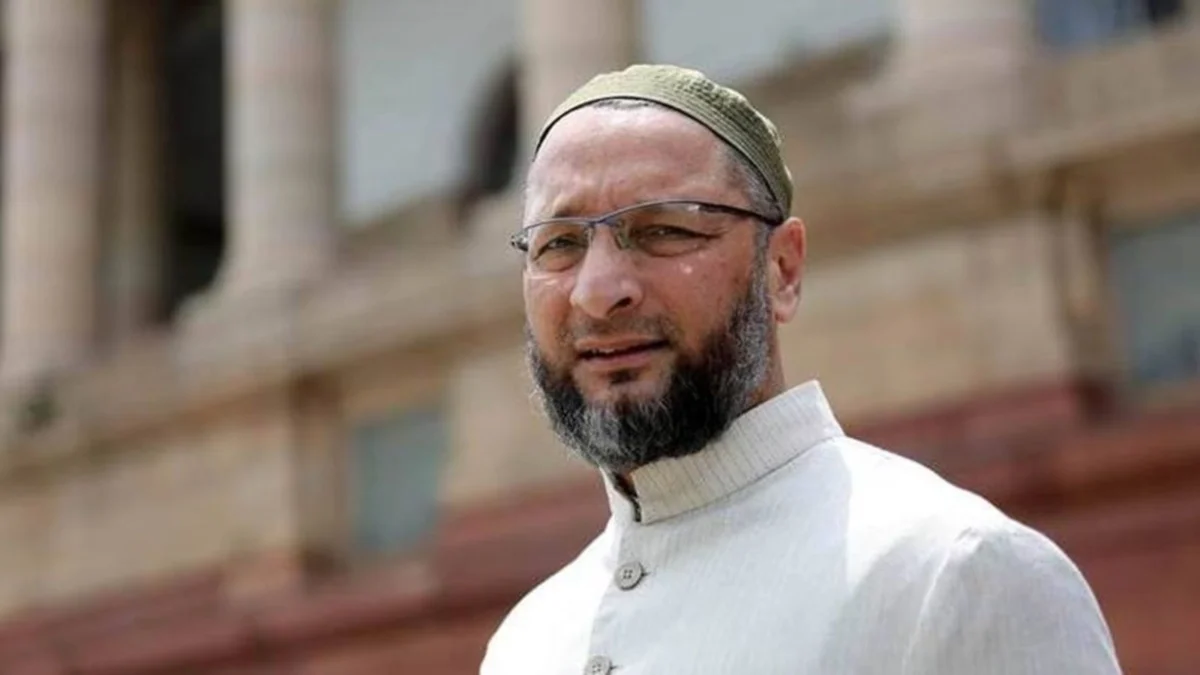
Bahraich, a district nestled in the fertile plains of Uttar Pradesh, has long been a crucible where history, faith, and politics intersect. For decades, it has hosted a simmering, often unspoken, contest over the legacies of two monumental figures: Maharaja Suheldev, an indigenous king revered as a protector of local pride, and Syed Salar Masood Ghazi, a revered warrior-saint whose dargah draws millions. This nuanced historical debate has now erupted into a full-blown political conflagration, acquiring a potent new dimension with the entry of All India Majlis-e-Ittehadul Muslimeen (AIMIM) chief Asaduddin Owaisi. His recent decision to hold a public meeting in Bahraich on a Sunday has not only placed AIMIM squarely at the heart of this volatile discourse but has also signaled a significant shift in the political dynamics of Uttar Pradesh, particularly in its eastern regions.
The move by the Hyderabad-based party is far more than a routine political rally; it represents a calculated challenge to the established order, aiming to disrupt the two-pronged political narrative that has dominated Uttar Pradesh under the Bharatiya Janata Party (BJP) government. The BJP, along with its allies, has assiduously worked to weave the narrative of Maharaja Suheldev into its broader cultural and nationalistic agenda, often portraying him as a symbol of indigenous resistance against foreign invaders. Conversely, the legacy of Syed Salar Masood Ghazi, deeply entrenched in Muslim religious and cultural identity, has faced increasing scrutiny and questioning from right-wing quarters. Owaisi’s intervention, therefore, is a deliberate attempt to assert AIMIM’s presence in a state where it has struggled for electoral traction, by positioning itself as a vocal defender of Muslim heritage and challenging the BJP’s reinterpretations of history, while simultaneously vying for the Muslim vote traditionally held by the Samajwadi Party (SP).
The Roots of Contention: Maharaja Suheldev and Syed Salar Masood Ghazi
To fully grasp the contemporary political implications, one must delve into the historical narratives surrounding Maharaja Suheldev and Syed Salar Masood Ghazi. Both figures are believed to have lived in the 11th century, their lives intertwined in a legendary conflict that has shaped local folklore and identity.
Maharaja Suheldev, often described as a king of the Pasi or Bhar (now identified as Rajbhar) community, is celebrated in local traditions as a formidable warrior who successfully repelled the invading forces of Syed Salar Masood Ghazi. The battle, famously fought near Bahraich, is said to have resulted in Ghazi’s defeat and death. For communities like the Rajbhars and other non-Yadav Other Backward Classes (OBCs), Suheldev embodies a powerful symbol of indigenous resistance, valor, and cultural pride. His legacy has been actively promoted by the BJP and its ideological affiliates, who see him as an ideal figure to rally support around, particularly among OBCs, and to reinforce a narrative of pre-Islamic Indian glory. Memorials, statues, and government-sponsored events dedicated to Suheldev have become increasingly common under the current dispensation, projecting him as a national hero.
On the other hand, Syed Salar Masood Ghazi is revered as a warrior-saint, a Ghazi (a Muslim fighter for faith) who accompanied Mahmud of Ghazni’s invasions into India. He is believed to have been martyred in Bahraich, where his dargah (shrine) stands as a prominent pilgrimage site. The annual "Urs" (fair) at the dargah traditionally attracts millions of devotees, both Muslim and Hindu, from across India and beyond, testifying to its syncretic appeal and deep cultural significance. For centuries, the dargah has been a beacon of faith, a place of healing and spiritual solace, and a symbol of shared heritage in the region. However, in recent years, this legacy has come under increasing attack, with right-wing groups questioning Ghazi’s status and portraying him solely as a foreign invader rather than a revered saint, thereby challenging the very foundation of the dargah’s sanctity.
The historical accounts of both figures are not without ambiguity, with much of Suheldev’s story rooted in oral traditions and folk narratives rather than contemporary written records. This historical fluidity allows for different interpretations and, crucially, for political weaponization. The BJP’s narrative emphasizes Suheldev’s role as a defender against foreign invasion, aligning with its broader cultural nationalism. Conversely, the reverence for Ghazi represents a significant aspect of Muslim identity and heritage, which AIMIM now seeks to champion against perceived threats.
Owaisi’s Strategic Gambit in Matera
Asaduddin Owaisi’s decision to hold his public meeting in the Matera Assembly constituency of Bahraich is a masterstroke of political strategy, carefully chosen for its symbolic and demographic significance. Matera has historically been a stronghold of the Samajwadi Party (SP), consistently electing its candidates since the seat’s creation following the 2008 delimitation exercise. This choice immediately positions AIMIM as a direct challenger to the SP’s long-held dominance in Muslim-dominated pockets of eastern Uttar Pradesh.
Owaisi’s rally, occurring on a Sunday, was meticulously timed to maximize impact and draw attention to AIMIM’s aspirations beyond its traditional strongholds in Telangana. For AIMIM, expanding its footprint in eastern Uttar Pradesh is crucial for establishing itself as a national player and a credible voice for Muslim communities. By choosing Matera, Owaisi aims to chip away at the SP’s traditional Muslim vote bank, which has historically viewed the SP as its primary political protector against the BJP. The strategy is to present AIMIM as a more assertive and uncompromised advocate for Muslim rights and identity, especially in the face of rising communal polarization and the BJP’s aggressive cultural agenda.
The rally serves multiple purposes: it aims to galvanize local Muslim voters, introduce AIMIM’s political agenda, and, most importantly, insert the party into a debate that has significant religious and historical resonance. Owaisi’s presence in Bahraich transforms the prevailing BJP vs. SP narrative into a three-cornered contest, creating space for AIMIM to emerge as a distinct political entity that challenges both the ruling party’s Hindutva agenda and the main opposition’s perceived inability to adequately defend Muslim interests. The long-term implication is to consolidate a dedicated Muslim vote bank that feels alienated from both the BJP’s majoritarian politics and the SP’s pragmatism, potentially altering electoral outcomes in a state where minority votes can be decisive.
The Dargah Controversy: A Flashpoint of Identity Politics
The timing of Owaisi’s rally is particularly pertinent given the renewed controversy surrounding the Bahraich dargah of Syed Salar Masood Ghazi. This controversy intensified recently following a visit by Uttar Pradesh minister Anil Rajbhar to the district. Rajbhar, a prominent OBC leader, made a provocative claim that the site currently occupied by the dargah was originally a "Surya Kund" (Sun Temple). He publicly declared his intention to write to Chief Minister Yogi Adityanath and Prime Minister Narendra Modi, advocating for an Archaeological Survey of India (ASI) survey of the site.
This demand for an ASI survey is not merely an archaeological curiosity; it is a highly charged political statement. In the current Indian political climate, calls for ASI surveys of Muslim religious sites often precede claims of Hindu origins and demands for their reclamation or alteration. The Gyanvapi mosque-Kashi Vishwanath temple dispute in Varanasi and the Krishna Janmabhoomi-Shahi Idgah controversy in Mathura serve as potent precedents, demonstrating how such surveys can ignite communal tensions and become central to legal and political battles. Rajbhar’s assertion, therefore, immediately placed the Bahraich dargah at the heart of a sensitive identity debate, threatening its long-established status and perceived sanctity.
Adding fuel to the fire, Anil Rajbhar further accused previous state governments, implicitly referring to the SP and BSP, of "glorifying invaders" such as Ghazi while simultaneously neglecting the legacy of Maharaja Suheldev. This accusation directly ties into the BJP’s broader historical revisionism, which seeks to reframe medieval Indian history as a period of continuous struggle against foreign invaders, with indigenous heroes like Suheldev embodying national pride and resistance. By drawing this stark contrast, Rajbhar sought to consolidate support among OBC communities, particularly Rajbhars, who identify strongly with Suheldev, while simultaneously delegitimizing the historical reverence accorded to Ghazi and, by extension, challenging the cultural heritage of the Muslim community. The minister’s remarks underscored the BJP’s strategic use of historical narratives to polarize the electorate and consolidate its Hindu vote base.
BJP’s Unwavering Cultural Narrative and OBC Outreach
The issue of Maharaja Suheldev versus Syed Salar Masood Ghazi has become a cornerstone of the BJP-led government’s cultural and political narrative in eastern Uttar Pradesh. This narrative is meticulously crafted to serve several key objectives: to reinforce a broader Hindutva ideology, to reclaim historical figures perceived as indigenous heroes, and crucially, to consolidate the votes of non-Yadav OBC communities, particularly the Rajbhars.
In recent years, there has been a noticeable shift in official emphasis. The centuries-old annual fair associated with the Ghazi dargah, once a significant event fostering communal harmony, has reportedly been discontinued or significantly downplayed. Concurrently, government efforts have focused intensely on commemorating Maharaja Suheldev. Chief Minister Yogi Adityanath has consistently and vociferously accused previous governments of honoring "invaders" instead of "indigenous heroes," frequently citing Suheldev as a prime example of the latter. This rhetoric is designed to resonate with a segment of the electorate that feels marginalized or overlooked in historical narratives and to create a clear dichotomy between "us" (indigenous, Hindu) and "them" (foreign, Muslim).
The BJP’s strategic promotion of Suheldev is multifaceted. It includes the establishment of memorials, the release of postage stamps, and the organization of large-scale public events celebrating his legacy. These initiatives are not merely commemorative; they are powerful political tools aimed at consolidating the votes of communities like the Rajbhars, who form a significant electoral bloc in eastern UP. By elevating Suheldev, the BJP signals its recognition and respect for these communities, thereby attempting to draw them away from traditional caste-based parties like the SP and BSP. This strategy is part of a larger electoral calculus to build a broad Hindu coalition that transcends traditional caste divisions, united by a shared sense of cultural pride and historical grievance. The emphasis on Suheldev also reinforces the BJP’s broader agenda of rewriting history from a nationalist perspective, aligning with its core ideological tenets.
AIMIM’s Counter-Offensive: Defending Muslim Heritage
Against this backdrop of heightened rhetoric and historical reinterpretation, AIMIM leaders have adopted a confrontational stance, positioning themselves as staunch defenders of Muslim religious sites and heritage. The party’s Uttar Pradesh president, Shaukat Ali, launched a scathing attack on the BJP government a day before Owaisi’s rally, accusing it of systematically targeting Muslim religious structures.
"You have taken many religious structures. You have taken peer, dargah and masjid. Every other day our religious structures are being demolished," Ali declared, articulating a deep-seated grievance within the Muslim community regarding perceived attacks on their places of worship and cultural sites. This statement directly addresses the anxieties fueled by controversies surrounding sites like the Gyanvapi mosque and the renewed focus on the Bahraich dargah. Ali’s words aim to galvanize Muslim voters by presenting AIMIM as the only party willing to directly challenge what he perceives as a deliberate policy of encroachment and destruction of Muslim heritage.
Ali did not spare Anil Rajbhar, directly targeting the minister over his demand for an ASI survey of the dargah. With sharp sarcasm, Ali remarked that a person "who cannot properly list his own five generations is speaking about one thousand-year-old history." This retort not only dismisses Rajbhar’s historical claims as unfounded but also attempts to undermine his credibility and authority on matters of historical interpretation. By doing so, AIMIM seeks to counter the BJP’s narrative that presents its leaders as authoritative voices on Indian history, suggesting instead that their claims are politically motivated and lack genuine historical basis. This confrontational approach is central to AIMIM’s strategy of carving out a distinct political space for itself, separate from the more cautious approach of established secular parties like the SP.
NDA Ally Weighs In: SBSP’s Role in Reinforcing the Narrative
The political temperature in Bahraich was further escalated by the sharp responses from Om Prakash Rajbhar, chief of the Suheldev Bharatiya Samaj Party (SBSP), a crucial BJP ally. The SBSP’s very name, derived from Maharaja Suheldev, underscores its foundational commitment to the historical figure and its target demographic among the Rajbhar community. Om Prakash Rajbhar has been a vocal proponent of Suheldev’s legacy and a fierce critic of Ghazi.
Recently, Rajbhar described Ghazi unequivocally as a "foreign invader who had come to loot temples and wealth," thereby aligning perfectly with the BJP’s broader narrative. His statements serve to reinforce the message that Ghazi represents an external threat, while Suheldev symbolizes indigenous resistance. This narrative is particularly potent among the Rajbhar community, for whom Suheldev is a deeply cherished icon.
The exchange escalated into a public spat on social media, with Om Prakash Rajbhar directly responding to Owaisi. In a strongly worded post on Saturday, Rajbhar challenged Owaisi: "Now that you’re coming to Uttar Pradesh, please do share a bit of your Hyderabadi barrister wisdom with your commander-in-chief as well. Before expressing your devotion at the shrine of Ghazi in Bahraich, do remind him that this is the very land where Maharaja Suhaildev Rajbharji fought against foreign invaders to protect India’s identity and pride. Please explain to your commander-in-chief that he should use language befitting his stature and personality. Displaying unnecessary aggression and arrogance never earns respect in the pages of history."
This social media broadside was a calculated move. Firstly, it directly confronted Owaisi, questioning his historical understanding and loyalty. Secondly, it reiterated the core message of Suheldev as a protector of Indian identity, a message that resonates deeply with the BJP’s nationalistic agenda. Thirdly, by addressing Owaisi as a "Hyderabadi barrister," Rajbhar subtly played on regional and cultural differences, attempting to paint Owaisi as an outsider interfering in Uttar Pradesh politics. The public exchange not only amplified the debate but also demonstrated the unified front presented by the BJP and its allies in promoting the Suheldev narrative and countering any dissenting voices. For SBSP, this stance is vital for maintaining its political identity and its appeal to its core Rajbhar constituency.
Questioning History: The Battle Over Suheldev’s Legacy
Adding another provocative layer to the already complex controversy, AIMIM leaders have gone beyond merely defending Ghazi’s legacy; they have directly questioned the historical status of Maharaja Suheldev himself. Shaukat Ali, in a contentious statement, declared that he did not consider Suheldev a king. He argued that if Suheldev had indeed been a significant ruler, there should be tangible physical evidence of his reign, such as a fort in Bahraich or other historical structures. Ali dismissed the prevailing narrative around Suheldev as "imaginary," suggesting it lacked genuine historical backing and was largely a construct.
This audacious questioning of Suheldev’s historicity is a high-stakes move by AIMIM. While academic historians have indeed debated the extent and nature of Suheldev’s rule, given the scarcity of contemporary records, politically, this narrative has been sacrosanct for the BJP and its allies. For communities like the Rajbhars and other OBCs who identify deeply with Suheldev as an ancestral hero and a symbol of their past glory, Ali’s remarks are likely to be perceived as a direct insult and a deliberate attempt to erase their heritage. Such a statement risks alienating these crucial vote banks and could provoke a strong backlash, potentially hardening communal lines.
AIMIM’s strategy here appears to be twofold: firstly, to highlight the selective use of history by the BJP for political ends, suggesting that figures are elevated or dismissed based on contemporary political convenience rather than rigorous historical inquiry. Secondly, by challenging the very foundation of the BJP’s hero narrative, AIMIM aims to undermine its cultural and electoral appeal. However, this approach is fraught with peril, as it directly confronts deeply held beliefs and identities, potentially fueling further polarization rather than merely shifting political allegiances. It elevates the historical debate from a mere contest of interpretation to a fundamental challenge to collective memory and identity.
Broader Political Implications for Uttar Pradesh
The escalating historical and political contest in Bahraich holds profound implications for the broader political landscape of Uttar Pradesh, especially with the 2027 Assembly elections on the horizon. The state, a crucial battleground in Indian politics, is expected to witness an intense competition for key vote banks: the OBCs and the Muslims.
For the BJP and its ally SBSP, the Suheldev narrative has become a vital instrument for consolidating non-Yadav OBC communities, particularly Rajbhars. By championing Suheldev, they aim to reinforce a broader Hindutva discourse centered on historical memory, civilizational pride, and indigenous heroism, effectively uniting diverse caste groups under a common cultural banner. This strategy is critical for expanding their electoral base beyond traditional upper-caste support and securing a dominant position in eastern UP.
For the AIMIM, entering this contentious debate is a calculated risk with significant potential rewards. It allows the party to position itself as a vocal and uncompromising defender of Muslim religious heritage and identity, directly challenging the BJP’s interpretations of medieval history and its perceived aggression against Muslim sites. By taking on both the BJP’s Hindutva narrative and the SP’s traditional claim to Muslim votes, AIMIM aims to carve out a distinct political space. If successful, it could consolidate a significant portion of the Muslim electorate, which has often felt politically orphaned or taken for granted by established secular parties.
The Samajwadi Party, traditionally reliant on a Muslim-Yadav alliance, faces a unique challenge. While not directly involved in the rhetorical sparring, the SP’s traditional Muslim vote bank is being targeted by AIMIM, while its OBC base is under continuous assault from the BJP and SBSP. The SP’s cautious approach to highly polarized issues might be seen as a weakness by some Muslim voters, potentially pushing them towards AIMIM.
Eastern Uttar Pradesh, with its complex caste dynamics and significant Muslim population, is set to become a key battleground. By choosing Bahraich and deliberately stepping into a controversy already dominating local politics, Owaisi has unequivocally signaled that AIMIM intends to be a serious contender in this upcoming electoral contest. This intervention moves the political discourse beyond a simple bipolar contest between the BJP and SP, transforming it into a more complex, three-cornered struggle for votes and ideological supremacy. The outcome will not only determine electoral fortunes but also shape the narrative of identity and history in one of India’s most politically significant states.
Conclusion: An Escalating Identity War
The political saga unfolding in Bahraich is more than a local dispute; it is a microcosm of the larger identity politics at play across Uttar Pradesh and, indeed, India. The legacies of Maharaja Suheldev and Syed Salar Masood Ghazi, once subjects of historical and folkloric interpretation, have now been thoroughly weaponized, serving as potent symbols in a fierce electoral and ideological battle.
Owaisi’s entry into this fray has undeniably transformed the dynamics, shifting what was largely a BJP versus SP narrative into a three-cornered political contest. While the immediate electoral gains for AIMIM remain uncertain, its intervention has ensured that the debate over historical memory, religious heritage, and community identity will intensify. The BJP and its allies will continue to champion Suheldev as a symbol of Hindu pride and OBC empowerment, while AIMIM will vigorously defend Muslim heritage and challenge what it perceives as historical revisionism and cultural aggression.
The long-term impact of such historical weaponization extends beyond electoral outcomes. It risks exacerbating communal divisions, fostering historical grievances, and potentially undermining the syncretic traditions that have historically characterized many parts of Uttar Pradesh, including Bahraich. As the 2027 Assembly elections draw nearer, the intensity of this identity war is only expected to escalate, making Bahraich a focal point for understanding the future trajectory of Indian politics. The battle for history, it seems, is far from over, and its echoes will reverberate deeply across the state’s social and political fabric.
