

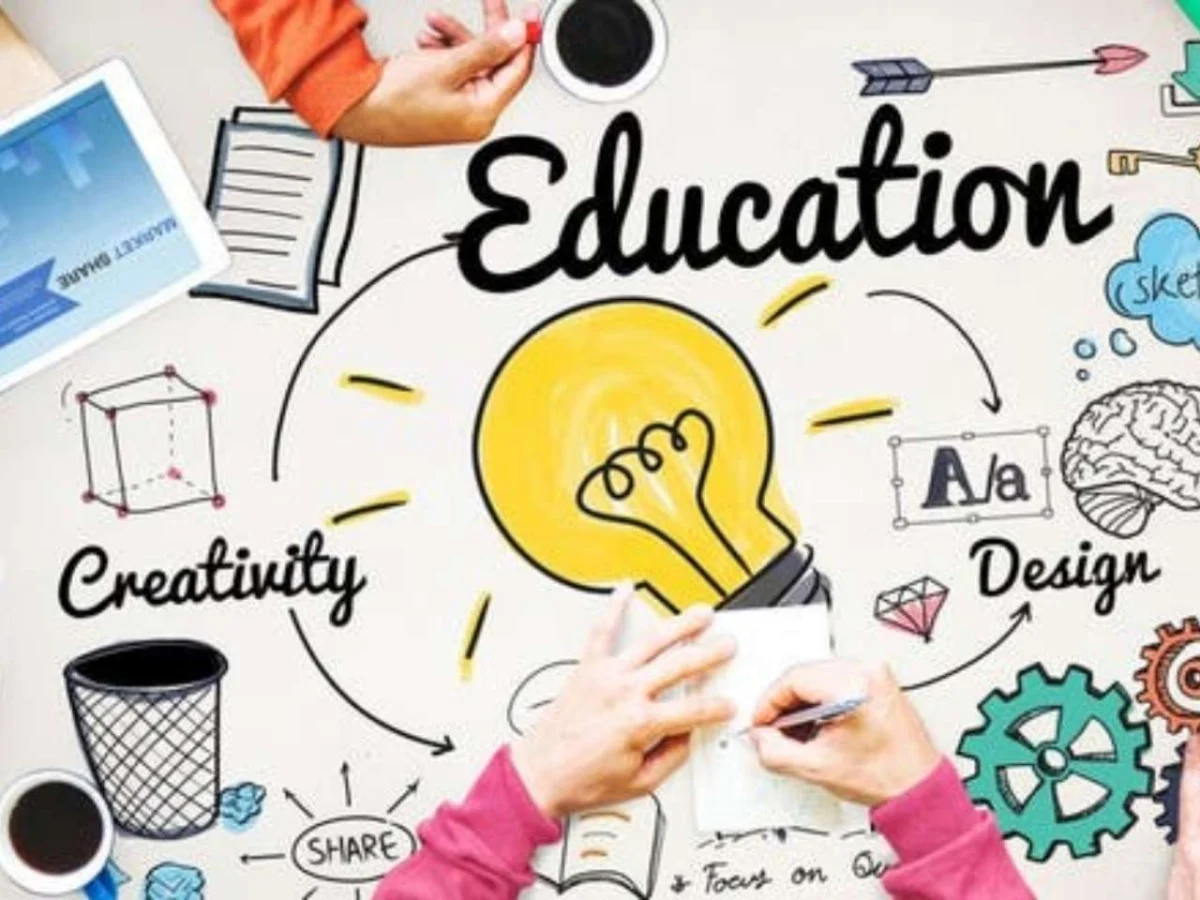
The grand pronouncements on creativity in education, echoing through policy documents and institutional visions, stand in stark contrast to the quiet suppression of imaginative thought within the very classrooms they aim to inspire. While educators are exhorted to foster divergent thinking, students are often rewarded for conformity, and innovation is lauded while learning is predominantly measured through standardized metrics. This fundamental contradiction is the crux of the ongoing debate surrounding creativity in education. As the world hurtles towards an increasingly uncertain and complex future, creativity can no longer be a mere embellishment; it must be re-engineered as a foundational principle guiding pedagogy, assessment, and the very conception of learning.
The prevailing educational structures, it appears, are inadvertently cultivating a landscape that prioritizes the "correct" answer over the "thoughtful" question, speed over contemplation, and the completion of a syllabus over the boundless potential of intellectual exploration. This paradox has led to a situation where creativity struggles to take root, not for lack of inherent student potential, but due to systemic inertia. The current educational paradigm often rewards adherence to established norms more than the cultivation of curiosity and critical inquiry. The challenge, therefore, extends beyond simply addressing a perceived decline in children’s creativity; it delves into the very architecture of our learning environments, which frequently foster conformity at the expense of genuine intellectual adventure.
)
The Teacher’s Tightrope: Navigating Constraints to Foster Innovation
A critical element in this equation is the role of the teacher. Educators are increasingly tasked with the monumental responsibility of nurturing creative learners, yet they often operate within a straitjacket of rigid timetables, relentless examination pressures, overcrowded classrooms, and a pervasive lack of adequate professional support. Many teachers, themselves products of a system that heavily emphasizes examination outcomes, are expected to pivot to creative pedagogies without the requisite training, resources, or institutional backing. This expectation, without a fundamental restructuring of their working conditions, is demonstrably unrealistic.

For creativity to permeate the fabric of everyday learning, teacher education must undergo a profound transformation. It must transcend mere content delivery and equip educators with the skills to design and implement inquiry-based, interdisciplinary, and reflective classroom experiences. Furthermore, educational institutions must foster an environment that grants teachers the autonomy to experiment and innovate. Creativity, by its very nature, cannot flourish in settings where educators feel perpetually monitored, rushed, or undervalued. Empowering teachers with the freedom to explore novel approaches is not merely beneficial; it is an indispensable prerequisite for cultivating a truly creative learning ecosystem.
)
The Social Fabric of Creativity: Confronting Inequality and Access
Beyond the classroom, the social dimension of creativity is equally pivotal. Creativity is often erroneously portrayed as an individual talent, an innate spark possessed by a select few. In reality, its development is intrinsically linked to a confluence of factors including access to resources, exposure to diverse experiences, linguistic proficiency, technological integration, institutional support, and the fostering of social confidence.
)
Students in well-resourced urban schools or prestigious higher education institutions often benefit from superior infrastructure, a richer array of extracurricular activities, robust research networks, and access to highly qualified faculty. Conversely, students in rural, semi-urban, or under-resourced institutions, while potentially possessing an equal or even greater capacity for imagination, may lack the essential conditions required for this imagination to mature and flourish.
)
Any earnest discourse on creativity in education must therefore grapple with the pervasive issue of inequality. A system that professes to champion innovation while simultaneously neglecting the stark disparities in access risks transforming creativity into yet another marker of privilege, further entrenching existing social divides. Addressing these systemic inequities is not an ancillary concern; it is fundamental to ensuring that the promise of creativity is accessible to all learners, irrespective of their socio-economic background or geographic location.
)
The AI Awakening: A Catalyst for Reimagining Learning
The advent and rapid proliferation of artificial intelligence (AI) have injected a new layer of urgency into the creativity debate. AI should not be viewed through a purely alarmist lens, nor should it be uncritically lauded as a panacea for educational challenges. Its true value, and indeed its impact on creativity, hinges entirely on how learners are educated to engage with it.
)
If AI is merely embraced as a tool for generating pre-packaged answers, it risks exacerbating student passivity and diminishing the very cognitive processes that foster independent thought. However, if AI is strategically integrated as a means to compare diverse perspectives, rigorously test hypotheses, refine questioning techniques, and engage in profound ethical reflection, it has the potential to significantly enhance the learning experience.
)
The paramount task before educators in this new era is to safeguard and cultivate those uniquely human attributes that AI, at present, cannot replicate: imagination, nuanced judgment, the richness of lived experience, profound empathy, and the capacity for independent thought. These are the cornerstones of meaningful learning and the bedrock upon which future innovation will be built.
)
Navigating the AI Frontier: Beyond Technical Literacy
The integration of AI into education demands a more holistic approach than simply imparting technical literacy. Introducing students to artificial intelligence from an early stage holds true educational significance only if it empowers them to critically examine the human and societal implications embedded within these technologies. Crucial questions must be posed and explored: Who is designing these AI systems? Whose knowledge and perspectives are being encoded within them? Who stands to benefit from their deployment, and who might be inadvertently excluded or disadvantaged?
)
These inquiries are not tangential to technological learning; they are, in fact, central to fostering responsible digital citizenship. Without this critical engagement, AI education risks producing a generation of proficient technology users who lack the intellectual fortitude to question the direction and impact of the very tools they employ. This could lead to a passive consumption of technology rather than an active, critical, and ethically informed participation in the digital age.
)
Policy Meets Practice: The Crucial Leap from Paper to Pedagogy
Policy frameworks, such as the National Education Policy, rightly champion the importance of creativity, critical thinking, and holistic learning. However, the true measure of their success lies not in their eloquent articulation but in their effective implementation. Creativity cannot be conjured into existence through policy pronouncements alone. It must manifest tangibly in the day-to-day realities of the classroom: in the meticulous planning of lessons, in the genuine welcome extended to student questions, in the constructive manner in which mistakes are addressed, in the collaborative spirit fostered among learners, and in the institutional support provided to both teachers and students, particularly in navigating contexts marked by inequality.
)
The domain of assessment, in particular, requires a radical overhaul. If examinations continue to prioritize the regurgitation of memorized facts and reward a perceived certainty, then creative learning will invariably remain relegated to the periphery of the educational experience. A fundamental reimagining of how we measure understanding is imperative to signal the genuine value placed on creative and critical engagement.
)
The Enduring Promise of a Creative Education
Ultimately, the pursuit of creativity in education is not about identifying and nurturing a select cadre of exceptional innovators. Rather, it is about cultivating thoughtful, confident, and socially aware individuals who possess the capacity to actively engage with knowledge, rather than passively consuming it. Without the infusion of creativity, education risks devolving into a monotonous cycle of rote memorization, high-stakes examinations, superficial certification, and the pervasive anxiety surrounding future employment.
)
However, with creativity at its core, education can transform into a vibrant space where learners not only understand themselves but also critically question the world around them, and, most importantly, actively imagine and work towards building more just, equitable, and meaningful futures for all. This is the transformative potential of a truly creative educational paradigm.
