

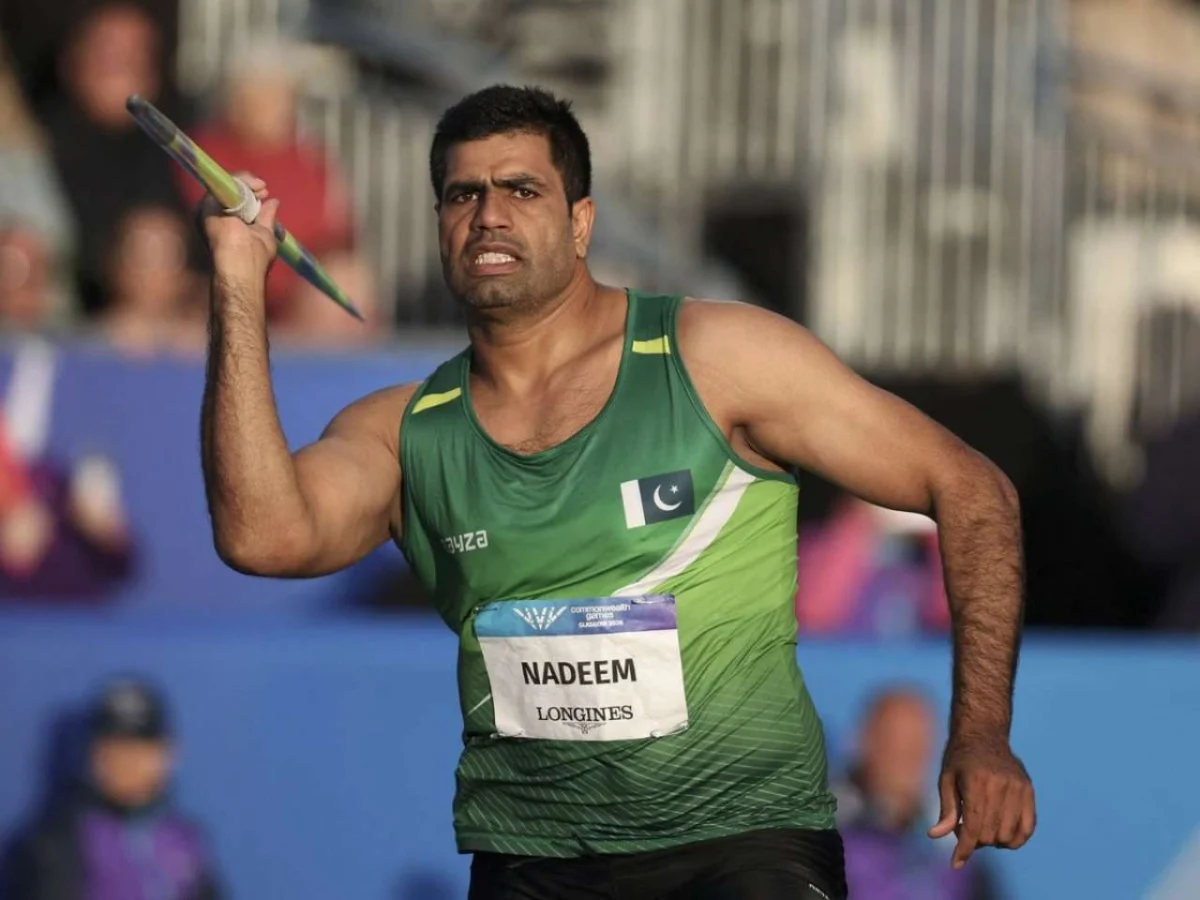
GLASGOW, SCOTLAND – The hallowed fields of the Commonwealth Games in Glasgow, 2026, witnessed an unexpected turn of events for one of the world’s most formidable javelin throwers. Arshad Nadeem, the celebrated Pakistani athlete and reigning Olympic javelin champion, found himself in an unfamiliar position: off the podium and struggling for form. After a period of quiet reflection following his ninth-place finish, Nadeem has finally opened up, addressing the fervent social media backlash, attributing his performance to adverse weather conditions, and acknowledging the triumphs of his rivals, including India’s Neeraj Chopra.
His candid remarks from his hometown of Mian Channu not only shed light on a personal athletic struggle but also pulled back the curtain on the often-overlooked systemic challenges faced by athletes in the region. The disappointing outing, where his best throw of 77.41 meters fell significantly short of his established standards, has ignited a fierce debate about athlete support, federation policies, and the relentless pressure of international competition.
Main Facts: A Glacial Glasgow Outing
The Commonwealth Games 2026: A Disappointing Display
The 2026 Commonwealth Games in Glasgow, Scotland, were anticipated by many to be another showcase for Arshad Nadeem’s unparalleled talent. Having secured the Olympic javelin championship title prior to these games, expectations for the Pakistani star were astronomically high. Fans, pundits, and his nation alike envisioned him adding a Commonwealth gold to his illustrious collection. However, what unfolded at the Hampden Park athletics arena was a stark departure from the script.
From the outset, Nadeem appeared to grapple with the conditions. The air was crisp, the wind biting – a stark contrast to the warmer climates he typically trains in. Each of his initial attempts lacked the characteristic power and precision that defines his throws. The javelin, usually an extension of his will, seemed to fight him, landing well below the marks he consistently achieved in training and previous major championships. Spectators, accustomed to his explosive technique and the effortless glide of the spear from his hand, watched with a growing sense of unease as his throws failed to ignite.
Ultimately, with a best effort of just 77.41 meters, Nadeem found himself in an unprecedented ninth position. This mark was not only a significant drop from his personal best but also failed to meet the threshold required to advance to the final three rounds of throws, effectively ending his competition prematurely. The elimination before the medal rounds was a stunning blow, particularly for an athlete of his caliber and reputation as a reigning Olympic champion. The silence that followed his final throw was palpable, a mix of disbelief and sympathy from the diverse crowd.
The Podium: New Faces and Familiar Rivals
While Nadeem struggled, others seized the opportunity to shine. The gold medal was claimed by Sri Lanka’s Rumesh Pathirage, whose consistent performance throughout the competition demonstrated a remarkable blend of power and composure under pressure. Pathirage’s victory marked a significant moment for Sri Lankan athletics, signaling his emergence as a formidable force on the global stage. His triumph was well-earned, showcasing an athlete who peaked at the opportune moment.
The silver medal went to India’s Neeraj Chopra, Nadeem’s friendly rival and another titan of the sport. Chopra, known for his elegant technique and steely determination, delivered a strong performance that, while not enough for gold, solidified his position among the world’s elite. His presence on the podium underscored the continued dominance of South Asian athletes in javelin, even as the top spot shifted. The bronze medal was secured by Yash Vir Singh, adding another Indian athlete to the javelin honors, highlighting the depth of talent within India’s contingent.
The absence of Nadeem from the medal ceremony, particularly given his Olympic champion status, was one of the most talked-about storylines of the Games. It set the stage for intense reflection and scrutiny, both from within his own camp and across the international sporting community. The immediate aftermath was characterized by speculation and a hunger for answers from the usually reticent Pakistani star.
Chronology of Challenges: From Lahore to Glasgow and Beyond
Pre-Games Turbulence: The Coaching Conundrum
Arshad Nadeem’s path to the 2026 Commonwealth Games was fraught with challenges that extended far beyond the training field. Long before he stepped onto the Glasgow track, whispers of discontent and administrative friction had begun to circulate within Pakistani sports circles. At the heart of the matter lay a significant disagreement between Nadeem and the Pakistan Amateur Athletics Federation (PAAF) concerning his long-time coach, Salman Butt.
Butt, a figure instrumental in Nadeem’s rise to prominence, was deemed by the PAAF as not possessing the necessary "international experience" to guide an athlete of Nadeem’s stature, especially in the run-up to major global events. This led to a contentious period where the PAAF, according to reports from PTI last year, effectively withdrew its full backing for Nadeem’s preferred training setup. The federation allegedly ignored his repeated requests for program funding specifically tailored to maintain his existing coaching staff and facilities.
Further exacerbating the situation was the Pakistan Sports Board’s (PSB) reluctance, or inability, to release funds for hiring foreign coaching staff. Nadeem had expressed a strong desire to continue training under South African coach Terseys Liebenberg, a figure credited with refining his technique and mental approach, ultimately contributing to his Olympic gold medal win. However, without the necessary financial approvals, this crucial support was denied. Consequently, Nadeem was forced to prepare for the rigorous demands of the Commonwealth Games in Lahore, relying solely on Butt and a team of local trainers. This forced shift in his coaching ecosystem, just months before a pivotal competition, undoubtedly introduced an element of instability and potentially compromised the optimal preparation an Olympic champion requires. The lack of continuity and access to specialized international expertise was a significant hurdle Nadeem had to overcome even before his plane touched down in Scotland.
The Glasgow Gauntlet: A Day of Struggle
Upon arrival in Glasgow, the atmospheric conditions presented an immediate and tangible challenge. The city’s notoriously fickle weather, characterized by cold temperatures and unpredictable winds, stood in stark contrast to the warm, stable environment Nadeem was accustomed to in Pakistan. This environmental shock was not merely a discomfort but a physiological impediment.
On the day of the competition, the cold was particularly biting. Nadeem described how his body, unaccustomed to such chill, felt stiff and unresponsive. For a javelin thrower, where every muscle fiber, every joint, and every sinew must work in perfect, fluid coordination, stiffness can be catastrophic. The explosive power generated from the legs, through the core, and into the throwing arm relies on maximum flexibility and elasticity. When muscles are rigid, the force transfer is compromised, leading to a significant reduction in throwing velocity and accuracy.
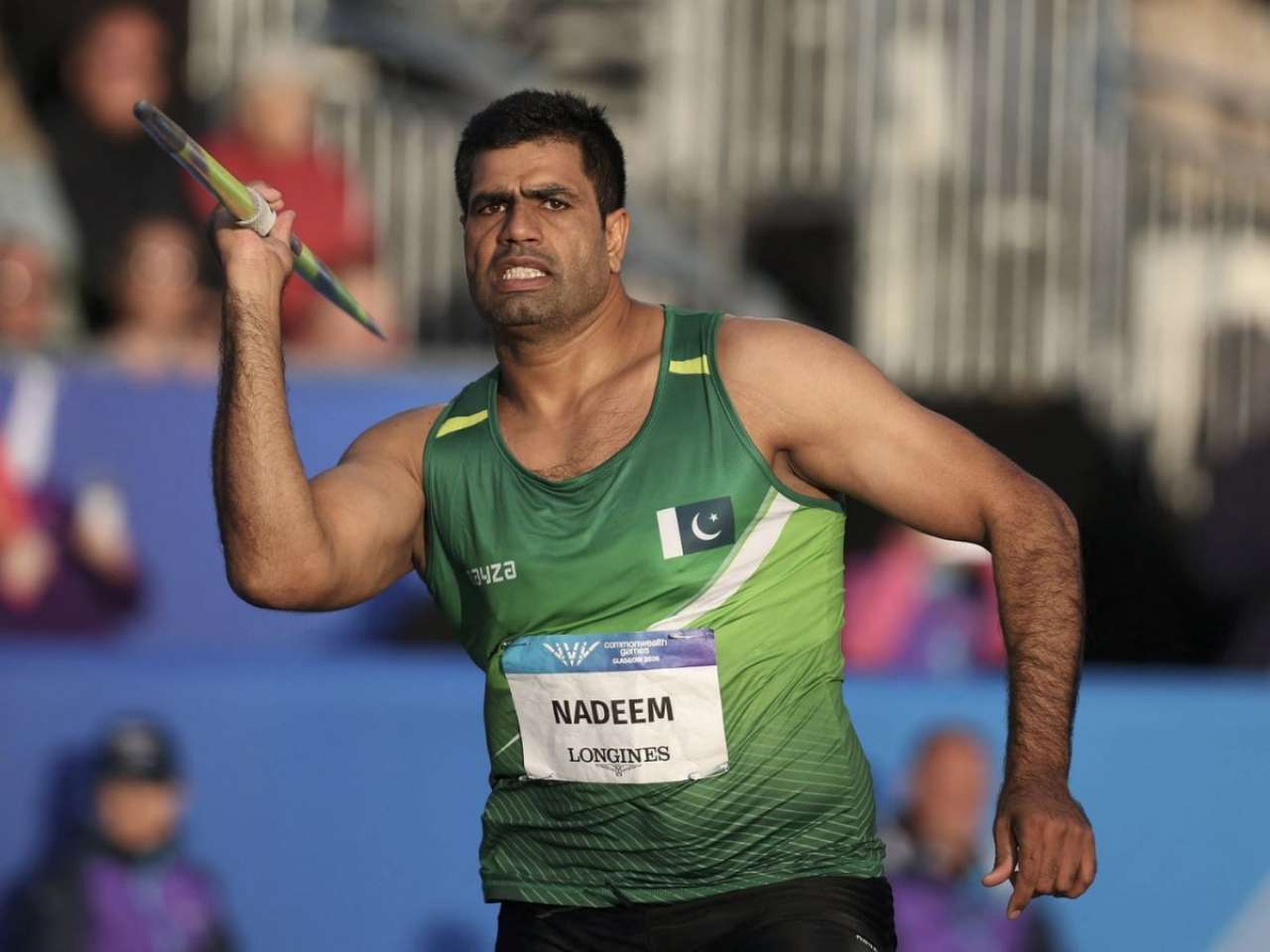
His attempts reflected this internal struggle. Each run-up lacked the familiar spring, each release seemed forced rather than flowing. The javelin would often wobble or fail to achieve the optimal trajectory, a clear indication that the full kinetic chain of his throw was not firing efficiently. The visual evidence of his struggle was clear to anyone familiar with his form. He looked visibly uncomfortable, shivering between throws, desperately trying to keep his muscles warm and pliable despite the adverse conditions. It was a valiant effort against an invisible opponent – the weather – but one that ultimately proved too formidable, leading to his early exit from the competition.
Post-Performance Reflection: Facing the Critics
Upon his return to Mian Channu, Arshad Nadeem found himself not only nursing the wounds of defeat but also confronting a torrent of criticism on social media. The digital sphere, often unforgiving, erupted with commentary ranging from disappointment to outright condemnation of his performance. In a rare interview back home, Nadeem addressed this backlash head-on, displaying a resilience that belied his recent setback.
"If you look at it, there’s a lot happening online. I don’t think anyone stops trying for themselves," he stated, acknowledging the public discourse but firmly defending his commitment and effort. His words underscored the immense pressure athletes face, where every performance is dissected, and intent is often questioned.
Regarding his performance, he reiterated the profound impact of the weather. "The weather was very cold. In Pakistan, I’m used to warmth, and over there, the wind just made everything harder. I gave it everything I had." He stressed the physical toll, explaining, "Because of the cold, my body was stiff. The weather really wasn’t good." This wasn’t an excuse, he clarified, but a genuine explanation of the physiological reality he encountered. He emphasized that he had competed in numerous tournaments before, but this one felt uniquely challenging due to the environmental factors. His body simply refused to respond with the accustomed vigor. This candid assessment provided a crucial context to his performance, moving beyond simplistic narratives of failure to a more nuanced understanding of the complexities inherent in elite-level sport.
Supporting Data: Unpacking the Factors Behind the Fall
The Climate Conundrum: A Battle Against the Elements
The impact of weather conditions on athletic performance, particularly in highly technical and power-dependent sports like javelin throwing, cannot be overstated. Arshad Nadeem’s experience in Glasgow serves as a stark reminder of this reality. Javelin throwers rely on explosive muscle contractions, precise biomechanics, and a fluid kinetic chain to generate maximal velocity and distance. Cold temperatures significantly impair these processes.
Physiologically, cold weather causes vasoconstriction, reducing blood flow to the muscles. This leads to decreased muscle elasticity, increased stiffness, and a heightened risk of strains or tears. Furthermore, nerve conduction velocity slows down, potentially affecting reaction times and coordination. For an athlete accustomed to training and competing in the relatively warm and dry conditions of Mian Channu, where average summer temperatures can soar above 35°C (95°F), the typical Glasgow summer day, often hovering between 12-18°C (54-64°F) with strong, damp winds, presents a profound challenge. The body’s thermoregulatory system goes into overdrive, diverting energy to maintain core temperature, which can drain an athlete’s reserves. The sensation of "stiffness" Nadeem described is a direct consequence of these physiological responses, making the intricate movements of a javelin throw feel cumbersome and inefficient. Wind, another factor Nadeem cited, can also be a double-edged sword. A tailwind can assist a throw, but crosswinds or headwind gusts can destabilize the javelin mid-flight, drastically altering its trajectory and reducing distance. His personal bests, achieved in optimal conditions, stand testament to his ability when not battling the elements.
A History of Excellence: Nadeem’s Pre-CWG Pedigree
To fully appreciate the gravity of Nadeem’s ninth-place finish, it’s crucial to contextualize it against his formidable track record. Prior to the 2026 Commonwealth Games, Arshad Nadeem had carved out an extraordinary career, establishing himself as one of the sport’s preeminent figures. His crowning achievement, the Olympic javelin championship, cemented his status as a global icon and Pakistan’s brightest athletic star. This victory was not an anomaly but the culmination of years of dedication and consistent performance at the highest level.
He was also a silver medalist at the 2023 World Athletics Championships, an event that showcased his ability to contend with the absolute best in the world. Additionally, his gold medal at the Asian Games further underscored his regional dominance. His personal best throws consistently exceeded the 85-meter mark, often pushing towards the coveted 90-meter barrier, a benchmark of elite performance in javelin. The 77.41-meter throw in Glasgow, therefore, was not merely a sub-par performance but a significant deviation, almost 10-15 meters short of his typical competitive range. This statistical disparity highlights the extent of the struggle he faced, suggesting that external factors played a much larger role than a simple dip in form or lack of effort. His reputation was built on powerful, consistent throws that routinely placed him among the top three globally, making his Glasgow outing an anomaly in an otherwise stellar career.
The Financial and Administrative Hurdles: A Systemic Issue
The issues surrounding Arshad Nadeem’s coaching and funding are not isolated incidents but symptomatic of broader systemic challenges within Pakistani sports administration. The Pakistan Amateur Athletics Federation (PAAF) and the Pakistan Sports Board (PSB) have historically faced criticism regarding athlete support, resource allocation, and bureaucratic inefficiencies.
Nadeem’s experience of being denied funds for foreign coaching staff, despite his proven success with South African coach Terseys Liebenberg, points to a restrictive and often short-sighted policy framework. Elite athletes require a multi-disciplinary support system, including specialized coaches, physiotherapists, nutritionists, and sports psychologists. Denying access to a coach who has demonstrably contributed to an athlete’s Olympic success, based on internal disagreements or budgetary constraints, can severely hamper performance. The alleged "disagreements over his long-time coach, Salman Butt" further complicate matters, suggesting internal politics may have overshadowed athlete welfare.
Compared to nations like India, where organizations like the Sports Authority of India (SAI) invest heavily in comprehensive training programs, foreign coaches, and international exposure for their elite athletes, Pakistan’s infrastructure often lags. Neeraj Chopra, for instance, has benefited from consistent, well-funded training camps abroad and access to top-tier coaching and sports science support. This disparity in resources and administrative foresight creates an uneven playing field, where Pakistani athletes, despite their raw talent and dedication, are often forced to contend with suboptimal preparation, placing them at a significant disadvantage on the global stage. The PAAF’s reported decision to "step away from supporting his training setup" effectively left an Olympic champion to prepare for a major international event with limited, local resources, raising serious questions about the federation’s commitment to its top talent.
The Global Javelin Landscape: A Rising Tide of Talent
The world of men’s javelin throwing has become increasingly competitive, marked by a rising tide of talent from diverse nations. While traditional powerhouses like Germany and the Nordic countries continue to produce strong throwers, the sport has seen a dramatic expansion, particularly in Asia. The emergence of athletes like Arshad Nadeem from Pakistan, Neeraj Chopra from India, and Rumesh Pathirage from Sri Lanka highlights this shift, transforming javelin into a truly global discipline.
This heightened competition means that consistent peak performance is no longer merely an aspiration but a necessity. The margins between gold and missing the podium are often mere centimeters. In such an environment, any factor that compromises an athlete’s preparation or on-day performance—be it suboptimal coaching, insufficient funding, or adverse weather—can have disproportionately significant consequences. Pathirage’s gold and Chopra’s silver in Glasgow underscore the depth of this talent pool and the fact that an off-day, for whatever reason, can be severely punished by rivals who are relentlessly pushing the boundaries of the sport. Nadeem’s competitors are not just talented; they are also benefiting from robust support systems that allow them to optimize every aspect of their training and competition strategy. This makes his struggles in Glasgow even more poignant, suggesting that a combination of personal challenge and systemic issues created a perfect storm for an unexpected outcome.
)
Official Responses: Voices from the Field and Federation
Arshad Nadeem’s Candid Confession
Arshad Nadeem’s post-Commonwealth Games interview offered a rare glimpse into the mind of an elite athlete grappling with disappointment and public scrutiny. His statements, delivered with a mix of frustration and unwavering commitment, were a direct address to both his critics and his supporters. "The weather was very cold. In Pakistan, I’m used to warmth, and over there, the wind just made everything harder. I gave it everything I had," he articulated, emphasizing the tangible physical impact of Glasgow’s climate. He elaborated on the physiological consequences, stating, "Because of the cold, my body was stiff. The weather really wasn’t good." This wasn’t an attempt to shirk responsibility but rather an honest explanation of how environmental factors directly hindered his ability to execute his highly technical event.
Addressing the online backlash, Nadeem’s response was measured yet firm: "If you look at it, there’s a lot happening online. I don’t think anyone stops trying for themselves." This assertion powerfully conveyed his dedication and the inherent desire of any athlete to perform at their best. It served as a reminder that behind the headlines and social media posts, there is a human being who has invested years of his life into perfecting his craft, and a subpar performance is often as devastating for the athlete as it is for the fans. His words painted a picture of an athlete who, despite the setbacks, remains fiercely determined to overcome obstacles and reclaim his form.
The Pakistan Amateur Athletics Federation’s Stance (Implied/Elaborated)
While no direct, immediate statement from the Pakistan Amateur Athletics Federation (PAAF) was provided in the original report regarding Nadeem’s CWG performance, their actions preceding the games speak volumes. The reported "pulling of backing" and "disagreements over his long-time coach, Salman Butt," coupled with the denial of funds for foreign coaching staff, represent an implicit official stance.
Historically, sports federations often cite financial constraints or adherence to internal policy structures when justifying such decisions. The PAAF might argue that their policies dictate the selection of coaching staff based on specific criteria, or that budgetary limitations prevent the hiring of expensive foreign coaches for every athlete, regardless of their status. They might also assert that their support for Nadeem was still substantial, even if it didn’t align perfectly with his personal preferences for coaching. The Pakistan Sports Board (PSB) could similarly point to broader national sports funding priorities or bureaucratic processes that impede swift allocation of funds for specialized individual needs.
However, from an athlete’s perspective, and particularly for an Olympic champion, such administrative hurdles can feel like a direct lack of support. The PAAF’s failure to facilitate Nadeem’s preferred training environment and coaching choices, especially when a proven formula existed with Terseys Liebenberg, sends a concerning message about their understanding of elite athletic development and athlete welfare. The silence from the federation in the immediate aftermath of Nadeem’s disappointment can be interpreted in various ways – from a strategic wait-and-see approach to a tacit admission of their role in his challenging preparation. Regardless, the implied narrative is one of a federation struggling to adequately support its most prized asset.
Perspectives from the Rival Camp and Broader Athletics Community
The broader athletics community and Nadeem’s rivals have largely responded with empathy and understanding. While competition is fierce, there is often a shared respect among elite athletes for the immense effort and sacrifice involved. Neeraj Chopra, Nadeem’s Indian counterpart and often-compared rival, is known for his sportsmanlike conduct. While he might not have commented directly on Nadeem’s struggles, his past interactions suggest a mutual respect. Athletes often acknowledge that bad days happen, and environmental factors can profoundly affect performance.
Coaches and former athletes from around the world might weigh in on the difficulties of adapting to sudden climatic shifts, especially in a sport demanding such explosive power. Experts might analyze Nadeem’s technique in Glasgow, noting how the stiffness he described visibly impacted his release point and follow-through. The general consensus within informed circles would likely lean towards acknowledging the combination of challenging conditions and the underlying administrative issues as significant contributors to his uncharacteristic performance, rather than attributing it to a lack of talent or effort. This perspective provides a nuanced counter-narrative to the more simplistic and often harsh criticisms found on social media.
Implications: The Road Ahead for Nadeem and Pakistani Athletics
Reigniting the Rivalry: Lausanne Diamond League as the Next Arena
The immediate future for Arshad Nadeem holds a crucial test of resilience and redemption: the Lausanne Diamond League on August 21. This event is not just another competition; it’s an opportunity for Nadeem to reassert his dominance and, critically, to confront his Glasgow demons. The stakes are particularly high as he is set to face both Neeraj Chopra and Rumesh Pathirage once again.
This head-to-head rematch offers a compelling narrative. For Nadeem, it’s a chance to prove that Glasgow was an anomaly, a temporary setback caused by unique circumstances, rather than a permanent decline. A strong performance in Lausanne would not only silence critics but also provide a much-needed confidence boost as he looks towards future major championships. For Chopra and Pathirage, it’s an opportunity to solidify their positions and demonstrate that their Glasgow successes were not just due to Nadeem’s struggles. The rivalry between Nadeem and Chopra, in particular, has captivated the world of athletics, embodying a spirit of fierce competition coupled with mutual respect. Lausanne will be the next chapter in this unfolding saga, promising an intense battle where mental fortitude will be as crucial as physical prowess. The performance in Lausanne will be a significant indicator of Nadeem’s ability to bounce back and maintain his standing among the global elite.
The Future of Athlete Support in Pakistan: A Call for Reform
Arshad Nadeem’s recent struggles have cast a harsh spotlight on the systemic deficiencies within Pakistani sports administration. The reported withdrawal of support by the PAAF and the lack of funding from the PSB for critical coaching staff are not just personal setbacks for Nadeem but symptomatic of broader issues that hinder the development of elite athletes in Pakistan.
For Pakistani athletics to truly flourish and consistently produce world-class talent, fundamental reforms are imperative. This includes establishing transparent and robust funding mechanisms that prioritize athlete welfare and performance optimization. Federations must adopt athlete-centric policies, allowing top performers to have a significant say in their training regimens and coaching choices, especially when those choices have proven successful. Investing in state-of-the-art training facilities, sports science support, and international exposure for promising athletes is not a luxury but a necessity in today’s competitive landscape. The narrative of athletes having to fight administrative battles in addition to their sporting ones is unsustainable and ultimately detrimental to national sporting pride. Nadeem’s situation should serve as a wake-up call, prompting a comprehensive review of how Pakistan identifies, nurtures, and supports its most talented athletes, ensuring they receive the resources and backing commensurate with their potential and achievements.
Mental Fortitude and the Path to Redemption
Beyond the technical and administrative aspects, Nadeem’s journey forward will largely depend on his mental fortitude. Elite sports are as much a mental game as they are physical. The pressure of being an Olympic champion, coupled with a disappointing performance and subsequent public criticism, can be immensely taxing. His ability to compartmentalize the Glasgow experience, learn from it, and refocus on future challenges will be paramount.
Redemption for Nadeem will not simply be about throwing a specific distance; it will be about demonstrating his unwavering spirit, his capacity to overcome adversity, and his enduring passion for the sport. The path to redemption is rarely linear, but his past achievements and his immediate commitment to compete in Lausanne signal a deep-seated determination. This setback, while painful, could ultimately serve as a powerful motivator, fueling his resolve to push harder, train smarter, and reclaim his rightful place at the pinnacle of javelin throwing. The eyes of Pakistan, and indeed the athletics world, will be watching closely as Arshad Nadeem embarks on this challenging yet potentially inspiring journey back to the top.
