

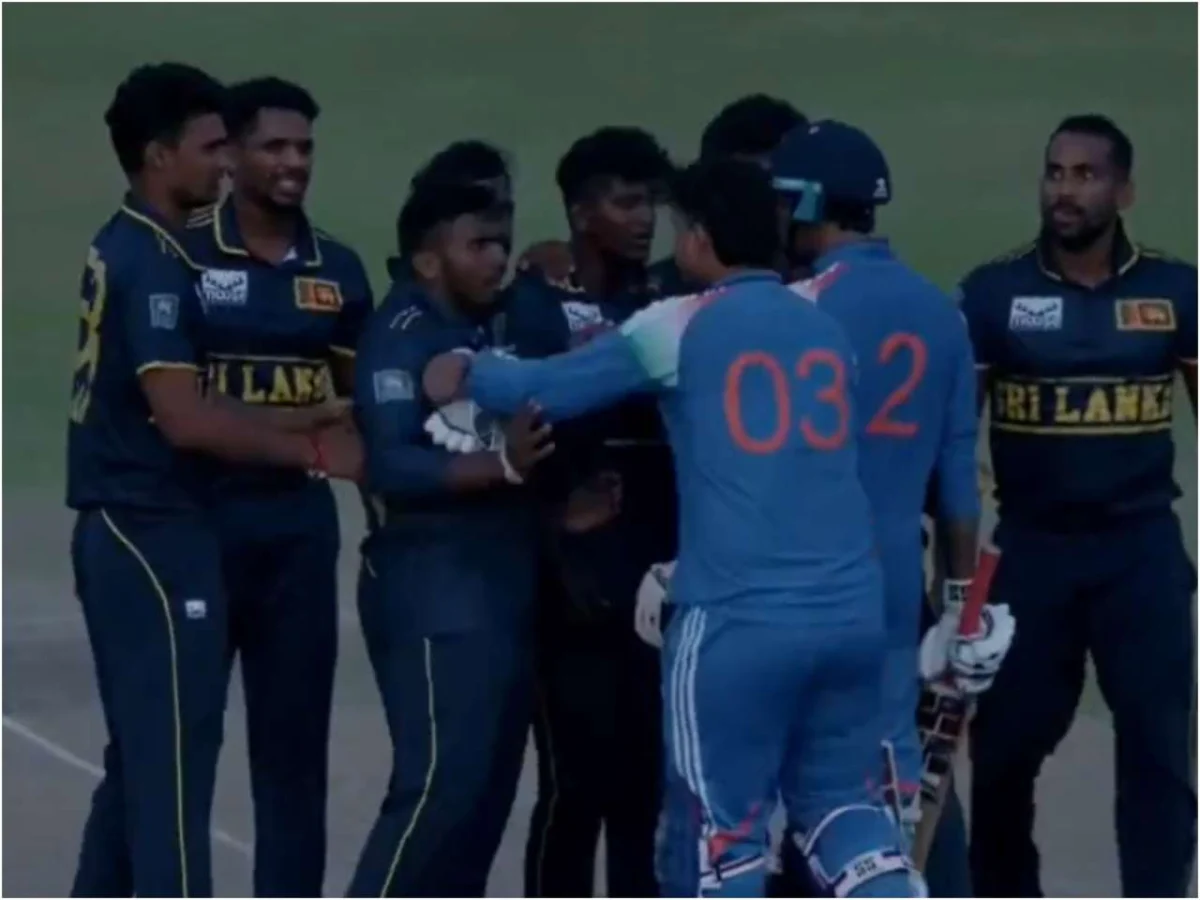
Dambulla, Sri Lanka – June 15, 2026 – A thrilling encounter in the ongoing tri-nation A-team series culminated in an unsavoury incident today, casting a shadow over what was otherwise a captivating contest. Indian A-team batter Vaibhav Sooryavanshi found himself at the centre of controversy after allegedly pushing Sri Lanka A player Vishen Halambage following India A’s Super Over defeat at the Rangiri Dambulla International Stadium. The incident, captured on video, quickly went viral across social media platforms, igniting widespread debate among cricket enthusiasts and raising questions about player conduct at all levels of the game.
The altercation occurred moments after Sri Lanka A clinched a dramatic victory in the Super Over, breaking a deadlock that saw both teams score an identical 265 runs in their respective innings. Sooryavanshi, visibly frustrated by the loss, reportedly reacted to a perceived provocation from a celebrating Sri Lankan player, leading to a physical exchange that required intervention from other players. This regrettable turn of events has prompted expectations of official investigations and potential disciplinary action, overshadowing the exceptional display of skill and resilience witnessed throughout the day.
The Unraveling Moment: Main Facts
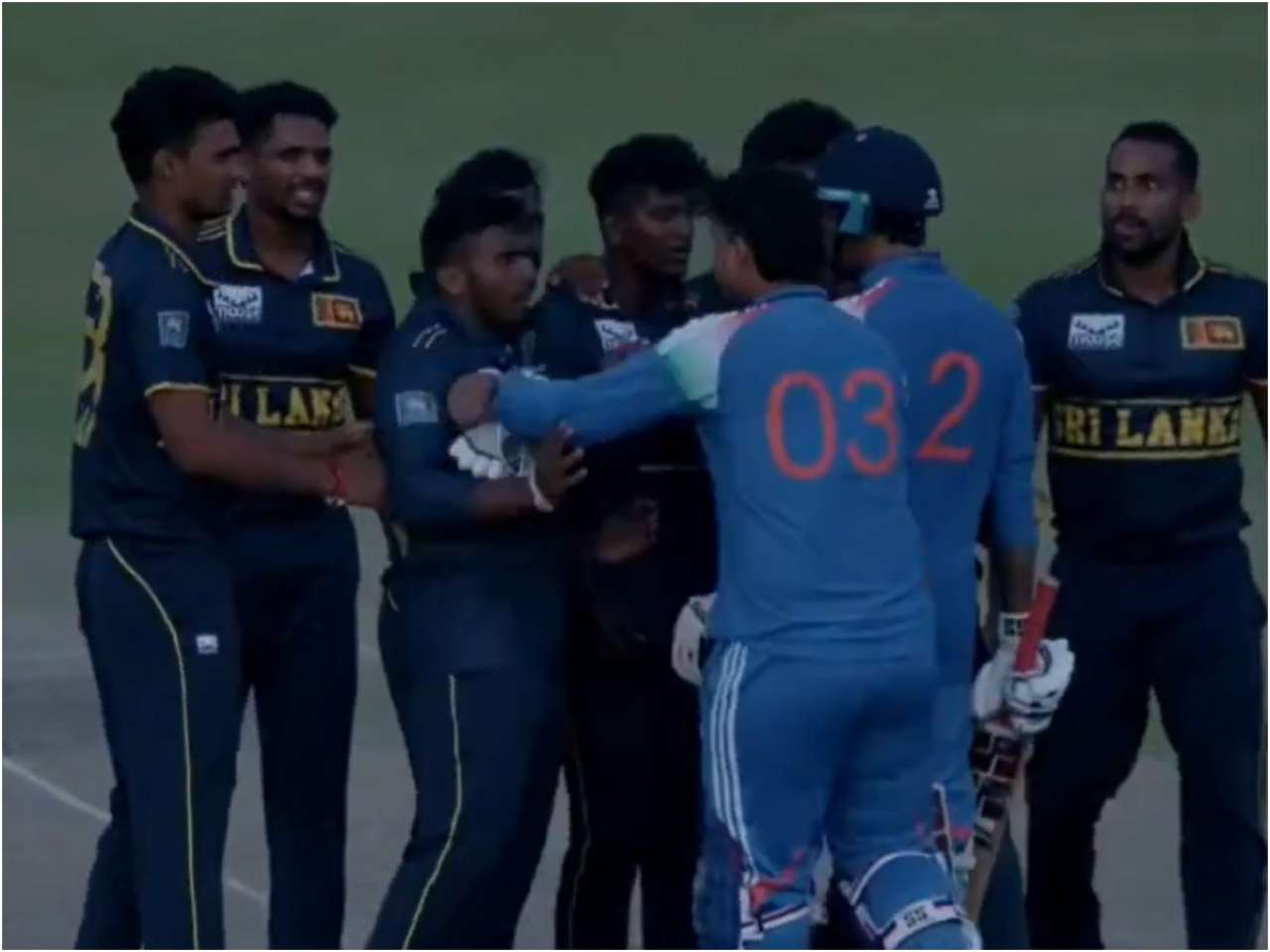
The core of the incident revolves around India A’s Vaibhav Sooryavanshi and Sri Lanka A’s Vishen Halambage. Following a tied match that led to a Super Over, Sri Lanka A emerged victorious, successfully defending their target of 16 runs against India A’s nine. As the Sri Lankan players erupted in jubilant celebrations, Sooryavanshi, walking off the field, was allegedly subjected to verbal taunts from a Sri Lankan player. In a moment of intense frustration, Sooryavanshi approached Halambage and pushed him, leading to a brief but heated confrontation before teammates from both sides intervened to de-escalate the situation.
The tri-nation series, designed to provide a crucial platform for emerging talents from India, Sri Lanka, and a third participating nation (or a bilateral series structured as such), witnessed high stakes and competitive spirit throughout the match. However, the post-match incident has shifted the narrative from cricketing prowess to player discipline, with the cricketing fraternity now awaiting official responses from the respective cricket boards and tournament organisers.
)
A Match of High Drama: Chronological Account
The fourth match of the tri-nation A-team series promised excitement, but few could have predicted the sheer drama that would unfold, culminating in a regrettable post-match incident.
Build-up to the Clash: The Tri-Nation Series
The tri-nation A-team series serves as a vital proving ground for the next generation of cricketing stars. It offers young players invaluable exposure to international competition, allowing them to hone their skills under pressure and stake their claim for senior team selection. For India A, captained by the promising Tilak Varma, and Sri Lanka A, each match in the series carries significant weight, not just for team performance but for individual player development. The Rangiri Dambulla International Stadium, known for its picturesque setting and fair playing conditions, was the stage for this pivotal encounter, with both teams eager to secure a crucial win in the series standings. The atmosphere leading into the match was charged with competitive energy, as players aimed to impress selectors and fans alike.

The Main Innings: India A’s Rollercoaster Ride
The day began with Sri Lanka A winning the toss and electing to field first, a decision likely influenced by the conditions and their bowling strength. India A’s innings, however, started precariously. Despite the presence of seasoned young talents like Tilak Varma, the Men in Blue struggled to build substantial partnerships in the initial overs. They were soon reduced to a precarious 143 for 7, facing the prospect of being bowled out for a modest total. The Sri Lankan A bowlers maintained tight lines and lengths, capitalising on the early breakthroughs and exerting considerable pressure on the Indian batting lineup.
Just when it seemed India A was collapsing, a remarkable resurgence took place. The eighth-wicket partnership between Suryansh Shedge and Vipraj Nigam proved to be the turning point. Displaying immense grit and maturity beyond their years, both batters launched a calculated counter-attack. Shedge and Nigam meticulously rebuilt the innings, rotating the strike effectively and punishing loose deliveries. Their resilient stand not only stemmed the fall of wickets but also dramatically accelerated the scoring rate. Both players reached their respective half-centuries, a testament to their composure under pressure. Their partnership transformed India A’s fortunes, eventually guiding them to a respectable total of 265 runs before being bowled out in the final over. This spirited fightback had injected renewed confidence into the Indian camp and set the stage for a compelling chase.
)
Sri Lanka A’s Spirited Chase
In response, Sri Lanka A began their chase with a clear intent to match India A’s fighting total. Their batters showed determination, navigating the early overs cautiously before accelerating through the middle period. Just like India A, Sri Lanka A faced their own challenges, losing wickets at crucial junctures. However, they consistently found ways to stay in the hunt, thanks to valuable contributions from their middle and lower order. The match ebbed and flowed, with momentum shifting between the two sides as each team fought tooth and nail for dominance.
As the innings approached its climax, the tension was palpable. Sri Lanka A required runs off the final over with wickets in hand, and they delivered under immense pressure. In a remarkable display of precision and nerve, they managed to score the exact total of 265 runs, drawing level with India A. The crowd erupted, witnessing a rare and exhilarating tie in limited-overs cricket. This result meant that the match, which had already provided a full spectrum of cricketing emotions, would now head into a Super Over to determine the winner.
)
Super Over Showdown: The Decisive Finish
The Super Over format, designed for such thrilling deadlocks, brought an immediate surge of adrenaline. Sri Lanka A batted first, with their chosen batters stepping up to the challenge. They demonstrated aggressive intent, smashing 16 runs off their allotted six balls, setting a formidable target of 17 for India A to win. The pressure was immense, with every delivery carrying the weight of the match’s outcome.
For India A, the responsibility of chasing 17 runs fell to Vaibhav Sooryavanshi and Suryansh Shedge. With the entire team’s hopes resting on their shoulders, the duo strode out to the crease, aware that they needed to find boundaries from the outset. However, despite their best efforts and some valiant hitting, India A could only manage to score 9 runs off their six balls, falling short of Sri Lanka A’s total. The Super Over concluded with Sri Lanka A clinching a memorable victory, leaving India A players and fans heartbroken.
)
The Flashpoint: Sooryavanshi’s Outburst
The immediate aftermath of the Super Over loss was a cacophony of contrasting emotions. Sri Lankan A players and support staff erupted in joyous celebrations, understandable given the dramatic nature of their victory. Amidst this jubilant scene, Vaibhav Sooryavanshi, deeply disappointed by the defeat and his team’s inability to secure the win, began to walk off the field.
It was during this moment of high tension that the incident occurred. Reports suggest that as Sooryavanshi was making his way towards the pavilion, a Sri Lankan player, later identified as Vishen Halambage, allegedly uttered something that "irked" the Indian batter. While the exact words exchanged remain unconfirmed, the perceived provocation triggered an immediate and furious reaction from Sooryavanshi. He abruptly stopped, turned back, and confronted Halambage, pushing him in a clear act of aggression.
)
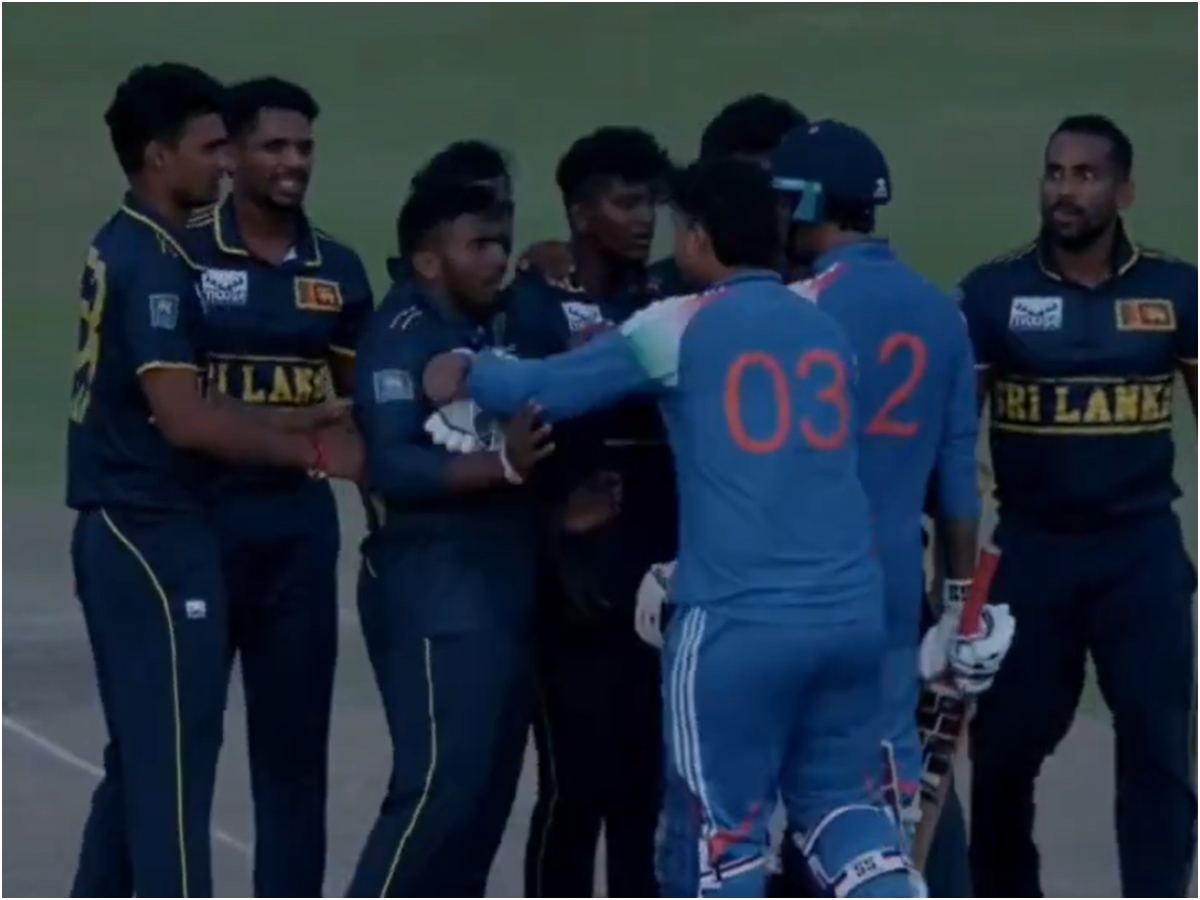
The scene quickly escalated. Other Sri Lankan players rushed towards the duo, some appearing to defend their teammate, while Indian batters and fielders also moved in to intervene. Cooler heads eventually prevailed, with players from both sides stepping in to separate Sooryavanshi and Halambage. The Indian batters were then ushered away from the heated confrontation, while the Sri Lankan team continued their celebrations, albeit with a momentary pause of tension. The entire incident was captured on video by spectators and quickly circulated online, turning a competitive cricket match into a major talking point about sportsmanship and player conduct.
Supporting Data and Player Profiles
Understanding the context of the players involved helps shed light on the intensity of the moment and the potential ramifications.
)
Vaibhav Sooryavanshi: A Profile in Talent and Intensity
Vaibhav Sooryavanshi is considered one of India’s most promising young batting talents. Known for his aggressive stroke play and ability to accelerate the scoring rate, he has been a consistent performer in domestic circuits, catching the eyes of national selectors. His reputation precedes him as a passionate and highly competitive individual, always eager to make a significant impact on the game. In the main innings of today’s match, Sooryavanshi contributed a quickfire 21 runs off just 14 balls, showcasing his attacking prowess. While his talent is undeniable, incidents like this raise questions about temperament and the ability to manage emotions under pressure, particularly for a player earmarked for a future in international cricket. His fierce competitive spirit, while often an asset, clearly became a liability in the heat of the moment today.
Vishen Halambage: The Player in the Crosshairs
Vishen Halambage is a relatively lesser-known but spirited member of the Sri Lanka A squad. As a young player, he is keen to make his mark and contribute to his team’s success. While details about his specific role in the Super Over or the main innings were not prominently featured in immediate reports, his involvement in the post-match altercation has brought him into the spotlight. It is common for young players, particularly after a hard-fought victory, to engage in spirited celebrations. However, the line between enthusiastic celebration and potential provocation is often fine, and today’s incident highlights the need for restraint from all parties involved, regardless of the outcome.
)
Match Statistics at a Glance
- Tournament: Tri-Nation A-Team Series (4th Match)
- Date: June 15, 2026
- Venue: Rangiri Dambulla International Stadium, Sri Lanka
- Toss: Sri Lanka A won, elected to field
- India A Innings: 265 all out (50 overs)
- Key Performers: Suryansh Shedge (Half-century), Vipraj Nigam (Half-century), Vaibhav Sooryavanshi (21 runs off 14 balls)
- Sri Lanka A Innings: 265 all out (50 overs)
- Result: Match Tied
- Super Over:
- Sri Lanka A: 16 runs
- India A: 9 runs (Sooryavanshi and Shedge batted)
- Match Winner: Sri Lanka A (by Super Over)
Official Responses and Regulatory Framework
The immediate aftermath of such an incident in international cricket typically involves a structured response from cricketing authorities. The lack of immediate official statements does not mean inaction; rather, it suggests a period of internal review and evidence gathering before formal announcements are made.
The Silent Boards: Awaiting Statements
As of now, there has been no immediate official statement from the Board of Control for Cricket in India (BCCI), Sri Lanka Cricket (SLC), or the International Cricket Council (ICC) regarding the altercation. This is customary in such situations, as cricket boards usually conduct their own preliminary inquiries and gather all available evidence, including match referee reports, umpire reports, and video footage, before issuing formal statements or announcing disciplinary actions. The cricket fraternity, however, keenly awaits a response, as the incident has garnered significant public attention and debate. The silence, while procedural, only amplifies the anticipation for clarity on the matter.
)
Cricket’s Code of Conduct: What the Rulebook Says
The conduct of players and officials in international cricket is governed by strict codes of conduct established by the ICC and adopted by national boards. The incident involving Vaibhav Sooryavanshi and Vishen Halambage is likely to fall under several articles of the ICC Code of Conduct, particularly those related to physical assault and bringing the game into disrepute.
Specifically, Article 2.12 of the ICC Code of Conduct for Players and Player Support Personnel addresses "Physical assault of another Player, Player Support Personnel, Umpire, Match Referee or any other person." This is considered a Level 4 offence, the most severe category, carrying significant penalties. Even if the incident is deemed less severe, other articles such as Article 2.20 (conduct that is contrary to the spirit of the game) or Article 2.5 (using language, gestures or actions which could provoke an aggressive reaction from a Player or Player Support Personnel) could also be invoked.
)
Upon review, the Match Referee, who would have been present at the game, will submit a report detailing the incident. This report, along with any evidence (including the viral video), will be crucial for the disciplinary committee. Potential penalties for such an offence can range from substantial fines (up to 100% of the player’s match fee), multiple demerit points, and most significantly, suspensions ranging from several matches to even an entire season, depending on the severity and any past disciplinary record of the player involved.
Precedents and Past Incidents
While rare, altercations and breaches of the Code of Conduct are not entirely unprecedented in cricket. The sport prides itself on its "spirit of cricket" ethos, but the competitive nature of the game occasionally leads to heated moments. Historically, players who have engaged in physical altercations or severe verbal abuse have faced significant bans and fines. These precedents underscore the seriousness with which cricketing bodies treat such incidents, aiming to maintain the integrity and gentlemanly image of the sport. Each case is judged on its specific merits, but the underlying principle remains clear: physical aggression has no place on the cricket field. The severity of Sooryavanshi’s potential punishment will likely be influenced by whether the Match Referee classifies the act as a minor push or a more aggressive physical assault, as well as whether any verbal provocation is deemed to have been significant.
)
Implications and Future Outlook
The Dambulla incident carries far-reaching implications, not just for the players involved but for the teams, the series, and the broader message of sportsmanship in cricket.
The Immediate Aftermath for Sooryavanshi
For Vaibhav Sooryavanshi, a promising young talent, the immediate future appears uncertain. A formal charge under the ICC Code of Conduct is highly likely, especially given the visual evidence of the incident. Depending on the level of the offence, he could face a ban from the remaining matches of the tri-nation series, which would be a significant blow to his development and the team’s prospects. Beyond the immediate suspension, the incident could severely impact his reputation and career trajectory. Selectors and team management often look for not just skill but also temperament and discipline in aspiring international cricketers. An incident of this nature, particularly involving physical contact, raises red flags and could set him back in the pecking order for future opportunities with the national team. It serves as a harsh lesson on managing emotions in high-pressure situations.
)
Impact on India A and the Tri-Nation Series
The incident could also have a tangible impact on the India A squad. Losing a key player like Sooryavanshi to suspension would undoubtedly weaken their batting lineup for the rest of the series. More broadly, such controversies can affect team morale and cohesion. While the team might rally in response, the negative publicity can be a distraction. The incident also casts a shadow over the tri-nation series itself, which is meant to be a showcase of young talent and healthy competition. Organisers and participating teams will be keen to ensure that the focus remains on the cricket, rather than on disciplinary issues, and may reinforce guidelines on player conduct to prevent similar occurrences.
Broader Concerns: Player Conduct and Sportsmanship
This incident reignites a perennial debate in sports: the fine line between competitive spirit and aggressive, unsportsmanlike conduct. Cricket, often revered for its traditions of fair play and respect, expects its players to uphold these values. Young players, in particular, are seen as role models for aspiring cricketers and the general public. An incident involving physical contact sends a concerning message about the breakdown of decorum on the field. It underscores the importance of continuous education and reinforcement of the spirit of cricket among players, especially those transitioning from junior to senior levels, where stakes are higher and emotions run strong. The incident serves as a stark reminder that passion must be tempered with professionalism and respect for opponents.
)
Moving Forward: Lessons to be Learned
Moving forward, this incident will undoubtedly prompt introspection from both the players and the management of India A and Sri Lanka A. It highlights the need for robust player management programs that not only focus on skill development but also on mental resilience, emotional regulation, and adherence to ethical standards. Coaches and team leaders have a crucial role to play in instilling discipline and emphasizing the importance of respecting opponents, regardless of the match outcome. For Sooryavanshi, it will be an opportunity for significant personal growth, understanding the gravity of his actions and learning to channel his intensity constructively. The cricketing world will be watching not just for the disciplinary actions but also for how the young talent responds to this setback, hoping that the unfortunate incident becomes a catalyst for greater maturity and sportsmanship.
Conclusion: A Stain on a Thrilling Contest
The fourth match of the tri-nation A-team series between India A and Sri Lanka A will be remembered for its nail-biting finish and the incredible display of resilience from both sides. However, the regrettable post-match altercation involving Vaibhav Sooryavanshi has unfortunately cast a significant shadow over what was otherwise a brilliant advertisement for A-team cricket. While the intensity of competition and the raw emotion of sport are undeniably appealing, they must never transcend the boundaries of respect and fair play.
)
As cricketing authorities prepare to address this breach of conduct, the incident serves as a powerful reminder of the enduring importance of upholding the spirit of cricket. It reinforces the message that while winning is paramount, it should never come at the cost of sportsmanship and mutual respect. The cricketing community now looks towards the future, hoping that lessons are learned, appropriate actions are taken, and the focus returns to the beautiful game played in its true spirit.
